Like
Share
멍실장
고양이 헬리코박터 감염, 증상부터 치료까지

Helicobacter Infection in Cats: From Symptoms to Treatment

DigestiveQ&AMeongsiljang Veterinary Advisory Board

Helicobacter infection in cats is a bacterial infection that causes chronic gastritis and vomiting. We’ve put together a symptom checklist along with diagnostic and treatment methods.

What Is Helicobacter Infection in Cats?

A cat that appears to have lost its appetite while sitting next to its food bowl
Helicobacter infection in cats occurs when spiral-shaped Helicobacter bacteria colonize the stomach lining, potentially causing chronic gastritis and recurrent vomiting. The most critical step is to rule out other gastrointestinal causes first. If your cat experiences chronic or intermittent vomiting or noticeable weight loss, it’s best to have a veterinarian perform an upper endoscopy and biopsy to confirm the underlying cause. Dismissing these symptoms as simple hairballs can lead to missing other serious gastrointestinal conditions, such as gastric lymphoma.

Why Do Cats Get Helicobacter?

The exact transmission routes of Helicobacter bacteria have not yet been fully elucidated. The species most commonly found in cats are H. felis, H. heilmannii, and H. pylori. According to veterinary textbooks, Helicobacter-like organisms are detected in as many as 41–100% of gastric biopsies from clinically healthy cats, indicating their high prevalence. Furthermore, studies have reported no significant difference in Helicobacter infection rates between cats with gastritis and those without. Therefore, the presence of clinical signs, rather than mere bacterial colonization, serves as the basis for treatment decisions.

Characteristics by Helicobacter Species

The three bacterial species most commonly found in cats are listed below. The degree of irritation they cause to the gastric mucosa and their association with lymphoma vary by species.
SpeciesKey CharacteristicsDisease Association
H. felisRelatively common in the feline stomachChronic gastritis, lymphocytic inflammation
H. heilmanniiSpiral-shaped bacterium; also found in humansPotential for gastric lymphoma
H. pyloriCommon in humans, rare in catsMay be associated with more severe clinical signs than other species when infection occurs
Identification of the specific species requires a gastric tissue biopsy examined via special staining.

Check for These Symptoms

Helicobacter infections can be tricky to spot because the symptoms are often vague. If you notice any of the following signs occurring chronically or intermittently, it may be worth considering a Helicobacter infection.
Repetitive vomiting: Your pet may vomit yellow stomach acid or white foam, especially on an empty stomach.
Decreased appetite: They may eat less than usual or hesitate before meals.
Weight loss: You might notice a gradual but noticeable drop in weight.
Abdominal discomfort: They may show signs of discomfort when their belly is touched or adopt a hunched posture more frequently.
Black stools: If there’s bleeding in the stomach, their stool may appear black.
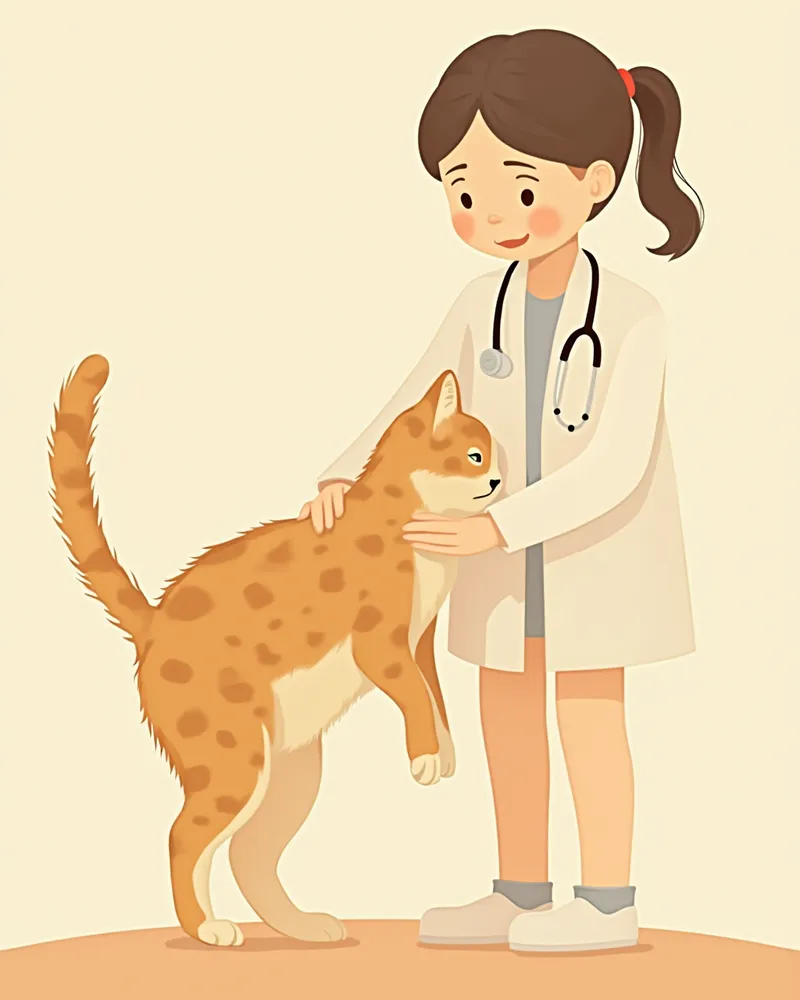
A veterinarian examining a cat's abdomen

Go to the Vet Immediately in These Cases

If your pet vomits blood or passes black, tarry stools, or experiences severe, repeated vomiting that prevents them from drinking water, it’s an emergency. These signs may indicate gastrointestinal bleeding and dehydration, which can rapidly worsen within just a few hours. Place a towel in the carrier, keep your pet warm, and head to the vet immediately.

How Is It Diagnosed at the Vet?

Diagnosis is confirmed through gastric endoscopy and biopsy. Under general anesthesia, a camera is used to examine the stomach lining while tissue samples are taken for cellular and histopathological analysis to directly check for bacteria and inflammation. A urease test may also be performed on the removed stomach tissue to detect the presence of the bacteria. However, since the bacteria can sometimes be found in healthy cats, a definitive diagnosis is made by combining clinical symptoms, endoscopic findings, and biopsy results. The key is to differentiate this condition from other diseases with similar symptoms, such as inflammatory bowel disease and gastric lymphoma.
Scene of a cat undergoing an endoscopy examination

How Is Treatment Conducted?

Helicobacter infections with symptoms are treated using a combination therapy that involves two to three antibiotics. There are reported cases of using combinations of antibiotics such as amoxicillin, clarithromycin, and metronidazole. The veterinarian will determine the type of medication and treatment duration based on the pet's weight and stomach condition. Since symptoms can recur after treatment, it is important to consult with your veterinarian and undergo regular follow-up examinations. Dietary management is also important. Using easily digestible prescription diets or low-irritation food can help manage gastrointestinal health.

If You Have Multiple Cats, Follow This Rule

If one cat is infected, all cats sharing the same space should be tested. Provide separate food and water bowls and litter boxes for each cat, and disinfect them daily with hot water. Although transmission to humans is very rare, if there are immunocompromised family members, be sure to wash hands thoroughly after contact.

Reviewed by a veterinarian

Dr. Tony — Punnawat Phongkittirak

Dr. Tony — Punnawat Phongkittirak

Veterinarian

A veterinarian who majored in veterinary medicine at Khon Kaen University, Thailand, and completed the IVSA program at North Carolina State University in the United States. Drawing on clinical experience at animal hospitals, he works in the pet healthcare field and is dedicated to building a digital care environment that connects pet parents with veterinarians.

Frequently Asked Questions

My cat vomits frequently. Does it need a Helicobacter test right away?
Vomiting can also be caused by hairballs, feeding issues, or food allergies. If vomiting persists for more than two weeks or is accompanied by weight loss or decreased appetite, consider an endoscopic examination.
Is it the same type of bacteria as Helicobacter in humans?
While some H. pylori strains can be shared between humans and cats, the most common species found in cats are H. felis and H. heilmannii. Transmission to humans is extremely rare.
Will it completely disappear after treatment?
Complete eradication may be difficult. The goal of treatment is to eliminate symptoms and prevent recurrence. Regular follow-up examinations are important even after treatment.
The health checkup showed bacteria, but there are no symptoms. Do I need treatment?
Asymptomatic infections are monitored without immediate treatment. Therapy is initiated only if symptoms develop.
Will changing the diet help?
Switching to a prescription diet or a low-irritant food that is easy to digest can help support gastrointestinal health. Please consult with your veterinarian to determine the best option for your pet.

Share

Related Guides

References

[1] Bridgeford EC, Marini RP, Feng Y, et al. Gastric Helicobacter species as a cause of feline gastric lymphoma: a viable hypothesis. Vet Immunol Immunopathol. 2008;123:106-113.

[2] The Cat, Clinical Medicine and Management, 2nd Edition — Gastrointestinal chapter

[3] Clinical Medicine of the Dog and Cat, 4th Edition — Chronic Gastritis chapter

This information is based on veterinary literature and does not replace diagnosis or treatment. Please consult a veterinarian for specific health concerns.

Metapet Co., Ltd. | CEO: Park Sung-yong | Business Reg. No. 417-88-02562 | Seoul, South Korea | Customer Center

Helicobacter Infection in Cats: Symptoms to Treatment | Meongsiljang