Like
Share
멍실장
고양이 칼리시바이러스 자주 묻는 질문 Q&A — 보호자가 꼭 알아야 할 핵심

Feline Calicivirus FAQ — Key Information Every Pet Owner Must Know

RespiratoryQ&AMeongsiljang Veterinary Advisory Board

Feline calicivirus is one of the leading causes of respiratory disease in cats. Because it is highly contagious and prone to recurrence, it’s important for pet owners to understand the condition and take early action.

What is Feline Calicivirus?

Feline calicivirus particles as seen under an electron microscope
Feline calicivirus is a highly contagious viral disease that causes inflammation in a cat’s respiratory tract and mouth, spreading rapidly to other cats. - Transmission routes: The virus spreads through airborne droplets, contaminated food and water bowls, toys, and human clothing or hands. - Environmental persistence: The virus can survive in the environment for extended periods, making thorough cleaning and disinfection essential. The exact duration of survival varies depending on environmental conditions. - Post-infection status: Cats may continue to shed the virus for a long time after infection, meaning transmission can still occur even after recovery. - Indoor cats are also at risk: Infection can be introduced via items or people coming from outside, so caution is necessary. - Special precautions: Kittens with immature immune systems and senior cats are at higher risk of developing severe disease.

Why is Feline Calicivirus a Problem?

This virus causes severe inflammation in a cat’s respiratory tract and mouth, leading to significant pain and clinical signs. - Potential for chronic carriage: While most cats recover naturally, some remain chronically infected and can continue shedding the virus even when asymptomatic. - Worsening with immunosuppression: Co-infection with immunosuppressive viruses such as Feline Immunodeficiency Virus (FIV) or Feline Leukemia Virus (FeLV) can lead to more severe disease progression. - Symptom-focused treatment: Supportive care aimed at alleviating symptoms is the primary approach, often involving antibiotics to prevent secondary bacterial infections and interferon therapy. - Nutritional management is essential: Loss of appetite can make adequate nutrition difficult, leading to rapid weight loss and overall weakening. - Long-term management required: Because cats may become chronic carriers, routine care and regular veterinary check-ups are crucial.
A cat with lesions on its mouth and paws

How is it Transmitted?

Feline calicivirus spreads easily through airborne droplets. - Droplet transmission: Droplets expelled during coughing or sneezing can enter another cat’s respiratory tract and cause infection. - Transmission via objects: Shared items such as food bowls, water dishes, toys, and play areas can become contaminated with the virus and serve as vectors for transmission. - Transmission via humans: Clothing or hands of people who have handled an infected cat can act as fomites, transferring the virus to other cats. - Environmental survival: The virus can survive in the environment for a certain period. Therefore, it is essential to first remove organic matter and then disinfect with an appropriate disinfectant. The exact duration of survival may vary depending on environmental conditions. - Key prevention measures: Avoid contact with infected cats, and always disinfect items brought from outside before use.
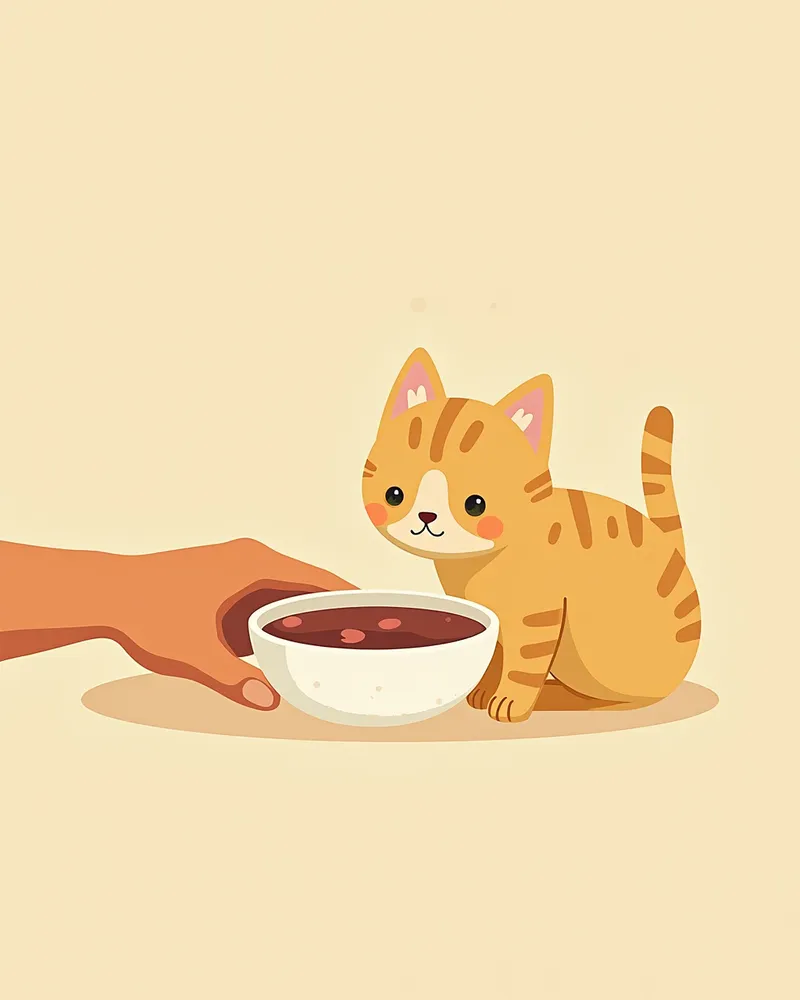
A food bowl illustrating the transmission routes of feline calicivirus

What are the Main Symptoms?

The most common symptoms of feline calicivirus infection include excessive tearing, nasal discharge, coughing, and fever. - Oral ulcers: Painful ulcers develop in the mouth, which may cause your cat to refuse food. - Loss of appetite: Due to pain and discomfort, cats may stop eating, leading to rapid weight loss. - Difficulty breathing: Increased nasal discharge or lung inflammation can result in labored breathing. - Risk of chronicity: Some cats may continue to experience oral pain long after acute symptoms have resolved. - Importance of early detection: Since initial symptoms can be mild, close observation is essential to catch any changes early.
Symptoms of feline calicivirus: tearing, nasal discharge, drooling

What Should You Do If Symptoms Appear?

Consult your veterinarian immediately if symptoms appear. - Diagnosis Required: Symptoms alone are often insufficient for a definitive diagnosis, so diagnostic tests are necessary to confirm the condition. - Treatment Plan: Antibiotics are prescribed to prevent secondary infections, along with immunomodulators or pain relievers as needed. - Dietary Adjustments: If oral ulcers are present, switch to soft food or liquid diet to make eating easier. - Hydration Support: Since loss of appetite can lead to dehydration, offer water frequently or provide fluids via injection if necessary. - Isolation Management: Minimize contact with other cats to prevent the spread of infection.
A veterinarian examining a cat’s oral ulcer.

Comparison of Symptoms and Management by Infection Stage

ItemMain SymptomsManagementPrecautions
MildWatery eyes, nasal discharge, mild coughHome care without hospitalization, hydrationIsolate from other cats, disinfect the environment
ModerateFever, loss of appetite, oral ulcersTake veterinarian-prescribed medication, provide soft foodPrevent spread of infection, regular monitoring
SevereDifficulty breathing, rapid weight loss, dehydrationHospitalization, intravenous fluids, oxygen supplyVisit the clinic immediately, prevent spread of infection

Early diagnosis is important because the treatment approach differs depending on the stage of infection.

Signs Requiring Immediate Veterinary Visit

Seek immediate veterinary care if your cat shows difficulty breathing, has no appetite for more than 24 hours, exhibits signs of dehydration (such as dry lips and reduced skin elasticity), or has persistent bloody nasal discharge or coughing. A cat’s condition can deteriorate rapidly.

How Can It Be Prevented?

Regular vaccinations are the most effective way to prevent disease. - Vaccination schedule: Start at 6–8 weeks of age, repeat every 3–4 weeks, and complete the series by 16–20 weeks of age. A booster shot may be needed one year later. - Vaccine types: Feline calicivirus is included in core cat vaccines and is commonly administered as part of a combination vaccine. - Environmental management: Always disinfect items belonging to infected cats before reuse. - Limiting contact: Avoid contact with cats that may be infected, and thoroughly disinfect any items brought in from outside. - Key to prevention: Combining vaccination with regular cleaning and disinfection significantly reduces the risk of infection.
A cat receiving a vaccination

Reviewed by a veterinarian

Dr. Tony — Punnawat Phongkittirak

Dr. Tony — Punnawat Phongkittirak

Veterinarian

A veterinarian who majored in veterinary medicine at Khon Kaen University, Thailand, and completed the IVSA program at North Carolina State University in the United States. Drawing on clinical experience at animal hospitals, he works in the pet healthcare field and is dedicated to building a digital care environment that connects pet parents with veterinarians.

Frequently Asked Questions

Can feline calicivirus be transmitted to humans?
No, feline calicivirus is not transmitted to humans. It is a virus specific to cats, so other animals and people cannot become infected.
Does getting vaccinated provide complete protection?
Vaccines are effective at preventing severe symptoms, but they don’t completely stop infection. However, vaccinated cats tend to experience milder symptoms and recover more quickly.
Can I bring my infected cat back home?
Because the virus can be shed for an extended period even after infection, you should only introduce your cat to other cats after a veterinary examination and risk assessment, followed by an adequate quarantine period. The exact duration may vary depending on individual circumstances.
How can I disinfect at home?
Since calicivirus is a non-enveloped virus and resistant to alcohol, it’s most effective to first wipe away organic matter, then disinfect surfaces with a diluted chlorine-based disinfectant (such as sodium hypochlorite or other oxidizing agents). For your cat’s bedding, food bowls, and toys, soaking them in boiling water for at least 10 minutes or disinfecting them with a chlorine-based solution is recommended.
Can it recur?
Yes, most cats recover, but some may remain asymptomatic carriers of the virus after infection, continuously shedding it and potentially experiencing a recurrence of symptoms later on. Regular health care is essential.

Share

Related Guides

References

[1] The Cat, Clinical Medicine and Management, 2nd Edition. 2016. Chapter 42: Feline Calicivirus Infection.

[2] Low HC, Powell CC, Veir JK, et al. Prevalence of feline herpesvirus or dermatologic disease attributed to feline herpesvirus type 1: 1, Chlamydophila felis, and Mycoplasma spp DNA in conjunctival cells collected from cats with and without conjunctivitis. J Am Vet Med Assoc. 2016;249(5):526–538.

[3] Pesavento PA, MacLachlan NJ, Dillard-Telm L, et al. Pathologic, immunohistochemical, and electron microscopic findings in naturally occurring virulent systemic feline calicivirus infection in cats. Vet Pathol. 2004;41(3):257–263.

This information is based on veterinary literature and does not replace diagnosis or treatment. Please consult a veterinarian for specific health concerns.

Metapet Co., Ltd. | CEO: Park Sung-yong | Business Reg. No. 417-88-02562 | Seoul, South Korea | Customer Center

Feline Calicivirus FAQ: Symptoms, Spread & Treatment Explained | Meongsiljang