Like
Share
멍실장
고양이 급성 신부전(AKI) 자주 묻는 질문 Q&A — 보호자가 꼭 알아야 할 핵심

What Is Feline Acute Kidney Injury (AKI)? — A Summary of Symptoms and Emergency Response

KidneyQ&AMeongsiljang Veterinary Advisory Board

Acute kidney injury (AKI) in cats can be life-threatening due to a sudden decline in kidney function. Here’s a summary of the symptoms, causes, and management strategies that pet owners should know.

What Is Feline Acute Kidney Injury (AKI)?

An image showing the anatomical structure of a cat's kidneys
Feline acute kidney injury (AKI) is a dangerous condition in which kidney function declines rapidly over a few days, leading to the buildup of toxins in the body. Because it can be life-threatening, early detection and immediate intervention are crucial. - Decline in kidney function: The kidneys fail to properly eliminate waste products, causing toxins to accumulate in the blood. - Rapid progression: Symptoms typically appear within 1–3 days, but they may be subtle at first, so close monitoring is essential. - Significant impact on survival: Early treatment greatly improves the chances of recovery, while delays sharply increase the risk. - Importance of early diagnosis: Seeking veterinary care while symptoms are still mild significantly boosts survival rates.

Why Are Cats Vulnerable to Acute Kidney Injury?

Cats are prone to sudden declines in kidney function due to dehydration, exposure to toxic substances, infections, or reduced blood flow. They are especially sensitive to certain toxins, so extra caution is warranted. - Sensitivity to toxic substances: All parts of lilies (Lilium and Hemerocallis species)—including leaves, petals, stamens, and pollen—can cause acute kidney injury in cats if ingested. Cats are also particularly vulnerable to ethylene glycol, the main component of antifreeze; even small amounts can lead to kidney failure and death. - Infections: Infections such as bacterial pyelonephritis can directly damage the kidneys. - Reduced blood flow (ischemia): Decreased blood flow to the kidneys, caused by dehydration or hypotension during anesthesia, can result in ischemic injury. - Recovery characteristics: Kidney damage caused by reduced blood flow may resolve relatively quickly, whereas direct injury to the kidney tissue can take weeks to months to heal.
A scene of a cat drinking water.

What Are the Main Causes of Acute Kidney Injury?
The main causes of acute kidney failure in cats include ingestion of toxic substances, infections, reduced blood flow (ischemia), urinary tract obstruction, and adverse drug reactions. - Exposure to toxic substances: Lilies and ethylene glycol, a component of antifreeze, are well-known nephrotoxins in cats. Cats are particularly sensitive to these, so even small amounts can be dangerous. - Urinary tract obstruction: Urethral obstruction, which is common in cats, can block urine flow and lead to acute kidney failure. - Spread of infection: Infections such as bacterial pyelonephritis and feline infectious peritonitis (FIP) can impair kidney function. - Adverse drug reactions: Certain nephrotoxic medications, including some antibiotics and pain relievers, can place stress on the kidneys. - Blood flow issues (ischemia): Reduced blood flow to the kidneys due to dehydration, hypotension during anesthesia, or bleeding can result in decreased kidney function.
An image of a cat next to a bottle of lavender oil

What Are the Early Signs of Acute Kidney Injury?
The early signs of acute kidney failure in cats include loss of appetite, vomiting, lethargy, decreased urination, and dehydration. It is crucial to visit the vet as soon as these symptoms appear. - Loss of appetite: Your cat may suddenly eat less or stop eating altogether. - Repeated vomiting: Vomiting may occur multiple times a day or persist severely. - Lethargy and weakness: Your cat may seem unusually sleepy or less active than normal. - Decreased urination: Your cat may urinate very little or not at all, with a noticeable drop in urine output. - Signs of dehydration: Dry mouth and reduced skin elasticity are common indicators. Early intervention is critical for survival in all these cases.
An image of a sleepy cat lying on the floor

Signs Requiring Immediate Veterinary Care

If your cat hasn’t drunk water for more than 12 hours, is vomiting repeatedly, hasn’t urinated at all, or appears disoriented, seek veterinary care immediately—these signs can be life-threatening.

How Is Diagnosis Performed?
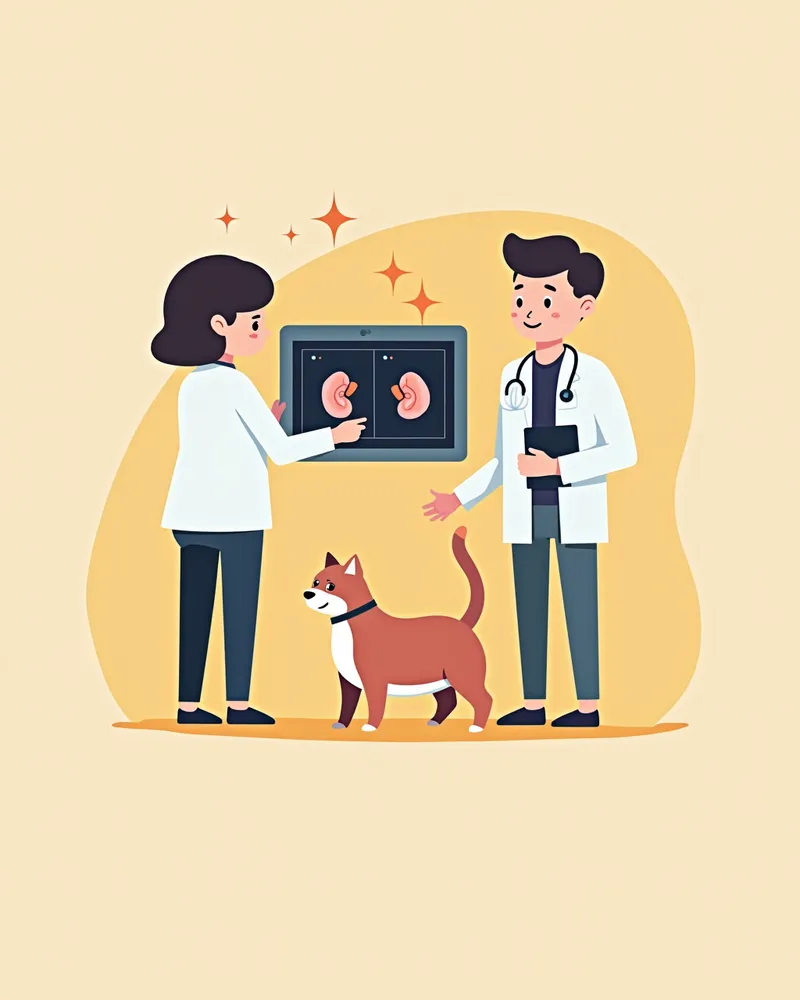
Acute kidney failure in cats is accurately diagnosed through a series of tests. - Blood tests: We check creatinine and BUN levels to assess whether kidney function has declined. - Urinalysis: We analyze urine concentration and cellular composition to evaluate normal kidney function. - Ultrasound imaging: We examine the size, shape, and structure of the kidneys to identify any abnormalities. - Identifying the cause: We determine the underlying cause, such as infection, toxicity, or impaired blood flow, to guide treatment decisions. - Comprehensive assessment: We integrate results from multiple tests to evaluate the severity stage and develop a tailored treatment plan.
An image of a veterinarian examining a cat’s ultrasound screen

What Are the Treatment Options?

Early intervention is key to treating acute kidney failure in cats. - Fluid therapy: Intravenous fluids are administered to correct dehydration and support the recovery of kidney function. - Hemodialysis: In severe cases, dialysis is necessary to remove toxins from the blood. - Treating the underlying cause: If exposure to toxic substances is the cause, antidotes are used; if infection is present, antibiotics are prescribed. - Supportive care: Nutritional supplementation, gastrointestinal protectants, and electrolyte regulation are provided concurrently. - Ongoing management: Even after recovery, kidney function is monitored through regular check-ups.
Image of a cat receiving intravenous fluids

Symptoms and Management by Stage of Acute Kidney Injury

ItemMain symptomsTreatment methodPrognosis
MildDecreased appetite, drowsinessFluid supplementationGood
ModerateVomiting, decreased urinationFluids + medicationFair
SevereDecreased consciousness, anuriaFluids + hemodialysisCritical

Stage-by-stage management has a major impact on survival rate. Early detection is key.

Reviewed by a veterinarian

Dr. Tony — Punnawat Phongkittirak

Dr. Tony — Punnawat Phongkittirak

Veterinarian

A veterinarian who majored in veterinary medicine at Khon Kaen University, Thailand, and completed the IVSA program at North Carolina State University in the United States. Drawing on clinical experience at animal hospitals, he works in the pet healthcare field and is dedicated to building a digital care environment that connects pet parents with veterinarians.

Frequently Asked Questions

If your cat suddenly stops drinking water, could it be acute kidney failure?
Not drinking water alone isn't enough to diagnose acute kidney failure. However, if it occurs alongside loss of appetite, lethargy, vomiting, and other symptoms, it could be a sign of various conditions, including kidney problems. If the symptoms persist, a visit to the vet is necessary.
Which plants can cause acute kidney failure in cats?
Lilies are a prime example. Ingesting any part of the plant—leaves, petals, stamens, or pollen—can cause acute kidney failure in cats, so it’s safest to keep them out of your home entirely.
Is recovery possible after treatment for acute kidney failure?
Recovery depends on the underlying cause and the extent of kidney damage. If the issue is due to reduced blood flow (prerenal), recovery can be swift. However, if the kidney tissue itself is directly damaged, it may take several weeks to months to recover, or it could progress to chronic kidney failure. The mortality rate for acute kidney failure is high, around 50%, making early treatment crucial.
Can it be prevented?
Keep toxic substances such as lily plants and antifreeze (ethylene glycol) out of your cat’s reach, and ensure they have access to plenty of fresh water and regular veterinary check-ups. This is especially important for senior cats.
Does a high creatinine level on a blood test always mean kidney failure?
Elevated creatinine levels can signal kidney failure, but they may also be influenced by dehydration (prerenal causes), postrenal obstruction, Addison’s disease, or chronic kidney disease. Further diagnostic testing is needed.

Share

Related Guides

References

[1] Hosgood, G. et al. (2021) Notes on Canine and Feline Internal Medicine, 4th Ed. Elsevier.

[2] Bartges, J. W. et al. (2020) Urinalysis in the Dog and Cat. Veterinary Clinics of North America: Small Animal Practice.

[3] Kirk, C. W. et al. (2019) Clinical Medicine of the Dog and Cat, 4th Ed. Elsevier.

This information is based on veterinary literature and does not replace diagnosis or treatment. Please consult a veterinarian for specific health concerns.

Metapet Co., Ltd. | CEO: Park Sung-yong | Business Reg. No. 417-88-02562 | Seoul, South Korea | Customer Center

What Is Feline Acute Kidney Injury (AKI)? Signs & Response | Meongsiljang