
Do pets need blood transfusions too — what happens if blood types don't match?
Blood transfusions for pets are necessary in life-threatening situations such as anemia, bleeding, or poisoning. We’ve outlined the blood types of dogs and cats, cross-matching procedures, the transfusion process, and important precautions.
What is a pet blood transfusion?
Situations requiring blood transfusion
Comparison of dog and cat blood types
Differences in dog and cat blood types
| Item | Dogs | Cats |
|---|---|---|
| Main blood types | DEA 1 (positive/negative) | Type A, B, AB |
| Naturally occurring antibodies | None (first transfusion relatively safe) | Present (even first transfusion is risky) |
| Most common type | DEA 1 positive (frequency varies by breed and region) | Type A (large breed variation; most breeds 70-100%) |
| High-risk breeds/situations | Sensitization when a DEA 1 negative animal receives positive blood → risk of acute hemolytic reaction on re-transfusion | British Shorthair and Devon Rex have a high frequency of type B |
| Cross-matching / blood typing | Cross-matching essential for re-transfusion | Blood typing essential from the first transfusion (cross-matching recommended) |
In cats, even a first transfusion can cause a fatal reaction within minutes if the blood type does not match.
How is the blood transfusion process carried out?
Warning signs of adverse reactions during transfusion
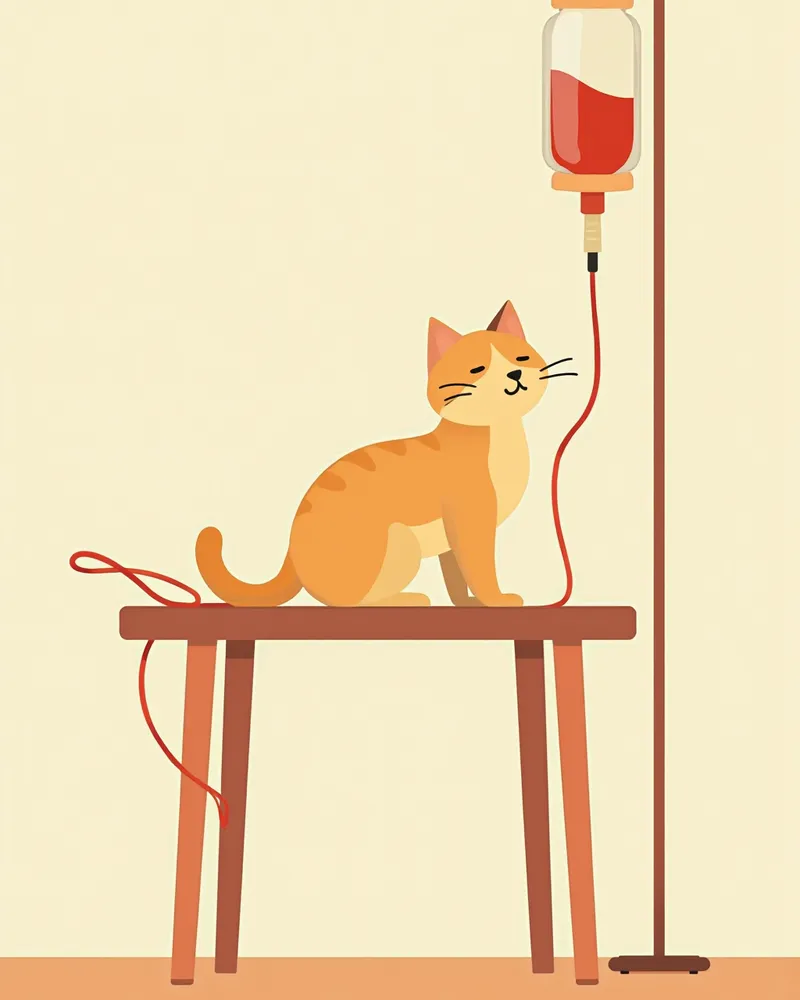
Transfusion reactions can be life-threatening. If any of the following signs appear during or immediately after a transfusion, stop the transfusion immediately and notify your veterinarian: - Elevated body temperature (fever) - Vomiting or excessive drooling - Difficulty breathing or rapid breathing - Pale or jaundiced gums - Red or brown urine (hemoglobinuria) - Sudden collapse or hypotension In particular, transfusing type A (or type AB) blood to a type B cat can cause fatal acute hemolysis and death within minutes, even with a small volume of about 0.5 mL, due to the strong anti-A antibodies present in type B cats. Conversely, when type B blood is transfused to a type A cat, the anti-B antibodies are generally weaker, so the reaction is often milder; however, the lifespan of the transfused red blood cells is significantly shortened, meaning the therapeutic effect of the transfusion does not last long. Because mismatched transfusions are dangerous in either direction, a blood type test must always be performed before transfusion to select compatible blood.
Post-transfusion care and recovery

How to become a blood donor?
Some pet owners even wish to register their pets as blood donors. Generally, dogs (25 kg or more) and cats (4 kg or more) must be between 1 and 8 years old, fully vaccinated, negative for heartworm and blood-borne infectious diseases, have normal health check-up results, and show no aggressive behavior. Since specific criteria and procedures vary by veterinary clinic, it's best to consult with your veterinarian.
Reviewed by a veterinarian

Dr. Tony — Punnawat Phongkittirak
VeterinarianA veterinarian who majored in veterinary medicine at Khon Kaen University, Thailand, and completed the IVSA program at North Carolina State University in the United States. Drawing on clinical experience at animal hospitals, he works in the pet healthcare field and is dedicated to building a digital care environment that connects pet parents with veterinarians.
Reviewed 2026-04-23
Frequently Asked Questions
Do puppies also need a blood type test before their first transfusion?
Why is a cat’s first blood transfusion risky?
How long does the effect of a blood transfusion last?
How much does a blood transfusion cost?
Can a dog that has received a blood transfusion become a blood donor again?
Share
Related Guides

Top 7 Short-Legged Dog Breeds

Primary vs. Secondary Veterinary Hospitals: A Comparison

5 Easy-to-Raise Cat Breeds for First-Time Owners — Grooming Difficulty Comparison

Dog Urinary Incontinence & Urethral Sphincter Mechanism Incompetence FAQ — Key Information for Pet Owners

Dog Urethral Obstruction FAQ — Key Information Every Pet Owner Must Know

Frequently Asked Questions About Urinary Incontinence After Spaying in Dogs — Key Information Every Pet Owner Should Know

Dog Sleep Respiratory Rate (RR) Monitoring Heart FAQ — Key Points Owners Must Know

Dog Respiratory Rate Monitoring Methods FAQ — Key Essentials for Pet Owners

Canine Pulmonary Thromboembolism FAQ — Key Information for Pet Owners

Dog Pulmonary Edema FAQ — Key Information Every Pet Owner Should Know
References
[1] Feline Emergency and Critical Care Medicine, 2nd Edition
[2] Advanced Monitoring for Small Animal Emergency and Critical Care, 2nd Edition
[3] Kisielewicz C, Self I, Bell R. (2014). Assessment of clinical and laboratory variables as a guide to packed red blood cell transfusion of euvolemic anemic dogs. J Vet Intern Med 28(2): 576–582.
[4] Schalm's Veterinary Hematology, 5th Edition