
Cat Summer Heatstroke — Warning Signs You Must Not Miss and Indoor Temperature Management
Cats have very few sweat glands, making it difficult for them to regulate their body temperature during the summer. Here’s how to manage indoor temperature and humidity, along with tips for preventing heatstroke.
Why Is Summer Care for Cats Important?
Check This Before Summer Care
If your cat is panting unusually or has red tongue and gums, it may be early heatstroke rather than just feeling hot. Move them to a cool place immediately and cool their paws and belly with lukewarm or cool water. Applying ice packs to areas with major blood vessels can also help lower body temperature. However, cooling too rapidly can lead to hypothermia, so stop active cooling once the body temperature drops to around 39.4°C (about 103°F). If the temperature remains high or doesn’t improve within 20 minutes, seek veterinary care right away.
Method 1. Indoor Temperature and Humidity Management
Method 2. Increase Water Intake
Method 3. Utilize Cooling Items
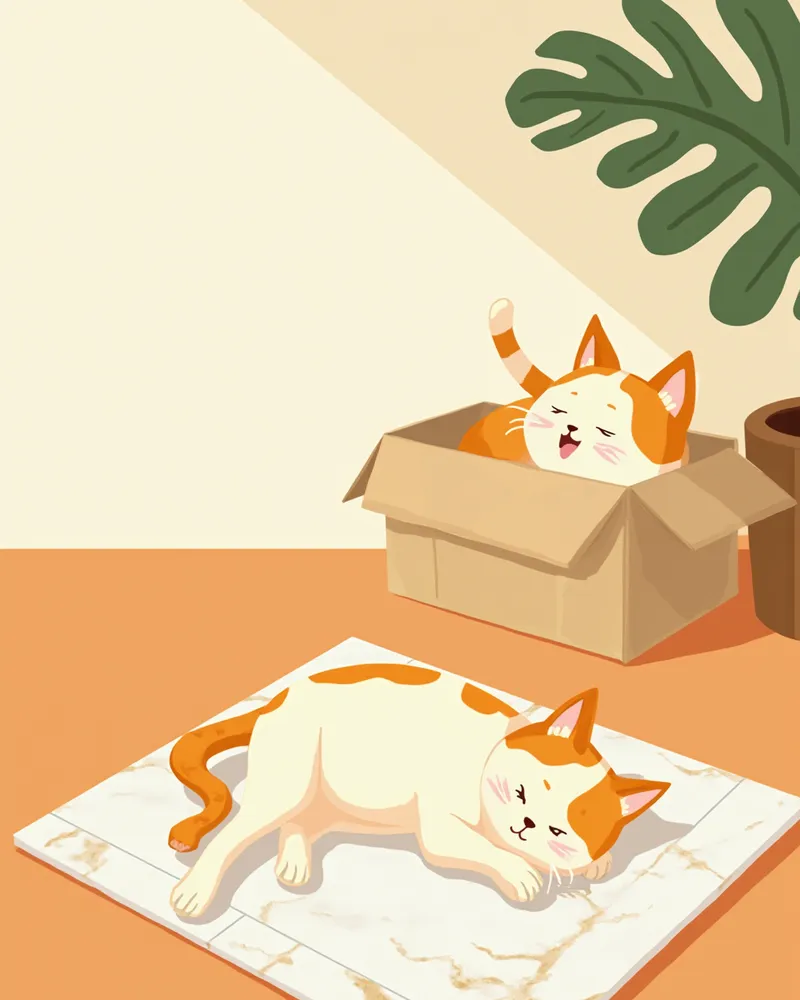
Cooling Item Comparison
| Item | Marble cooling mat | Aluminum plate | Gel cooling mat | Tile floor |
|---|---|---|---|---|
| Cooling effect | Moderate | Strong | Strong | Moderate |
| Duration | Continuous | Continuous | 2–3 hours | Continuous |
| Chewing risk | False | False | True | False |
| Ease of maintenance | Easy | Easy | Difficult | Easy |
| Recommendation level | High | High | Low | High |
Gel cooling mats are not recommended because if the cat chews it and the contents leak, it can cause digestive problems.
Heatstroke Suspected Signs Checklist
Pay Special Attention to Brachycephalic Breeds, Senior Cats, and Cats with Diseases
Brachycephalic breeds such as Persians, Himalayans, and Exotic Shorthairs have anatomical features like narrowed nostrils and elongated soft palates that make it difficult for them to dissipate heat, putting them at a higher risk of heatstroke even at moderate temperatures. Senior cats aged 11 years or older, as well as those with heart disease, kidney disease, or obesity, are also considered high-risk. In these cases, keep the indoor temperature below 24°C and limit outdoor activities or travel to the cooler morning and evening hours. Never leave your cat alone in a vehicle, even for a few minutes. The interior of a closed car can heat up rapidly and become extremely dangerous, even if the outside temperature seems mild.
Reviewed by a veterinarian

Dr. Tony — Punnawat Phongkittirak
VeterinarianA veterinarian who majored in veterinary medicine at Khon Kaen University, Thailand, and completed the IVSA program at North Carolina State University in the United States. Drawing on clinical experience at animal hospitals, he works in the pet healthcare field and is dedicated to building a digital care environment that connects pet parents with veterinarians.
Reviewed 2026-04-19
Frequently Asked Questions
Is it okay to leave the air conditioner running 24 hours a day?
Will shaving your cat’s summer coat help?
Wouldn't leaving the window open improve ventilation?
Will a fan alone be enough?
What should I do if my pet isn’t drinking enough water in the summer?
Share
Related Guides

Primary vs. Secondary Veterinary Hospitals: A Comparison
5 Easy-to-Raise Cat Breeds for First-Time Owners — Grooming Difficulty Comparison

Top 7 Short-Legged Dog Breeds

How Many Litter Boxes for Cats? — FLUTD Prevention, Environment and Stress Management

Do Indoor Cats Need Deworming? — Risks of Roundworms and Tapeworms and Recommended Schedules by Age

First Month Puppy Adoption Checklist — Vet Visit, Vaccination, and Socialization

Do Indoor Cats Need Vaccines? — What Are the Essential Recommended Vaccinations?
Cat Neutering Timing — Lifelong Health Benefits of Surgery Before the First Heat Cycle

When Is the Best Time to Neuter a Male Dog? — Comparing Effects of Early vs. Post-Growth Timing
Timing of Spaying Your Female Dog — A Guide to Deciding Before or After the First Heat Cycle
References
[1] Little SE, The Cat: Clinical Medicine and Management, 2nd Edition, Chapter on Environmental and Life Stage Health Care, Elsevier
[2] Rodan I, Heath S, Feline Behavioral Health and Welfare, Saunders
[3] Ettinger SJ, Textbook of Veterinary Internal Medicine, Chapter on Hyperthermia and Heat-Related Illness