Like
Share
멍실장
강아지 회충(톡소카라) 감염과 치료

Puppy Roundworm (Toxocara) Infection and Treatment

DigestiveDiseasesMeongsiljang Veterinary Advisory Board

Roundworms (Toxocara) are common intestinal parasites that live in a dog’s small intestine. They pose a particular risk to puppies and can be transmitted to humans, making regular deworming essential.

What Are Puppy Roundworms (Toxocara)?

The appearance of a puppy with a distended belly
Roundworms (Toxocara canis) are common nematode parasites that live in a puppy’s small intestine and steal nutrients. What’s critical to know is that they can be passed directly to newborn puppies through the placenta and mother’s milk, so many puppies are already infected by just two weeks of age. If symptoms like diarrhea, vomiting, a pot-bellied appearance, or poor growth persist for more than two to three days, take your puppy to the vet right away for a fecal exam.

How Do Roundworms Infect Puppies?

Puppies can contract roundworms through four main routes. First, and most commonly, infection occurs in utero when the parasite crosses the placenta from an infected mother. Second, puppies can become infected through their mother’s milk during nursing. Third, ingestion or licking of worm eggs shed in the environment leads to infection. Fourth, infection can occur if a puppy ingests paratenic hosts such as rodents or insects. Because worm eggs can survive in soil for several months, even licking their paws after a walk poses a risk of infection.

Key Symptoms Not to Miss

Puppies with roundworm infections may appear healthy at first glance, but closer observation reveals telltale signs.
Pot-bellied appearance: Malnutrition causes the abdomen to swell and protrude.
Weight loss: The puppy fails to gain weight despite eating well.
Diarrhea and vomiting: In severe cases, white, spaghetti-like worms may be visible in vomit.
Dull, rough coat: The fur loses its shine and becomes dry and brittle.
Coughing: Larvae migrating through the lungs can trigger a cough.
Changes in appetite: The puppy may suddenly refuse food or, conversely, eat excessively.
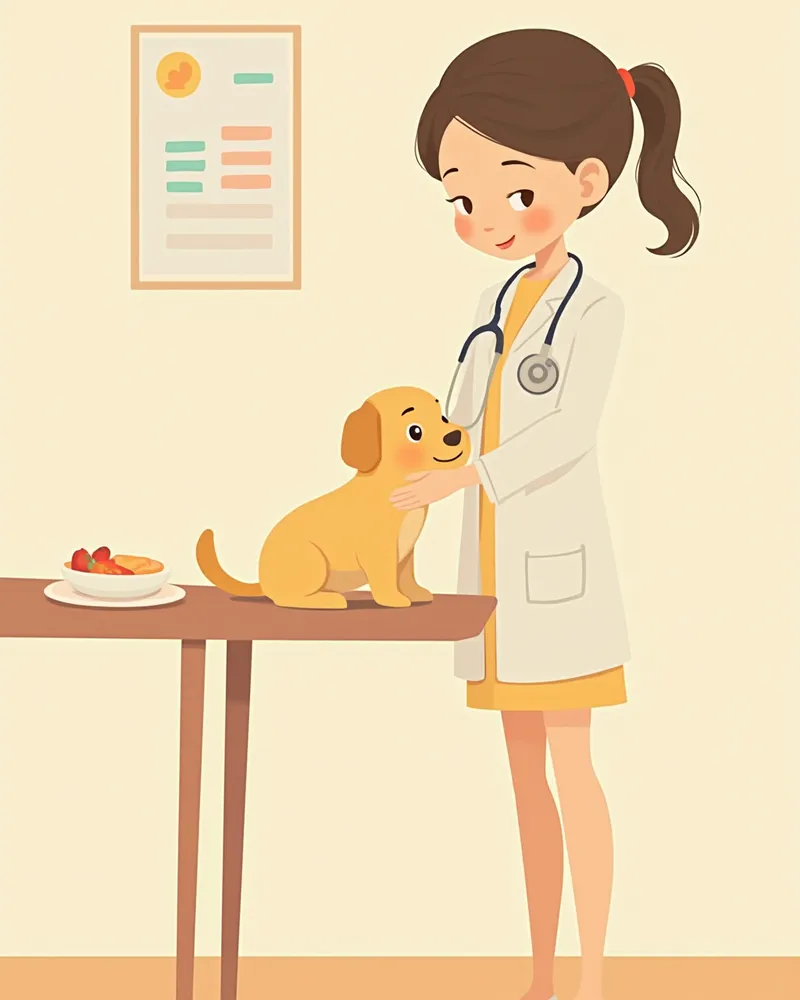
A veterinarian gently palpating a puppy’s abdomen.

When to Go to the Vet Immediately

When roundworms multiply to the point of filling the intestines, they can cause intestinal obstruction or perforation. This is an emergency if severe abdominal distension is accompanied by difficulty breathing, if white, noodle-like worms are visible in the stool or vomit, or if a puppy under two months of age appears lethargic and shows signs of dehydration. Because young puppies can deteriorate rapidly, their condition can change significantly within hours.

How Is Diagnosis Performed?

Roundworm infections are diagnosed through fecal examinations. The most common method is the fecal flotation test (either centrifugal or simple flotation), which involves directly observing worm eggs under a microscope. However, in very young puppies, the worms may not yet have reached the egg-laying stage, so a single negative result does not completely rule out infection. For this reason, veterinarians often repeat fecal tests multiple times (usually around three) over a 5- to 7-day period. If suspicion remains, empirical deworming may be administered based on the puppy’s symptoms and age. In cases where adult worms are expelled through vomit or feces, they can be seen with the naked eye. These nematodes are long and thick, resembling strands of white spaghetti, making them relatively easy to spot visually.

Treatment — Deworming Medication and Management

The cornerstone of treatment is deworming medication. Because the spectrum of efficacy varies by active ingredient, your veterinarian will select the most appropriate product based on your dog’s specific condition.
Fenbendazole: A broad-spectrum deworming agent recommended in veterinary textbooks, also used in protocols to prevent fetal infection in pregnant dogs.
Pyrantel: A fundamental ingredient considered relatively safe for use in puppies.
Milbemycin/Moxidectin: Broad-spectrum agents included in heartworm preventives that are also effective against roundworms.
Treatment is not a one-time event. Even if adult worms are eliminated, larvae hiding within tissues can survive; therefore, the standard protocol typically involves repeating the medication approximately four times at two-week intervals. Your veterinarian will determine the precise dosage and schedule based on your dog’s weight.
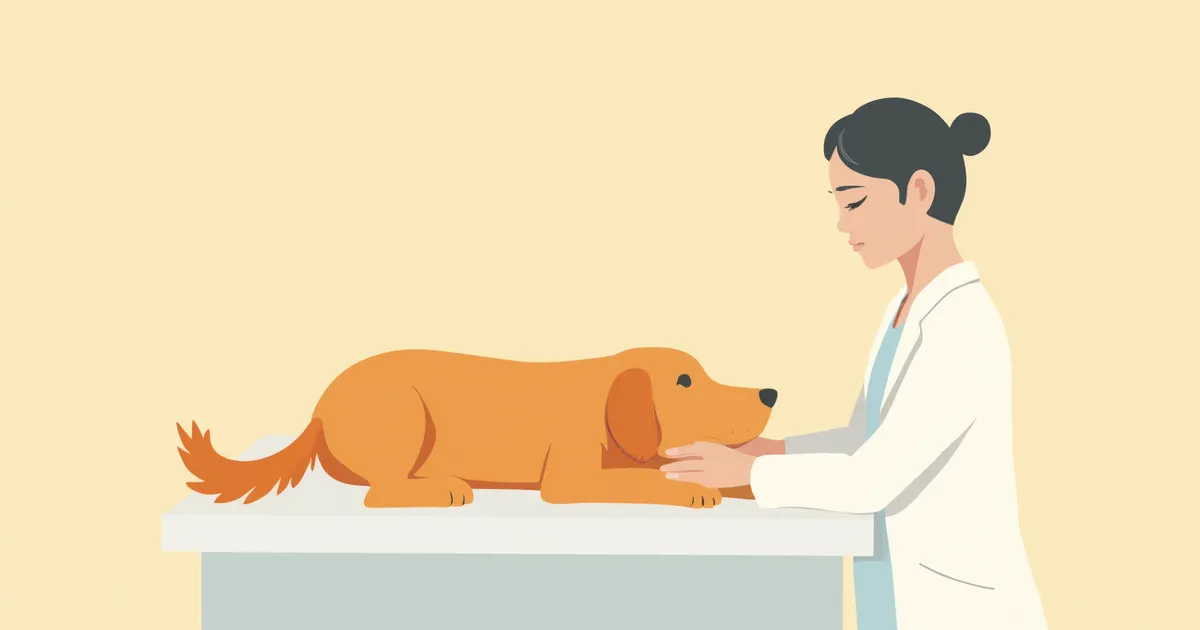
A veterinarian administering deworming medication to a puppy.

Home Care Points

Roundworm eggs can survive in the environment for months, so environmental management is just as important as treatment. Clean up feces immediately after each bowel movement, and wash your dog’s bedding and any fabrics it uses in hot water. After walks, wipe your dog’s paws with a wet wipe and prevent it from licking dirt or sand. To prevent reinfection, deworm all other pets living in the same household. As a zoonotic disease that can rarely be transmitted to humans, always wash your hands thoroughly after handling feces.

Special Precautions for Pregnant Dogs and Newborn Puppies

Larvae that have been dormant in the mother’s body become active during the late stages of pregnancy and can cross the placenta to infect the puppies. Therefore, pregnant dogs should follow a deworming protocol from late pregnancy through the nursing period, under veterinary guidance. Puppies typically begin their first deworming at two weeks of age, with treatments every two weeks until they are two months old, and then once a month thereafter. Because young puppies are at a higher risk of intestinal blockage, it is crucial to adhere strictly to this schedule.

Reviewed by a veterinarian

Dr. Tony — Punnawat Phongkittirak

Dr. Tony — Punnawat Phongkittirak

Veterinarian

A veterinarian who majored in veterinary medicine at Khon Kaen University, Thailand, and completed the IVSA program at North Carolina State University in the United States. Drawing on clinical experience at animal hospitals, he works in the pet healthcare field and is dedicated to building a digital care environment that connects pet parents with veterinarians.

Frequently Asked Questions

Can it be transmitted to humans?
Yes, although rare, it can be transmitted to humans. If roundworm eggs enter the human body, the larvae can migrate to the liver, lungs, and eyes, causing a condition known as toxocariasis. Young children are particularly at risk, so it is essential to wash your hands after handling feces and to keep up with regular deworming.
Will giving heartworm medication also prevent roundworms?
Heartworm preventives containing ingredients like milbemycin, moxidectin, and selamectin are also known to be effective against roundworms. However, the range of worms each product covers varies, so it's important to consult with your veterinarian to choose the right one for your pet.
Is one treatment enough to cure it?
No, that’s not quite right. Even if the adult worms are killed, the larvae hiding in the tissues can survive, so we usually repeat the treatment about four times at two-week intervals. Additionally, since reinfection can occur from eggs remaining in the environment, adult dogs also need regular deworming care.
I found worms in my pet’s stool—are they already dead?
Seeing worms in your pet’s stool after deworming is a sign that the medication is working. However, since some worms may still remain in the intestines, please do not stop treatment on your own—follow the full schedule prescribed by your veterinarian.
Do adult dogs also need regular deworming?
Yes, adult dogs can also become reinfected at any time through walks or contact with contaminated objects. We recommend more frequent deworming for dogs with extensive outdoor activity, and regular deworming even for those primarily kept indoors. Please consult your veterinarian to determine the appropriate deworming interval based on your dog's specific living environment.

Share

Related Guides

References

[1] Taylor M.A., Coop R.L., Wall R.L., Veterinary Parasitology, 5th Edition, Wiley-Blackwell, 2024

[2] Ettinger S.J., Feldman E.C., Textbook of Veterinary Internal Medicine, 8th Edition, Elsevier, 2017

[3] CDC, Toxocariasis - Parasites, Centers for Disease Control and Prevention, 2023

This information is based on veterinary literature and does not replace diagnosis or treatment. Please consult a veterinarian for specific health concerns.

Metapet Co., Ltd. | CEO: Park Sung-yong | Business Reg. No. 417-88-02562 | Seoul, South Korea | Customer Center

Puppy Roundworm (Toxocara): Symptoms and Treatment | Meongsiljang