
Like
Share
멍실장
강아지 진행성망막위축 증상과 원인, 진단·치료와 관리 포인트 총정리

If Your Dog Keeps Bumping Into Things at Night — Symptoms and Progression Stages of Progressive Retinal Atrophy

Eye HealthDiseasesMeongsiljang Veterinary Advisory Board

Progressive Retinal Atrophy (PRA) in dogs is an eye condition in which the retina’s light-sensitive cells degenerate due to genetic factors, leading to vision loss that progresses from night blindness to complete blindness. While there is no cure, early detection and environmental management can help maintain a good quality of life.

What Is Progressive Retinal Atrophy in Dogs?
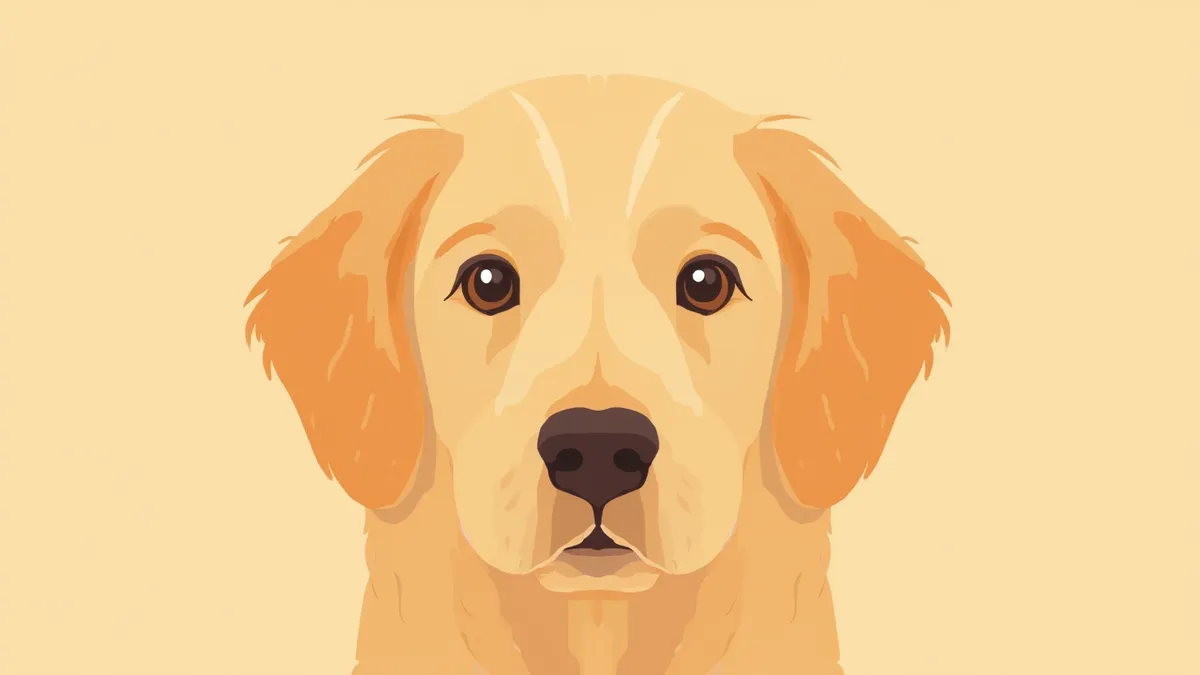
Progressive Retinal Atrophy in Dogs — A Genetic Eye Disease Caused by the Degeneration of Retinal Photoreceptor Cells
Progressive Retinal Atrophy (PRA) in dogs is a hereditary eye disease in which the photoreceptor cells of the retina gradually degenerate due to genetic factors, leading to progressive vision loss. It typically affects both eyes simultaneously. The most critical point to understand is that there is currently no cure. The condition often begins with decreased night vision and, depending on the onset type, can progress to complete blindness over approximately 1–5 years in early-onset cases or 6–8 years in late-onset cases. It occurs more frequently in certain breeds, such as Labrador Retrievers, Golden Retrievers, Poodles, and Irish Setters. Because genetic testing can identify the condition beforehand, early intervention is possible.

Causes and Pathogenesis

Progressive retinal atrophy is most commonly inherited as an autosomal recessive trait. It occurs in puppies that inherit defective genes from both parents and is not caused by external trauma or infection. The rod cells in the retina, which detect light in dark environments, degenerate first, followed by damage to the cone cells responsible for detecting bright light, ultimately leading to complete blindness. The specific gene mutations associated with the condition vary by breed, and the age of onset can range from early stages in young dogs to later stages in adult dogs.

Key Symptoms Checklist — How It Presents

Night blindness (nyctalopia): Your pet may pace in circles or bump into objects in familiar spaces when it’s dark. Dilated pupils: The pupils appear larger and more widely open than usual. Increased eye shine: The eyes seem to glow excessively in low light. Disorientation in unfamiliar environments: Even during the day, your pet may lose their sense of direction in new places. Secondary cataracts: As the condition progresses, the lens may become cloudy. In the early stages, there’s typically no pain, redness, or tearing, making it difficult for owners to notice. Be alert if your pet suddenly refuses to walk during evening strolls or hesitates on stairs.
Symptoms of Progressive Retinal Atrophy in Dogs — Dilated Pupils and Decreased Night Vision

See a Veterinarian Immediately If You Notice These Symptoms

If your pet suddenly starts bumping into furniture in the evening or in dimly lit areas, or begins refusing nighttime walks, they should be seen by a veterinary ophthalmologist within 48 hours. Night blindness can be a sign of various retinal diseases, including progressive retinal atrophy and sudden acquired retinal degeneration (SARD), so it’s important not to rely on self-diagnosis.

How Is It Diagnosed?

Diagnosing progressive retinal atrophy (PRA) requires a veterinary ophthalmologist to combine several tests.
Fundoscopic exam: The pupils are dilated so the retina can be directly examined.
Electroretinography (ERG): This measures the electrical responses of retinal photoreceptor cells to quantify functional abnormalities.
Genetic (DNA) testing: A blood sample or oral swab is used to detect genetic mutations associated with PRA.
Genetic testing can identify carriers even in young dogs that show no symptoms. For high-risk breeds, we strongly recommend having this test done once around the age of two.

Treatment Options — What Can Be Done Now

There is currently no cure for progressive retinal atrophy. The goal of treatment is to slow the progression of the disease and protect remaining vision as much as possible.
Antioxidant supplements: Products containing antioxidants may be recommended to help slow the degeneration. However, please remember that these are intended only to delay progression and cannot prevent blindness itself.
Management of secondary cataracts: If cataracts develop, surgery (phacoemulsification) may be considered. However, if retinal function has already been lost, the potential for vision recovery is limited.
Regular follow-up monitoring: It is important to periodically monitor changes in retinal function through fundus examinations and electroretinography (ERG). If you have breeding plans, consult with your veterinarian based on genetic test results.
A veterinarian performing a fundus examination on a puppy’s eyes

Home Care — Living Happily Even After Blindness

Even if your dog goes blind from progressive retinal atrophy, they can adapt well using their sense of smell and hearing. You just need to make a few adjustments to their environment.
Keep furniture in place: Maintain familiar pathways. Sudden changes can be confusing.
Mark hazardous areas: Use mats with different textures or scents near stairs to signal danger zones.
Continue leash walks: Even without sight, your dog can still enjoy plenty of stimulation through sniffing.
Train verbal cues: Teaching directional commands like “right,” “left,” and “careful” makes outings safer.
Regular eye check-ups every six months: Have your vet monitor eye pressure and retinal health.
Even blind dogs can live happily with leash walks.

Genetic Testing Is Essential for Owners of These Breeds

The following breeds have been reported to have a higher incidence of progressive retinal atrophy. Even in the absence of symptoms, we strongly recommend genetic testing during puppyhood. Labrador Retriever, Golden Retriever, Chesapeake Bay Retriever, Collie, Irish Setter, Miniature Schnauzer, Dachshund, American Cocker Spaniel, Miniature and Toy Poodle, Samoyed, Siberian Husky If you are planning to breed, it is essential to first determine carrier status and avoid breeding two carriers together. Accurate genetic testing helps inform breeding strategies aimed at reducing the prevalence of the condition within the breed.

Reviewed by a veterinarian

Dr. Tony — Punnawat Phongkittirak

Dr. Tony — Punnawat Phongkittirak

Veterinarian

A veterinarian who majored in veterinary medicine at Khon Kaen University, Thailand, and completed the IVSA program at North Carolina State University in the United States. Drawing on clinical experience at animal hospitals, he works in the pet healthcare field and is dedicated to building a digital care environment that connects pet parents with veterinarians.

Frequently Asked Questions

Is progressive retinal atrophy curable?
There is currently no cure. Products containing antioxidants may be recommended to slow the progression of the disease, but they cannot prevent blindness or restore already damaged retinal cells. Therefore, early diagnosis and regular monitoring are essential to preserve remaining vision as much as possible.
Can dogs still live well after going blind?
They can live quite comfortably. Their sense of smell and hearing compensate for their lack of vision. By keeping the furniture arrangement consistent and training them to respond to verbal cues, most dogs adapt surprisingly quickly. If signs of anxiety or depression appear, consulting a veterinary behaviorist can be helpful.
How are cataracts and progressive retinal atrophy different?
Cataracts are a condition in which the lens becomes cloudy, while progressive retinal atrophy (PRA) is a disease characterized by the degeneration of the retina’s photoreceptor cells. As PRA progresses, secondary cataracts often develop. Although cataract surgery is an option, its effectiveness is limited if retinal function has already been lost.
Where can I get a genetic test done?
A veterinary ophthalmologist will collect a blood sample or an oral swab and send it to a specialized genetic testing laboratory. Since the genetic variants that can be tested vary by breed, it’s best to consult with your veterinarian to determine the most appropriate test for your pet.
Is it safe to breed a dog with progressive retinal atrophy?
Breeding from carriers or affected dogs is not recommended. If you are planning to breed, it is essential to confirm carrier status through genetic testing and consult with a veterinarian for genetic counseling beforehand. Responsible breeding is key to reducing the incidence of PRA within the breed.

Share

Related Guides

References

[1] Clements PJ, Sargan DR, Gould DJ, Petersen-Jones SM. Recent advances in understanding the spectrum of canine generalised progressive retinal atrophy. J Small Anim Pract. 1996;37(4):155–162.

[2] Downs LM, Hitti R, Pregnolato S, Mellersh CS. Genetic screening for PRA-associated mutations in multiple dog breeds shows that PRA is heterogeneous within and between breeds. Vet Ophthalmol. 2014;17(2):126–130.

[3] Narfström K. Hereditary and congenital ocular disease in the canine. In: Clinical Atlas of Canine and Feline Ophthalmic Disease, 2nd Ed. Wiley-Blackwell.

This information is based on veterinary literature and does not replace diagnosis or treatment. Please consult a veterinarian for specific health concerns.

Metapet Co., Ltd. | CEO: Park Sung-yong | Business Reg. No. 417-88-02562 | Seoul, South Korea | Customer Center

Dog Bumping Into Things at Night? PRA Symptoms & Stages | Meongsiljang