
Like
Share
멍실장
강아지 면역매개성다발성관절염 증상과 원인, 진단·치료와 관리 포인트 총정리

If Your Dog Has Swollen Joints and a Fever — Symptoms and Treatment of Immune-Mediated Polyarthritis

JointDiseasesMeongsiljang Veterinary Advisory Board

Canine immune-mediated polyarthritis is an autoimmune disease in which the immune system mistakenly attacks two or more joints simultaneously. Early diagnosis and immunosuppressive therapy are key, and it’s essential to understand long-term management strategies to prevent relapse.

What Is Immune-Mediated Polyarthritis?
A veterinarian examining a dog with inflammation in multiple joints
Immune-mediated polyarthritis in dogs is an autoimmune disease in which the immune system mistakenly attacks the dog’s own joint tissues, causing simultaneous inflammation in two or more joints. The key is to start immunosuppressive therapy early. If left untreated, joint damage can progressively worsen and become chronic, so if you notice swelling or signs of pain in multiple joints at once, seek veterinary care immediately.

Causes and Types

Immune-mediated polyarthritis is broadly categorized into two types, depending on whether the articular cartilage is destroyed.
Non-erosive: In this type, the articular cartilage remains intact. It is the more common form of polyarthritis and is often primary (idiopathic), meaning the cause is unknown. However, it can also be triggered by issues elsewhere in the body, such as infections, medications, vaccines, or tumors.
Erosive: This type involves the progressive destruction of the articular cartilage. Rheumatoid arthritis falls into this category.
While any breed can be affected, breed-associated polyarthritis has been reported in certain breeds, such as Akitas and Greyhounds.

Key Symptoms Checklist

Swelling in multiple joints: Rather than just one joint, two or more joints may swell and feel warm to the touch.
Fever: A systemic inflammatory response often causes a higher-than-normal body temperature, and in some cases, periodic fevers that do not respond to antibiotics may occur.
Abnormal gait: Your pet may limp, have difficulty standing up, or walk awkwardly across multiple limbs.
Decreased appetite and lethargy: They may eat less, appear weak and listless, or show pronounced lethargy without other obvious symptoms.
Joint pain: Touching the affected joint may cause them to flinch or show signs of discomfort.
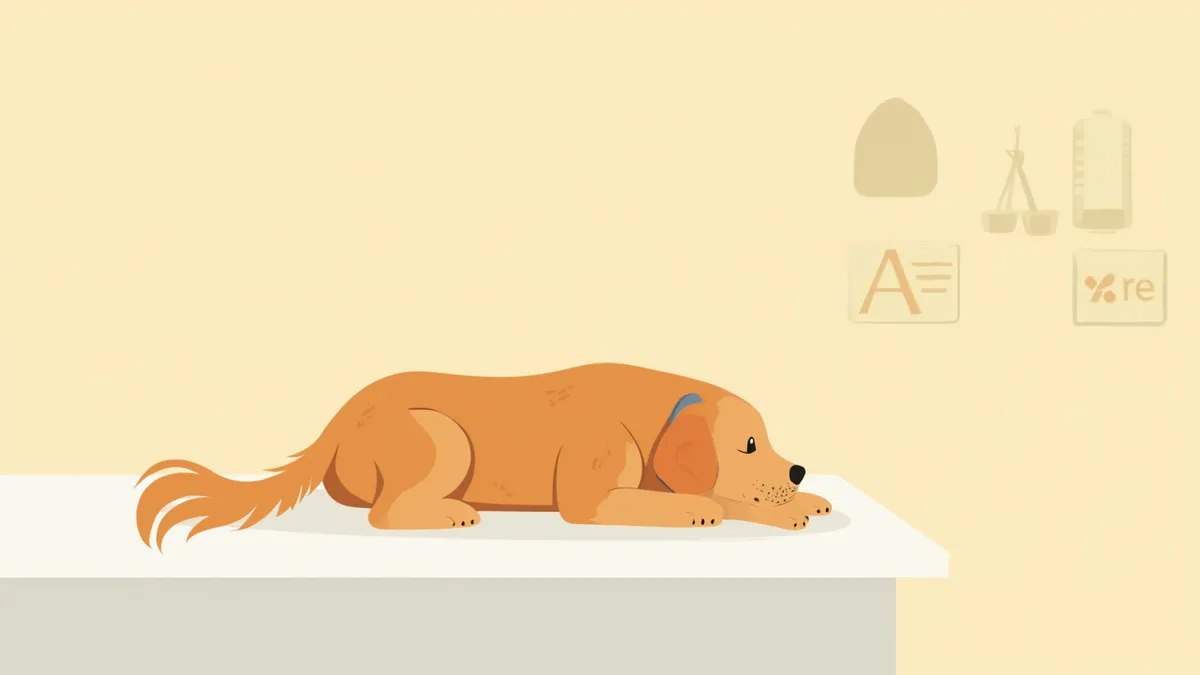
A dog lying listlessly due to joint pain

When to Visit the Clinic Immediately

If your pet shows any of the following symptoms, please visit the clinic on the same day, as their condition can deteriorate rapidly: • A high fever of 39°C (102.2°F) or higher lasting more than 24 hours • Inability to walk on all four legs or stand up • Severe swelling and redness in the joints • Refusal to eat or drink for more than 12 hours

How Is It Diagnosed?

Diagnosis is made by combining the results of several tests.
Blood tests: We check inflammatory markers and autoimmune antibodies.
Synovial fluid analysis: A small sample of fluid is drawn from the joint to examine cellular components and rule out infection. In immune-mediated cases, white blood cell counts are typically elevated.
X-rays and MRI: These imaging studies assess the extent of joint destruction (erosive changes) and the scope of inflammation.
Infection screening: We also test for tick-borne diseases such as ehrlichiosis and Lyme disease, as they can present with similar symptoms.

Treatment — Step-by-Step Approach

The cornerstone of treatment is immunosuppression. Your veterinarian will tailor a combination of the following approaches based on your pet’s condition: Step 1 — Corticosteroids: Prednisolone-based medications are used to rapidly reduce inflammation. Step 2 — Additional Immunosuppressants: If corticosteroids alone are insufficient, drugs such as azathioprine or cyclosporine may be added. Concurrent Treatment of Underlying Causes: If an infection or tumor is driving the condition, targeted therapy for that cause is administered alongside immunosuppression. Long-Term Maintenance Therapy: Even after symptoms improve, many pets require ongoing maintenance doses to keep the condition under control.
A puppy receiving joint treatment at a veterinary clinic

Home Care Tips

Do not stop medication on your own: Even if symptoms appear to improve, discontinuing medication without your veterinarian’s guidance significantly increases the risk of recurrence.
Weight management: Excess weight places additional stress on the joints, so it is important to maintain a healthy body weight.
Low-impact exercise: Activities that are gentle on the joints, such as swimming or short walks on flat ground, are recommended.
Slip prevention: Slippery floors can cause impact on the joints, so please use non-slip mats.
Regular blood tests: Immunosuppressants such as azathioprine can cause side effects including bone marrow suppression and hepatotoxicity; therefore, blood cell counts and liver function values should be monitored periodically during long-term use.
A puppy receiving joint care at home and taking medication

Relapse and Long-Term Management Precautions

Immune-mediated polyarthritis is a condition that tends to relapse relatively often, even after symptoms improve with treatment. Even if your pet appears to have fully recovered, abruptly stopping immunosuppressive therapy can significantly increase the risk of relapse, so it’s important not to do so. If your dog belongs to a breed known to be predisposed to polyarthritis, such as the Akita or Greyhound, or if your pet has a history of relapses, more frequent check-ups are recommended. In cases where relapses occur repeatedly, long-term maintenance therapy may be necessary to keep the symptoms under control.

Reviewed by a veterinarian

Dr. Tony — Punnawat Phongkittirak

Dr. Tony — Punnawat Phongkittirak

Veterinarian

A veterinarian who majored in veterinary medicine at Khon Kaen University, Thailand, and completed the IVSA program at North Carolina State University in the United States. Drawing on clinical experience at animal hospitals, he works in the pet healthcare field and is dedicated to building a digital care environment that connects pet parents with veterinarians.

Frequently Asked Questions

Is immune-mediated polyarthritis curable?
Rather than aiming for a complete cure, the goal is remission, meaning the disappearance of symptoms. Remission can be achieved using steroids alone or in combination with immunosuppressive drugs, but relapse is common once treatment is discontinued. Therefore, many pets require long-term maintenance therapy, and it’s essential to consistently monitor for any signs of recurrence.
Is it safe to give steroids long-term?
Long-term use can lead to side effects such as weight gain, elevated liver enzymes, and a weakened immune system. That’s why your veterinarian will regularly monitor blood work to adjust the dosage as needed. Please follow your vet’s instructions carefully, as stopping the medication on your own can be dangerous.
Which breeds are more prone to developing it?
Polyarthritis has been reported in certain breeds, such as Akita and Greyhound. However, since it can occur in any breed, it’s important to have your pet evaluated if symptoms appear, regardless of breed.
How are they related to tick-borne diseases?
Tick-borne infections like Borrelia (Lyme disease) can cause similar joint symptoms or trigger immune-mediated arthritis. Therefore, it is essential to rule out these infections during diagnosis. If it is unclear whether the condition is immune-mediated or tick-borne, veterinarians may initially treat with antibiotics such as doxycycline.
How can you tell the difference from infectious arthritis?
Infectious arthritis occurs when bacteria or other pathogens directly invade the joint, whereas immune-mediated arthritis is caused by a malfunction of the immune system. If joint infection is suspected, we differentiate between the two through joint fluid analysis and culture testing. Because the treatment approaches are entirely different, an accurate differential diagnosis is crucial.

Share

Related Guides

References

[1] Ettinger SJ, Feldman EC. Textbook of Veterinary Internal Medicine, 8th ed. Chapter 256: Immune-mediated joint disease. Elsevier, 2017.

[2] Couto CG, Nelson RW. Small Animal Internal Medicine, 5th ed. Chapter: Polyarthritis. Elsevier, 2014.

[3] Bennett D. Immune-mediated and infective arthritis. In: Ettinger SJ (ed) Textbook of Veterinary Internal Medicine, 7th ed. Elsevier, 2009.

[4] Textbook of Veterinary Orthopaedic Surgery. Chapter 12.3: Osteoarthritis and inflammatory joint disease. Wiley-Blackwell, 2022.

This information is based on veterinary literature and does not replace diagnosis or treatment. Please consult a veterinarian for specific health concerns.

Metapet Co., Ltd. | CEO: Park Sung-yong | Business Reg. No. 417-88-02562 | Seoul, South Korea | Customer Center

Dog Immune-Mediated Polyarthritis: Symptoms & Treatment | Meongsiljang