
If You Hear a Heart Murmur in Your Puppy — Causes and Treatment Timing for Patent Ductus Arteriosus (PDA)
Patent ductus arteriosus (PDA) in puppies is a congenital heart condition where a blood vessel that should close at birth remains open, placing extra strain on the heart. Early detection and surgery can lead to a complete cure, so it's important to be familiar with the symptoms and treatment options.
What Is Patent Ductus Arteriosus? A Congenital Heart Disease in Puppies

Why Does It Occur? — Causes and Pathogenesis of Patent Ductus Arteriosus
Suspect PDA If You See These Symptoms — Key Symptom Checklist

Go to the Emergency Room Immediately! Never Wait If You See These Symptoms
If your pet suddenly collapses or loses consciousness, experiences severe respiratory distress causing the entire body to tremble, or shows differential cyanosis (bluish discoloration of the rear body parts, including the hind legs and tail mucous membranes) due to a reversed patent ductus arteriosus (PDA), take them to a 24-hour emergency veterinary clinic immediately. Do not miss the critical window for treatment.
How Is It Diagnosed? — Overview of Diagnostic Tests
How Is It Treated? — Catheter-Based Procedure vs. Surgical Repair
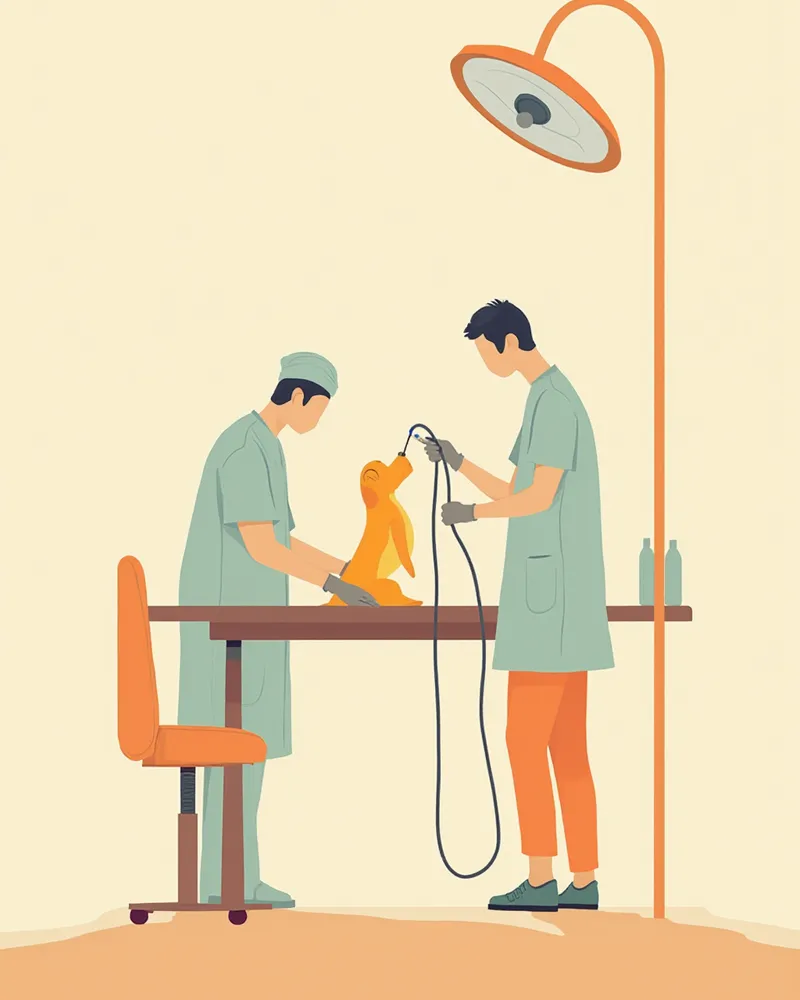
How to Care for Your Pet at Home After Surgery

If Your Dog Is One of These Breeds, Request Cardiac Auscultation at the First Postnatal Checkup
Poodles, Maltese, Pomeranians, Collies, Chihuahuas, German Shepherds, Cocker Spaniels, and Welsh Corgis are reported to have a relatively higher risk of patent ductus arteriosus. It is especially more common in females. Be sure to request a cardiac auscultation during your puppy’s first vaccination visit at two months of age. If a continuous heart murmur is detected during auscultation, it is advisable to promptly undergo an echocardiogram.
Reviewed by a veterinarian

Dr. Tony — Punnawat Phongkittirak
VeterinarianA veterinarian who majored in veterinary medicine at Khon Kaen University, Thailand, and completed the IVSA program at North Carolina State University in the United States. Drawing on clinical experience at animal hospitals, he works in the pet healthcare field and is dedicated to building a digital care environment that connects pet parents with veterinarians.
Reviewed 2026-05-28
Frequently Asked Questions
What happens if a patent ductus arteriosus is left untreated surgically?
At what age is it best to have surgery?
Which is better, catheter placement or thoracotomy?
Should my pet continue taking heart medication after surgery?
Is patent ductus arteriosus hereditary? Can it occur in sibling dogs as well?
Share
Related Guides
Coenzyme Q10 Benefits and Administration Guide

Dog Pulmonary Edema Warning — 7 Best Diuretics (Furosemide) for Heart Management
7 Best Prescription Diets for Feline Heart Disease Recommended by Veterinarians — Criteria for Choosing Low-Sodium Food

Treatment of Feline Otitis Externa by Type

Aspiration Pneumonia in Dogs: Symptoms, Causes, Diagnosis, Treatment, and Management Tips

Feline Calicivirus: Symptoms, Causes, Diagnosis, Treatment, and Management Essentials

Comprehensive Guide to Health Management, Symptoms, Causes, Diagnosis, Treatment, and Care Points for Dogs During Travel and Transport
Comprehensive Guide to Monitoring Side Effects After Cat Vaccination: Symptoms, Causes, Diagnosis, Treatment, and Management
Dog Scabies (Sarcoptic Mange): Symptoms, Causes, Diagnosis, Treatment, and Care Essentials

Cat Tongue and Lip Lesions — Causes, Symptoms, Diagnosis, and Treatment
References
[1] Chetboul V, et al. Textbook of Cardiovascular Medicine in Dogs and Cats. Éditions du Point Vétérinaire, 2016.
[2] Schaer M (ed.). Clinical Medicine of the Dog and Cat, 4th Ed. CRC Press, 2022.
[3] Bussadori C, Carminati M, Domenech O. Transcatheter closure of a perimembranous ventricular septal defect in a dog. J Vet Intern Med, 2007, 21:1396–1400.
[4] Bussadori C, Domenech O, Longo A, et al. Percutaneous catheter-based treatment of pulmonic stenosis and patent ductus arteriosus in a dog. J Vet Cardiol, 2002, 4:29–34.