
Like
Share
멍실장
강아지 구강 흑색종 — 입안 검은 점 의심해야 하는 경우

If Your Dog’s Gums Have Turned Black — Signs of Suspected Oral Melanoma and When to Visit the Vet

Oncology/CancerDiseasesMeongsiljang Veterinary Advisory Board

Canine oral melanoma is the most common malignant tumor that develops in a dog’s mouth. New black spots on the gums or roof of the mouth, bad breath, and bleeding are signs that warrant early diagnosis.

What Is Canine Oral Melanoma?

A veterinarian's hand examining the gums of a senior dog
Canine oral melanoma is the most common form of malignant tumor affecting the oral mucosa, gums, and tongue. It originates from melanocytes, the pigment-producing cells, and progresses rapidly. Early detection is crucial. If you notice a new black spot or lump on your dog’s gums or the roof of its mouth that doesn’t disappear or grows over two weeks, have a biopsy performed at a veterinary clinic immediately. Delayed diagnosis increases the risk of metastasis to the lymph nodes and lungs, significantly limiting treatment options.

Causes and Pathogenesis

Oral melanoma is a tumor of neural crest origin that arises from the abnormal proliferation of melanocytes in the oral mucosa. The exact cause of this disease has not yet been clearly identified. Melanoma cells can exhibit a pleomorphic appearance, displaying characteristics of both epithelial and mesenchymal cells, which makes pathological examination crucial for diagnosis. Regarding breed predisposition, it is known to occur in any breed or mixed-breed dog, rather than being limited to specific breeds. It is primarily diagnosed in senior dogs, and reports indicate that dogs aged 12 years and older tend to have a poorer prognosis. There is currently no clear evidence of a significant difference in incidence between males and females.

Key Symptoms Checklist

Black spots on the gums: Newly developed pigmented masses that gradually enlarge or bleed from the surface. Bad breath: A persistent, foul odor distinct from the usual smell. Drooling: Excessive drooling from one side of the mouth, sometimes mixed with pink-tinged blood. Decreased appetite: Refusal to eat hard kibble due to pain, or chewing on only one side. Facial swelling: Asymmetrical swelling of the jaw and cheeks that is painful to the touch. Loose teeth: Teeth that were previously stable suddenly become loose as the tumor invades the jawbone. Weight loss: Rapid weight loss resulting from reduced food intake.
Comparison photos of suspected pigmented spots on a dog's gums

Visit the Vet Immediately If You See These Signs

If new black spots or lumps appear on the gums or roof of the mouth and do not disappear within 1–2 weeks, or if they are accompanied by bleeding, foul odor, or loose teeth, please visit a veterinary clinic immediately. Oral melanoma is a tumor that frequently metastasizes to the lungs; depending on the study, the reported rate of lung metastasis ranges from 14% to 67%, and lung metastasis is known to be the most common cause of death. Therefore, early detection is crucial. Even if a lesion appears to be a benign pigmented spot (freckle), it is safer to confirm its nature through a biopsy rather than making a self-diagnosis. Growling or turning the head away when the mouth is touched may also be signs of pain.

Diagnostic Methods — What Tests Are Performed?

Diagnosis proceeds in this order: physical examination, imaging studies, and then histopathology. The veterinarian first assesses the tumor’s size, location, and whether it has invaded the jawbone, and checks for metastasis to the lungs and liver with chest X-rays and abdominal ultrasound. A biopsy is essential to confirm the exact tumor type. Tumors are staged from I to IV based on size, and prognosis depends on lymph node involvement and distant metastasis. When planning surgery, a CT scan provides a three-dimensional view of the extent of jawbone invasion. Learn more in our Dog CT Scan Guide.

Treatment Options — Choices by Stage and Location
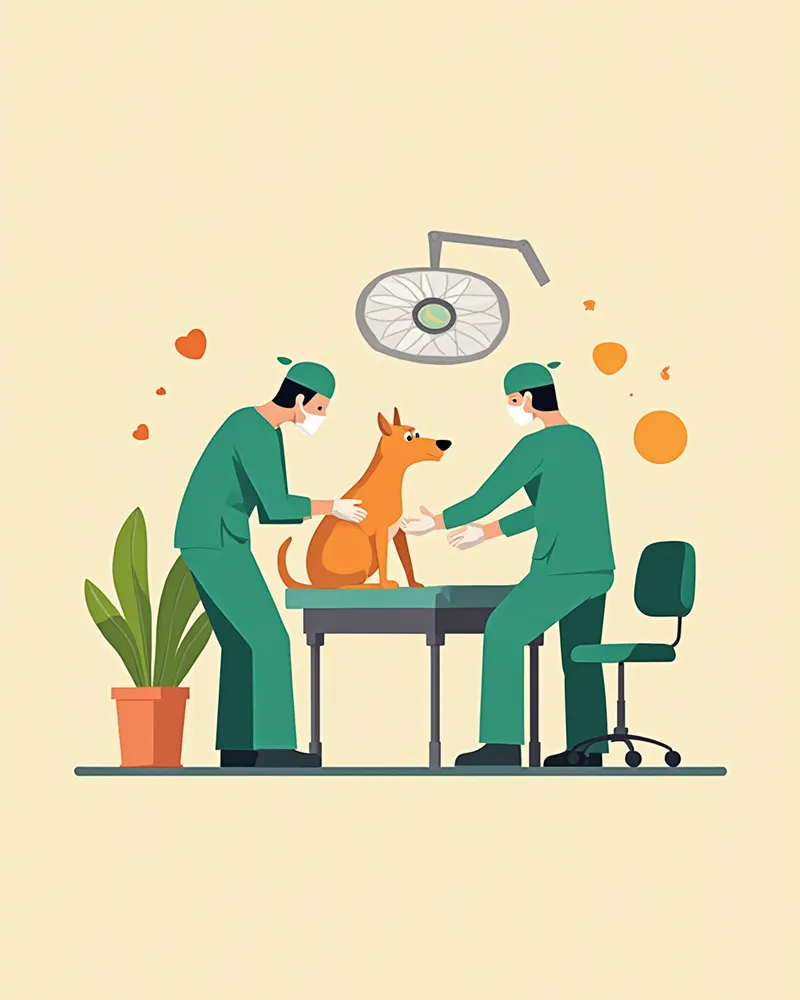
Treatment depends on the tumor stage and location.
Surgery: For localized tumors, the standard approach is wide excision, which involves removing the tumor along with a sufficient margin of surrounding healthy tissue. In cases of malignant melanoma, when resecting the jawbone, a margin of approximately 2–3 cm is maintained, and partial mandibulectomy or maxillectomy may be required depending on the location.
Radiation therapy: External beam radiation is used as an adjunctive treatment for tumors in locations where surgery is difficult or to control microscopic residual disease.
Immunotherapy: Vaccine-based immunotherapies, such as the melanoma DNA vaccine (Oncept), are attempted as adjunctive treatments, but their efficacy has not yet been fully established.
Chemotherapy: Chemotherapy is used as an adjunctive treatment when metastasis is confirmed, but its effectiveness is generally limited in melanoma.
The veterinary surgical team preparing for oral tumor surgery

Post-Surgery Home Care and Management Tips

During the recovery period after surgery or radiation therapy, feed your pet soft food cut into small pieces and gently rinse their mouth with lukewarm water after meals. Pain management medications must be administered exactly as prescribed, at the correct times. Taking photos of the gums and palate at the same time each day to document changes can help detect recurrence or metastasis early. For the first year after surgery, monitor for lung metastasis with regular check-ups and chest X-rays every one to three months. Contact your veterinarian immediately if bad breath, decreased appetite, or weight loss reappear.
Caregivers who provide soft meals to senior dogs

High-Risk Breeds and Regular Checkups

Oral melanoma can occur in any breed or mixed-breed dog, not just specific breeds. The common belief that dogs with more black pigment in their mouths are at higher risk is not firmly supported by veterinary textbooks, so it’s important to monitor your dog’s mouth carefully regardless of breed. Since oral melanoma is primarily diagnosed in senior dogs, dogs aged seven and older should have their mouths examined at least once a year, and owners should make it a habit to check their dog’s mouth weekly. Benign pigmented spots and early-stage melanoma can be difficult to distinguish with the naked eye, so if you notice any changes in shape or size, have your veterinarian evaluate them immediately.

Reviewed by a veterinarian

Dr. Tony — Punnawat Phongkittirak

Dr. Tony — Punnawat Phongkittirak

Veterinarian

A veterinarian who majored in veterinary medicine at Khon Kaen University, Thailand, and completed the IVSA program at North Carolina State University in the United States. Drawing on clinical experience at animal hospitals, he works in the pet healthcare field and is dedicated to building a digital care environment that connects pet parents with veterinarians.

Frequently Asked Questions

Are all black spots on the gums melanomas?
Not necessarily. Most black spots on the gums and roof of the mouth are benign pigmented macules (freckles). However, any new spots, or those that increase in size or are accompanied by bleeding or pain, should be evaluated with a biopsy.
Is oral melanoma curable?
If a localized tumor in stages 1 or 2 is completely removed through extensive surgical excision, long-term survival can be expected. However, the risk of metastasis is high, with studies reporting rates of 14% to 67% in organs such as the lungs, and the average survival period varies significantly depending on the stage, ranging from a few months to around two years.
Will my pet's face change significantly after surgery?
Depending on the extent of the jawbone resection, there may be some changes in appearance. However, dogs typically adapt quickly, and in most cases, eating and daily life are not significantly affected.
What are the benefits of the melanoma vaccine (Oncept)?
It’s not a treatment that directly eliminates the tumor itself, but rather an adjunctive immunotherapy used to target residual cells after surgery or radiation therapy. However, its effectiveness has not yet been fully proven, and results can vary from pet to pet.
How often should my pet have a routine checkup?
For dogs aged seven and older, regular check-ups including chest X-rays are recommended every six to twelve months. After melanoma treatment, the first year requires check-ups every one to three months, followed by exams every three to six months thereafter.

Share

Related Guides

References

[1] Withrow SJ, Vail DM, Page RL. Withrow and MacEwen's Small Animal Clinical Oncology, 6th Edition. Saunders, 2019. Chapter: Tumors of the Gastrointestinal System — Oral Tumors

[2] Schaer M. Clinical Medicine of the Dog and Cat, 4th Edition. CRC Press, 2017. Chapter 5: Diseases of the Oral Cavity and Teeth

[3] Dobson JM, Lascelles BDX. BSAVA Manual of Canine and Feline Oncology, 3rd Edition. BSAVA, 2011. Chapter: Tumours of the Oral Cavity and Oropharynx

This information is based on veterinary literature and does not replace diagnosis or treatment. Please consult a veterinarian for specific health concerns.

Metapet Co., Ltd. | CEO: Park Sung-yong | Business Reg. No. 417-88-02562 | Seoul, South Korea | Customer Center

Black Gums in Dogs: Oral Melanoma Signs & Vet Timing | Meongsiljang