Like
Share
멍실장
강아지 NT-proBNP·트로포닌 심장 마커 증상과 원인, 진단·치료와 관리 포인트 총정리

Complete Guide to Canine Cardiac Blood Tests: NT-proBNP and Troponin — From Meaning to Management

HeartDiseasesMeongsiljang Veterinary Advisory Board

NT-proBNP and troponin are key cardiac markers for early detection of heart dysfunction in dogs. Elevated levels of these markers indicate a higher likelihood of heart disease.

What Are the Canine Cardiac Markers NT-proBNP and Troponin?

A veterinarian prepares to perform a blood test on a puppy.
- NT-proBNP: This is a cardiac biomarker released when the heart muscle (primarily the ventricles) stretches or experiences increased volume or pressure load. It is a fragment produced during the breakdown of proBNP. Although it has no biological activity itself, its long half-life makes it easy to measure, so it is used as a signal of cardiac stress. - Troponin (primarily Troponin I): This is a protein released into the bloodstream when heart muscle cells are damaged. It is a highly sensitive indicator of myocardial injury and is used to assess damage to the heart muscle, such as in myocarditis. However, myocardial infarction (commonly referred to as a heart attack) is rare in dogs. Both markers are measured via blood tests and help increase or decrease the likelihood of heart disease when systemic illness is absent. Because early detection aids management, regular testing is recommended for senior dogs or high-risk breeds. However, due to significant variations among breeds and individuals, these markers alone cannot confirm a diagnosis; accuracy improves when they are comprehensively analyzed alongside clinical symptoms and imaging results.

Main Causes of Elevated Cardiac Marker Levels
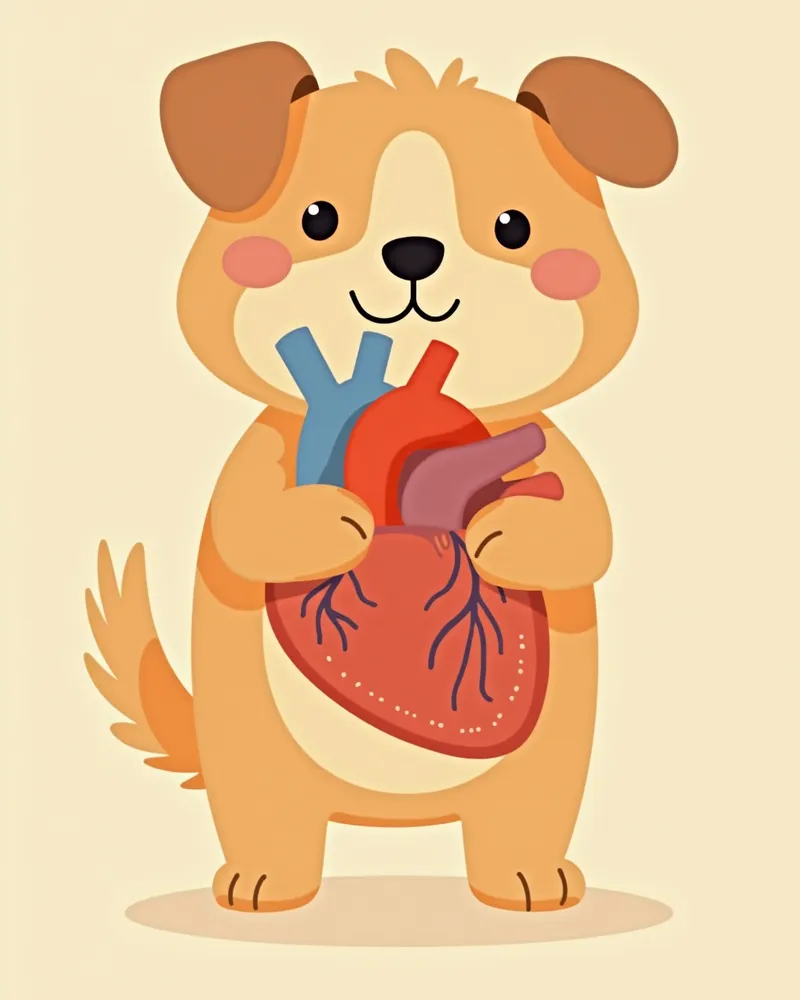
- Valvular heart disease: When heart valves fail to close properly, blood flows backward, placing extra strain on the heart. This leads to elevated levels of NT-proBNP and troponin. - Cardiomyopathy: When the heart muscle itself weakens, its ability to contract diminishes, causing marker levels to rise. - Heart failure: When the heart cannot pump blood effectively, blood accumulates in the body, triggering the release of these markers. - Hypertension: Chronic high blood pressure places continuous stress on the heart, which can elevate marker levels. - Cardiac infection or inflammation: Inflammation of the heart muscle can cause a rapid spike in troponin levels. Early detection and management are crucial for all of these conditions.
An anatomical illustration showing the heart expanding and markers being secreted.

Cardiac Marker Symptom Checklist

If your dog’s cardiac biomarker levels are elevated, they may exhibit the following symptoms. Please pay close attention to these behaviors, as they can be signs of heart disease.
Coughing: Your dog may cough repeatedly, especially at night or after exercise.
Difficulty breathing: You may frequently notice rapid breathing or panting.
Increased fatigue: Your dog may tire more easily than usual and show less interest in play.
Abdominal distension: The abdomen may appear swollen or feel firm to the touch.
Abnormal heart rhythm: The heart may beat too fast or irregularly.
Decreased appetite: Your dog may eat fewer treats and drink less water.
A puppy experiencing fatigue and difficulty breathing due to heart problems

Emergency Signs Requiring Immediate Veterinary Visit

If your dog suddenly starts breathing heavily, panting excessively, develops blue gums or tongue (cyanosis), or collapses, seek veterinary care immediately. These could be signs of a serious heart condition, such as heart failure.

Diagnostic Methods for Cardiac Markers

- Blood tests: Your veterinarian will draw a blood sample to analyze NT-proBNP and troponin levels. This is especially useful when traditional test results are inconclusive or when immediate confirmatory testing is difficult. - Echocardiogram: If blood test results show abnormalities, an ultrasound exam is performed to precisely evaluate the structure and function of the heart. - Chest X-ray: This helps assess heart size and check for pulmonary edema, providing supporting evidence for diagnosing heart failure. However, results may appear normal in the early stages of the disease. - Comprehensive evaluation: Diagnosis is not made based on marker levels alone; instead, symptoms, imaging results, and heart function are considered together. - Regular check-ups recommended: It is advisable for senior dogs or breeds at risk for heart disease to undergo regular examinations according to the schedule recommended by your veterinarian.
A veterinarian drawing blood from a puppy

Treatment Methods Based on Cardiac Markers

- Valvular heart disease: Medications help reduce the workload on the heart and maintain smooth blood flow. Antihypertensives and diuretics are commonly used. - Heart failure management: Regulate fluid intake and consistently administer medications that improve heart function. This is key to enhancing quality of life. - Medication adjustment: The veterinarian tailors the type and dosage of medication based on the dog’s weight, condition, and biomarker levels. - Surgical consideration: In some cases, surgery to repair the heart valves may be necessary. Biomarker levels are continuously monitored before and after the procedure. - Lifestyle adjustments: Avoid excessive exercise, and maintain a consistent feeding schedule and healthy weight.
A dog taking heart medication

Key Points for Managing Cardiac Markers at Home

- Medication management: Administer medication at the prescribed times to ensure no doses are missed. Set alarms as reminders. - Weight monitoring: Weigh your pet once a week to check for sudden changes. Weight gain can be a sign of heart failure. - Respiratory monitoring: Closely observe for shortness of breath, frequent coughing, or excessive panting. - Exercise regulation: Avoid excessive exercise and opt for short, light walks instead. - Diet management: Reduce salt intake and choose food formulated with nutrients that support heart health. - Regular veterinary visits: It is important to consult with your veterinarian for regular check-ups and retesting of biomarkers.
A daily scene of a puppy managing meals and medication.

Certain Breeds Require Attention to Abnormal Cardiac Markers

Large and giant breeds such as Doberman Pinschers, Great Danes, Irish Wolfhounds, Weimaraners, and Boxers are particularly susceptible to dilated cardiomyopathy (DCM). In these breeds, the disease can progress silently even in the early, asymptomatic stages, making regular check-ups essential. It is advisable to consult with your veterinarian about periodic cardiac biomarker testing.

Reviewed by a veterinarian

Dr. Tony — Punnawat Phongkittirak

Dr. Tony — Punnawat Phongkittirak

Veterinarian

A veterinarian who majored in veterinary medicine at Khon Kaen University, Thailand, and completed the IVSA program at North Carolina State University in the United States. Drawing on clinical experience at animal hospitals, he works in the pet healthcare field and is dedicated to building a digital care environment that connects pet parents with veterinarians.

Frequently Asked Questions

Does a high NT-proBNP level always mean heart disease?
Not necessarily. An elevated NT-proBNP level doesn't always mean your pet has heart disease. Conditions like high blood pressure, kidney disease, or respiratory issues can also raise the levels. Your veterinarian will make a comprehensive assessment to determine the cause.
When is the best time to have an NT-proBNP test?
If you suspect your dog has heart disease, or if your dog is older or has a family history of heart disease, it's a good idea to have regular check-ups. Follow the schedule and frequency recommended by your veterinarian.
Does a high troponin level mean a heart attack?
Elevated troponin levels may indicate damage to the heart muscle. However, conditions such as myocarditis, valvular heart disease, and heart failure are more common than a heart attack. A single test cannot provide a definitive diagnosis; instead, multiple test results must be evaluated together.
Does a normal heart marker level mean there are no heart problems?
If the levels are within the normal range, heart disease is unlikely, but if symptoms are present, further testing is necessary. Some conditions may show normal marker levels in the early stages.
Does the cardiac marker test for dogs cause any pain?
Blood draws may cause a slight prick, but the procedure is very brief and causes minimal discomfort. If your dog becomes anxious, the veterinarian may administer a mild sedative to help them relax.

Share

Related Guides

References

[1] Notes on Canine Internal Medicine, 4th Ed. (2023)

[2] Small Animal Critical Care Medicine, 3rd Ed. (2022)

[3] Textbook of Cardiovascular Medicine in Dogs and Cats (2021)

This information is based on veterinary literature and does not replace diagnosis or treatment. Please consult a veterinarian for specific health concerns.

Metapet Co., Ltd. | CEO: Park Sung-yong | Business Reg. No. 417-88-02562 | Seoul, South Korea | Customer Center

Dog Heart Blood Tests: A Complete Guide to NT-proBNP and Troponin | Meongsiljang