Like
Share
멍실장
강아지 안구 건조증 치료(사이클로스포린) 증상과 원인, 진단·치료와 관리 포인트 총정리

Cyclosporine Treatment for Canine Keratoconjunctivitis Sicca — Efficacy and Lifelong Management Points

Eye HealthDiseasesMeongsiljang Veterinary Advisory Board

Keratoconjunctivitis sicca (dry eye) in dogs is a condition caused by insufficient tear production, and cyclosporine is the primary treatment. Early diagnosis and consistent management are essential.

Canine Keratoconjunctivitis Sicca Is a Condition of Insufficient Tear Production

Red, dry eyes in dogs caused by dry eye syndrome
Keratoconjunctivitis sicca (dry eye) in dogs is a condition in which tear production is significantly reduced, leading to dryness and inflammation of the eyes. It is primarily caused by an autoimmune response in which the immune system mistakenly attacks the tear glands. Certain breeds have a genetic predisposition that increases their risk of developing the disease. Early diagnosis and consistent treatment are crucial for preserving vision. Because insufficient tear production can lead to corneal damage, it is essential to visit a veterinarian promptly if symptoms appear. - Insufficient tear production: A state in which adequate tears are not produced due to impaired function of the tear glands. - Autoimmune response: A cause in which the immune system attacks the tear glands, damaging their function. - Genetic predisposition: A risk factor for the disease that is more commonly seen in certain breeds.

The Main Causes Are Immune System Abnormalities and Genetic Predisposition
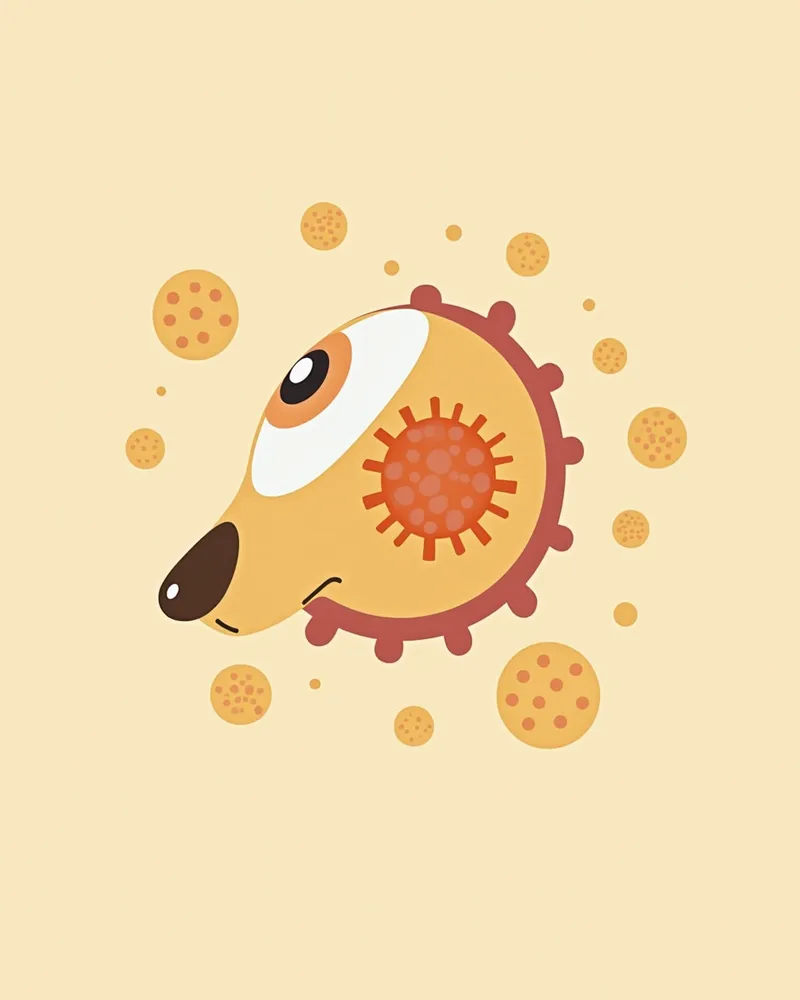
The most common cause of canine dry eye is an immune-mediated disease in which the immune system mistakenly attacks the tear gland tissue. This reaction gradually impairs tear gland function, reducing tear production. Certain breeds, such as Cocker Spaniels and West Highland White Terriers, are genetically more susceptible. Tear gland damage from trauma or exposure to certain medications, such as sulfonamides, etodolac, or atropine, can also trigger the condition. Additionally, removal of the third eyelid gland or neurological factors may reduce tear production. - Immune-mediated response: The most common cause, occurring when the immune system mistakenly identifies and attacks the tear glands. - Genetic factors: Certain breeds have a higher predisposition to developing the condition. - Trauma, medications, and neurological factors: Trauma, specific medications, removal of the third eyelid gland, and nerve damage can all contribute to reduced tear production.
A scientific illustration depicting the excessive response of immune cells attacking a dog's tear ducts.

The Main Symptoms Are Tear Deficiency and Inflammatory Response

The main symptoms of dry eye in dogs include dry, red eyes. As tear production decreases, sticky discharge may appear, and your dog may blink frequently or scratch at their eyes.
Reduced tear production: Tear production drops significantly, leading to dry eyes.
Eye redness: The conjunctiva becomes red and inflamed.
Increased discharge: Sticky discharge accumulates around the eyes.
Eye scratching behavior: Discomfort causes frequent scratching or rubbing of the eyes.
Corneal clouding: Damage to the tear film can cause the cornea to become cloudy.
These symptoms tend to worsen gradually over time.
Red, swollen eyes and sticky discharge in dogs due to dry eye syndrome

Emergency Signs Requiring Immediate Veterinary Visit

If your pet’s eyes are severely swollen or too painful to open, seek veterinary care immediately. Corneal damage can lead to vision loss.

Diagnosis Is Performed via Tear Tests and Ophthalmic Examinations
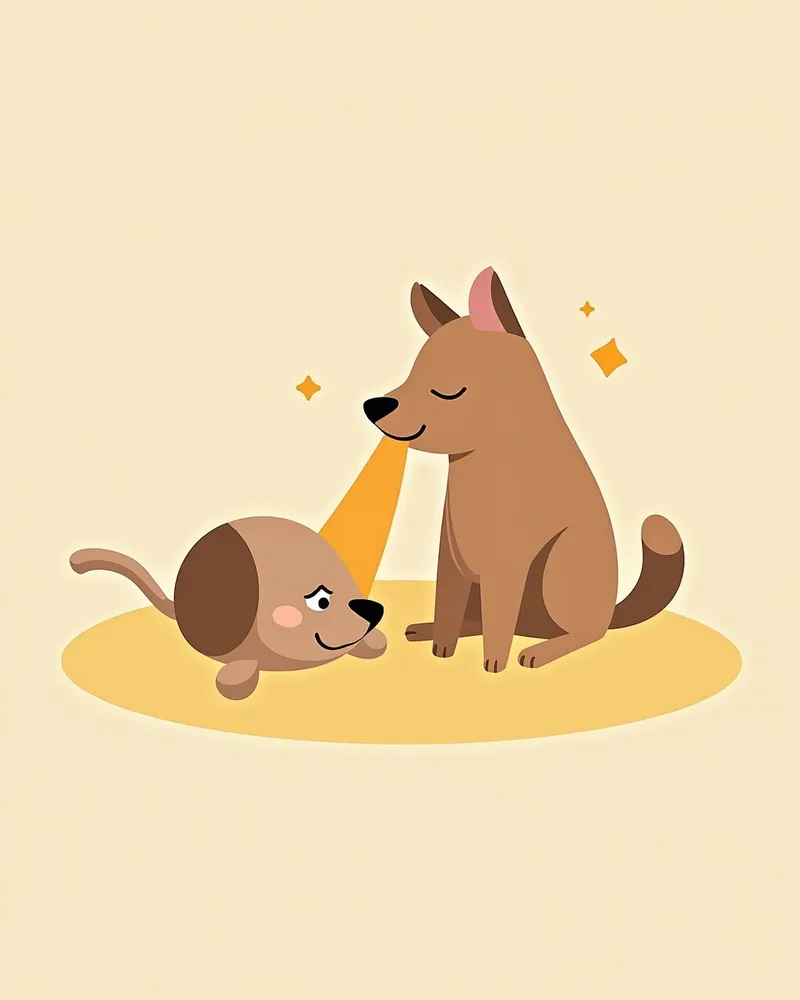
Canine dry eye is accurately diagnosed using the Schirmer tear test (STT) and the tear film break-up time (TFBUT) test. The STT quantitatively measures tear production by placing a measuring strip in the lower conjunctival sac for one minute and measuring the length of the wetted area. A result of less than 15 mm per minute is suspicious, while less than 10 mm per minute confirms a diagnosis of dry eye. The TFBUT test assesses tear film stability by measuring how long it takes for the tear film to break after fluorescein staining; a time of less than 20 seconds is considered abnormal. Additionally, fluorescein staining is performed to check for corneal damage. Veterinarians combine these clinical signs and test results to provide an accurate diagnosis. - Schirmer tear test (STT): The primary diagnostic method for measuring tear production; a result of less than 10 mm is diagnostic. - Tear film break-up time (TFBUT): A test to evaluate tear film stability; a time of less than 20 seconds is considered abnormal. - Fluorescein staining: A method to visually confirm the presence of corneal damage.
A scene showing the performance of the Schirmer tear test to measure tear production in dogs.

Cyclosporine Eye Drops Are the Key to Treatment
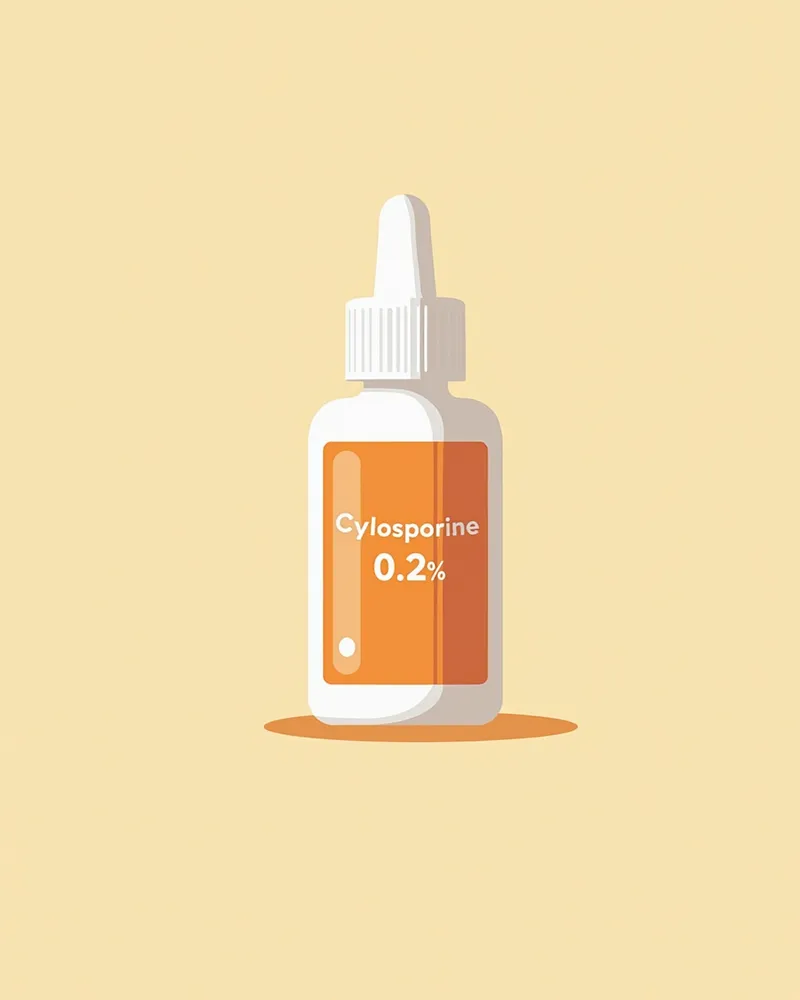
The primary treatment for canine dry eye is cyclosporine eye drops. This medication helps restore tear gland function by suppressing the immune response while stimulating tear production. Do not arbitrarily decide on the dosage or frequency; strictly follow your veterinarian’s prescription.
Cyclosporine eye drops: The cornerstone treatment that suppresses immune responses and stimulates tear production.
Lubricating eye drops: Artificial tears or tear substitutes are used alongside to keep the eyes moist.
Antibiotic eye drops: Prescribed concurrently if a secondary bacterial infection develops.
Combination immunosuppressants: In severe cases or when the response is insufficient, other immunomodulators such as tacrolimus may be used in combination.
Treatment typically requires consistent, lifelong management.
A real photo of a bottle of cyclosporine eye drops for dogs

Consistent Eye Drop Administration and Environmental Control Are Crucial for Home Care
Proper care at home is key to successful treatment. Cyclosporine eye drops must be used consistently at the prescribed times. Avoid dry environments and use a humidifier. Gently clean around the eyes, but avoid causing irritation.
Regular eye drop administration: Apply the eye drops exactly at the times specified by your veterinarian.
Maintain environmental humidity: Use a humidifier to keep indoor humidity between 40% and 60%.
Clean around the eyes: Gently wipe the area around the eyes with a soft cloth.
Avoid irritation: Take care to prevent hair or dust from getting into the eyes.
Regular check-ups: Schedule follow-up examinations with your veterinarian every 1 to 2 months.
A scene of home care where eye drops are regularly administered to a puppy.

Certain Breeds Are at Higher Risk and Require Attention

Certain breeds, such as West Highland White Terriers, Cocker Spaniels, Springer Spaniels, Bulldogs, Toy Poodles, and Lhasa Apsos, are more susceptible to dry eye. Due to their strong genetic predisposition, early screening is essential.

Reviewed by a veterinarian

Dr. Tony — Punnawat Phongkittirak

Dr. Tony — Punnawat Phongkittirak

Veterinarian

A veterinarian who majored in veterinary medicine at Khon Kaen University, Thailand, and completed the IVSA program at North Carolina State University in the United States. Drawing on clinical experience at animal hospitals, he works in the pet healthcare field and is dedicated to building a digital care environment that connects pet parents with veterinarians.

Frequently Asked Questions

What are the effects of cyclosporine eye drops?
Cyclosporine eye drops help restore tear gland function by suppressing the immune response while stimulating tear production. With consistent use, tear production gradually increases.
How long does treatment take?
The time it takes for the medication to take effect and the degree of improvement can vary from pet to pet. Dry eye is typically a chronic condition that requires lifelong, consistent treatment and eye drops rather than a one-time cure, so it’s important not to stop the medication on your own, even if symptoms improve.
What happens if I miss a dose of eye drops?
Regular use is important. If you miss a dose, tear production may decrease again, and the therapeutic effect may diminish. If you miss a dose, use it as soon as possible at the next scheduled instillation time.
Are there any side effects when using eye drops?
Cyclosporine may cause allergic reactions or gastrointestinal upset, and can also lead to skin inflammation around the eyes or hair loss. If these symptoms persist or worsen, please contact your veterinarian.
Can dry eye be cured?
While a complete cure may be difficult, consistent treatment and care can help stabilize symptoms and allow your pet to enjoy a normal daily life. In most cases, lifelong management is necessary.

Comparison of Cyclosporine Eye Drops and Other Treatments

ItemOnset SpeedDurabilitySide Effects
Cyclosporine Eye DropsModerateHighLow
Lubricant Eye Drop AdjunctsFastLowVery Low
Antibiotic Eye DropsFastLowModerate
Combined ImmunosuppressantsModerateVery HighHigh

Choose the treatment after consulting your veterinarian. Cyclosporine is a key therapeutic agent that modulates the immune response.

Share

Related Guides
References

[1] Dodi PL. Immune-mediated keratoconjunctivitis sicca in dogs: current perspectives on management. Vet Med (Auckl). 2015;6:341–347.

[2] Haeussler DJ Jr. Improving the diagnosis of canine keratoconjunctivitis sicca. Vet Rec. 2019;184(22):676–677.

[3] Hendrix DV, Adkins EA, Ward DA, Stuffle J, Skorobohach B. An investigation comparing the efficacy of topical ocular application of tacrolimus and cyclosporine in dogs. Vet Med Int. 2011;2011:487592.

This information is based on veterinary literature and does not replace diagnosis or treatment. Please consult a veterinarian for specific health concerns.

Metapet Co., Ltd. | CEO: Park Sung-yong | Business Reg. No. 417-88-02562 | Seoul, South Korea | Customer Center

Cyclosporine for Canine Dry Eye: Efficacy and Lifelong Care | Meongsiljang