Like
Share
멍실장
강아지 울혈성심부전 증상과 원인, 진단·치료와 관리 포인트 총정리

Why Is My Dog Coughing So Much? — Symptoms of Congestive Heart Failure and When to Visit the Vet

HeartDiseasesMeongsiljang Veterinary Advisory Board

Canine congestive heart failure is a heart condition in which impaired pumping function causes abnormal fluid accumulation in the lungs or abdominal cavity. If you notice symptoms such as coughing, difficulty breathing, or abdominal distension, prompt diagnosis and treatment are essential.

What Is Canine Congestive Heart Failure?

A dog resting comfortably at home
Canine congestive heart failure (CHF) is a heart condition in which weakened pumping function causes blood to abnormally accumulate in the lungs or abdominal cavity. Early detection is truly critical. If you notice coughing that worsens at night, rapid fatigue, or a distended abdomen, seek veterinary care immediately. The earlier it is diagnosed, the more effectively medication can slow disease progression and help maintain your dog’s quality of life for longer.

Main Causes of Congestive Heart Failure

When the heart fails to pump enough blood, pressure builds up in the blood vessels, causing fluid to leak out into surrounding tissues. The main causes include:
Mitral valve insufficiency: The most common cause in small-breed dogs, this occurs when the valve between the left atrium and left ventricle wears down, allowing blood to flow backward.
Dilated cardiomyopathy: A condition in which the heart muscle stretches and weakens, reducing its ability to contract; it primarily affects large-breed dogs.
Congenital heart defects: Structural abnormalities of the heart present from birth.
Heartworm infection: Parasites can block the heart and pulmonary blood vessels, potentially leading to right-sided heart failure.

Checklist of Key Symptoms You Should Not Miss
Persistent coughing: A cough can occur when fluid accumulates in the lungs, but it may also result from an enlarged heart pressing on the bronchi (particularly the left main bronchus). Coughing that worsens at night or when lying down should never be ignored and requires prompt attention.
Rapid breathing (tachypnea): Even at rest, breathing becomes faster than usual, with noticeable heaving of the chest and abdomen.
Exercise intolerance: The pet tires quickly after even short walks, often sitting down or appearing weak.
Abdominal distension: Right-sided heart failure can cause fluid to accumulate in the abdominal cavity (ascites) and enlargement of the liver and spleen, making the belly appear swollen.
Pale or blue gums: This is an emergency sign indicating reduced oxygen supply.
Fainting or collapse: A sudden drop in blood flow to the brain can cause weakness or sudden collapse.
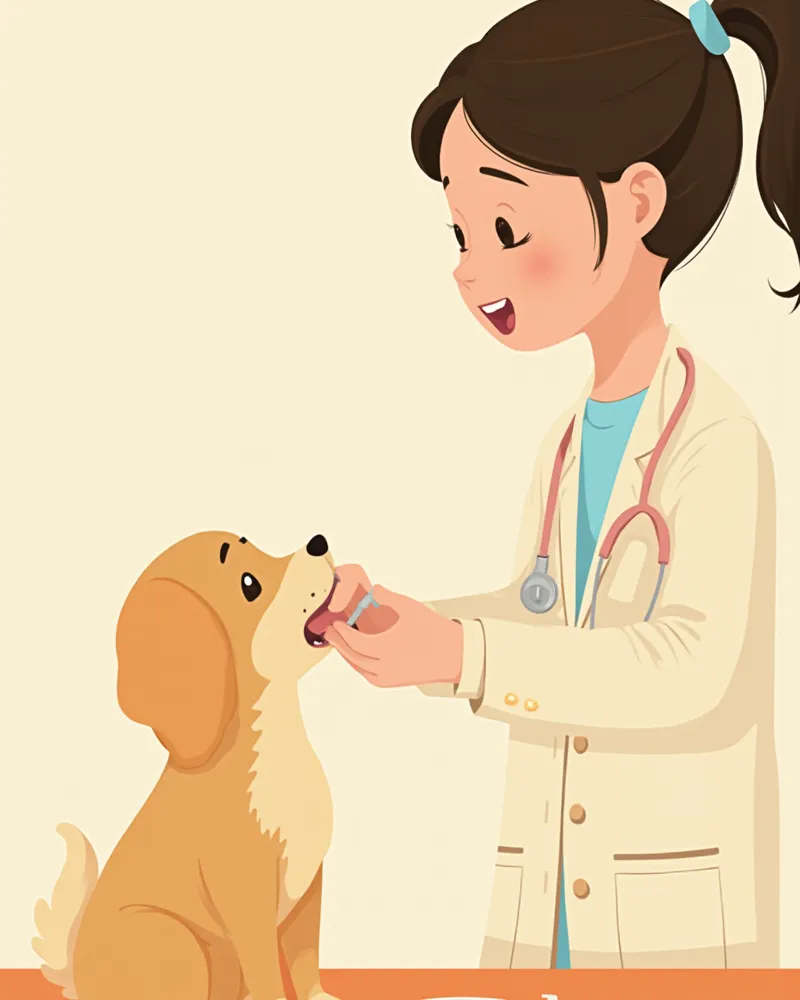
A veterinarian checking a puppy's gum color.

Go to an Emergency Animal Hospital Immediately — Criteria for Immediate Transport

If your pet exhibits any of the following symptoms, seek immediate care at a 24-hour emergency animal hospital: blue or white gums, breathing with an open mouth, decreased consciousness or collapse, a resting respiratory rate exceeding 60 breaths per minute, or sudden hindlimb paralysis. During transport, keep your pet as calm and still as possible, avoiding any unnecessary movement or jostling.

Diagnostic Methods — Tests Performed at the Veterinary Hospital

Chest X-ray: This is the basic test that allows us to quickly assess heart size and check for fluid in the lungs.
Echocardiogram (Echo): This key test provides a real-time view of heart structure, valve abnormalities, and contraction function. It is essential for accurate disease staging.
Electrocardiogram (ECG): This test checks for arrhythmias.
Blood tests and NT-proBNP: These evaluate markers of cardiac stress along with kidney and liver function.
Blood pressure measurement: This checks for the presence of concurrent hypertension.

Treatment Methods — Triple Drug Therapy Is Key
The standard treatment recommended in veterinary internal medicine textbooks involves a combination of three medications.
Diuretics (furosemide, spironolactone): These are the first-line drugs used to eliminate fluid accumulated in the lungs or abdominal cavity through urine.
Pimobendan: This medication strengthens heart contractions and dilates blood vessels, reducing the workload on the heart.
ACE inhibitors (enalapril, benazepril): These drugs dilate blood vessels and lower cardiac pressure, helping to slow disease progression.
In cases of severe ascites, fluid may be directly drained from the abdominal cavity via abdominocentesis. The specific drug combination and dosage are determined by the veterinarian based on the patient’s weight and disease stage.
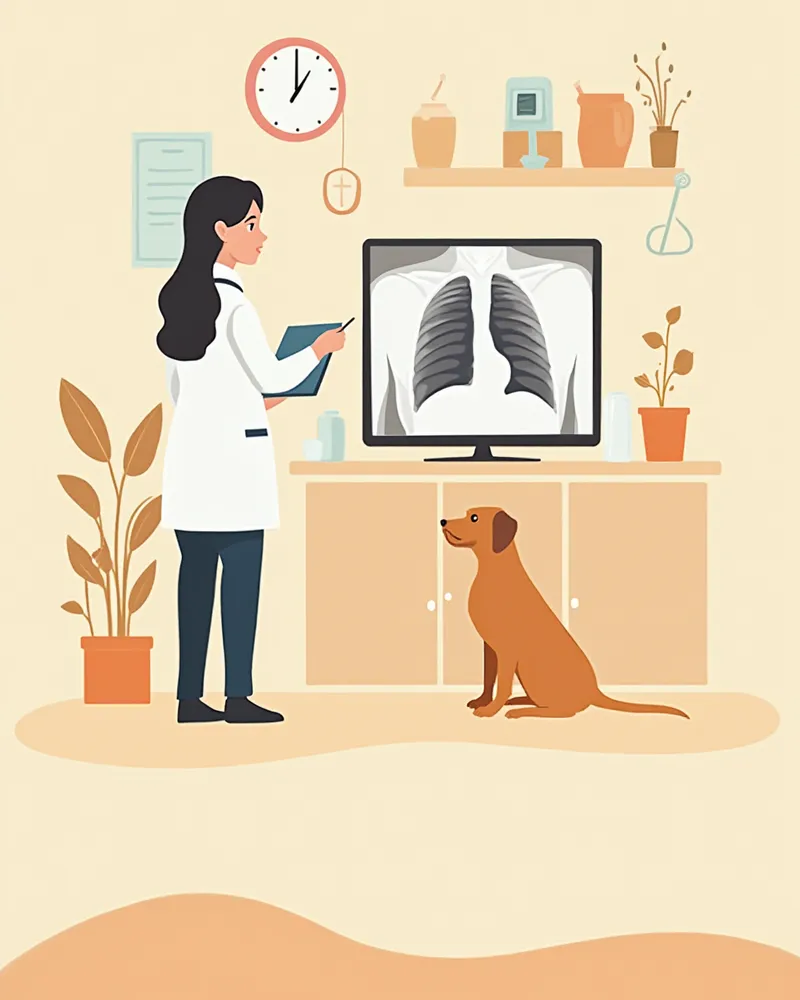
A veterinarian reviewing a dog's chest X-ray

Management Points for Owners at Home

Monitor resting respiratory rate: Count your pet’s breaths per minute while they are asleep, every day. If the rate exceeds 30 breaths per minute, contact your veterinarian immediately.
Low-sodium diet: Treats and human foods high in sodium can worsen fluid retention. A veterinarian-recommended prescription diet is helpful.
Adjust exercise intensity: Allow only short, gentle walks and avoid vigorous running.
Minimize stress: Excitement and sudden scares can strain the heart, so maintain a calm environment.
Regular follow-up exams: It is important to monitor changes in condition with chest X-rays and echocardiograms every 2 to 4 weeks.
A pet owner monitoring their dog’s breathing at home

Breed-Specific Precautions — Your Dog May Need Extra Care

Small breeds like Cavalier King Charles Spaniels, Dachshunds, and Maltese are at higher risk for myxomatous mitral valve disease (mitral regurgitation). In contrast, large breeds such as Doberman Pinschers, Great Danes, and Irish Wolfhounds face a greater risk of dilated cardiomyopathy (DCM). DCM is particularly tricky because it has a long occult phase with no outward symptoms. If your dog belongs to a high-risk breed, regular cardiac check-ups with your veterinarian are recommended even if they appear healthy. The earlier we detect changes, the sooner we can begin management.

Reviewed by a veterinarian

Dr. Tony — Punnawat Phongkittirak

Dr. Tony — Punnawat Phongkittirak

Veterinarian

A veterinarian who majored in veterinary medicine at Khon Kaen University, Thailand, and completed the IVSA program at North Carolina State University in the United States. Drawing on clinical experience at animal hospitals, he works in the pet healthcare field and is dedicated to building a digital care environment that connects pet parents with veterinarians.

Frequently Asked Questions

Is congestive heart failure curable?
This condition is more about management than a complete cure. By using medication to control symptoms and slow progression, we can help maintain a good quality of life for a longer period. The earlier it is detected, the better the prognosis.
Does my pet need to take this medication for the rest of its life?
Most medications need to be taken for life. Stopping them abruptly can cause a sudden worsening of the condition, so always consult your veterinarian before making any changes.
My dog is coughing frequently. Could it be heart failure?
Coughing can have various causes, such as bronchitis or reflux esophagitis. However, if the cough worsens when lying down at night or if breathing becomes rapid, a chest X-ray is essential.
How do you measure your pet’s respiratory rate at home?
Count the number of times your dog’s chest rises and falls over 60 seconds while they are completely asleep. A normal rate is 30 breaths per minute or less. If the rate exceeds 30 breaths per minute or has increased by more than 10 breaths per minute compared to the previous day, contact your veterinarian immediately.
Can I feed regular dog food to a puppy with heart failure?
Regular pet food can be high in sodium. Depending on your pet’s condition, your veterinarian may recommend a low-sodium prescription diet, so always consult them before making any dietary changes.

Share

Related Guides

References

[1] Tilley LP, Smith FWK et al., Textbook of Cardiovascular Medicine in Dogs and Cats, Wiley-Blackwell, 2024

[2] Maddison JE, Page SW, Church DB, Handbook of Veterinary Pharmacology, Wiley-Blackwell, 2008

[3] White RAS, Herrtage ME, Hall EJ, Notes on Canine Internal Medicine, 4th Ed, Wiley-Blackwell, 2011

[4] Battersby I, Harvey A, 100 Top Consultations in Small Animal General Practice, Wiley-Blackwell, 2013

This information is based on veterinary literature and does not replace diagnosis or treatment. Please consult a veterinarian for specific health concerns.

Metapet Co., Ltd. | CEO: Park Sung-yong | Business Reg. No. 417-88-02562 | Seoul, South Korea | Customer Center

Why Is My Dog Coughing? Congestive Heart Failure Signs & Vet Care | Meongsiljang