Like
Share
멍실장
고양이 갑상선 T4 검사 증상과 원인, 진단·치료와 관리 포인트 총정리

Complete Guide to Feline Thyroid T4 Testing — Interpreting Results and Timing for Additional Tests

EndocrineDiseasesMeongsiljang Veterinary Advisory Board

Hyperthyroidism is a common endocrine disorder in senior cats, and it can be diagnosed through T4 level testing. Early detection and proper management can significantly improve your cat's quality of life.

Feline Hyperthyroidism Is a Common Endocrine Disorder in Senior Cats

A medical illustration showing an enlarged thyroid gland in a cat's neck area.
Feline hyperthyroidism is an endocrine disorder commonly seen in senior cats aged 10 years and older. - Hyperthyroidism: This condition occurs when the thyroid gland secretes excessive amounts of T4 hormone, causing a rapid increase in metabolic rate. Symptoms include weight loss, increased appetite, and hyperactivity. It can also place significant strain on the heart, leading to tachycardia or heart failure. - T4 Level Testing: Diagnosis is possible through blood tests that measure T4 levels. Early detection significantly improves treatment success rates. - Importance of Early Management: Starting appropriate treatment while symptoms are mild can greatly improve a cat's quality of life. If these symptoms appear in older cats, a veterinary visit is essential.

The Main Causes of Hyperthyroidism Are Thyroid Tumors or Adenomas

The primary cause of hyperthyroidism in cats is benign changes in the thyroid gland, specifically adenomatous hyperplasia or adenomas. - Most cases are benign: Approximately 98% of cases involve benign adenomatous hyperplasia or adenomas, while malignant thyroid cancer (carcinoma) is rare, accounting for only 1–3%. These abnormal tissues continuously overproduce T4 hormone. - Hormone excess: This leads to a rapid acceleration of metabolism and places significant strain on vital organs, including the heart. - Bilateral involvement: It is more common for both thyroid lobes to enlarge simultaneously rather than just one. - Exact cause remains unknown: The underlying trigger for the disease has not yet been clearly identified. No specific predisposition based on breed or sex has been confirmed; in fact, purebred cats such as Siamese and Himalayans tend to have a lower risk of developing the condition. - Importance of early diagnosis: It is crucial to assess the condition through testing and begin treatment as soon as symptoms first appear, even if they are mild.
Microscopic image of feline thyroid tissue, showing abnormal cell proliferation

Understand the Main Symptoms and Signs

The main symptoms of feline hyperthyroidism include weight loss, increased appetite, hyperactivity, vomiting, diarrhea, and an elevated heart rate. If these signs appear in an older cat, a T4 test should be considered.
Weight loss: Despite a strong appetite, the cat may experience rapid weight loss.
Increased appetite: The cat eats frequently but still appears unsatisfied.
Hyperactivity: The cat may wake up at night, run around, or display restless behavior.
Vomiting and diarrhea: These occur frequently due to gastrointestinal dysfunction.
Elevated heart rate: You may notice the cat’s heart beating faster than normal.
Four illustrations showing the main symptoms of feline hyperthyroidism

Immediate Veterinary Visit Is Necessary If Severe Heart Problems or Liver Dysfunction Occur

When feline hyperthyroidism becomes severe, it can strain the heart and lead to heart failure or arrhythmias. Excessively high thyroid hormone levels can also damage liver function, so if your cat shows severe difficulty breathing, collapses, or experiences persistent vomiting, seek veterinary care immediately.

Diagnosis Is Made by Measuring T4 Levels Through a Blood Test
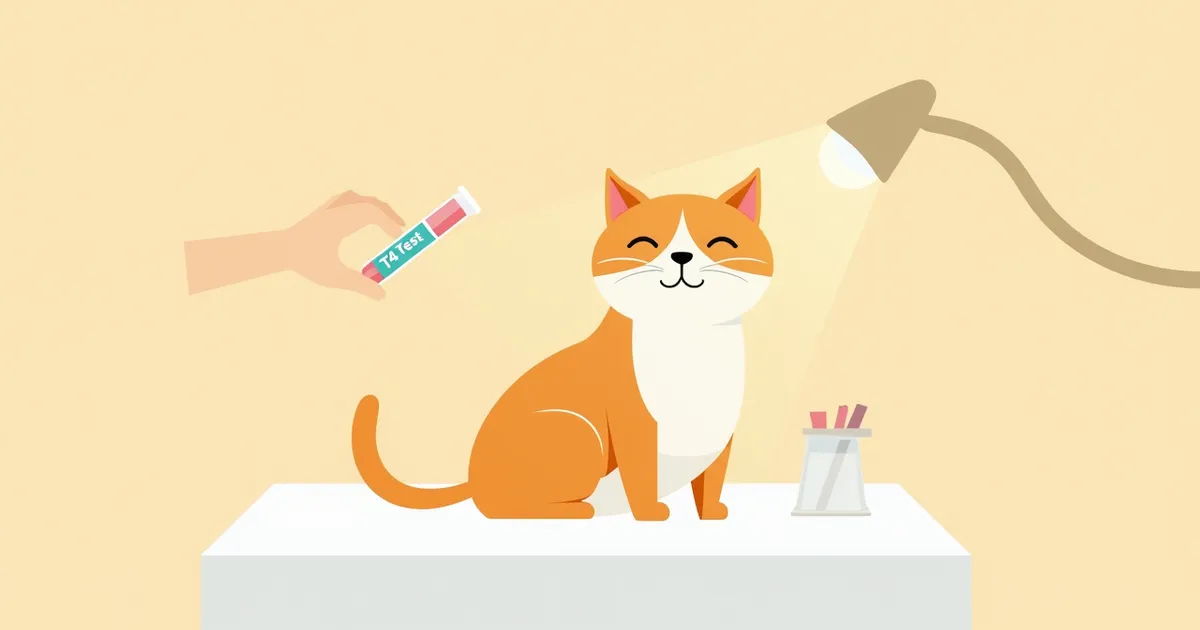
Diagnosing hyperthyroidism in cats primarily involves measuring total T4 (TT4) levels through a blood test. If a cat showing symptoms of hyperthyroidism has TT4 levels that consistently exceed the normal range, a diagnosis of hyperthyroidism is made. In fact, approximately 90% of hyperthyroid cats have TT4 levels above the normal range. However, in early or mild cases, or when other non-thyroidal illnesses are present, TT4 levels may remain within the normal range, necessitating additional testing.
Total T4 (TT4) Measurement: Consistently elevated TT4 levels above the reference range support the diagnosis.
Free T4 and TSH Testing: When TT4 levels are borderline, free T4 and thyroid-stimulating hormone (TSH) are measured together.
TT4 Re-testing: TT4 levels may be re-measured after four weeks to confirm the results.
Thyroid Scintigraphy and Cardiac Ultrasound: These tests evaluate the condition of the thyroid tissue and heart function.
A veterinarian drawing blood from a cat's vein.

Treatment Options Include Medication, Radioactive Iodine, Surgery, and Dietary Management
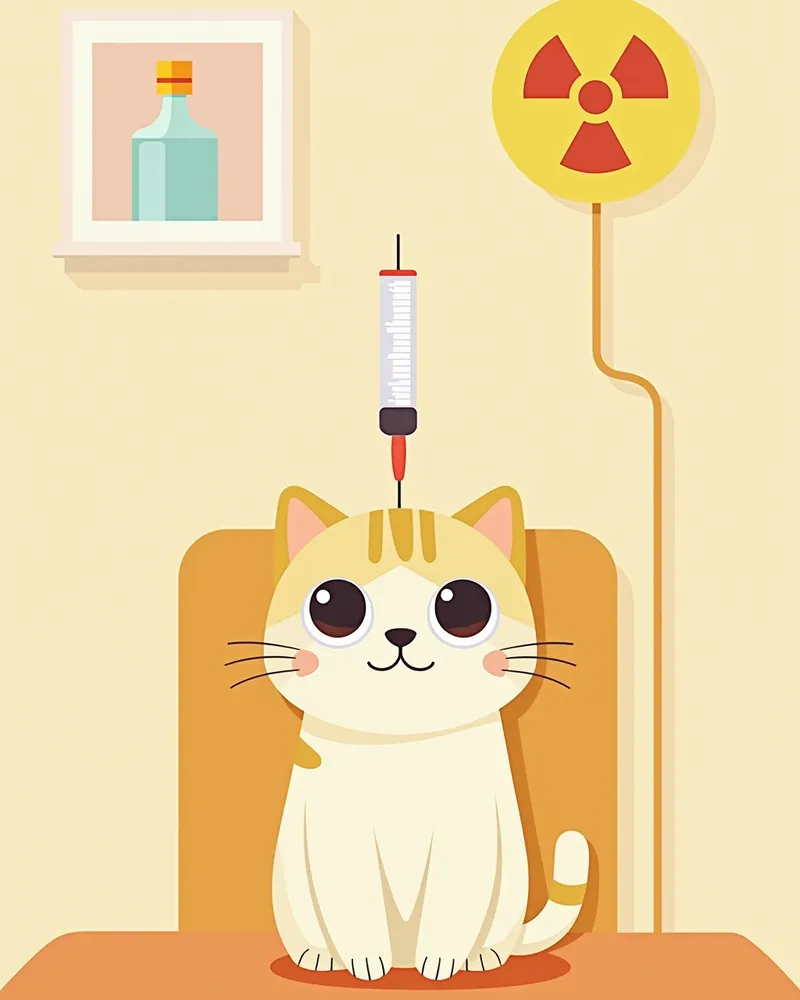
There are several treatment options for feline hyperthyroidism. Medication involves administering methimazole. Radioactive iodine therapy normalizes the thyroid gland and has a very low recurrence rate after treatment. Surgery removes part of the thyroid gland but carries the risk of general anesthesia. Dietary management controls hormone secretion through an iodine-restricted diet.
Methimazole administration: Daily dosing regulates hormone levels.
Radioactive iodine therapy: A single treatment offers a high likelihood of cure.
Surgical treatment: The goal is to remove thyroid tumors.
Iodine-restricted diet: Effective for long-term management.
A cat undergoing radioactive iodine therapy in a treatment room equipped with protective shielding.

Be Sure to Follow Key Management Points at Home
Feline hyperthyroidism requires long-term management. Medication must be given at the correct time and dosage. Regular thyroid function tests are necessary during treatment. If a dietary approach is chosen, it is important to feed only the prescribed diet. Additionally, minimize stress and provide a stable environment.
Maintain a consistent medication schedule: Administer medication at the same time every day.
Regular monitoring: T4 level testing is required every 3 to 6 months.
Use prescribed diet: Feed only iodine-restricted food.
Minimize stress: Maintain a quiet environment.
A photo showing a cat eating iodine-restricted food in a calm and comfortable environment.

Monitor for Liver Dysfunction or Blood Issues With Long-Term Medication Use

Long-term use of methimazole can cause side effects such as liver dysfunction or a decrease in white blood cells. Regular blood tests are necessary to monitor for any abnormalities. If symptoms like vomiting, loss of appetite, or persistent fatigue occur, consult your veterinarian immediately.

Reviewed by a veterinarian

Dr. Tony — Punnawat Phongkittirak

Dr. Tony — Punnawat Phongkittirak

Veterinarian

A veterinarian who majored in veterinary medicine at Khon Kaen University, Thailand, and completed the IVSA program at North Carolina State University in the United States. Drawing on clinical experience at animal hospitals, he works in the pet healthcare field and is dedicated to building a digital care environment that connects pet parents with veterinarians.

Frequently Asked Questions

When is the best time to have a cat’s thyroid T4 test?
For cats aged 10 or older, or those showing symptoms such as weight loss or increased appetite, regular check-ups are recommended.
Does a high T4 level always mean I need to take my pet to the vet?
If T4 levels are higher than normal and accompanied by symptoms of hyperthyroidism, it is highly likely to be hyperthyroidism. However, in early or mild cases, or when other conditions are present, T4 levels may remain within the normal range. In such borderline cases, additional tests like free T4, TSH, or retesting are necessary for confirmation.
Is radioactive iodine therapy safe?
Radioactivity may temporarily remain after treatment, but your pet will be safely managed in isolation at the hospital. In most cases, a full recovery is possible.
Do I need to give my pet medication for the rest of its life?
Medication is a temporary management tool. If a definitive cure is possible through radioactive iodine therapy or surgery, the medication can be discontinued.
If my pet is on an iodine-restricted diet, should I avoid giving any other types of food as well?
If your pet is on an iodine-restricted diet, do not give any other food or treats. Increased iodine intake can reduce the effectiveness of treatment.

Comparison of Treatment Options for Feline Hyperthyroidism

ItemEfficacySide effectsCost and duration
Methimazole medicationCan regulate hormone levelsRisk of liver dysfunction, decreased white blood cellsLow (requires long-term administration)
Radioactive iodine therapyCan cure, almost no recurrenceTemporary radiation exposureModerate (including isolation period)
Surgical treatmentAllows direct tumor removalGeneral anesthesia risk, possible complicationsHigh (requires hospitalization)
Iodine-restricted dietAllows long-term managementDifficult to maintain dietary complianceLow (requires ongoing management)

For the choice of treatment, decide after consulting a veterinarian based on the cat's health condition, cost, and home environment.

Share

Related Guides

References

[1] Peterson ME, Kintzer PP, Hurvitz AI. Methimazole treatment of 262 cats with hyperthyroidism. J Vet Intern Med. 1988;2:150.

[2] Fox P, Peterson M, Broussard J. Electrocardiographic and radiographic changes in cats with hyperthyroidism: comparison of populations evaluated during 1992-1993 vs. 1979-1982. J Am Anim Hosp Assoc. 1998;35:27.

[3] Textbook of Cardiovascular Medicine in Dogs and Cats. Feline Hyperthyroidism section. 2nd Edition.

This information is based on veterinary literature and does not replace diagnosis or treatment. Please consult a veterinarian for specific health concerns.

Metapet Co., Ltd. | CEO: Park Sung-yong | Business Reg. No. 417-88-02562 | Seoul, South Korea | Customer Center

Feline Thyroid T4 Test Guide: Results & When to Retest | Meongsiljang