Like
Share
멍실장
고양이 스피로노락톤 심장 증상과 원인, 진단·치료와 관리 포인트 총정리

Complete Guide to Spironolactone for Cats: Efficacy, Dosage, and Side Effects

HeartDiseasesMeongsiljang Veterinary Advisory Board

Spirolactone-related heart disease in cats is a drug-induced cardiac condition that can lead to decreased heart function, making early detection and proper management essential.

What is Spironolactone-Related Heart Disease in Cats?
A veterinarian examining a cat's heart.
Spironolactone is a medication that blocks aldosterone receptors and can be used as an adjunctive therapy to reduce the burden on the heart. However, the most common heart disease in cats is cardiomyopathy, including hypertrophic cardiomyopathy (HCM), which is mostly linked to genetic factors. Based on the evidence provided, it is difficult to confirm that the medication itself directly causes a decline in heart function. Nevertheless, as cardiomyopathy progresses and leads to congestive heart failure, symptoms such as difficulty breathing, lethargy, and exercise intolerance (getting tired easily) may appear. Stress, anesthesia, and fluid therapy have also been reported as potential triggers for symptom exacerbation. Early detection and consistent management in collaboration with your veterinarian are essential.

What are the Main Causes of Spironolactone-Related Heart Disease?
Feline heart disease is often caused by a combination of genetic predisposition and various other factors, rather than a single clear cause. In particular, hypertrophic cardiomyopathy is known as a genetic condition associated with MYBPC3 gene mutations in breeds such as Maine Coons and Ragdolls. Although spironolactone is a medication that reduces cardiac workload by blocking aldosterone receptors, there is no evidence in the provided data to support the claim that it damages feline heart muscle. However, there are reports that predisposing events such as stress, anesthesia, fluid therapy, and steroid administration can trigger or exacerbate symptoms. For safety, any medication should be accurately prescribed by a veterinarian based on the cat’s weight and condition, followed by consistent monitoring.
A cat heart illustration with warning signs indicating cardiac issues

Check for Key Symptoms and Signs

The main symptoms of feline heart disease include difficulty breathing, rapid breathing, lethargy, exercise intolerance (tiring easily), and decreased appetite. Unlike dogs, coughing is not a common sign of congestive heart failure in cats, so you should pay closer attention to changes in breathing patterns than to coughing. If your cat tires more easily than usual, lies down frequently, or breathes heavily, seek veterinary care immediately. These respiratory signs may be early indicators of declining heart function, so do not overlook them. In severe cases, cats may faint, collapse suddenly, or develop cyanosis, where the gums turn bluish. Early detection significantly improves treatment outcomes, making regular consultations with your veterinarian essential.
A tired cat lying down

Symptoms Requiring Immediate Veterinary Attention

If your cat suddenly starts panting, develops bluish gums, or collapses, you should take them to the vet immediately. These could be signs of acute congestive heart failure, severe respiratory distress, or arrhythmia, so it's important to consult with a veterinarian without delay.

Diagnostic Tests for Accurate Diagnosis
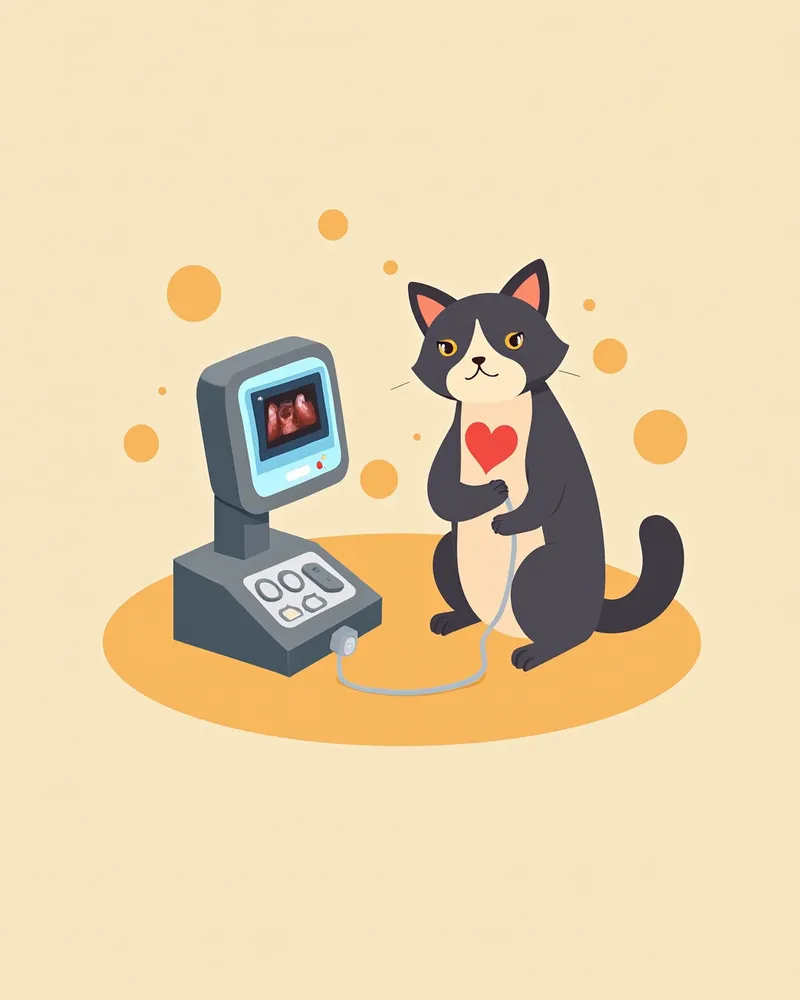
Feline heart disease can be difficult to detect with chest X-rays alone, as they may miss cardiac enlargement. Therefore, diagnosis requires advanced testing, including echocardiography. - Echocardiography: This is the essential test for confirming a diagnosis, providing a precise evaluation of the heart muscle’s structure and function. - Electrocardiogram (ECG): This test checks for abnormalities in the heart’s rhythm, specifically identifying arrhythmias. - Blood tests: These help assess overall health status and electrolyte balance. Your veterinarian will recommend tailored tests based on your cat’s medical history and symptoms. Early diagnosis significantly improves treatment outcomes.
A veterinarian performing an echocardiogram on a cat

Treatment Methods and Step-by-Step Management
Treatment begins by reviewing the discontinuation or dosage adjustment of any suspected causative medication. If congestive heart failure is present, the cornerstone of therapy involves using diuretics to reduce pulmonary congestion and administering ACE inhibitors to lessen the workload on the heart. In cases of severe respiratory distress, emergency supportive care such as oxygen therapy is provided, and medications to prevent blood clots may also be necessary. Your veterinarian will tailor a treatment plan based on your cat’s condition and monitor recovery through regular check-ups. Minimizing stress and maintaining a stable environment during treatment are crucial, with long-term management being the key to success.
A cat wearing an oxygen mask

Home Care Points

Effective spironolactone-based heart care for cats hinges on consistent medication, stress reduction, appropriate exercise, and a balanced diet. It’s important to keep the environment quiet and avoid sudden noises or changes. Adjust food portions and eating habits according to your veterinarian’s instructions. Regular weight checks and health logs are also helpful. Be sure to attend regular check-ups at the times specified by your vet. Early detection and ongoing management are key to preventing recurrence.
A cat lying comfortably in an indoor space

Breed-Specific Precautions and Prevention of Recurrence

Breeds with a higher genetic risk of hypertrophic cardiomyopathy (HCM), such as Maine Coons and Ragdolls, require extra attention to cardiac screening. For these high-risk breeds, it is advisable to consider annual echocardiograms alongside genetic testing. During medication, regular cardiac check-ups help detect any abnormalities early, and you should never discontinue the medication on your own.

Reviewed by a veterinarian

Dr. Tony — Punnawat Phongkittirak

Dr. Tony — Punnawat Phongkittirak

Veterinarian

A veterinarian who majored in veterinary medicine at Khon Kaen University, Thailand, and completed the IVSA program at North Carolina State University in the United States. Drawing on clinical experience at animal hospitals, he works in the pet healthcare field and is dedicated to building a digital care environment that connects pet parents with veterinarians.

Frequently Asked Questions

Can cats develop heart problems when given spironolactone?
There is no evidence to suggest that spironolactone directly causes heart disease in cats. However, since underlying heart conditions such as hypertrophic cardiomyopathy are common in cats, and symptoms can be triggered by factors like stress, anesthesia, or fluid therapy, please consult your veterinarian if you notice any changes in your cat's condition while on medication.
What should I do if symptoms develop while my pet is taking spironolactone?
Please consult your veterinarian immediately. Your vet will need to determine whether to discontinue the medication, and acute symptoms such as difficulty breathing require an urgent visit to the clinic.
Why is spironolactone used in cats?
Spironolactone is a medication that reduces the heart’s workload by blocking aldosterone receptors, and it can be used as an adjunct therapy in managing heart failure. However, since the primary treatment for feline heart failure involves diuretics and ACE inhibitors, veterinary prescription and monitoring are essential.
How often should I have my pet’s heart checked after starting spironolactone?
The frequency of check-ups is determined by your veterinarian based on your cat’s condition and the severity of the disease. It is common to have more frequent exams during the early stages when symptoms are unstable, and then to gradually extend the intervals for regular heart check-ups once the condition stabilizes.
Can heart problems worsen if spironolactone is not administered?
If medication is required, stopping it on your own can worsen the underlying heart condition. Always follow your veterinarian’s instructions regarding whether to continue or discontinue the medication.

Share

Related Guides

References

[1] Payne JR, Borgeat K, Brodbelt DC, Connolly DJ, Luis Fuentes V. Risk factors associated with sudden death vs. congestive heart failure or arterial thromboembolism in cats with hypertrophic cardiomyopathy, J Vet Cardiol 17(Suppl 1):S318-S328, 2015.

[2] Jaisser F, Farman N: Emerging roles of the mineralocorticoid receptor in pathology: toward new paradigms in clinical pharmacology, Pharmacol Rev 68:49-75, 2016.

[3] Plumb's Veterinary Drug Handbook, 10th Ed. 2023. Wiley-Blackwell.

This information is based on veterinary literature and does not replace diagnosis or treatment. Please consult a veterinarian for specific health concerns.

Metapet Co., Ltd. | CEO: Park Sung-yong | Business Reg. No. 417-88-02562 | Seoul, South Korea | Customer Center

Spironolactone for Cats: Efficacy, Dosage & Side Effects | Meongsiljang