
Like
Share
멍실장
고양이 예방접종 후 부작용 모니터링 증상과 원인, 진단·치료와 관리 포인트 총정리

Comprehensive Guide to Monitoring Side Effects After Cat Vaccination: Symptoms, Causes, Diagnosis, Treatment, and Management

Lifestyle & Age CareDiseasesMeongsiljang Veterinary Advisory Board

It’s important to be aware of the potential side effects that can occur after your cat’s vaccinations and to recognize the signs that require an immediate visit to the vet. This article provides a comprehensive guide, covering everything from the causes to proper management.

Side Effects After Cat Vaccination Are Important Observation Items That Owners Must Monitor

A veterinary examination scene for monitoring post-vaccination side effects in cats.
Side effects after vaccination are temporary physiological changes that occur as the immune system responds to the vaccine. Most are mild and transient, and with careful observation and appropriate care under a veterinarian’s guidance, pets typically recover naturally. However, some reactions can be severe, such as anaphylaxis, so close monitoring by the pet owner is essential. - Increased body temperature: A temporary rise in body temperature may occur after vaccination. If the fever persists or is high, consult your veterinarian. - Decreased activity and appetite: Your pet may seem lethargic or have a reduced appetite for a short time after vaccination. If these symptoms persist, be sure to contact your veterinarian. - Difficulty breathing and shock symptoms: Shock is not a temporary change but an emergency requiring immediate action. If your pet has trouble opening its eyes, experiences muscle tremors, or shows rapid and irregular breathing, seek veterinary care immediately. In cats, anaphylaxis often presents with pronounced difficulty breathing and airway swelling. Accurate observation by the pet owner is key to early detection and timely treatment.

The Main Causes of Side Effects Are Vaccine Components and Hypersensitivity Reactions of the Immune System

Side effects after vaccination can occur as a result of the antigens and adjuvants contained in the vaccine, or due to your cat’s immune system responding to the vaccine. The severity of reactions may vary depending on the type of vaccine and its manufacturing process, so it is important to consult with your veterinarian before vaccination to select the most appropriate vaccine. - Genetic predisposition: While some cat breeds may be more sensitive to vaccine reactions, no specific breeds have been reported to date as having a proven increased risk. - Impact of underlying conditions: Cats with serious underlying health conditions may have altered immune responses, so a pre-vaccination check-up is necessary to develop a safe vaccination plan. - Differences among vaccine types: Reactions can vary depending on the ingredients and manufacturing methods of each vaccine, making it important to choose a tailored vaccine in consultation with your veterinarian.
Image explaining the ingredients of feline vaccination vaccines

Checklist of Main Side Effect Symptoms

It’s important to accurately recognize the main symptoms that may appear after your cat’s vaccination. These signs can range from mild reactions to serious conditions, and early intervention is possible through careful observation by pet owners.
Fever: A temporary rise in body temperature may occur. If the fever persists at a high level, consult your veterinarian.
Loss of appetite: It’s common for cats to have a reduced appetite temporarily after vaccination, but if your cat refuses to eat for more than 24 hours, contact your vet.
Difficulty breathing: If your cat is panting, has swelling in the airways, or increased respiratory secretions, immediate veterinary care is necessary. Cats may show particularly prominent respiratory symptoms during anaphylaxis.
Fainting or seizures: These could indicate a severe reaction affecting the brain or heart, requiring immediate medical attention.
Skin rash or swelling: Swelling or rashes on the face, ears, or neck may suggest an allergic reaction and should be evaluated by a veterinarian. Hives, itching, and redness of the conjunctiva may also occur.
Vomiting or diarrhea: Feline anaphylaxis often begins with gastrointestinal symptoms, especially severe vomiting. If these symptoms are repeated or persistent, diagnostic testing is needed.
Post-vaccination fever and symptom checklist for cats

Emergency Signs Requiring Immediate Veterinary Visit

If your cat experiences difficulty breathing, fainting, severe swelling, seizures, or persistent vomiting and diarrhea after vaccination, seek veterinary care immediately. These symptoms may indicate an allergic shock or a severe immune reaction, making prompt evaluation and treatment by a veterinarian crucial.

Diagnosis Is Accurately Made Through Symptom Records and Clinical Examinations

Veterinarians begin their diagnosis by reviewing the symptoms that appeared after vaccination. - Temperature check: A temporary rise in body temperature may occur after vaccination, but if there are no other abnormalities, it can be monitored within the normal range. - Blood tests: White blood cell counts and inflammation markers are analyzed to assess overall health. - Urinalysis: Kidney function and hydration status are evaluated. - Clinical examination: The veterinarian directly checks skin condition, breathing, and heart rate. Detailed observation records from pet owners help improve diagnostic accuracy.
A veterinary examination scene for diagnosing a cat after vaccination

Treatment Methods Are Implemented in Stages Depending on the Severity of Symptoms
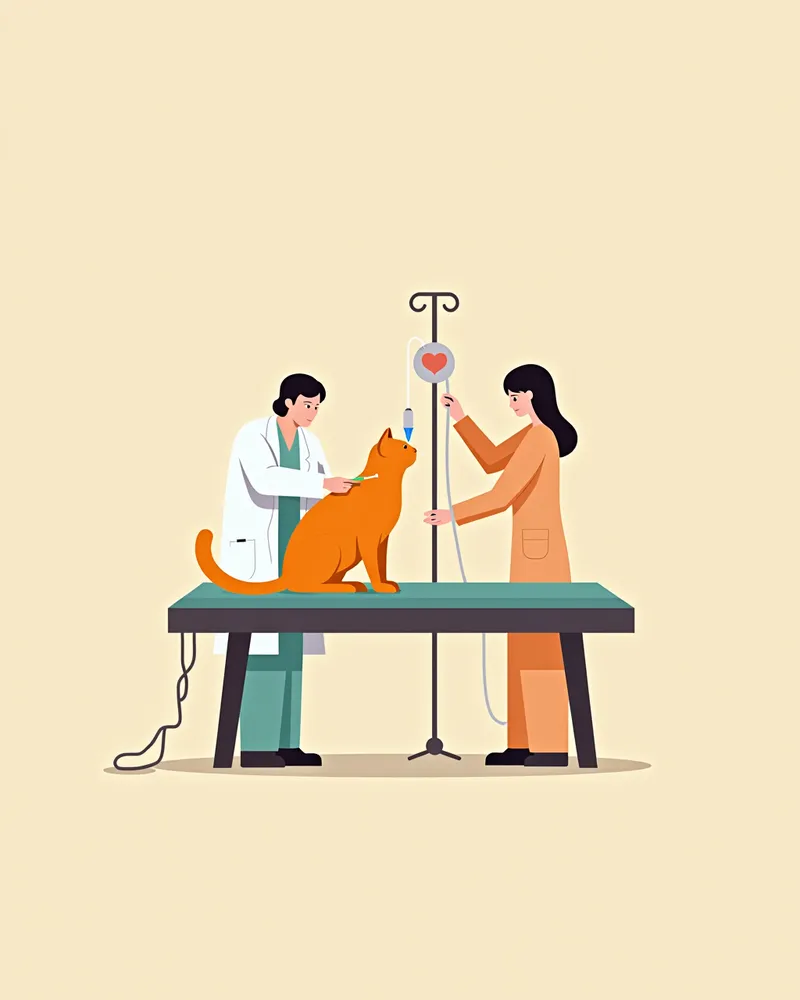
Mild side effects can be managed with rest and plenty of fluids. - Fever: Check your pet’s temperature every 1–2 hours, and consult your veterinarian if it continues to rise. - Allergic or anaphylactic reactions: For severe reactions, your veterinarian may administer epinephrine, antihistamines, and intravenous fluids. Medications must only be used under veterinary prescription; never administer them at home without professional guidance. - Difficulty breathing or shock: Oxygen therapy and intravenous injections are administered under veterinary supervision. - Persistent vomiting or diarrhea: Intravenous fluid therapy may be necessary to prevent dehydration, and treatment will be adjusted according to your veterinarian’s instructions.
A scene of intravenous injection for treatment after a cat's vaccination

Key Home Management Points: Quiet Environment and Consistent Observation

For 24 to 48 hours after vaccination, keep your cat in a quiet space and minimize external stimuli. - Hydration: Always provide fresh, clean water. If your cat refuses to drink, try offering a gel-based hydrating supplement. - Appetite Monitoring: Avoid force-feeding if your cat has no appetite. If they haven’t eaten for more than 24 hours, consult your veterinarian. - Temperature Checks: Measure your cat’s temperature once or twice daily and record any abnormalities immediately. - Activity Monitoring: Avoid outdoor trips or vigorous play until your cat has fully recovered. Gradually reintroduce normal daily activities. Your consistent observation is key to supporting their recovery.
Home care scene after a cat's vaccination

Precautions by Cat Breed and Prevention of Recurrence

There is currently no clear evidence that vaccine reactions are more common in specific breeds. Therefore, rather than assuming risk based solely on breed, it is best to consult with your veterinarian before vaccination and adjust the type of vaccine if necessary. Cats may rarely develop lumps at the injection site or feline injection-site sarcomas (FISS). If a lump persists for more than three months, exceeds 2 cm in size, or continues to grow one month after vaccination (the 3-2-1 rule), please have it evaluated by a veterinarian. If any adverse reactions occur, document them and report them to your veterinarian, the manufacturer, and regulatory authorities. To prevent recurrence, ensure close monitoring during any subsequent vaccinations.

Reviewed by a veterinarian

Dr. Tony — Punnawat Phongkittirak

Dr. Tony — Punnawat Phongkittirak

Veterinarian

A veterinarian who majored in veterinary medicine at Khon Kaen University, Thailand, and completed the IVSA program at North Carolina State University in the United States. Drawing on clinical experience at animal hospitals, he works in the pet healthcare field and is dedicated to building a digital care environment that connects pet parents with veterinarians.

Frequently Asked Questions

What should I do if my cat develops a fever 12 hours after vaccination?
If the fever persists at a high level, consult your veterinarian. In most cases, it is a temporary reaction that resolves naturally within a few days, but if it continues or is accompanied by other symptoms such as difficulty breathing or vomiting, veterinary care is necessary.
Is it okay if my pet doesn’t eat for two days after vaccination?
If your pet goes more than 12 hours without eating, they are at risk of dehydration, so be sure to provide fresh water. If they still haven't eaten after 24 hours, please consult your veterinarian. A temporary loss of appetite is common after vaccination.
What should I do for emergency first aid if my pet has an allergic reaction?
You should go to the hospital immediately. Never administer antihistamines at home, as severe reactions require treatment by a veterinarian with epinephrine, antihistamines, and intravenous fluids. Follow the veterinarian's instructions for treatment.
When can the next vaccination be administered?
If your pet experiences mild side effects, vaccination can be resumed once they’ve fully recovered, based on your veterinarian’s assessment. However, if there was a severe reaction, you’ll need to work with your vet to adjust the vaccination schedule accordingly.
Can side effects after vaccination be prevented?
While it's difficult to completely prevent side effects, you can reduce the risk by checking your pet's health status before vaccination and choosing the appropriate vaccine together with your veterinarian.

Comparison of Response Methods by Severity of Side Effects

ItemSymptom SeverityKey SignsResponse MethodWhether to Visit Hospital
MildBody temperature 38.5–39.4°C, slight lethargyDecreased appetite, drowsiness, reduced activityRest, adequate water intake, observationNot necessary
ModeratePersistent high fever, rash or swellingPersistent vomiting, diarrhea, loss of appetiteAdminister medication as directed by the veterinarian, fluid replacementRecommended
SevereDifficulty breathing, fainting, seizures, facial swelling, foaming, shockSigns of brain or heart dysfunction or anaphylaxisEpinephrine, oxygen supply, intravenous injection, emergency treatmentImmediately necessary

Symptom severity may vary depending on the veterinarian's judgment criteria. Shock is always an emergency, so go to the hospital immediately. Careful observation by the owner is always important.

Share

Related Guides

References

[1] Scherk MA, Ford RB, Gaskell RM, et al. 2013 AAFP Feline Vaccination Advisory Panel Report. J Feline Med Surg. 2013;15(9):785–808.

[2] World Small Animal Veterinary Association (WSAVA). WSAVA Guidelines for the Prevention and Management of Feline Infectious Diseases. 2023.

[3] The Cat, Clinical Medicine and Management, 2nd Edition. Chapter 8: Vaccination and Immune Response. Elsevier, 2021.

This information is based on veterinary literature and does not replace diagnosis or treatment. Please consult a veterinarian for specific health concerns.

Metapet Co., Ltd. | CEO: Park Sung-yong | Business Reg. No. 417-88-02562 | Seoul, South Korea | Customer Center

Cat Vaccine Side Effects: Symptoms, Causes, Diagnosis & Care | Meongsiljang