Like
Share
멍실장
고양이 장중첩증 증상과 원인, 진단·치료와 관리 포인트 총정리

My Cat Keeps Vomiting and Won’t Eat — Symptoms, Causes, and Emergency Response for Intestinal Intussusception

DigestiveDiseasesMeongsiljang Veterinary Advisory Board

Feline intestinal intussusception is a life-threatening gastrointestinal emergency in which a segment of the intestine telescopes into an adjacent portion, and timely diagnosis and surgical intervention are critical for survival. Here’s a clear overview of everything from symptoms to post-operative home care.

What Is Feline Intestinal Intussusception?
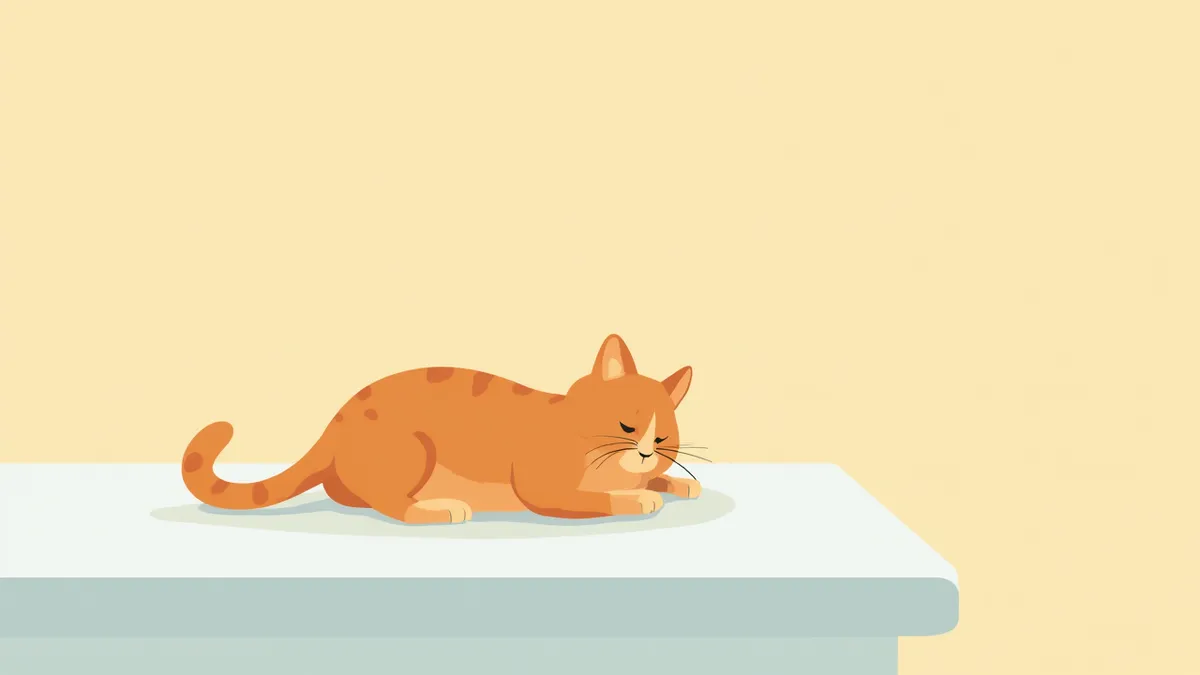
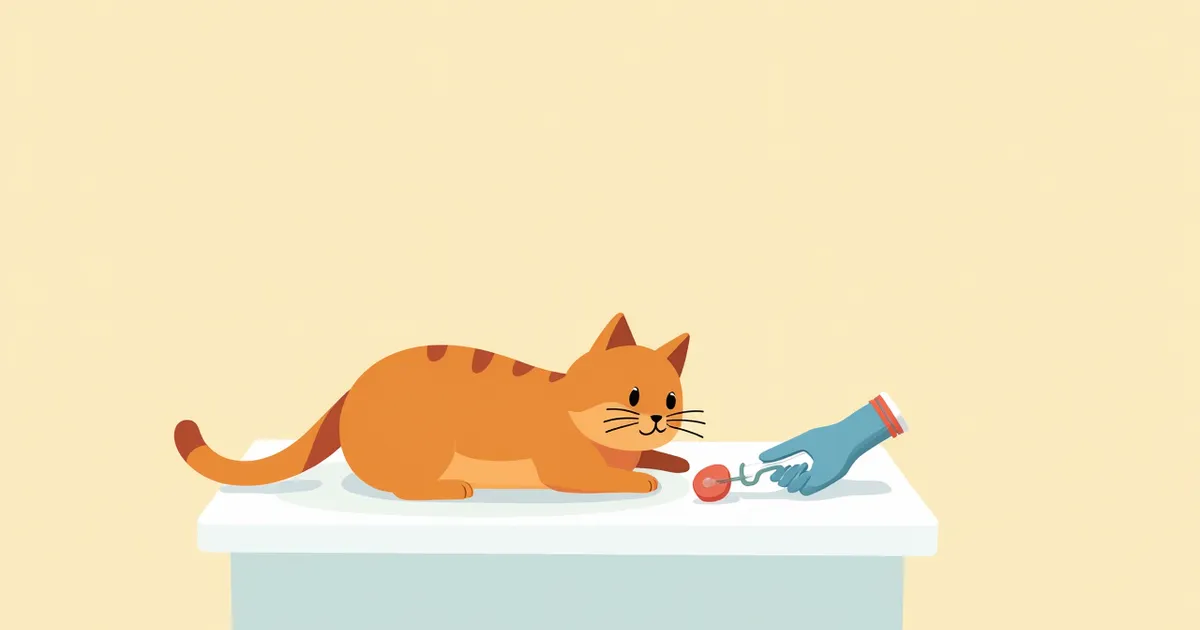
A listless cat lying on the examination table at the animal hospital.
Feline intestinal intussusception is a gastrointestinal emergency in which a segment of the intestine telescopes into an adjacent portion. As one of the leading surgical causes of acute abdominal pain, early detection is critical to prognosis. If your cat suddenly develops vomiting, bloody stools, or abdominal pain that rapidly worsens, seek veterinary care immediately without delay. If treatment is postponed and blood flow to the telescoped intestine is compromised, intestinal necrosis can occur, making recovery difficult at that stage.

Why Does Intussusception Occur? — Main Causes

Intussusception occurs when abnormal intestinal motility causes one segment of the intestine to telescope into an adjacent segment. It is generally understood that this condition is triggered by abnormal motility associated with enteritis or intraluminal masses.
Parasitic infection: Infections with parasites such as roundworms can serve as a predisposing factor.
Ingestion of foreign bodies: Swallowed foreign objects, particularly linear items like string or ribbon, can be involved.
Viral or bacterial enteritis: Severe acute enteritis, such as that caused by panleukopenia (parvovirus), is a classic trigger.
Intestinal tumors or inflammatory bowel disease (IBD): In older cats, intestinal tumors or IBD are common causes.
The age of onset falls into two distinct categories: in young cats, the condition is often idiopathic with no clear cause, whereas in older cats, it is more closely associated with tumors.

Key Symptom Checklist

If your pet shows two or more of the following symptoms at the same time, intestinal intussusception should be suspected.
Repetitive vomiting: Persistent retching and vomiting, even without any stomach contents.
Blood or mucus in stool: Damage to the intestinal lining causes blood or mucus to mix with the stool.
Complete loss of appetite: A pet that usually eats well suddenly refuses food.
Abdominal distension and pain: The abdomen feels tense, and the pet may pull away or show discomfort when touched.
Rapid dehydration: Gums become dry, and skin elasticity noticeably decreases.
Lethargy and hiding behavior: Reduced activity and attempts to hide in confined spaces.
A sick cat curled up listlessly

If You See These Symptoms, Go to a 24-Hour Veterinary Clinic Immediately

If your pet vomits repeatedly for more than six hours, passes bloody stool, or has a hard, distended abdomen, immediate emergency care is required. Once intestinal necrosis begins, recovery may be difficult even with surgery. Please visit a 24-hour emergency veterinary clinic right away, even in the early morning or on holidays.

How Is It Diagnosed?

Intussusception is diagnosed through a combination of tests.
Abdominal ultrasound: This is the most accurate diagnostic method, revealing a concentric ring pattern known as the "target sign."
Abdominal radiography: This helps identify gas patterns associated with intestinal obstruction.
Abdominal palpation: An experienced veterinarian may feel a sausage-shaped mass.
Blood and electrolyte tests: These assess the degree of dehydration and inflammation, helping to evaluate surgical risk.
Because delayed diagnosis can lead to a larger area of intestinal necrosis, it is crucial to proceed with testing promptly.

Treatment — Surgery Is Usually Required
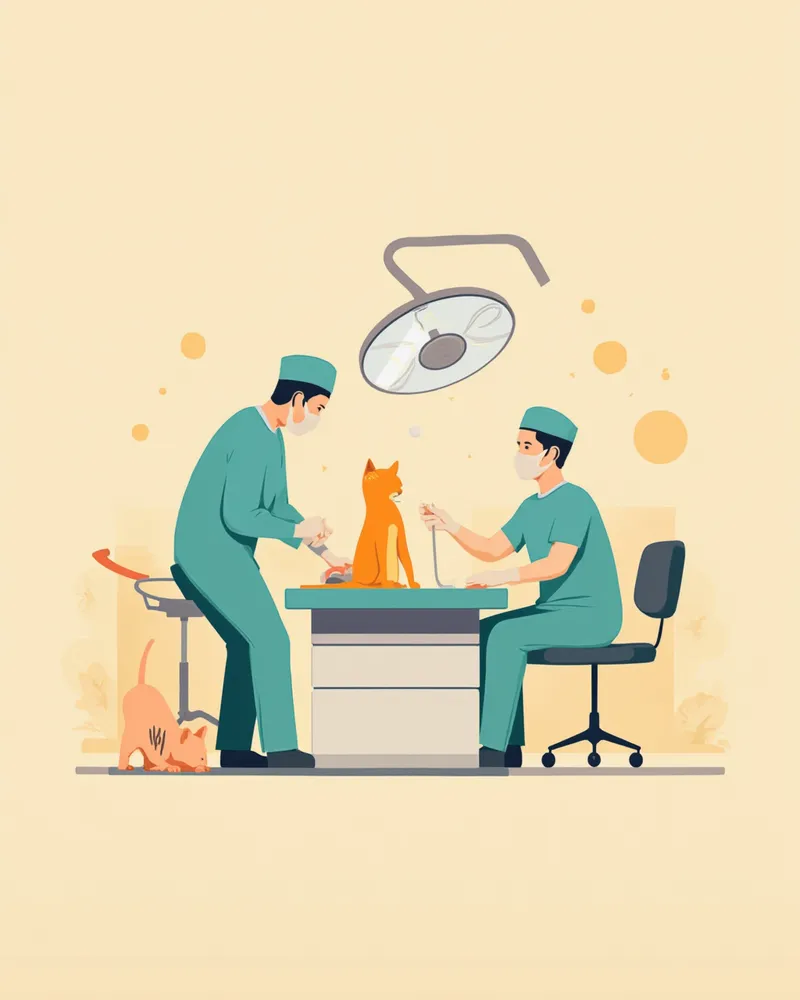
Intestinal intussusception rarely resolves with medication alone.
Preoperative treatment: Intravenous fluids are administered to correct dehydration and electrolyte imbalances.
Reduction surgery: This procedure involves untwisting the telescoped intestine. If the bowel tissue is still healthy, the surgery can be completed with this step alone.
Bowel resection and anastomosis: If necrosis has occurred, the affected portion of the intestine is surgically removed and the healthy ends are reconnected.
Postoperative intensive care: Antibiotics, pain management, and fluid therapy are continued.
The success rate of surgery varies significantly depending on how early the condition is detected and the extent of tissue necrosis.
A veterinarian performing abdominal surgery on a cat in the operating room

Post-Operative Home Care Points

During the post-operative recovery period, close monitoring by the pet owner is essential.
Dietary Management: Feed a gastrointestinal-prescription diet in small, frequent meals. Transition to regular food gradually and only under veterinary guidance.
Activity Restriction: For two weeks, until the sutures are secure, restrict jumping from heights and vigorous activity.
Symptom Monitoring: Contact the clinic immediately if vomiting recurs, appetite decreases, or abdominal distension reappears.
Regular Follow-up Examinations: Schedule check-ups at one week, two weeks, and one month post-surgery to assess recovery progress.
A recovering cat resting comfortably at home while wearing a neck cone.

Beware of Recurrence — Pay Extra Attention to Young Cats

Intestinal intussusception can recur even after surgical reduction or resection, especially in idiopathic cases where the cause is unclear, and may develop in other parts of the intestine. The risk of recurrence is higher in young cats with no clear underlying cause, those with lingering parasitic infections, or when enteritis has not been fully resolved. Please follow your veterinarian’s instructions for deworming and regular check-ups to help prevent recurrence.

Reviewed by a veterinarian

Dr. Tony — Punnawat Phongkittirak

Dr. Tony — Punnawat Phongkittirak

Veterinarian

A veterinarian who majored in veterinary medicine at Khon Kaen University, Thailand, and completed the IVSA program at North Carolina State University in the United States. Drawing on clinical experience at animal hospitals, he works in the pet healthcare field and is dedicated to building a digital care environment that connects pet parents with veterinarians.

Frequently Asked Questions

How can you tell the difference between intestinal intussusception and simple enteritis?
It's difficult to distinguish based on symptoms alone. If vomiting and diarrhea persist for more than six hours or if there is blood in the stool, it may not be simple enteritis. An abdominal ultrasound is necessary for an accurate diagnosis.
Is surgery absolutely necessary? Can’t it be treated with medication alone?
Most cases require surgery. A twisted intestine cannot be returned to its normal position with medication alone, and as time passes, blood flow becomes compromised, leading to intestinal necrosis. Delaying surgery can be life-threatening.
Will my pet make a full recovery after surgery?
If detected early and the area of necrosis is small, complete recovery after surgery can be expected. However, if a large portion of the intestine has to be removed, digestive function may be somewhat impaired, requiring long-term dietary management.
Can gastric dilatation-volvulus be prevented?
While complete prevention is challenging, regular deworming and preventing ingestion of foreign objects are essential. Manage your pet’s environment to prevent them from swallowing strings, threads, or plastic, and seek early treatment if enteritis develops.
How much does surgery for intestinal intussusception cost?
Costs vary significantly depending on the hospital, location, and scope of surgery, so please contact your veterinarian directly for an accurate estimate. Since emergency surgeries can be financially burdensome, we recommend considering pet insurance in advance to help ease the cost.

Share

Related Guides

References

[1] Washabau RJ, Day MJ. Canine and Feline Gastroenterology. Elsevier Saunders, 2013.

[2] Ettinger SJ, Feldman EC, Côté E. Textbook of Veterinary Internal Medicine, 8th Ed. Elsevier, 2017.

[3] Little SE. The Cat: Clinical Medicine and Management, 2nd Ed. Elsevier Saunders, 2012.

This information is based on veterinary literature and does not replace diagnosis or treatment. Please consult a veterinarian for specific health concerns.

Metapet Co., Ltd. | CEO: Park Sung-yong | Business Reg. No. 417-88-02562 | Seoul, South Korea | Customer Center

Cat Vomiting & Not Eating: Intussusception Emergency | Meongsiljang