
Like
Share
멍실장
고양이 주사 부위 육종 증상과 원인, 진단·치료와 관리 포인트 총정리

If a Lump Appears at Your Cat’s Injection Site — Signs of Injection-Site Sarcoma and Timing for Diagnosis and Treatment

Oncology/CancerDiseasesMeongsiljang Veterinary Advisory Board

Feline injection-site sarcomas are malignant tumors that develop at the site of a vaccine or other injection, making early detection and appropriate treatment essential. We also provide guidance on prevention and management.

What Are Feline Injection-Site Sarcomas?

A veterinarian examining a cat's injection site for sarcoma.
Feline injection-site sarcomas are malignant tumors that develop at the site of vaccine or medication injections. The onset time varies widely, with tumors appearing anywhere from several months to several years after the injection. Also known as feline injection-site sarcomas, these tumors are believed to arise from repeated inflammation and immune responses at the injection site. Initially, they present as small, firm, immobile lumps, but over time they grow and aggressively invade surrounding tissues along the fascia. Due to their highly malignant nature and strong local invasiveness, early detection and appropriate treatment significantly impact the prognosis. Early diagnosis through consultation with a veterinarian is crucial, and because complete cure can be challenging, prevention and ongoing management are equally emphasized.

What Are the Main Causes of Injection-Site Sarcomas?
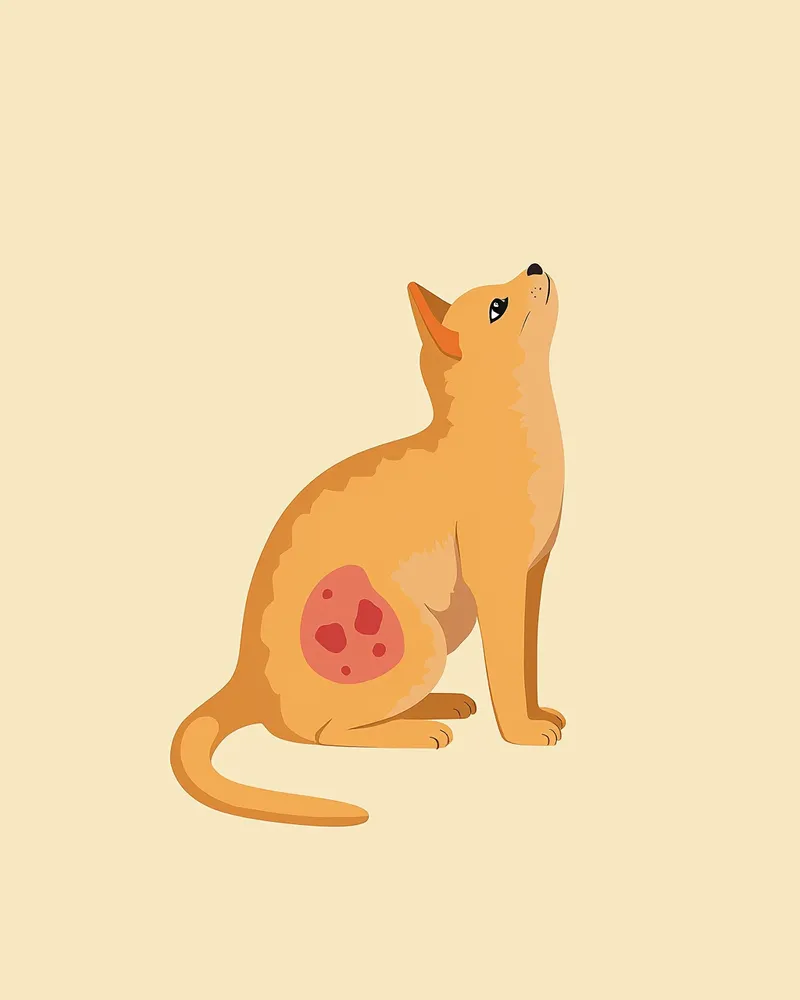
The primary cause of injection-site sarcomas in cats is believed to be persistent inflammation and immune responses at the injection site. In particular, inactivated vaccines containing adjuvants are considered a risk factor because they induce stronger local inflammation to stimulate the immune system. In fact, aluminum adjuvants have been identified in some tumor biopsies. It is hypothesized that prolonged inflammatory and immune responses to residual foreign material at the injection site can disrupt the normal repair process of fibrous connective tissue, leading to abnormal cell proliferation. However, the exact mechanism of development remains unclear. Additionally, reports suggest that cold vaccines are more strongly associated with sarcoma development than room-temperature vaccines; therefore, allowing vaccines to reach room temperature briefly before administration may help reduce this risk. Early prevention and proper care of injection sites are crucial.
An anatomical illustration showing the injection site on a cat's back and the areas where injection-site sarcomas may develop.

Check for Key Symptoms and Signs

The earliest sign of a feline injection-site sarcoma is the development of a firm, immobile lump at the injection site. Veterinary guidelines recommend monitoring closely if the lump persists for more than three months, gradually increases in size, or grows to 2 cm or larger. You should also watch for skin redness, ulceration, bleeding, or frequent licking by the cat. Pain may lead to reduced activity or a decreased appetite. Because these tumors can aggressively invade surrounding tissues along the fascia and extend into deep muscle layers, they may cause gait abnormalities depending on their location. If you notice any of these changes, please visit your veterinarian promptly for evaluation, as early detection significantly improves treatment outcomes and prognosis.
A close-up image showing the symptoms of a sarcoma that has developed at the injection site in a cat.

Signs Requiring Immediate Veterinary Attention

If a lump at the injection site persists for more than three months, grows larger than 2 cm, or causes the skin to peel or bleed, immediate veterinary attention is necessary. These are strong indicators of a potential malignant tumor, so early diagnosis is crucial.

Diagnostic Tests for an Accurate Diagnosis

A definitive diagnosis of injection-site sarcoma in cats requires a tissue biopsy. Histopathology (pathological examination) confirms whether the tumor is malignant, determines its grade and cytological characteristics, and differentiates it from other conditions with similar presentations, such as abscesses, foreign body reactions, or post-vaccination reactions. CT or MRI scans are used to assess the tumor’s size, depth, and extent of invasion into surrounding tissues, aiding in the planning of surgical or radiation therapy. Since this type of tumor commonly metastasizes to the lungs, thoracic radiography is recommended to check for pulmonary metastasis. Failing to accurately determine the extent of local invasion and metastasis at the diagnostic stage increases the risk of recurrence due to incomplete surgical removal; therefore, it is essential to consult with your veterinarian to develop a tailored diagnostic plan.
Ultrasound image of a cat's injection site showing a granuloma

Treatment Methods and Step-by-Step Approach
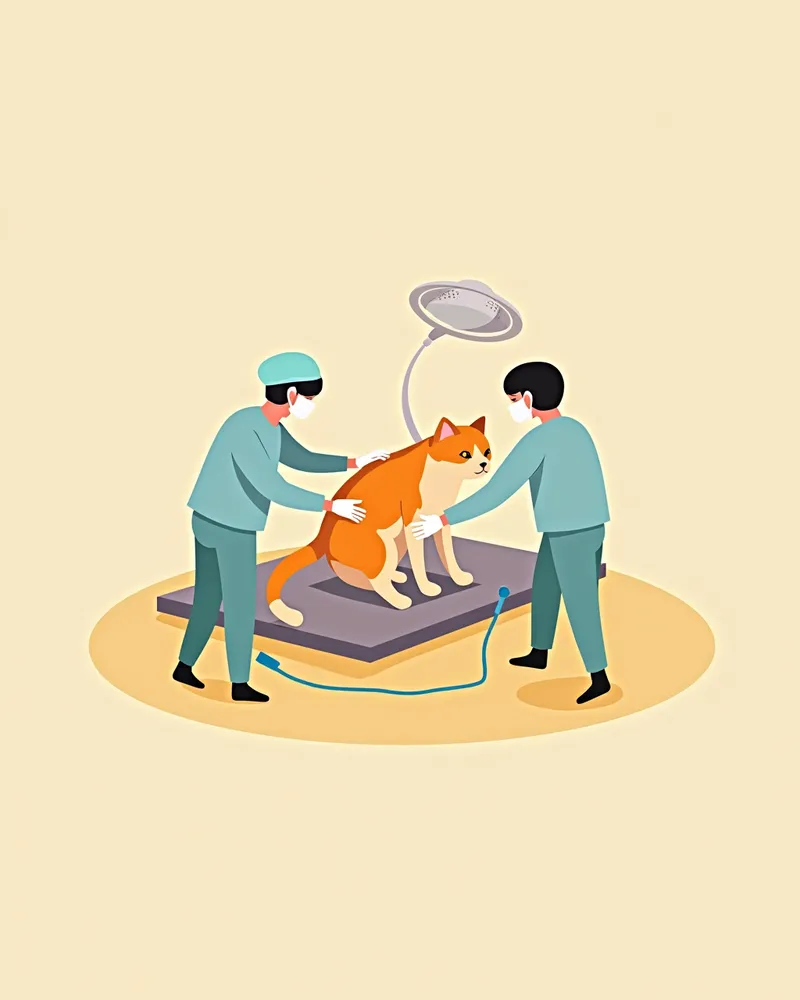
Surgery is the primary treatment for injection-site sarcomas in cats. Depending on the tumor’s size and location, complete removal may be possible, but the procedure becomes more complex if the cancer has invaded bone or muscle. Postoperative radiation therapy or chemotherapy is often used in combination with surgery to effectively reduce the risk of recurrence. The veterinarian will determine the treatment plan based on the tumor’s biological characteristics and stage of progression. Regular check-ups are necessary throughout the treatment period, with adjustments made according to the cat’s condition. Early treatment significantly impacts survival rates.
A veterinarian performing surgery to remove a sarcoma at the injection site in a cat.

Home Care and Precautions

To help your cat recover after treatment, keep the injection site clean and prevent infection. After surgery, limit your cat’s movement and ensure they take the prescribed medications exactly as directed by your veterinarian. Be careful not to let your cat frequently touch or lick the injection site; you can use an Elizabethan collar or a recovery cage to prevent this. Regular vet visits are essential to monitor for recurrence and quickly identify any changes in your cat’s condition. Proper care at home plays a significant role in the success of the treatment.
A caregiver tending to a cat after treatment

Preventing Recurrence and Breed-Specific Considerations

Because feline injection-site sarcomas have a high rate of local recurrence if not completely excised, it is crucial to monitor for any signs of recurrence through regular check-ups even after surgery. To date, no specific genetic predisposition has been clearly identified in any particular breed, so the key is to carefully watch for changes at injection sites rather than focusing on the cat’s breed. Vaccinations should only be administered when absolutely necessary, after consulting with your veterinarian, and it is recommended to minimize the use of vaccines containing adjuvatives whenever possible.

Reviewed by a veterinarian

Dr. Tony — Punnawat Phongkittirak

Dr. Tony — Punnawat Phongkittirak

Veterinarian

A veterinarian who majored in veterinary medicine at Khon Kaen University, Thailand, and completed the IVSA program at North Carolina State University in the United States. Drawing on clinical experience at animal hospitals, he works in the pet healthcare field and is dedicated to building a digital care environment that connects pet parents with veterinarians.

Frequently Asked Questions

Do injection-site sarcomas always require surgery?
Yes, in most cases, wide surgical excision is the best treatment. However, because complete removal can be difficult and the recurrence rate is relatively high, radiation or chemotherapy may be used in conjunction with surgery, depending on the tumor’s size, location, and extent of invasion.
Should I be concerned if a lump forms after a vaccine injection?
If a lump at the injection site persists for more than three months or gradually increases in size, it warrants attention. You should consult your veterinarian about considering a biopsy.
Do only cats develop injection-site sarcomas?
It is the most common and well-known in cats. Although injection-site fibrosarcomas have been reported in dogs and ferrets, they are relatively rare.
Can it be prevented?
Vaccines should only be administered when absolutely necessary, and the use of vaccines containing adjuvants should be minimized. It is recommended to avoid injecting into the interscapular region (between the shoulder blades), where precise control is difficult, and instead administer vaccines in standardized locations such as the distal limbs or tail.
How often do recurrences occur?
Especially when the tumor is incompletely removed, the rate of local recurrence tends to be high. Regular check-ups and consistent care are essential.

Share

Related Guides

References

[1] Hartmann K, Day MJ, Thiry E, et al. Feline injection-site sarcoma: ABCD guidelines on prevention and management. J Feline Med Surg 2015;17(7):606-13.

[2] Plumb's Veterinary Drug Handbook, 9th Edition. Wiley-Blackwell, 2021.

[3] The Cat, Clinical Medicine and Management, 2nd Edition. Elsevier, 2020.

This information is based on veterinary literature and does not replace diagnosis or treatment. Please consult a veterinarian for specific health concerns.

Metapet Co., Ltd. | CEO: Park Sung-yong | Business Reg. No. 417-88-02562 | Seoul, South Korea | Customer Center

Lump at Your Cat's Injection Site? Sarcoma Signs & Timing | Meongsiljang