
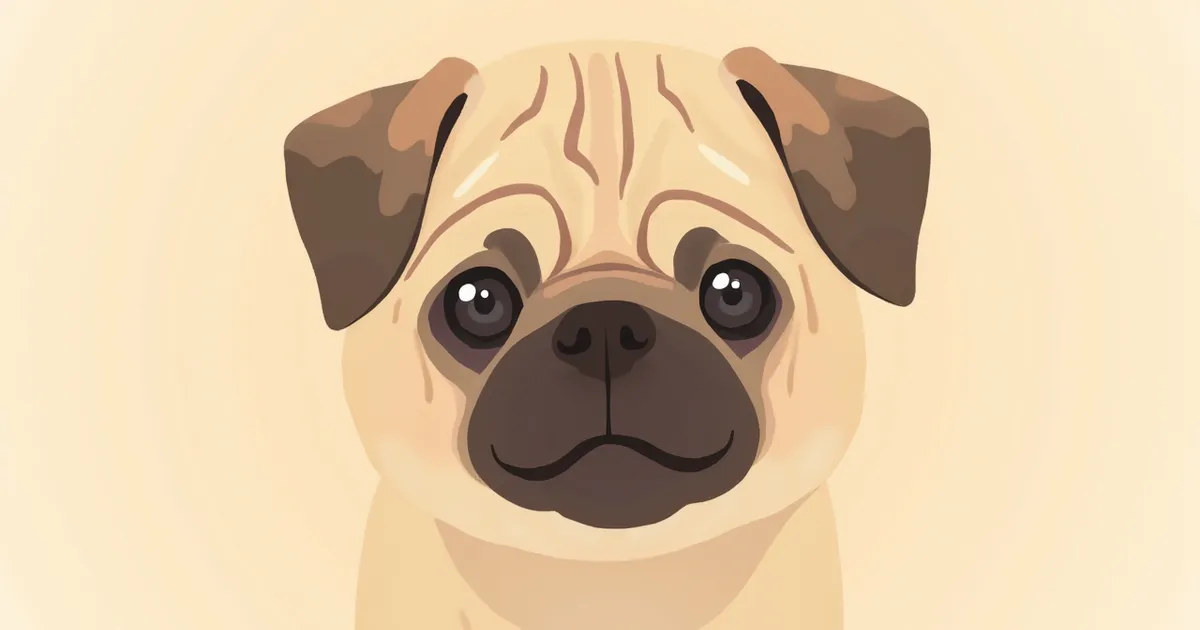
Pug Facial Wrinkle Care Guide
While a Pug’s deep facial wrinkles are undeniably charming, they are also prone to developing dermatitis. Here’s a guide to a daily cleaning routine and the warning signs to watch for.
What Are Pug Wrinkles?

Areas Where Pug Wrinkles Commonly Occur
Skin Issues Common in Wrinkles
See a Vet Immediately If You Notice These Signs
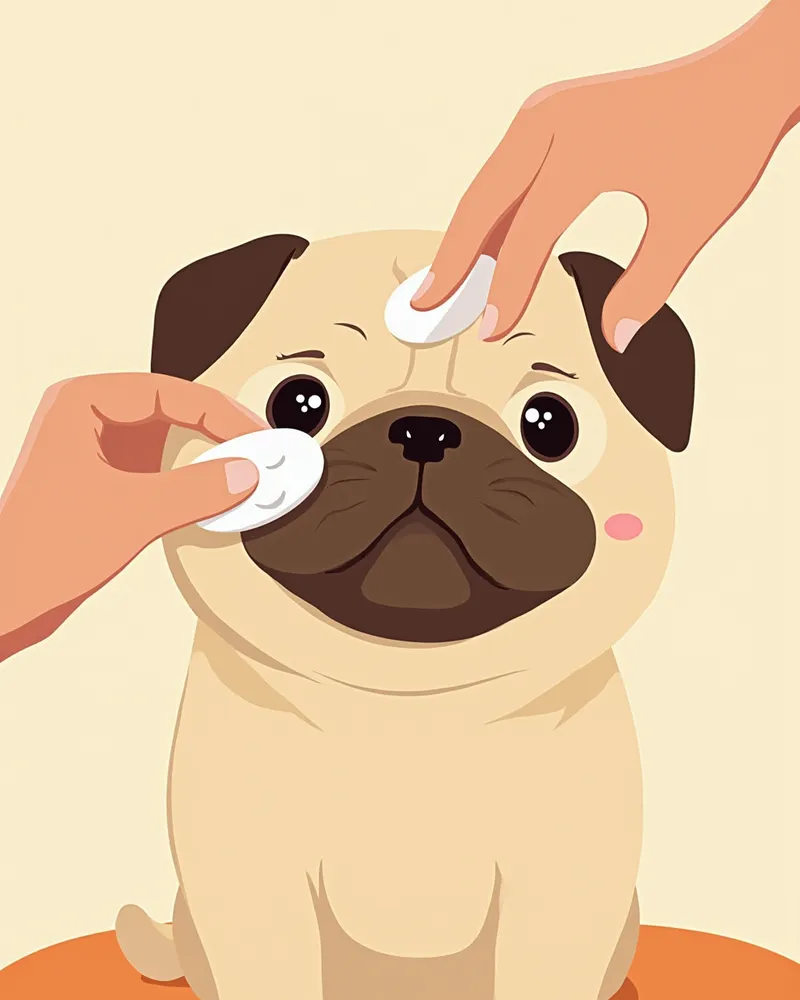
While mild redness can often be managed at home, it’s safest to visit the vet within 24 hours if you notice any of the following signs. Because Pugs are brachycephalic, they face higher anesthesia and surgical risks than other breeds, so catching skin issues early is key. - Yellow discharge or pus oozing from the wrinkles - A persistent strong odor, such as a sour or fishy smell - Thickened, darkened skin (a sign of chronic inflammation) - Frequent face rubbing or pawing at the face - Loss of appetite accompanied by fever
Daily Wrinkle Care Routine
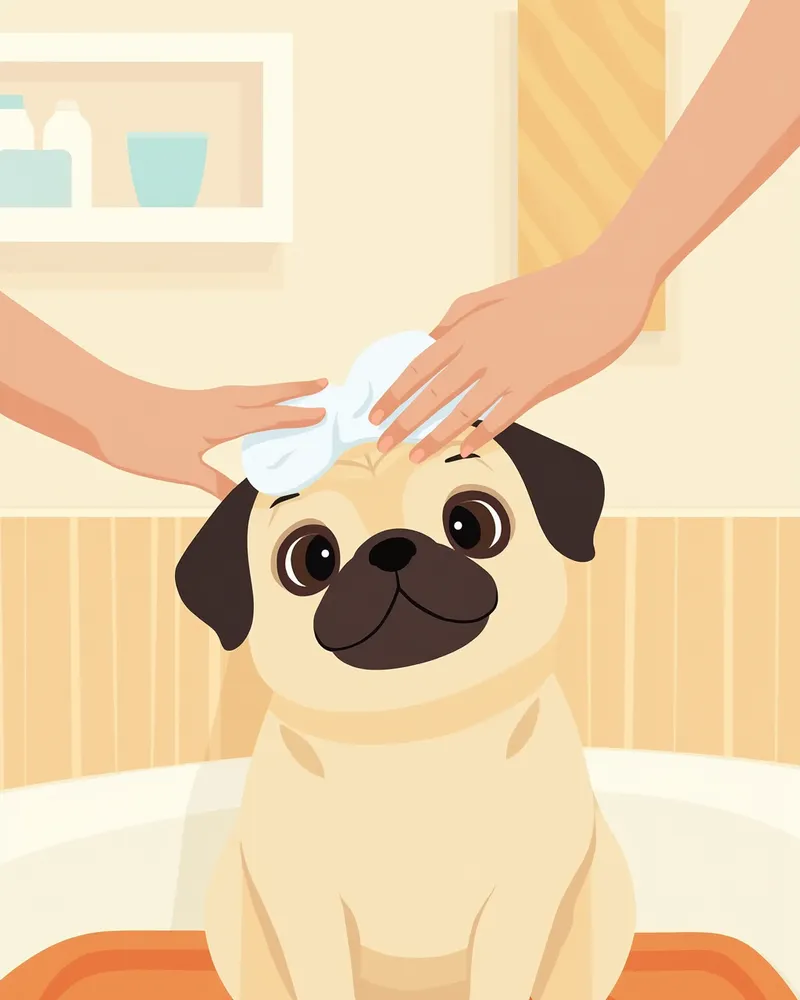
Weight Management Is Wrinkle Management
Things to Be Extra Cautious About Because They’re Pugs
There are several breed-specific traits that Pug owners should be aware of, just as important as wrinkle care. - Brachycephalic Airway Syndrome: If your Pug is panting heavily, avoid strenuous walks. - Poor Temperature Regulation: In summer, shorten walk times when temperatures exceed 27°C (80.6°F). - Hemivertebrae: Spinal deformities near the tail are common, so be cautious with jumping and stairs. - Corneal Exposure: Their protruding eyes make them vulnerable to tearing and foreign objects. - Allergic Disposition: Food and environmental allergies can worsen wrinkle dermatitis.
Environmental Management to Prevent Wrinkle Dermatitis

Reviewed by a veterinarian

Dr. Tony — Punnawat Phongkittirak
VeterinarianA veterinarian who majored in veterinary medicine at Khon Kaen University, Thailand, and completed the IVSA program at North Carolina State University in the United States. Drawing on clinical experience at animal hospitals, he works in the pet healthcare field and is dedicated to building a digital care environment that connects pet parents with veterinarians.
Reviewed 2026-04-30
Frequently Asked Questions
Should you clean your pug’s wrinkles every day?
Can I use only dog-specific wet wipes to clean my dog's wrinkles?
The brown stains between my dog’s skin folds won’t come off. What should I do?
Is it safe to apply ointment to the skin folds?
I’ve heard that Pugs can have surgery to remove their facial wrinkles. Is it really necessary?
Share
Related Guides

Top 5 Medicated Dog Shampoos — For Pyoderma and Bacterial Infections

Veterinarian-Recommended Top 5 Medicated Shampoos for Canine Yeast Dermatitis — Relieves Itching and Greasiness

Top 5 Medicated Cat Shampoos Recommended by Veterinarians — Fungal Dermatitis and Fungal Care

Cocker Spaniel Health Care — Prevention and Management of Ear, Eye, and Joint Diseases
Shih Tzu Health Care Guide (Eyes, Skin, and Tartar)

French Bulldog Health Care — Respiratory, Skin, and Spinal Conditions and Prevention

Pomeranian Health Care Guide — Prevention and Management of Tracheal Collapse and Patellar Luxation
Poodle Health Care Guide (Patellar, Skin, and Eye)

Maltese Health Care Guide — Patellar, Tear Stain, and Tartar Management

7 Genetic Conditions in Bichon Frises: Symptoms, Causes, and Lifelong Care Guide
References
[1] Hendricks JC, Brachycephalic Airway Syndrome, Textbook of Respiratory Disease in Dogs and Cats
[2] The Veterinary Workbook of Small Animal Clinical Cases, Case 41 - Brachycephalic Breeds
[3] Miller WH et al., Muller and Kirk's Small Animal Dermatology, 7th Edition