
Like
Share
멍실장
강아지 효모 과증식 케어 저전분 사료 추천 TOP 5

Top 5 Low-Starch Dog Foods for Yeast Overgrowth Care

DigestiveTop PicksMeongsiljang Veterinary Advisory Board

We’ve compared and summarized five low-starch, low-glycemic index dog foods that may help when yeast overgrowth is suspected, based on protein sources, carbohydrate sources, and added functional ingredients.

What Is Yeast Overgrowth in Dogs? Why Diet Is Key
A puppy waiting patiently by its bowl filled with low-carb, grain-free food
Yeast overgrowth in dogs occurs when yeast that normally resides on the skin and in the ears—primarily Malassezia, and occasionally Candida—multiplies abnormally, leading to symptoms such as itching, excessive paw licking, foul ear odor, and nail discoloration. Since Malassezia is a commensal organism naturally present on the skin surface, the cornerstone of care involves not only topical and systemic antifungal treatments but also identifying the underlying cause of the overgrowth. Textbook evidence strongly links yeast overgrowth with hypersensitivity disorders such as atopic dermatitis and food-responsive skin inflammation (food allergies). Therefore, for dogs with an underlying food allergy, transitioning to a diet containing novel or hydrolyzed proteins serves as the first step in reducing the root cause and preventing recurrence. However, the claim that eliminating simple carbohydrates alone is sufficient because yeast feeds on starch and sugar lacks scientific support. Instead, dietary adjustments should be viewed as a complementary measure to antifungal therapy and the management of allergic and endocrine conditions.

6 Signs of Suspected Yeast Overgrowth

If your pet experiences two or more of the following symptoms for over two weeks, it may indicate yeast overgrowth, particularly underlying skin or ear issues, or food allergies. However, these signs are only clues for diagnosis, and a definitive diagnosis requires cytological examination (skin and ear swabs, or nail fold swabs). - Licking between toes: The nails and toes may become brownish with visible licking marks (common in Malassezia claw fold dermatitis). - Ear itching and odor: Recurrent dark brown discharge and a sour smell (a pattern of Malassezia otitis externa). - Itching around the anus and perineum: These moist and friction-prone areas are prone to yeast growth. - Chronic digestive issues: If gas, bloating, and intermittent diarrhea recur, other causes such as Candida should also be considered. - Sticky or oily skin: The back and belly may feel greasy and sticky. - Increased itching after meals: If scratching worsens a few hours after eating, food allergies should also be suspected.

When to See a Vet Before Changing Diet

It may not be simple dietary yeast overgrowth, but rather a sign of an endocrine disorder or a secondary bacterial infection. In the following situations, you should consult a veterinarian before changing your pet’s diet: when pus or blood is draining from the ears or the pet shows signs of pain; when skin lesions spread rapidly to an area larger than a coin; when decreased appetite and weight loss persist for more than two weeks; or when excessive thirst and urination are present. If an underlying endocrine condition such as hypothyroidism, Cushing’s disease, or diabetes is present, switching diets alone will not resolve the yeast overgrowth.

5 Criteria for Choosing Yeast Care Diets
When selecting a diet, consider these five factors together. The key isn’t to “starve the yeast directly,” but rather to manage underlying food allergies and support a compromised skin barrier. - Single novel protein: Choose proteins your pet has never been exposed to, such as duck, salmon, kangaroo, or rabbit, to minimize allergic variables (this is fundamental for managing food-responsive dermatitis). - Grain-free or hydrolyzed: If a food allergy is suspected, a hydrolyzed prescription diet is the standard. These diets break down proteins into particles small enough that immune cells do not recognize them as allergens. - Moderate simple sugars and starch content: Note that there is no textbook evidence that starch itself promotes yeast growth; therefore, low starch should be viewed as a reference point, not an absolute requirement. - Skin barrier support: Look for formulas that aid in repairing the damaged skin barrier, such as those containing salmon oil or flaxseed (the barrier is particularly weakened in cases accompanied by atopy). - Feasibility of maintaining an elimination diet: Select a palatable line that allows you to consistently maintain an elimination diet for 6 to 8 weeks without deviation.
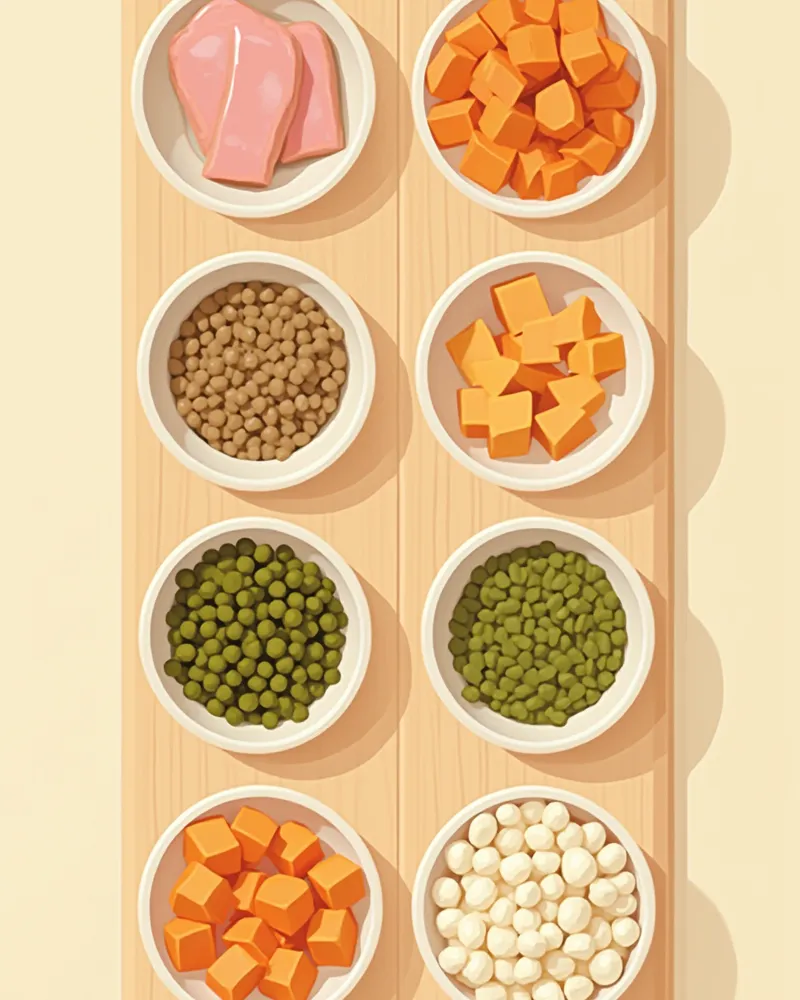
A collection of the main ingredients used in low-carb, grain-free pet food.

TOP 1 — Duck Single Protein Grain-Free Low-Starch Diet

This is the first formula we recommend for pets with both food allergies and yeast overgrowth. It features duck as a single protein source, with tapioca and peas as the base, keeping the starch content below 25%. Since duck is a novel protein that most pets have never been exposed to, it reduces the likelihood of an immune system overreaction compared to common proteins like chicken, beef, or pork. To avoid diarrhea or vomiting, gradually transition by mixing 25% of the new food with the old food over the first 7 to 10 days. It’s helpful to keep a diary noting any improvements in itching or stool quality around the 4-week mark.

TOP 2 — Salmon & White Fish Freeze-Dried Raw-Style Low-Starch Diet

Freeze-dried raw-style pet food undergoes minimal processing, which helps preserve the integrity of proteins and fats. With a vegetable and fruit base instead of grains, it naturally contains less starch. White fish like salmon, cod, and pollock are rich in omega-3 fatty acids, which support skin barrier recovery. While the higher cost can be a drawback, mixing it as a topper at 30–50% with regular dry kibble is a great option. Pets with fish allergies should avoid this food, and it’s helpful to know that reduced stool volume and darker color are normal changes.
A bowl filled with freeze-dried salmon and whitefish variety dog food

TOP 3 — Hydrolyzed Protein Prescription Diet

This type is suitable for dogs with true food allergies or atopy, rather than just simple yeast overgrowth. Hydrolyzed diets break down proteins into tiny fragments using enzymes, making them small enough that the immune system doesn’t recognize them as allergens. As a prescription diet, it requires a veterinarian’s diagnosis before purchase, but it’s also used as a standard diet for 6–8 weeks of elimination diet testing. It’s a good option when yeast symptoms can’t be separated from allergies, allowing for simultaneous diagnosis and treatment. However, some dogs may find the flavor bland and less appealing.

TOP 4 & 5 — Novel Protein Grain-Free / Rabbit & Green Vegetable Low-GI Diets
TOP 4 — Grain-Free Formulas with Novel Proteins like Kangaroo and Venison: This is a good last resort for dogs who have tried chicken, beef, salmon, and duck without success or who suffer from severe allergies. Although the price is higher, we often see clinical improvements in these cases.
TOP 5 — Low-GI Formulas Based on Rabbit, Green Vegetables, and Lentils: These are suitable for senior dogs who need to reduce their protein load. Even within rabbit-based lines, avoid products containing more than 30% pumpkin or sweet potato; instead, choose lines primarily using green vegetables, peas, and lentils to ensure they are truly low-starch.
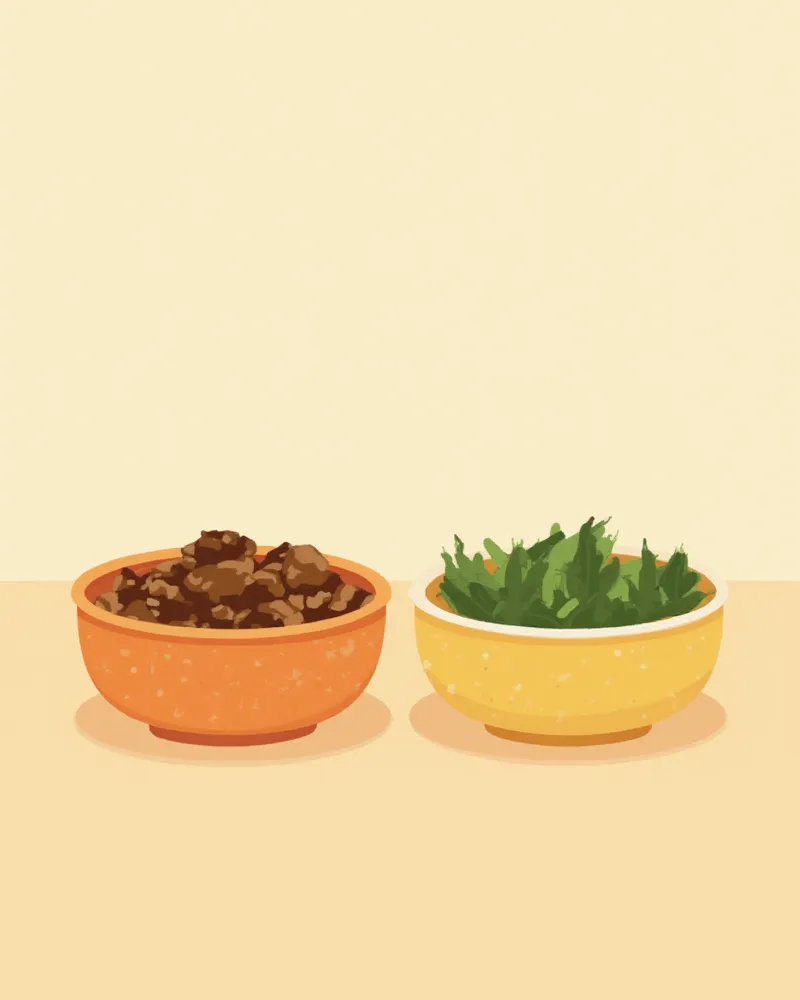
Two separate bowls, one containing kangaroo food and the other rabbit and green vegetable food

At-a-Glance Comparison of 5 Yeast Care Diets

ItemTOP 1 DuckTOP 2 Cooked DietTOP 3 HydrolyzedTOP 4 Novel ProteinTOP 5 Rabbit
Main proteinDuckSalmon, whitefishHydrolyzed chicken, salmonKangaroo, venisonRabbit
Main carbohydrate sourceTapioca, peaVegetables, fruitsRice flour (low ratio)Pea, lentilGreen vegetables, lentil
Estimated starch ratio20–25%Under 10%25–30%20–25%15–20%
Veterinary prescription requiredFalseFalseTrueFalseFalse
PalatabilityModerateHighLowModerateModerate
Recommended situationYeast + mild allergySkin-related symptomsConfirmed food allergyReframe stageSenior dogs, liver burden

Starch ratios are estimates based on typical lineups and vary by product. Please check the carbohydrate/starch content on the label directly before purchasing.

The 7–10 Day Rule for Transitioning Diets

Switching to a new diet all at once can cause diarrhea and vomiting, regardless of yeast involvement. Instead, transition gradually: mix 25% new food with 75% old food for days 1–3, then 50:50 for days 4–6, then 75:25 for days 7–9, and finally 100% new food from day 10 onward. Keep a daily log of stool consistency and itching severity during the transition; this will make it easier to assess by week 4 whether the new food is effective. If symptoms remain unchanged or worsen, try a different product line with alternative protein and carbohydrate sources.

Reviewed by a veterinarian

Dr. Tony — Punnawat Phongkittirak

Dr. Tony — Punnawat Phongkittirak

Veterinarian

A veterinarian who majored in veterinary medicine at Khon Kaen University, Thailand, and completed the IVSA program at North Carolina State University in the United States. Drawing on clinical experience at animal hospitals, he works in the pet healthcare field and is dedicated to building a digital care environment that connects pet parents with veterinarians.

Frequently Asked Questions

Will switching to a different food alone eliminate the yeast?
Food alone isn’t enough. Malassezia is a yeast that lives on the skin surface, so treatment centers on topical and systemic antifungal medications (such as miconazole, chlorhexidine medicated baths, ketoconazole, and itraconazole) along with medicated baths. Dietary adjustments play a supportive role in reducing recurrences when an underlying food allergy is present, but if otitis externa and Malassezia dermatitis occur together, antifungal therapy must always be administered concurrently.
Are pet foods containing sweet potatoes or potatoes not suitable?
There is no textbook evidence that carbohydrate sources like sweet potatoes and potatoes directly promote yeast growth. However, during the elimination diet period for diagnosing food allergies, simplifying the diet with novel proteins and a simple composition can be helpful. Rather than avoiding specific ingredients, dietary management that addresses the underlying cause is more important.
Can I give probiotics alongside this?
There is no textbook evidence that probiotics directly inhibit yeast. While they may help stabilize stool consistency, treating yeast overgrowth primarily requires antifungal medication and management of underlying conditions, such as allergies or endocrine disorders. Even when used as a supplement, probiotics do not replace antifungal treatment.
Are all grain-based pet foods bad?
No, grains themselves do not promote yeast growth. The reason we reduce grains is to simplify the diet for pets suspected of having food allergies, helping to identify the underlying cause. For pets without allergies, grain-based diets are not inherently bad.
How long should I wait before evaluating the results?
For dietary allergy and yeast care, maintain the same diet for at least four weeks, with a standard duration of six to eight weeks, while monitoring skin, ear, and stool condition. This timeframe must also be strictly followed for hydrolyzed or novel protein elimination diets. Switching diets again after just two weeks due to perceived lack of effect will obscure the diagnostic process.

Share

Related Guides

References

[1] Hand MS, Thatcher CD, Remillard RL, et al. Small Animal Clinical Nutrition, 5th Ed. Mark Morris Institute, 2010

[2] Fascetti AJ, Delaney SJ. Applied Veterinary Clinical Nutrition, 2nd Ed. Wiley-Blackwell, 2024

[3] Bond R, Morris DO, Guillot J, et al. Biology, diagnosis and treatment of Malassezia dermatitis in dogs and cats, Vet Dermatology, 2020

[4] Olivry T, Mueller RS. Critically appraised topic on adverse food reactions of companion animals, BMC Vet Res, 2017

This information is based on veterinary literature and does not replace diagnosis or treatment. Please consult a veterinarian for specific health concerns.

Metapet Co., Ltd. | CEO: Park Sung-yong | Business Reg. No. 417-88-02562 | Seoul, South Korea | Customer Center

Top 5 Low-Starch Dog Foods for Yeast Overgrowth Care | Meongsiljang