Like
Share
멍실장
고양이 동물병원 공포 관리 추천 BEST와 고르는 기준 총정리

Cats Who Tremble at the Vet — 7 Vet-Recommended Ways to Reduce Fear

Brain & CognitionTop PicksMeongsiljang Veterinary Advisory Board

We’ve organized step-by-step, evidence-based best practices from veterinary behaviorology for managing cats who fear the vet, along with criteria for choosing the right approach in each situation.

What Is Feline Veterinary Hospital Fear? Why Is Management Essential?

A nervous cat in the waiting room of an animal hospital
Feline veterinary hospital fear is a behavioral issue characterized by repeated excessive fear and defensive aggression before and after visits, triggered by unfamiliar environments, odors, the presence of other animals, and the possibility of medical procedures. The key point is that leaving this fear unaddressed leads to cumulative stress with each visit, often causing owners to delay essential health checkups. Veterinary textbooks explain that stimuli such as the clinic environment, unfamiliar smells and sounds, other animals, and restraint commonly provoke emotional responses like fear, anxiety, frustration, and pain in cats. These emotions can manifest as physical symptoms such as changes in appetite, defecation issues, or vomiting, which can harm the cat’s health and well-being. Conversely, properly managing fear and anxiety makes veterinary visits safer and improves compliance with examinations and treatments. Applying the best management strategies outlined below step by step can significantly reduce fear responses in many cats.

Key Summary: How to Reduce Hospital Fear

If two or more of the following apply, your pet definitely needs fear management: • Hides or runs away at the sight of the carrier • Defecates or vomits right after arriving at the clinic • Continues to growl or whine throughout the entire examination • Remains tense for several hours even after returning home • Refuses to eat on the day of the clinic visit

Key 1: Understand Why They Are Afraid and Get Them Used to the Carrier

Cats are often sensitive to unfamiliar environments, new smells, and the presence of other animals, which can make them fearful of veterinary visits. In particular, if they associate the carrier with only trips to the vet, it can become a source of stress. To help alleviate this, leave the carrier open in a common area like the living room and place treats or a familiar blanket inside to make it feel like a comfortable space. Rather than forcing them into it, allow your cat to enter and exit at their own pace, giving them time to gradually become accustomed to it.
Understand why your pet is afraid and help them get used to the carrier. See the related guide image.

Key 2: Reduce Stress During Transport and Examinations

Covering the carrier with a blanket during transport can help reduce visual stimuli and provide a sense of security. Using synthetic pheromone products in the carrier or car may also help calm your pet. Whenever possible, schedule appointments to minimize waiting time, and choose environments where your pet can avoid contact with other animals. Regularly visiting a clinic that specializes in cat-friendly care can make a big difference, as their gentle handling techniques help reduce fear and stress.

Key 3: Build Positive Experiences and Consult Your Vet If Needed
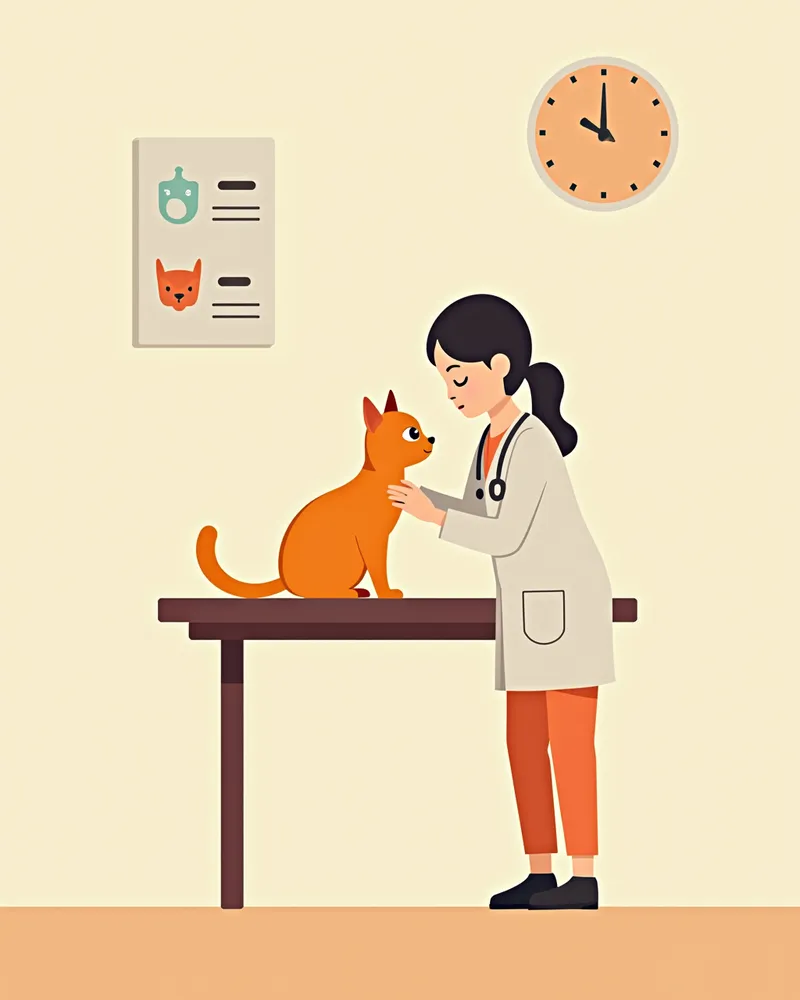
Creating positive associations with treats and praise before and after appointments makes future visits much easier. Regularly getting your cat used to being touched helps reduce anxiety during exams. If fear becomes overwhelming or causes severe stress, consult your vet for advice on calming aids or behavior management strategies. These efforts to reduce fear will make lifelong health care much more comfortable.
Build up positive experiences and consult with your veterinarian if needed. Related guide image

Key Points to Remember for Reducing Hospital Fear

ItemKey points
Understanding the causeSensitive to unfamiliar environments, smells, and other animals; memories of the carrier also have an effect
Carrier acclimatizationKeep it open normally and make it a comfortable space with treats and blankets
Travel and veterinary visitsCover with a blanket and use synthetic pheromones; book appointments to shorten waiting and minimize contact
Positive experiencesGive treats and praise before and after visits, and practice handling the body regularly
ConsultationIf fear is severe, consult a veterinarian about calming and behavioral management before the visit

This is not a table recommending specific products or devices, but key points to reference for at-home management. Always consult a veterinarian for interpreting measurements and making treatment decisions.

BEST 4 — Preventive Visits: Slowly Getting Comfortable with the Clinic Without Exams

Preventive visits are a training exercise where your cat visits the clinic, receives treats, and goes home without undergoing any actual medical procedures. This approach applies the veterinary behavioral principle of "counterconditioning," which pairs a previously fear-inducing stimulus with something enjoyable to create a new, positive emotional response. By using this principle, you can help your cat reassociate the clinic not as a scary place, but as a place where good things happen. 1st visit: Go only as far as the parking lot or entrance, then give treats and go home. 2nd–3rd visits: Stay in the waiting room for 5 minutes, then give treats and go home. 4th visit onward: Enter the examination room and proceed to the level of a weight check. While this training to build positive experiences is especially effective for young cats during their socialization period, textbooks note that it can be attempted in the same way for cats of any age.
A young kitten receiving a treat from the veterinarian at the animal hospital.

When Additional Consultation With a Vet Is Needed

If you’ve consistently applied these methods for over four weeks without seeing improvement, or if your pet exhibits severe aggressive behavior (such as scratching or biting) during vet visits, consider consulting a veterinary behavior specialist. In severe cases, your veterinarian may prescribe short-term calming aids as part of the treatment plan.

Complete Guide to Choosing — Best Options for Your Cat’s Situation

The approach varies depending on the level of fear. Mild (slightly anxious in the waiting room): Choose a cat-friendly clinic and use pheromone products concurrently. Severe (refuses to enter the carrier + growls throughout the visit): Begin with carrier training, then introduce pheromones, followed by gradual desensitization through preventive visits. Kittens (6 months or younger): Start preventive visits and carrier training simultaneously—positive experiences during this period can have lifelong benefits. If you had to choose just one? Carrier training is the most cost-effective and long-lasting solution.

Reviewed by a veterinarian

Dr. Tony — Punnawat Phongkittirak

Dr. Tony — Punnawat Phongkittirak

Veterinarian

A veterinarian who majored in veterinary medicine at Khon Kaen University, Thailand, and completed the IVSA program at North Carolina State University in the United States. Drawing on clinical experience at animal hospitals, he works in the pet healthcare field and is dedicated to building a digital care environment that connects pet parents with veterinarians.

Frequently Asked Questions

Is it okay to use a sedative when my cat is extremely fearful?
Short-term use is possible under a veterinarian’s prescription. Sedatives are not a fundamental solution but rather an auxiliary tool to ensure a single visit is completed safely. They must only be used after consulting with a veterinarian.
Are there cats for whom pheromone sprays are ineffective?
Yes, individual responses can vary. If pheromone products aren’t working, try combining crate training with preventive vet visits first.
How long does it take to train a pet to use a carrier?
It usually takes about two to four weeks. The key is to keep training sessions short—two to three times a day—and to leave the crate open in your home at all times. Forcing your pet inside can actually backfire.
What happens if a cat’s fear is left unaddressed?
Each visit to the clinic can become a negative experience, leading to increasing fear. In severe cases, this may cause pet owners to skip essential check-ups or treatments, potentially missing important health issues.
Is it more effective to start training when a cat is still a kitten?
That's right. The first 2 to 7 weeks of life are a critical period for socialization. If kittens have positive experiences with the vet clinic and carrier during this time, they'll be much less likely to develop fear responses as adults.

Share

Related Guides

References

[1] Rodan I., Sundahl E. et al., Veterinary Guide to Preventing Behavior Problems in Dogs and Cats, AAFP/ISFM, 2023

[2] Mariti C. et al., Perception of cats' stress by their owners, Journal of Veterinary Behavior, 2016

[3] Lloyd J., Minimising stress for patients in the veterinary hospital: why it is important and what can be done about it, Veterinary Ireland Journal, 2017

[4] Byers C.G. et al., The Veterinary Workbook of Small Animal Clinical Cases, Wiley, 2020

This information is based on veterinary literature and does not replace diagnosis or treatment. Please consult a veterinarian for specific health concerns.

Metapet Co., Ltd. | CEO: Park Sung-yong | Business Reg. No. 417-88-02562 | Seoul, South Korea | Customer Center

Cat Trembles at the Vet? 7 Vet-Recommended Ways to Ease Fear | Meongsiljang