
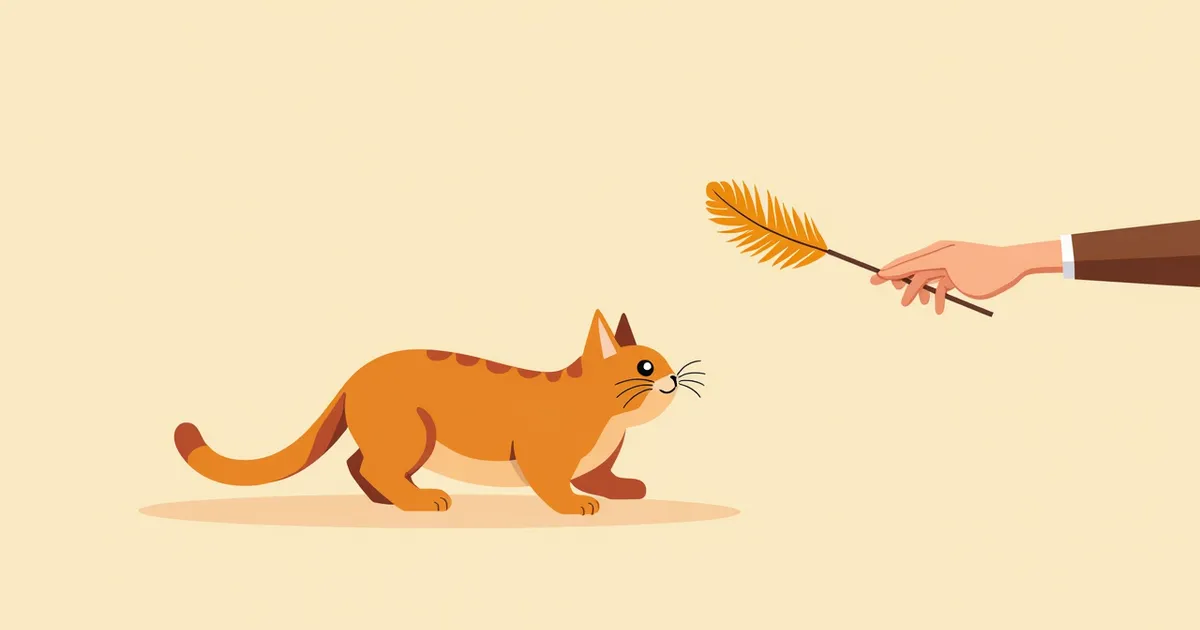
Top 5 Recommended Management Strategies for Excessive Expression of a Cat’s Hunting Instinct and Selection Criteria
When a domestic cat’s hunting instinct becomes overactive, it can lead to repeated biting, scratching, and nighttime aggression. Here are the top five behavior-modifying management strategies, along with guidelines for selecting toys and tools, all based on veterinary evidence.
What Is Excessive Expression of a Cat’s Hunting Instinct?
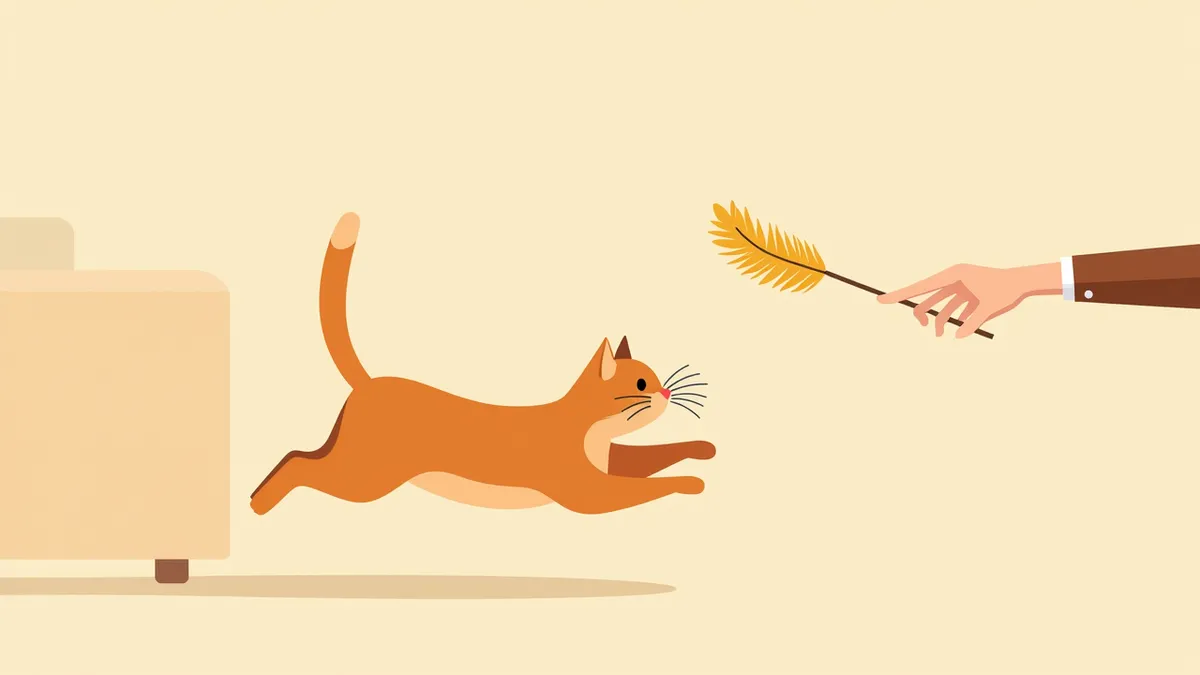
Main Causes of Excessive Expression of Hunting Instinct
When to Visit the Vet Before Behavior Management
If your pet’s aggression has suddenly worsened or changed from its usual pattern, it’s important to first rule out underlying medical conditions. Hyperthyroidism (a common endocrine disorder in cats), chronic pain, or neurological issues could be the cause. In such cases, a veterinary examination should always come before any behavioral management.
BEST 1 — Interactive Play (Feather Wands and Fishing Pole Toys)

BEST 2 — Puzzle Feeders (Food-Seeking Toys)
BEST 3 — Environmental Enrichment (Cat Trees, Hideaways, and Window Perches)
BEST 4 — Electronic Automatic Toys (As a Supplementary Tool Only)

BEST 5 — Clicker Training (Impulse Control Education)
Comparison of Management Methods — Selection Criteria by Situation
| Item | Effectiveness | Difficulty | Cost | Recommended situation |
|---|---|---|---|---|
| Interactive play | ★★★★★ | Easy | Low | Essential basic for all cats |
| Puzzle feeder | ★★★★ | Easy | Medium | Energetic young cats |
| Environmental enrichment | ★★★★ | Medium | High | When indoor space lacks stimulation |
| Electronic automatic toys | ★★★ | Easy | Medium | Supplementary when the owner is away |
| Clicker training | ★★★★★ | Hard | Low | When biting/aggression is severe |
Effectiveness is based on consistent practice. A one-off attempt won't change things.
Actions to Absolutely Avoid
Punishments like spraying with water, making loud noises, or slapping with your hand may temporarily stop the behavior, but they can worsen your cat’s anxiety and aggression in the long run. Playing directly with your hands can also teach your cat to see them as prey, leading to biting habits. Always use toys instead.
Reviewed by a veterinarian

Dr. Tony — Punnawat Phongkittirak
VeterinarianA veterinarian who majored in veterinary medicine at Khon Kaen University, Thailand, and completed the IVSA program at North Carolina State University in the United States. Drawing on clinical experience at animal hospitals, he works in the pet healthcare field and is dedicated to building a digital care environment that connects pet parents with veterinarians.
Reviewed 2026-06-01
Frequently Asked Questions
How much playtime should I give my pet each day?
Your pet bites the top of your foot at night. How should you handle it?
I bought several toys, but my pet quickly loses interest in them.
Will adopting a second cat satisfy the hunting instinct?
My cat bit me and caused a wound. Is it dangerous?
Share
Related Guides

7 Behavioral Enrichment Strategies for Mental Stimulation Recommended by Veterinarians
Top 5 Recommended Cognitive Supplements for Cats in 2026

Top 5 Calming Supplements for Dogs and Cats in 2026
Top Recommended Indoor Flea Removal Management for Cats and Selection Criteria
Top Recommended Products for Feline Echinococcosis Management and Selection Criteria
Top 3 Recommended Products for Feline Ear Mite Management and Selection Criteria

Top 3 Recommended Strategies and Selection Criteria for Differentiating and Managing Feline Ringworm and Parasitic Infections

Top 3 Recommended Products for Feline Cryptosporidiosis Management and Selection Criteria
Cat Combination Dewormer Selection Guide: Recommended BEST Products and Key Selection Criteria

Top Recommended Feline Coccidiosis Management Products and Selection Criteria
References
[1] Rodan, I. and Heath, S. (2016) Feline Behavioral Health and Welfare. Elsevier.
[2] Overall, K.L., Rodan, I., Beaver, B.V. et al. (2005). Feline behavior guidelines from the American Association of Feline Practitioners. Journal of the American Veterinary Medical Association 227(1): 70–84.
[3] Bain, M.J. and Fan, C.M. (2012). Animal behavior case of the month. J. Am. Vet. Med. Assoc. 240(6): 673–675.
[4] Ahola, M.K., Vapalahti, K., and Lohi, H. (2017). Early weaning increases aggression and stereotypic behaviour in cats. Nat. Sci. Rep. 7: 10412.
[5] Barrett, P. and Bateson, P. (1978). The development of play in cats. Behaviour 66: 106.