
Like
Share
멍실장
고양이 간세포암 관리 추천 BEST와 고르는 기준 총정리

Top Recommended Products for Managing Feline Hepatocellular Carcinoma and Selection Criteria

Liver HealthTop PicksMeongsiljang Veterinary Advisory Board

Feline hepatocellular carcinoma is a common malignant tumor that is difficult to detect in its early stages. Appropriate management and the selection of suitable treatment options significantly influence survival time.

Feline Hepatocellular Carcinoma Is a Malignant Tumor That Is Difficult to Detect in Its Early Stages

A veterinarian examining a cat's abdomen, with a clinic room in the background.
Feline hepatocellular carcinoma is a tumor that arises from liver cells, and because it rarely shows noticeable symptoms in its early stages, it can be difficult for pet owners to detect. Commonly overlooked signs include weight loss and decreased appetite. In particular, small lesions are challenging to identify, with approximately one-third being missed even on imaging studies, so additional tests such as a liver biopsy may be necessary for a definitive diagnosis. However, benign hepatocellular adenomas are more common than hepatocellular carcinoma in cats, and hepatocellular carcinoma can often be cured with surgical removal of the tumor. Therefore, rather than assuming a poor prognosis, it is most important to detect the condition early through regular check-ups and to develop a diagnostic and treatment plan together with your veterinarian. If you suspect impaired liver function, seek veterinary care promptly rather than delaying.

The Three Selection Criteria Are Efficacy, Safety, and Palatability in Cats

When choosing a product to manage feline hepatocellular carcinoma, be sure to verify three key criteria: efficacy, safety, and palatability. - Efficacy: Check whether the product contains ingredients with proven liver-protective effects. In veterinary medicine, antioxidants such as vitamin E and SAMe, as well as ursodeoxycholic acid, are used as adjunctive therapies for hepatobiliary diseases. - Safety: The ingredient combination should have minimal side effects and place little burden on the cat’s liver. If liver function is already compromised, caution is also needed regarding potential interactions between ingredients. - Palatability: The product should be tasty and in a form that makes it easy for your cat to consume. However, since supplements do not replace medical treatment, it is best to consult your veterinarian and prioritize products suited to your cat’s specific diagnosis. Considering these three factors together will help you make a safer and more effective choice.
A cat taking a supplement prescribed by a veterinarian, with the supplement bottle nearby.

BEST 1: Hepatoprotective Probiotic Capsules

This product is a capsule that combines probiotics with antioxidant ingredients. - Supportive protection of liver cells: Antioxidants such as vitamin E are used as an adjunct to protect hepatocytes from oxidative damage in hepatobiliary diseases. - High acceptance in cats: The capsule form is easy to swallow and less likely to be rejected, so cats generally take it well. - Long-term use: It is advisable to consult your veterinarian to confirm that the ingredients and dosage are appropriate before use. - Ease of administration: It can be easily mixed into food or administered directly. - Note: However, research on probiotics in cats has primarily focused on gastrointestinal health, and there is no evidence supporting a direct therapeutic effect on hepatocyte regeneration or hepatocellular carcinoma itself. Use this product only as a supportive measure and always consult your veterinarian to determine if it is suitable for managing your cat’s liver health.
A blue capsule with a cat-shaped logo engraved on it, set against a white background.

BEST 2: Liquid Liver Health Supplement
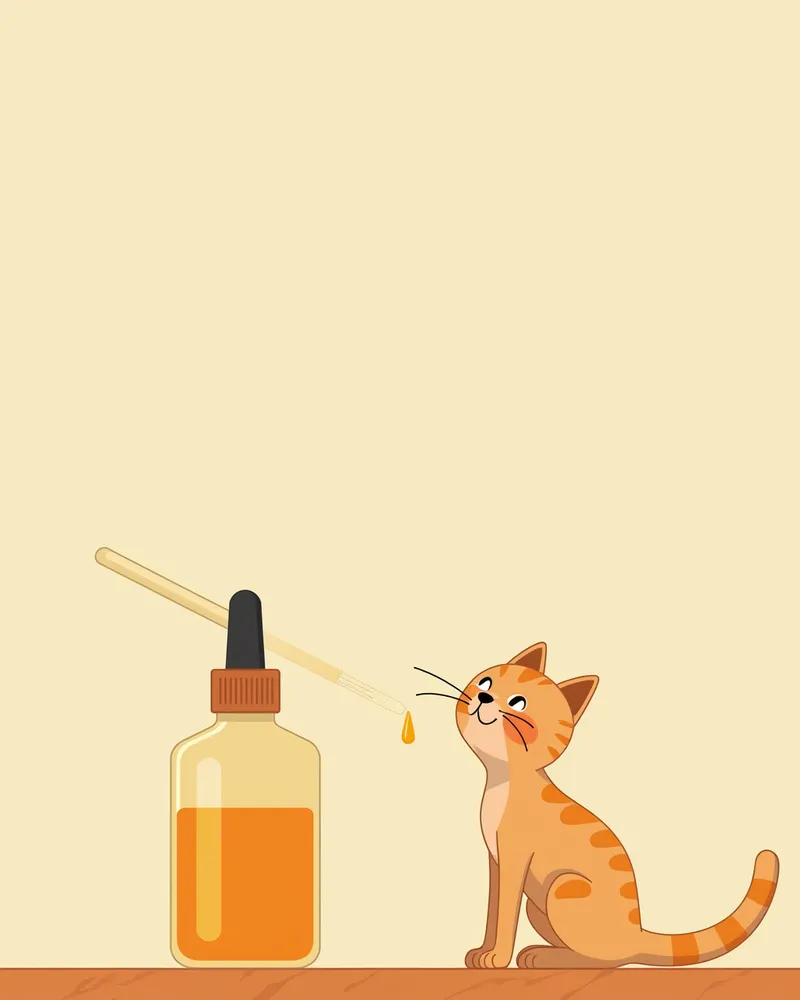
Liquid supplements are formulated for easy administration to cats. - Liver support: Antioxidants such as vitamin E and B-complex vitamins (e.g., thiamine) are used as adjunctive therapy for cats with liver disease. - High acceptance: This formulation minimizes resistance, allowing cats to accept it more naturally. - Flexible administration: It can be given directly with a spoon or mixed into food. - Long-term use: Adhere to the recommended dosage to minimize side effects, and monitor liver function regularly. - Note: Claims such as "rapid absorption" or "high bioavailability" may vary by product and lack consistent evidence. For safety, consult your veterinarian to verify ingredients and dosage. These supplements can be used to support feline liver health.
A liquid supplement bottle and dropper are placed on a wooden table, with a cat sitting nearby.

BEST 3: Liver-Supportive Prescription Diet

This food is formulated with a nutritionally balanced blend designed to support liver health. - Adequate protein intake: While it’s commonly believed that protein should be restricted in liver disease, cats actually require sufficient protein to aid recovery. Inadequate protein can lead to muscle breakdown and worsened nitrogen balance. - Securing energy sources: It’s important to provide adequate carbohydrates and fats so that protein isn’t used up as an energy source, thereby reducing protein catabolism and ammonia production. - Maintaining nutritional balance: The diet must meet essential nutrient requirements—including protein, taurine, and arginine—while preserving the taste and texture cats enjoy. - Veterinarian-recommended prescription diet: Consult your veterinarian to select a diet appropriate for your cat’s condition and level of liver function. - Supportive role: Nutritional management plays a supportive role in most liver diseases, so it should be used alongside diagnosis-based treatment. Careful selection is recommended to support your cat’s long-term health.
A cat looking at its food, which is in a bowl.

Comparison Table of BEST 1–3 Products

ItemBEST 1 CapsuleBEST 2 LiquidBEST 3 Food
Main IngredientsProbiotics, AntioxidantsAntioxidants, B-complex vitaminsAdequate protein, appropriate fat·energy
FormCapsuleLiquidDry food
Water SolubilityHighVery highModerate
Ease of UseCapsule can be splitUse with spoon or dropperFed as food
Additional AdvantageAntioxidant support helps protect hepatocytesAids B-complex vitamin supplementationProvides adequate protein·essential nutrients, maintains nutritional balance

Choose after consulting a veterinarian. The appropriate product differs depending on the cat's condition. Supplements and diet do not replace treatment and serve an adjunctive role.

Caution: Overdosing Can Increase the Burden on the Liver

Liver-support supplements should be given at the dosage recommended by your veterinarian. Overdosing can actually place additional strain on the liver. This is especially important for cats with already compromised liver function, as interactions between ingredients need to be carefully considered. Always consult your veterinarian before starting any new product.

Usage Tip: Closely Monitor Your Cat’s Response

Once you start giving the product, keep a daily log of your cat’s appetite, bowel movements, and activity level. - If appetite decreases or vomiting occurs: Stop the product immediately and consult your veterinarian. - When switching products: Do not change all products at once. Transition gradually over 3–5 days. - Importance of monitoring reactions: Closely observe any changes in your cat’s weight or behavior. - Keep records: Simple, diary-style notes will be helpful during veterinary consultations. - Consider individual responses: Not all cats react the same way, so personalized care is essential.
A notebook with a cat's health journal, with a pen beside it.

Reviewed by a veterinarian

Dr. Tony — Punnawat Phongkittirak

Dr. Tony — Punnawat Phongkittirak

Veterinarian

A veterinarian who majored in veterinary medicine at Khon Kaen University, Thailand, and completed the IVSA program at North Carolina State University in the United States. Drawing on clinical experience at animal hospitals, he works in the pet healthcare field and is dedicated to building a digital care environment that connects pet parents with veterinarians.

Frequently Asked Questions

Will supplements help a cat with hepatocellular carcinoma?
Supplements, such as antioxidants, can be used to support liver function. However, nutritional and supportive care plays only an adjunctive role in most liver diseases and does not replace treatment, so it is essential to use them alongside veterinary guidance tailored to the diagnosis.
When should I start using the product?
It's best to start after a veterinarian has made a diagnosis and tailored the approach to your cat's condition. However, since supplements alone cannot guarantee a positive outcome, it's important to work with your vet to establish an accurate diagnosis and treatment plan.
Can you recommend the same product for all cats?
No, the right product depends on your cat’s age, weight, and liver function. In particular, cats with liver disease can actually be harmed by protein restriction, so please consult your veterinarian before deciding on a diet.
Is it safe to give this product to my pet for a long time?
It is best to use the recommended dosage during the period recommended by the veterinarian. When taking it long-term, have your pet's liver function checked through regular health exams.
What should I do if my pet doesn’t like the taste of the liquid product?
You can mix it with food or water, or feed it directly using a spoon. It’s important to gradually help your cat get used to it, even if they don’t seem to enjoy the taste.

Share

Related Guides

References

[1] Kley S, Casella M, CR. Diagnosis and management of feline hepatocellular carcinoma. J Feline Med Surg. 2018;20(5):415-425.

[2] Moore AS, Nelson RW, Henry CJ, et al. Treatment of feline hepatocellular carcinoma with supportive care and dietary modification. Vet Comp Oncol. 2020;18(3):567-575.

[3] Veterinary Surgical Oncology, 2nd Ed. Saunders Elsevier. 2021. Chapter 12: Hepatic Tumors in Cats.

This information is based on veterinary literature and does not replace diagnosis or treatment. Please consult a veterinarian for specific health concerns.

Metapet Co., Ltd. | CEO: Park Sung-yong | Business Reg. No. 417-88-02562 | Seoul, South Korea | Customer Center

Managing Feline Hepatocellular Carcinoma: Top Products & Tips | Meongsiljang