Like
Share
멍실장
강아지 전기 줄 물기 사고 대처법 총정리

Complete Guide to Handling Dog Electrical Cord Chewing Accidents

Oral HealthSymptomsMeongsiljang Veterinary Advisory Board

We’ve compiled information on the symptoms of electric shock, oral burns, and pulmonary edema that can occur when a dog chews on an electrical cord, along with immediate first aid steps, veterinary diagnostics, and prevention tips.

What Are the Risks of a Dog Chewing on an Electrical Cord?

A veterinarian examining a dog's oral cavity
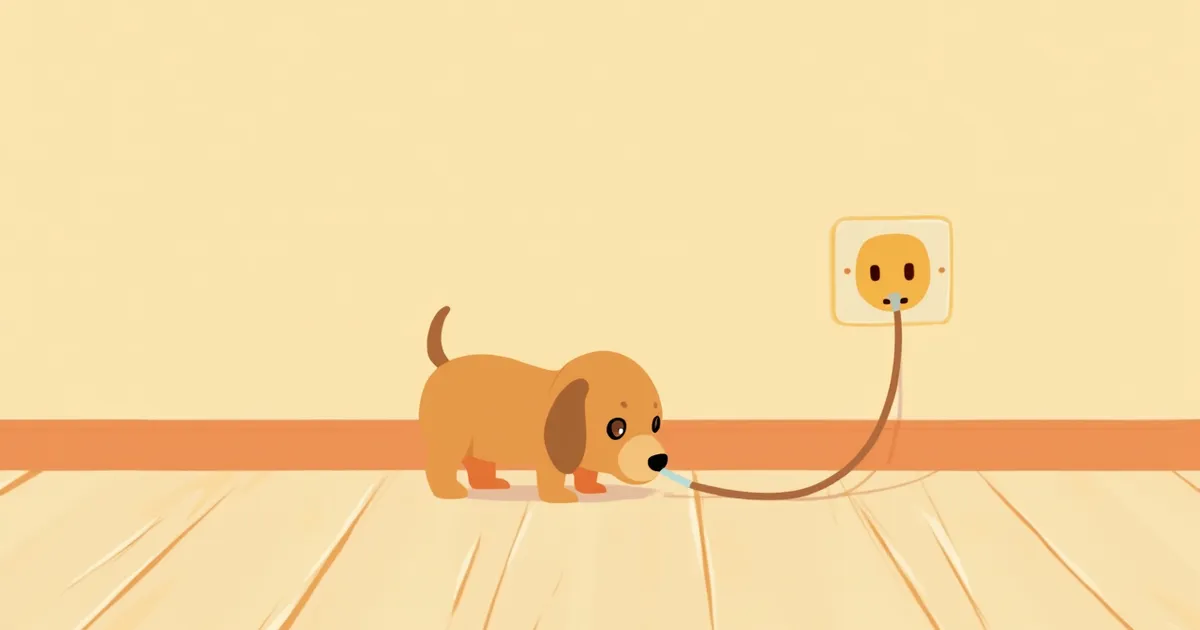
When a dog chews on an electrical cord, it can lead to emergencies such as electric shock, oral burns, and even heart or lung damage. The most critical first step is to cut off the power. Avoid touching the dog or the cord with wet hands, as this could result in you also receiving an electric shock. After turning off the circuit breaker or unplugging the cord, check the dog’s breathing and consciousness, then immediately take them to a 24-hour veterinary clinic. Even if the dog appears fine on the surface, delayed complications such as pulmonary edema (fluid accumulation in the lungs causing difficulty breathing) can develop within hours to days after the incident, making veterinary care essential.

Emergency Severity Assessment Steps

The urgency of response depends on your dog’s condition. Check the table below to assess the level of emergency.

Electrical Cord Chewing Accident Severity Chart

ItemSymptomsResponse
Stage 1 (Minor)Soot around the mouth, normal breathingCut off power, then visit hospital the same day
Stage 2 (Severe)Burns on lips/tongue, drooling, coughingImmediately to 24-hour emergency hospital
Stage 3 (Emergency)Difficulty breathing, bluish gums, reduced consciousnessPrepare for CPR and go to the nearest emergency room

If the animal is unconscious or breathing is weak, chest compressions may be needed even during transport.

Seek Veterinary Care Immediately If You See These Symptoms

If your pet shows any of the following signs after chewing on an electrical cord, seek veterinary care immediately.
Burned lips or tongue: Signs of oral burns caused by an electrical arc.
Excessive drooling: Caused by pain when swallowing due to mouth burns.
Coughing or wheezing: May indicate early signs of pulmonary edema.
Rapid, shallow breathing: Suggests a high likelihood of fluid accumulation in the lungs.
Pale or bluish gums: Indicates insufficient oxygen supply.
Sudden collapse or seizures: Warning signs of arrhythmia or cardiac arrest.
Check your dog’s lips for signs of burns.

Emergency! Do Not Delay for Even a Minute

If your dog has stopped breathing, is unconscious, or has blue gums, begin CPR immediately and transport them to a veterinary hospital. If the electrical cord is still in contact with your dog, never touch it with bare hands. Instead, turn off the power at the breaker and use a wooden stick or a dry towel to move the cord away. If you become electrocuted first, both you and your dog will be in danger.

Why Is It So Dangerous? Three Types of Electric Shock Injuries

When a dog chews on an electrical cord, three major types of injury can occur simultaneously.
Oral Burns: The lips, tongue, and roof of the mouth can suffer necrosis from electrical arcing. The full extent of burn damage may take several days to become clearly apparent.
Pulmonary Edema: Severe electric shock can impair cardiopulmonary function, causing fluid to accumulate in the lungs and leading to rapid or labored breathing. Even if no abnormalities are evident immediately after the incident, symptoms may develop after some time, making continuous monitoring essential.
Cardiac Arrhythmias: Electrical current can affect the heart, potentially causing arrhythmias or cardiac arrest. This is why electrocardiogram (ECG) monitoring is necessary even after the initial assessment.

How Is Treatment Provided at the Veterinary Hospital?
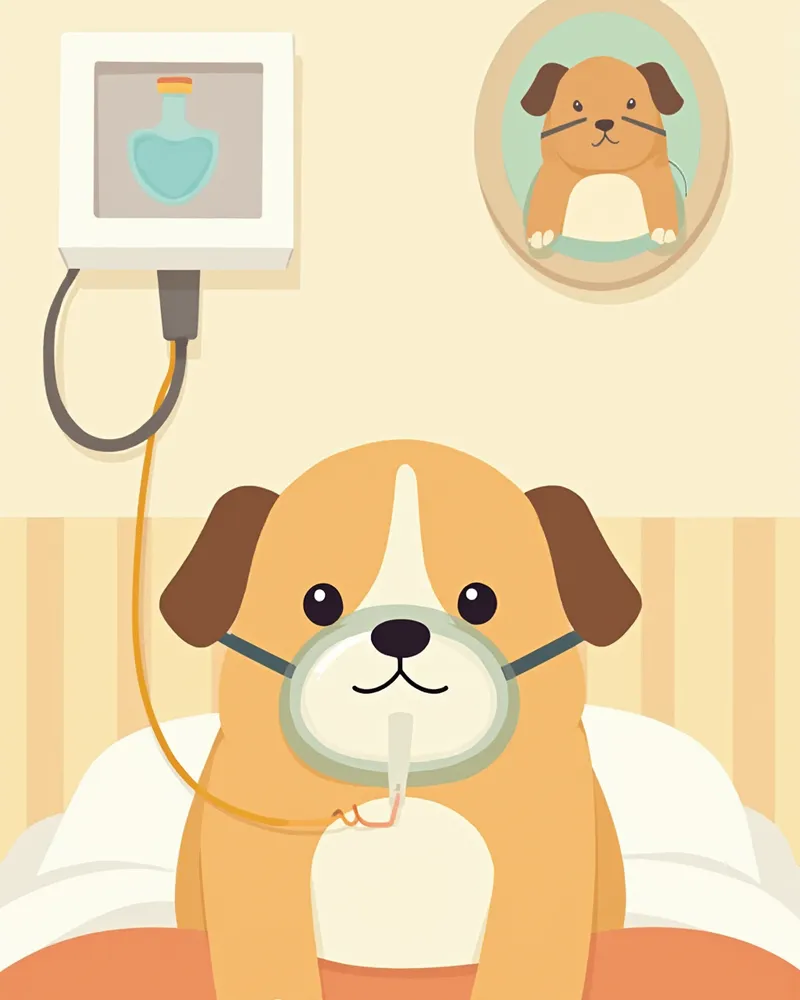
After an electric shock incident, the priority is to stabilize the patient’s breathing and circulation. We assess cardiopulmonary function, including oxygen saturation, and if pulmonary edema is suspected, we confirm it through thoracic auscultation and imaging. If arrhythmias are present, electrocardiogram (ECG) monitoring is maintained for an appropriate duration as determined by the veterinarian. Oral burns are managed with daily dressing changes alongside pain control, and eschar (necrotic tissue) is removed at the appropriate time to promote healthy granulation tissue formation and prevent infection. The veterinarian determines the medication schedule and dosage based on the patient’s weight and condition.
A puppy receiving oxygen therapy in the intensive care unit of an animal hospital

Monitor Closely for 24–72 Hours

Even if your pet appears to have recovered, pulmonary edema can develop some time after the incident. Once you’re home, check their breathing pattern (whether it’s rapid or labored), coughing, appetite, and gum color three to four times a day. Electrical cord accidents can also affect other pets, including cats, so make sure to check whether any other animals in the household were exposed to a similar situation.

Prevention Checklist to Prevent Recurrence

For curious dogs, prevention is the best cure.
Cable management: Secure wires to the wall using molding or cable conduits, and avoid leaving them dangling on the floor.
Bitter spray: Use wire cover sprays with flavors dogs dislike.
Install a ground fault circuit interrupter: An ELB (Earth Leakage Breaker) cuts off the current instantly in case of electric shock.
Unplug unused outlets: This is the most reliable method.
Use a puppy pen: During the teething period (2–7 months of age), only leave accessible the areas within your dog’s line of sight.
Provide alternative toys: Always have tough rubber toys available to satisfy their chewing urges.
A dog playing in a safe living room with neatly organized electrical cords.

Reviewed by a veterinarian

Dr. Tony — Punnawat Phongkittirak

Dr. Tony — Punnawat Phongkittirak

Veterinarian

A veterinarian who majored in veterinary medicine at Khon Kaen University, Thailand, and completed the IVSA program at North Carolina State University in the United States. Drawing on clinical experience at animal hospitals, he works in the pet healthcare field and is dedicated to building a digital care environment that connects pet parents with veterinarians.

Frequently Asked Questions

My pet just lightly chewed on an electrical cord and shows no symptoms. Should I still take them to the vet?
Yes, you should take your pet to the vet. Even if there are no immediate symptoms after an electric shock, complications such as pulmonary edema or arrhythmias can develop later. Therefore, it’s safest to have your pet examined on the same day, including a chest auscultation and an electrocardiogram (ECG), even if they appear symptom-free.
Is there any first aid I can do at home first?
First, turn off the power source and check if your dog is breathing. If conscious, lay them down in a quiet place, keep them warm, and transport them to the vet. Avoid forcing their mouth open or touching the inside. It's best not to apply any medication to the burned areas.
If there’s only a blackened scab on the lip, is it okay to just monitor it at home?
We don’t recommend it. The visible burns may only be the tip of the iceberg; the inside of the tongue, the roof of the mouth, and even the esophagus could be damaged. It’s difficult to assess without a veterinary examination, so it’s essential to have your pet checked at a clinic.
My puppy keeps chewing on electrical cords. How can I correct this behavior?
The first step is to redirect your puppy’s teething urge toward appropriate chew toys. Provide several durable rubber toys that are safe for chewing, and apply a bitter-tasting spray to electrical cords to deter gnawing. Using a puppy pen to prevent access to hazardous items altogether is also an effective strategy.
How much will the treatment cost?
The cost varies depending on the pet’s condition and the clinic, so it’s difficult to generalize. In mild cases, basic tests may be sufficient, but if there’s pulmonary edema or arrhythmia, intensive care unit admission may be necessary. Please check with the clinic you visit for an exact estimate.

Share

Related Guides

References

[1] Drobatz KJ, Hopper K, Rozanski E, Silverstein DC. Textbook of Small Animal Emergency Medicine. Wiley-Blackwell, 2018.

[2] Silverstein DC, Hopper K. Small Animal Critical Care Medicine, 3rd Edition. Elsevier, 2023.

[3] Peterson ME, Talcott PA. Small Animal Toxicology, 3rd Edition. Elsevier, 2013.

This information is based on veterinary literature and does not replace diagnosis or treatment. Please consult a veterinarian for specific health concerns.

Metapet Co., Ltd. | CEO: Park Sung-yong | Business Reg. No. 417-88-02562 | Seoul, South Korea | Customer Center

Dog Chewing an Electrical Cord: Emergency First Aid | Meongsiljang