Like
Share
멍실장
동물 치과 전문의 진료 가이드

Our Pet’s Dentist: General Clinic vs. Specialist — A Guide to Choosing Care

Oral HealthQ&AMeongsiljang Veterinary Advisory Board

Veterinary dental specialists are veterinarians who provide in-depth diagnosis and treatment for diseases of the teeth, gums, and jaws. We’ve put together everything you need to know, including how they differ from general clinics, when to visit, and what to prepare.

What Is Veterinary Dental Specialty Care?

Dogs and cats waiting in the veterinary dental clinic
Veterinary dentistry is a specialized field focused on diagnosing and treating dental, gum, jawbone, and oral mucosal diseases in dogs and cats. You’ll typically seek out a veterinary dentist when issues can’t be resolved with routine scaling. Conditions such as periapical abscesses, oral tumors, malocclusion, and fractured teeth require specialized dental X-rays and surgical equipment for accurate diagnosis and treatment. Periodontal disease is extremely common in pets, and its prevalence and severity tend to increase with age, making it worthwhile to consider a consultation with a veterinary dentist at least once.

How Does It Differ from General Veterinary Clinics?

While general veterinary clinics can perform basic scaling and extractions, veterinary dental specialists are equipped with specialized tools such as dental-specific digital X-rays, periodontal probes, ultrasonic and air scalers, and dental burs. Additionally, these veterinarians often undergo advanced training through organizations like the American Veterinary Dental College. Because root issues hidden beneath the gums are invisible to the naked eye, they can easily be missed without dental-specific X-rays. If your pet continues to experience pain or persistent tooth mobility even after a basic scaling, a consultation with a dental specialist is recommended.

General Clinic vs. Dental Specialty Care Comparison

ItemGeneral animal hospitalSpecialized dental care
ScalingTrueTrue
Simple extractionTrueTrue
Dedicated dental X-rayOnly some availableAlways available
Apicoectomy (root-tip surgery)DifficultPossible
Oral tumor resectionLimitedPossible
Malocclusion correctionDifficultPossible
Average anesthesia time30–60 minutes60–120 minutes

Equipment and training levels differ from hospital to hospital, so confirmation before visiting is needed.

When to Consider a Dental Specialist Consultation
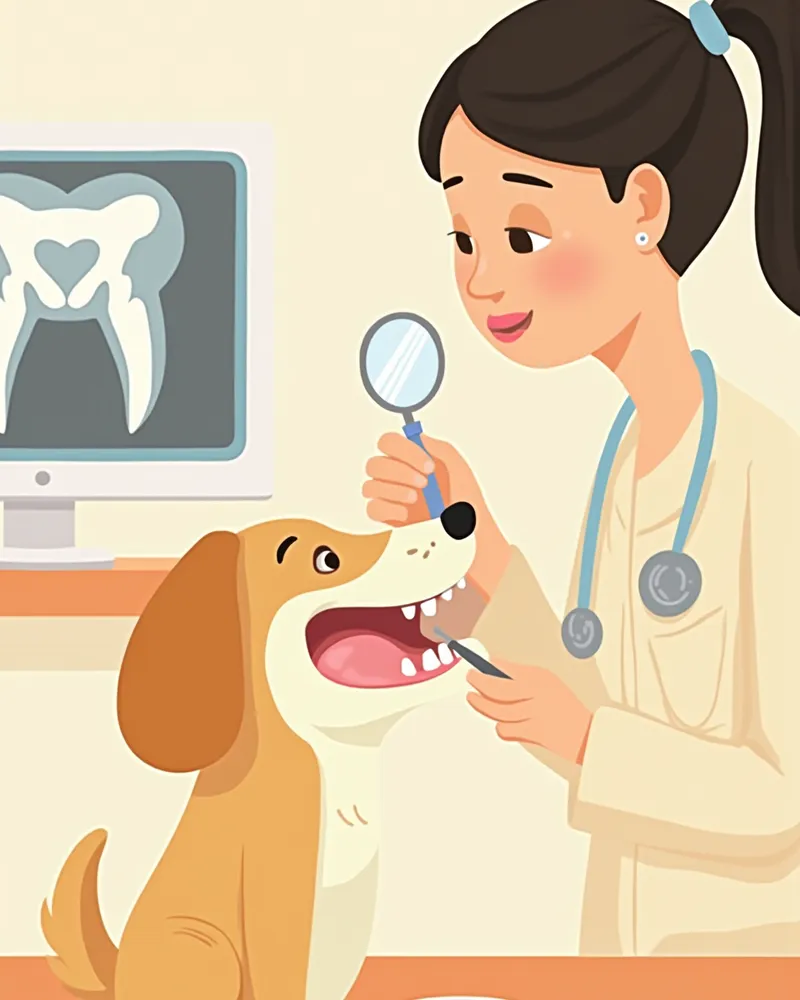
If you notice any of the following symptoms, a professional veterinary consultation is recommended:
Bad breath: Persistent severe halitosis even after dental scaling
Chewing on one side: Possible pain localized to one side of the mouth
Dropping food: Inability to close the mouth properly
Facial swelling: Spread of a periapical abscess to the face
Loose teeth: A late-stage sign of periodontal disease
Fractured teeth: Exposed dental pulp due to a broken tooth
Gum bleeding or pus: Possible severe periodontitis or tumors
In particular, fractured teeth may appear minor on the surface but can progress to pulpitis, making prompt veterinary care essential.
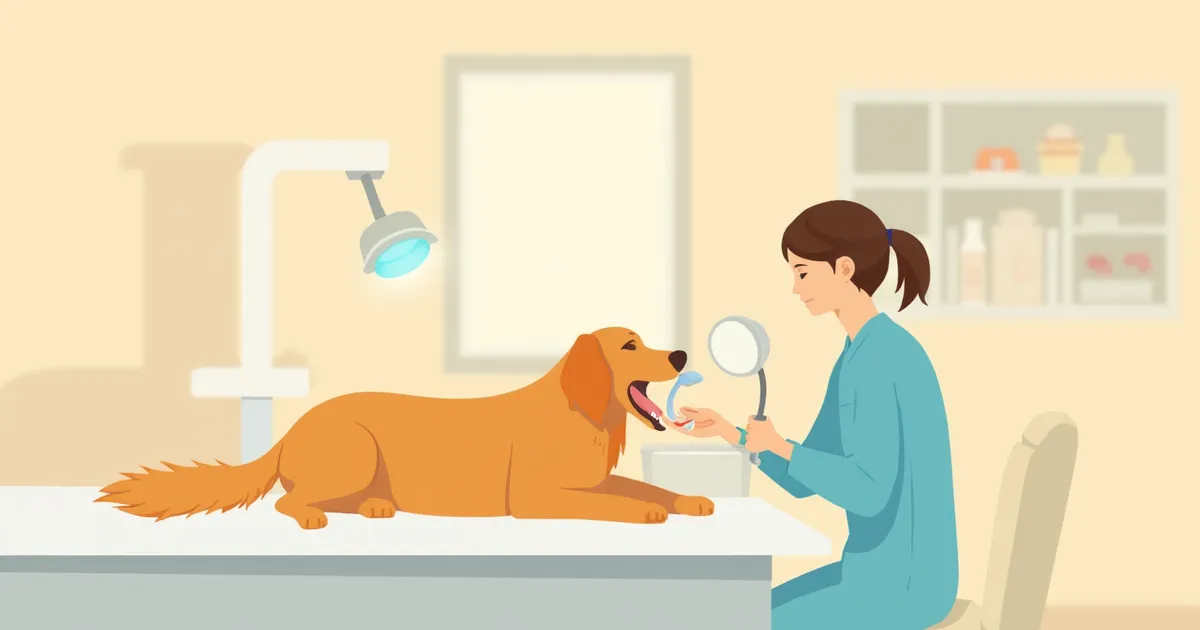
A veterinarian examining a dog’s teeth with dental tools

Situations Requiring Immediate Veterinary Attention

If one side of your pet’s face suddenly swells, if there are pus-draining lesions under the eye, or if bleeding from the mouth won’t stop, it’s an emergency. A periapical abscess often presents as swelling or pus discharge in the upper jaw, just below the eye. If a tooth is broken in half and the pink or red pulp inside is visible, bring your pet in as soon as possible. Exposed pulp allows bacteria to invade, potentially leading to a periapical abscess at the root tip, which can cause pain and inflammation in surrounding tissues. Rough fracture surfaces also trap plaque more easily, accelerating periodontal disease.

Preparation Before Your Visit

Specialized dental care requires thorough pre-anesthesia testing and consultation, which can take some time. Coming prepared helps ensure a smooth visit.
Fasting: Since anesthesia may be required, please withhold food for 8–12 hours before your appointment (water is allowed up to 2 hours prior).
Medical Records: Bring records of previous dental cleanings, a list of current medications, and recent blood test results.
Symptom Videos: If possible, bring a video of your pet opening their mouth or chewing food.
Question List: Write down any questions in advance so nothing gets overlooked.
You don’t need to avoid anesthesia for dental treatment simply because your pet is older. However, we recommend pre-anesthesia blood and cardiac tests to confirm safety. These pre-anesthesia checks are especially important for senior pets or those with heart or kidney disease.
A veterinarian and a pet owner discussing treatment options during a consultation.

How Much Do Consultations and Procedures Cost?

Dental specialty care tends to cost more than routine scaling. The final price varies depending on anesthesia time, the number of specialized X-rays taken, and the complexity of the procedure. Treatments such as root-end surgery or oral tumor removal can cost several times more than simple scaling. Since pricing standards differ from clinic to clinic, it’s best to request a cost estimate before your visit. Some pet insurance plans do cover disease-related dental treatments. However, preventive procedures like scaling are often excluded, so be sure to review your policy details carefully.

What Cat Owners Often Overlook

Cats are more likely than dogs to hide oral pain. Even if your cat continues to eat its regular food, it may still be suffering from progressive tooth resorption lesions (TR/FORL). The risk of developing these lesions increases with age, and the associated pain can significantly reduce quality of life, leading to decreased appetite and weight loss. Because these lesions are easy to miss during a visual examination, dental-specific X-rays are necessary. Sudden clicking sounds while eating or shaking the head mid-chew are signs that a dental checkup is warranted.

Post-Procedure Home Care

The two weeks following tooth extraction or surgery are a critical recovery period.
Soft diet: Switch to wet food or soaked dry kibble.
Limit toys: Avoid hard bones and rope toys.
Medication: Administer all prescribed antibiotics and pain relievers as directed.
Resuming brushing: Typically restart after 7–14 days, following your veterinarian’s instructions.
Follow-up visit: Return to the clinic in 1–2 weeks for suture removal and to check on healing.
If your pet constantly licks the surgical site or scratches it with their paws, please fit them with an Elizabethan collar. This is important, as wound dehiscence significantly increases the risk of infection.

Reviewed by a veterinarian

Dr. Tony — Punnawat Phongkittirak

Dr. Tony — Punnawat Phongkittirak

Veterinarian

A veterinarian who majored in veterinary medicine at Khon Kaen University, Thailand, and completed the IVSA program at North Carolina State University in the United States. Drawing on clinical experience at animal hospitals, he works in the pet healthcare field and is dedicated to building a digital care environment that connects pet parents with veterinarians.

Frequently Asked Questions

Is scaling without anesthesia a good option?
The American Veterinary Dental Society does not recommend scaling without anesthesia. Tartar and root issues below the gumline cannot be removed without anesthesia, and merely cleaning the surface can allow periodontal disease to progress internally.
At what age should my pet start getting dental check-ups?
The American Animal Hospital Association (AAHA) recommends that all adult dogs undergo a comprehensive oral examination and dental radiographs under anesthesia by the age of two. Regular dental check-ups are generally advised from this age onward, while small-breed dogs and brachycephalic breeds (such as Pugs, Shih Tzus, and Persians) may require earlier examinations due to the rapid progression of periodontal disease.
I’m scared of anesthesia. Is it safe?
With pre-anesthetic blood and cardiac tests to confirm suitability, and in a clinic equipped with monitoring devices, anesthesia is relatively safe. There’s no need to avoid anesthesia solely due to advanced age; in fact, leaving periodontal disease untreated can lead to pain, reduced quality of life, and eventual tooth loss.
Do I need to brush my pet’s teeth every day?
Ideally, brush your pet’s teeth every day. If that’s not feasible, aim for at least three times a week using a toothbrush and toothpaste specifically formulated for pets. Never use human toothpaste, as it contains detergents, foaming agents, and fluoride. Since dogs and cats cannot rinse their mouths, swallowing these ingredients over time can be dangerous.
How do I find a veterinary dental specialist?
First, check whether the clinic has a dedicated digital dental X-ray machine and whether the veterinarian has specialized training in dentistry. Many general animal hospitals will refer you to a specialist if needed.

Share

Related Guides

References

[1] Niemiec, B.A., Veterinary Periodontology, Wiley-Blackwell, 2013

[2] Lommer, M.J., Verstraete, F.J.M., Oral and Maxillofacial Surgery in Dogs and Cats, 2nd Ed, Elsevier, 2020

[3] Bellows, J., Feline Dentistry: Oral Assessment, Treatment, and Preventative Care, Wiley-Blackwell, 2022

[4] Rawlings, J.M., Gorrel, C., Effect on canine oral health of adding chlorhexidine to a dental hygiene chew, J Vet Dent, 1998

This information is based on veterinary literature and does not replace diagnosis or treatment. Please consult a veterinarian for specific health concerns.

Metapet Co., Ltd. | CEO: Park Sung-yong | Business Reg. No. 417-88-02562 | Seoul, South Korea | Customer Center

Pet Dentistry: General Clinic vs. Specialist Care Guide | Meongsiljang