
Like
Share
멍실장
종양 절제술 종류와 마진 완벽 정리

Tumor Resection: What Are the Methods? — Why Margins Determine Recurrence

ImmunityQ&AMeongsiljang Veterinary Advisory Board

Tumor removal surgery for dogs and cats is categorized into four types based on the size of the surgical margins. Choosing the appropriate margin width for the specific tumor characteristics is key to preventing recurrence.

What Is Tumor Resection?

A veterinarian marking the surgical resection margins around the tumor before the procedure.
Tumor resection is a surgical procedure that removes a tumor mass from the body. The most critical factor is the margin, which refers to how much healthy tissue is removed along with the tumor. If the margin is insufficient, remaining cancer cells can cause the tumor to recur, so the extent of resection is adjusted based on the type and malignancy of the tumor. It is standard practice to first determine the nature of the tumor through a biopsy before surgery.

There Are Four Types of Tumor Resection

Surgical margins are categorized into four types based on the extent of tissue removed.
Intracapsular excision: This technique involves scraping out only the interior of the tumor. It is rarely indicated in veterinary oncology and is limited to highly specific situations, such as draining cyst contents.
Marginal excision: The tumor is removed along the plane just outside its surrounding capsule. This approach is chosen when the goal is to reduce tumor size (palliative or debulking surgery) rather than achieve a cure, or when extensive resection is difficult due to anatomical constraints.
Wide excision: This method removes the tumor along with a sufficient margin of surrounding normal tissue. It is the standard surgical approach for malignant tumors; for example, a 3 cm margin is recommended for soft tissue sarcomas, while mast cell tumors require a 1–3 cm margin depending on their histological grade.
Radical excision: This involves removing the entire anatomical compartment containing the tumor, including muscle layers and bone.

Comparison Table of the Four Types of Tumor Resection

ItemIntracapsular ExcisionMarginal ExcisionWide ExcisionRadical Excision
MarginWithin the tumor0 cm (capsule)1–3 cm (by tumor type and grade)Entire compartment
Applicable TumorsSome cystic lesions (rarely)Palliative/debulking purposes / anatomical constraintsMalignant soft tissue sarcoma, mast cell tumor, etc.Osteosarcoma, invasive cancer
Recurrence RiskHighModerateLowVery low
Recovery PeriodShort-termShort to medium-termMedium-termLong-term (several months or more)
Functional ImpairmentAlmost noneMinimalModerateSignificant (including limb amputation)

The classification of excision methods follows the Veterinary Surgical Oncology textbook standard. Recovery periods vary greatly depending on the surgical extent and the patient's condition, so please confirm with your attending veterinarian.

What Determines the Type of Surgery?

The extent of surgical resection is determined by three factors: the tumor’s malignancy, location, and size. - Malignancy: A preoperative biopsy confirms whether the tumor is benign or malignant and determines its grade. Higher-grade tumors require wider surgical margins. - Location: While extensive resection is feasible on the limbs or body surface, anatomical constraints are significant in areas like the face or internal organs. - Size: Larger masses make it more difficult to achieve safe margins, potentially necessitating radical resection or even limb amputation. After imaging tests (CT or ultrasound) are used to assess the tumor’s boundaries and check for metastasis, the veterinarian will formulate a surgical plan.
A veterinarian examining a dog’s CT scan to determine the boundaries of a tumor

Insufficient Margins Increase the Risk of Recurrence and Metastasis

If the postoperative pathology report indicates that cancer cells remain at the surgical margin (a “dirty margin”), the risk of local recurrence increases significantly. For highly invasive tumors such as soft tissue sarcomas and mast cell tumors, an incomplete histological margin markedly elevates the risks of local recurrence and metastasis, making adequate margin clearance essential. Always obtain and review your pet’s pathology report after surgery; if the margins are insufficient, consult your veterinarian about whether further surgery or radiation therapy is necessary.

How to Manage Post-Operative Care?
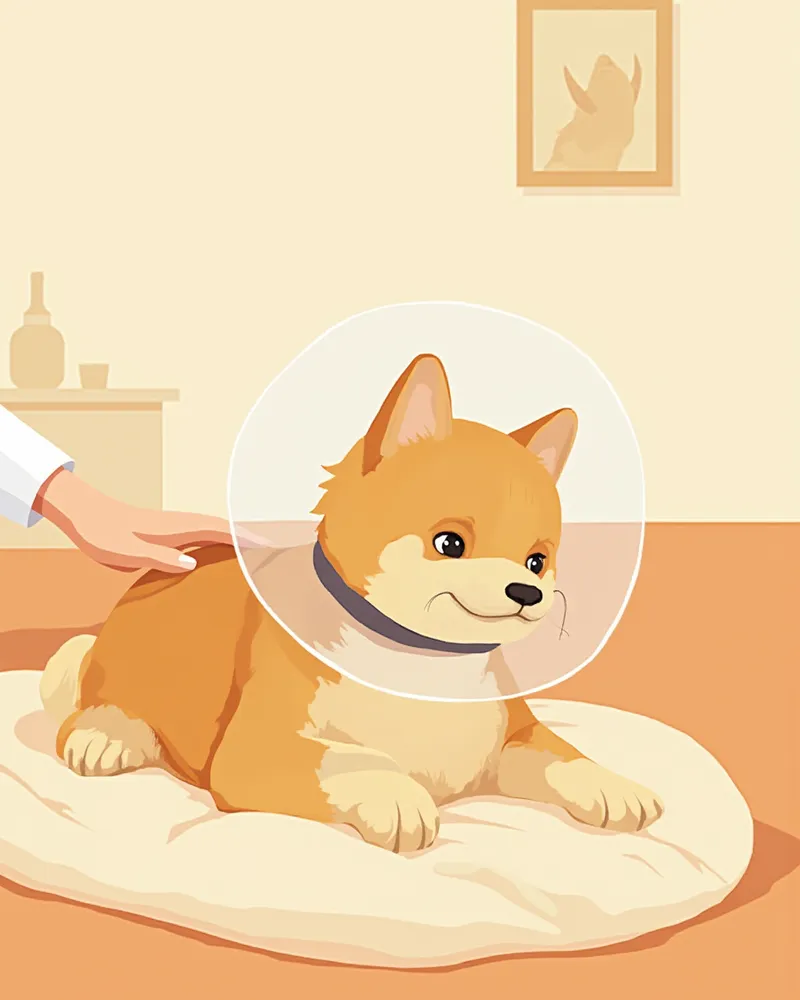
Post-operative care varies depending on the extent of the surgical excision. - Wearing an Elizabethan collar: The collar must be worn until the sutures are removed to prevent the pet from licking the surgical site. - Activity restriction: After extensive or radical excision, sufficient rest is required as directed by your veterinarian. Gradually increase activity, starting with short walks for elimination. - Drain care: Larger surgeries may involve the placement of a drain tube to remove exudate. Keep the area dry. - Reviewing pathology results: Once the final histopathology results are available, be sure to confirm the surgical margins and check for metastasis. - Regular check-ups: Monitor for recurrence through imaging tests at intervals recommended by your veterinarian, based on the tumor type and malignancy grade.
A puppy recovering after surgery while wearing a neck collar

Do Cats Follow the Same Criteria?

The basic principles are the same, but Feline Injection Site Sarcoma (FISS) is special. While a 2–3 cm margin is standard for typical malignant tumors, FISS requires excision with 5 cm margins on all sides and down to two muscle layers or even to the bone to reduce the risk of recurrence. Because the excision area is so large, significant tissue loss occurs, and reconstructive surgery may be necessary in some cases. If you feel a lump at your cat’s injection site, it’s crucial to rule out a tumor rather than assuming it’s just a simple reaction.

Reviewed by a veterinarian

Dr. Tony — Punnawat Phongkittirak

Dr. Tony — Punnawat Phongkittirak

Veterinarian

A veterinarian who majored in veterinary medicine at Khon Kaen University, Thailand, and completed the IVSA program at North Carolina State University in the United States. Drawing on clinical experience at animal hospitals, he works in the pet healthcare field and is dedicated to building a digital care environment that connects pet parents with veterinarians.

Frequently Asked Questions

Do benign tumors always require surgery?
The location and size are the key factors. Lipomas that aren’t affecting function or growing can be monitored over time. However, if they grow rapidly, ulcerate, bleed, or interfere with movement, removal is recommended even if they’re benign.
Can tumors be treated with radiation or chemotherapy alone instead of surgery?
The approach depends on the type of tumor. For systemic cancers that spread throughout the body, such as lymphoma, chemotherapy is often the primary treatment. In contrast, for localized solid tumors like squamous cell carcinoma, surgery with adequate margins is the standard treatment, with the extent of resection determined by the tumor type and grade. If achieving clear margins is difficult due to the tumor’s location, or if there is a risk of residual tumor at the surgical margins, radiation therapy may be used as an adjunct. In general, surgery is the first-line treatment for most solid tumors, with radiation and chemotherapy serving as complementary therapies.
The margins came back as insufficient. What should we do?
There are three options: 1) additional surgery to remove any remaining tissue, 2) radiation therapy to eliminate residual cancer cells, and 3) close monitoring. The best approach depends on the type and location of the tumor, as well as your pet’s overall health, so please discuss these options with your veterinarian.
How much does surgery cost?
The cost can vary significantly depending on the extent of the surgery, anesthesia time, and whether a pathology exam is performed, so it’s difficult to provide a one-size-fits-all estimate. We recommend getting a detailed quote in advance from your clinic, including CT scans and biopsies if needed.
Is surgery possible for an older pet?
Age alone is not a contraindication for surgery. We assess the anesthesia risk through heart, kidney, and liver function tests before making a decision. It’s important to weigh the risks of leaving the tumor untreated against the risks of surgery.

Share

Related Guides

References

[1] Kudnig S.T., Séguin B., Veterinary Surgical Oncology, 2nd Edition, Wiley-Blackwell, 2022

[2] Vail D.M., Thamm D.H., Liptak J.M., Withrow and MacEwen's Small Animal Clinical Oncology, 6th Edition, Elsevier, 2019

[3] Liptak J.M., Forrest L.J., Soft Tissue Sarcomas - Small Animal Clinical Oncology, Chapter 21, 2013

This information is based on veterinary literature and does not replace diagnosis or treatment. Please consult a veterinarian for specific health concerns.

Metapet Co., Ltd. | CEO: Park Sung-yong | Business Reg. No. 417-88-02562 | Seoul, South Korea | Customer Center

Tumor Resection Methods: Why Surgical Margins Drive Recurrence | Meongsiljang