Like
Share
멍실장
중성화수술 꼭 해야 할까? 장단점 정리

Is Spaying or Neutering Necessary? A Summary of Pros and Cons

ImmunityQ&AMeongsiljang Veterinary Advisory Board

Most veterinarians recommend spaying or neutering to improve your pet’s health and quality of life. Here’s a summary of the pros and cons, the ideal timing, and post-operative care, all based on veterinary textbooks.

Is Spaying or Neutering Really Necessary?

An illustration of a dog and a cat sitting together
Spaying and neutering are procedures that most veterinarians recommend to improve your pet’s health and quality of life. Neutering in males involves the removal of the testicles (orchiectomy), while spaying in females involves the removal of the ovaries and uterus (ovariohysterectomy). Beyond preventing reproduction, these surgeries significantly help prevent reproductive system diseases and improve behavior. However, like any surgery, there are both advantages and disadvantages. To make the best decision for your pet, it’s important to understand the pros and cons and consult with your veterinarian.

How Is Spaying or Neutering Performed?

Spaying and neutering are performed under general anesthesia. Males (Neutering): This surgery involves the removal of the testicles. The procedure is relatively quick, and recovery is typically fast. For dogs, a small incision is made in front of the scrotum, while for cats, a small incision is made directly on the scrotum. Females (Ovariohysterectomy): This surgery involves the removal of both the ovaries and the uterus. It takes longer than neutering, and because it requires an abdominal incision, recovery takes more time. Recently, alternative methods such as removing only the ovaries or using laparoscopic techniques have also become available. According to veterinary surgical textbooks, spaying and neutering are the most commonly performed elective surgeries.

Benefits of Spaying and Neutering

The benefits of spaying and neutering are well-established in veterinary medicine.
Prevention of mammary tumors: In female dogs, spaying before the first heat cycle significantly reduces the risk and severity of mammary tumors. Since approximately 50% of mammary tumors in intact female dogs are malignant, the preventive effect of early spaying is crucial.
Prevention of pyometra: Pyometra is a life-threatening condition characterized by pus accumulation in the uterus. Removing the ovaries and uterus eliminates the risk of this disease entirely.
Prevention of testicular tumors and prostate disease: In male dogs, neutering eliminates the risk of testicular tumors and reduces the incidence of prostate-related conditions.
Behavioral improvements: Reproductive behaviors driven by hormones, such as marking and roaming, often decrease. However, aggression in male dogs does not always diminish after castration, and results can vary by individual. According to veterinary textbooks, gonadectomy significantly reduces reproductive behaviors such as fighting, roaming, and marking.
Illustration of healthy dog and cat care

Pros and Cons of Spaying and Neutering at a Glance

Take a look at the table below for a clear comparison of the main pros and cons of spaying and neutering.
CategoryProsCons
HealthPrevents reproductive diseases; reduces the risk of certain cancers and infectious conditionsIncreased risk of obesity; potential side effects due to hormonal changes
BehaviorReduces breeding-related behaviors such as marking and roamingImprovement in certain behaviors, such as aggression, may vary from pet to pet
ReproductionPrevents unwanted pregnanciesSterilization is irreversible, eliminating the ability to reproduce
CostLong-term savings on disease treatment costsInitial surgical costs are incurred

Important Preoperative Checks

Spaying or neutering is a surgical procedure that requires general anesthesia. Preoperative blood tests and a health assessment are essential. The risk of surgery may increase if your pet has heart disease or a blood clotting disorder. Additionally, proper fasting before the surgery is necessary, and you should strictly follow your veterinarian’s instructions regarding the fasting period and detailed procedures.

Cons and Side Effects to Be Aware Of

There are a few important considerations to keep in mind when it comes to spaying and neutering.
Weight changes: After surgery, the loss of sex hormones can make pets more prone to weight gain. It’s a good idea to adjust their food portions accordingly and maintain a regular exercise routine to help manage their weight. If needed, switching to a diet formulated specifically for spayed or neutered pets can also be beneficial.
Potential urinary tract changes: In some cases, hormonal changes after surgery may rarely lead to urinary tract symptoms. If you notice any persistent issues, be sure to consult your veterinarian.
Anesthesia risks: While all surgeries involving general anesthesia carry some level of risk, it is generally very low in young, healthy animals. However, it’s important to conduct a pre-surgical health assessment to evaluate individual risks beforehand.
Irreversible procedure: Neutering (castration) and spaying (ovariohysterectomy) are permanent procedures that cannot be reversed. If you have plans for breeding, it’s essential to make this decision carefully.
Illustration of a puppy standing on a scale

When Is the Best Time for Spaying or Neutering?

The ideal timing for surgery varies depending on breed, size, and overall health.
Dogs: The appropriate age differs for each individual. Because large and small breeds grow at different rates and reach sexual maturity at different times, it’s best to consult your veterinarian to determine the right timing based on your dog’s growth stage and health status. For female dogs, spaying before the first heat cycle (first estrus) provides the greatest protection against mammary tumors.
Cats: Cats typically reach sexual maturity around six months of age, and some can reproduce as early as four months. To prevent unwanted pregnancies, many veterinarians recommend neutering before the first heat cycle, usually by five months of age. Veterinary textbooks note that gonadectomy offers significant health and welfare benefits for cats.
Please consult your veterinarian to determine the exact timing. A comprehensive assessment of your pet’s breed and health status will help identify the best approach.

Post-Operative Care Instructions

Post-operative care plays a key role in how quickly your pet recovers.
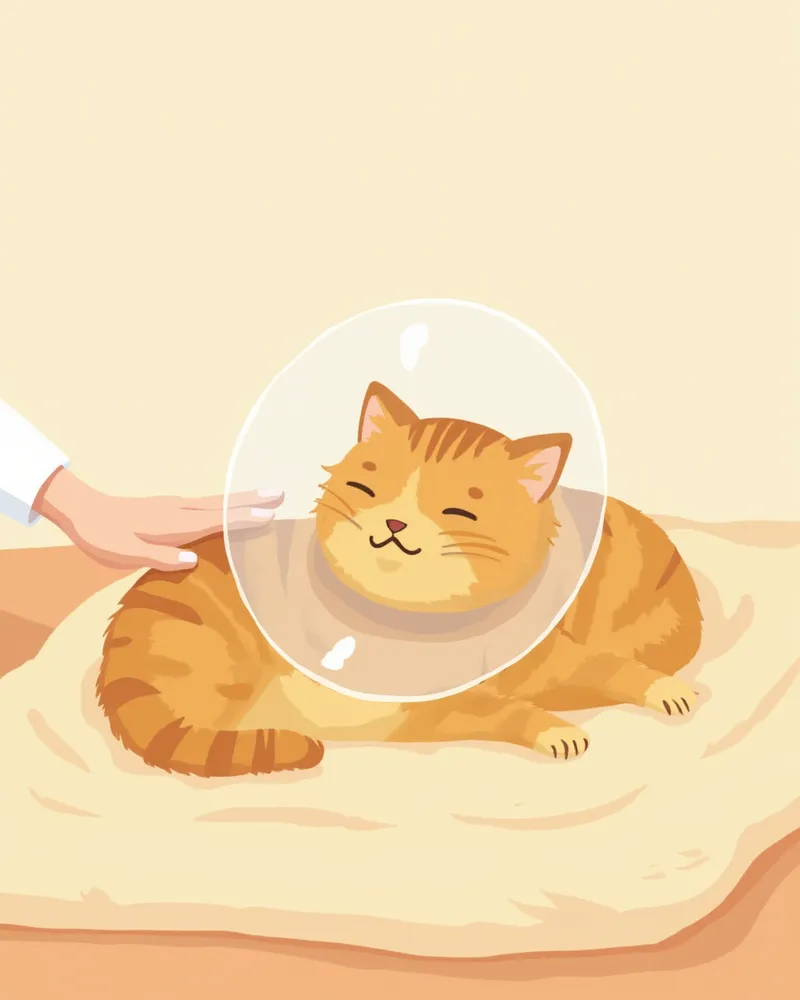
Wear an e-collar: Licking or biting at the surgical site can cause the wound to reopen or become infected. Please keep the e-collar on until the wound has fully healed to protect the area.
Restrict activity: During the recovery period, avoid strenuous exercise, jumping, or climbing stairs, as these can strain the incision. It’s best to keep your pet calm and resting until the sutures are removed. Follow your veterinarian’s specific guidance on the recommended rest period.
Monitor the incision: If you notice swelling, discharge, or an unusual odor at the surgical site, contact your clinic immediately.
Diet management: Pets are prone to weight gain after surgery, so adjust their food portions accordingly. Consider switching to a diet formulated for neutered pets if appropriate, as this can help prevent obesity.
An illustration of a cat resting while wearing a neck collar.

Reviewed by a veterinarian

Dr. Tony — Punnawat Phongkittirak

Dr. Tony — Punnawat Phongkittirak

Veterinarian

A veterinarian who majored in veterinary medicine at Khon Kaen University, Thailand, and completed the IVSA program at North Carolina State University in the United States. Drawing on clinical experience at animal hospitals, he works in the pet healthcare field and is dedicated to building a digital care environment that connects pet parents with veterinarians.

Frequently Asked Questions

Does spaying or neutering change a pet’s personality?
A pet’s core personality typically remains unchanged. Hormone-driven behaviors related to reproduction, such as marking and roaming, often decrease after the procedure. However, aggression does not always diminish post-surgery, and the outcome can vary depending on the individual animal and its environment. If behavioral issues persist, please consult your veterinarian.
How much does a spay or neuter surgery cost?
Costs vary significantly depending on the clinic, location, weight, and sex of the pet. Generally, neutering male pets is less expensive than spaying females. For the most accurate pricing, it’s best to contact the veterinary clinic you plan to visit.
Is it possible to have a spay or neuter surgery even if the pet is older?
If your pet is in good health, surgery is still possible even at an advanced age. However, the risk of anesthesia increases with age, so thorough preoperative testing becomes even more important. Be sure to consult with your veterinarian.
Does spaying or neutering always lead to weight gain?
It’s not inevitable. Hormonal changes can lower your pet’s basal metabolic rate, making weight gain more likely, but with proper portion control and regular exercise, you can manage their weight effectively.
Is neutering still effective if performed after the pet has gone into heat?
Yes, it is effective. However, performing the surgery before the first heat cycle yields the greatest benefit in preventing mammary tumors. Even if the procedure is done after the first heat, you can still expect significant advantages, such as a reduced risk of pyometra and improvements in behavior.

Share

Related Guides

References

[1] The Cat, Clinical Medicine and Management, 2nd Edition — Population Control and Neutering

[2] Handbook on Field Veterinary Surgery — Ch19: Ovariohysterectomy in Canines and Felines

[3] The Dog Care Handbook, Things I Wish My Vet Had Told Me — Neutering

This information is based on veterinary literature and does not replace diagnosis or treatment. Please consult a veterinarian for specific health concerns.

Metapet Co., Ltd. | CEO: Park Sung-yong | Business Reg. No. 417-88-02562 | Seoul, South Korea | Customer Center

Is Spaying or Neutering Necessary? Pros and Cons | Meongsiljang