Like
Share
멍실장
강아지 구강 종양(전반) 자주 묻는 질문 Q&A — 보호자가 꼭 알아야 할 핵심

Dog Oral Tumors (Overview) FAQ — Key Information Every Pet Owner Should Know

Oral HealthQ&AMeongsiljang Veterinary Advisory Board

Early detection is key to improving treatment success rates for oral tumors in dogs. Based on frequently asked questions, we’ve compiled the essential information every pet owner should know.

Early Detection of Canine Oral Tumors Saves Lives

A realistic medical illustration of a tumor in a dog's mouth
Canine oral tumors are benign or malignant growths that develop in the mouth. Although they may look similar on the surface, some lesions are actually proliferative or inflammatory in nature, making accurate diagnosis essential. Early detection significantly improves treatment prospects. These tumors can arise in various locations, including the lips, tongue, gums, and jawbone, and often begin with subtle symptoms. If your dog develops severe bad breath, has difficulty eating, or if you notice red spots or lumps in the mouth, consult your veterinarian immediately. Early diagnosis is key to increasing the likelihood of successful surgery and improving overall treatment outcomes. Your careful observation is the first step toward effective care.

What Are the Main Causes of Oral Tumors?

While the exact cause of oral tumors in dogs remains unclear, the risk increases with age, and breed or individual differences may play a role in some cases. These tumors can manifest in various forms, including benign and malignant types, as well as those originating from teeth or other tissues. In veterinary medicine, melanoma is the most common malignant oral tumor in dogs, accounting for approximately 30–40% of all canine oral tumors. Other malignant tumors, such as squamous cell carcinoma and fibrosarcoma, are also frequently reported. The development of these tumors is understood to result from a combination of multiple factors. Regular oral examinations are essential for preventive care and early detection, making routine veterinary check-ups crucial for identifying issues at an early stage.
A medical illustration of an elderly dog with thin fur exposed to sunlight.

5 Main Symptoms of Oral Tumors

Common signs of oral tumors in dogs include a noticeable increase in bad breath, difficulty eating, and excessive drooling. You should also watch for red spots or lumps in the mouth, swelling of the lips or jaw, and facial deformities. Bleeding from the mouth, blood-tinged saliva, loose teeth, and trouble swallowing can also indicate a tumor. If you notice any of these symptoms, consult your veterinarian immediately, as early detection is key to successful treatment.
Medical illustration of a dog with oral tumors and a swollen jaw

How Is an Oral Tumor Diagnosed?

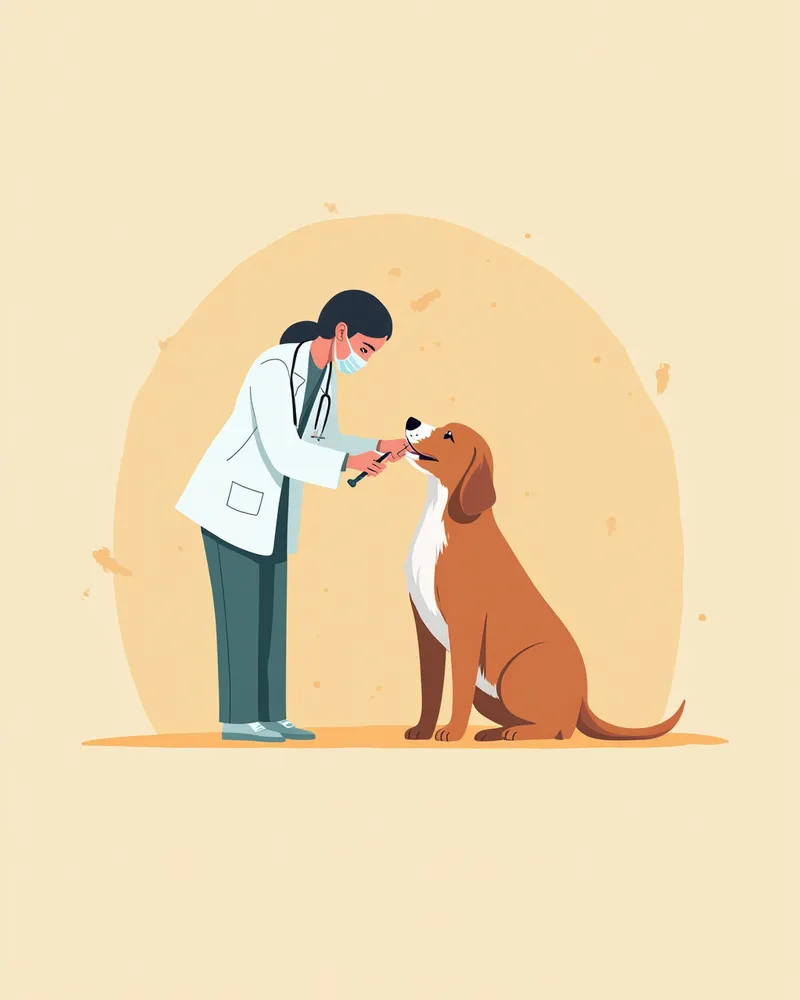
Diagnosing oral tumors begins with a thorough oral examination by your veterinarian. To confirm the diagnosis, fine-needle aspiration (FNA) or a tissue biopsy is essential. Skull radiographs or CT scans are used to assess the tumor’s size and extent of invasion. Chest radiographs (left and right lateral views, as well as ventrodorsal) or chest CT scans help determine whether the cancer has metastasized to the lungs, while blood tests evaluate your pet’s overall health. An accurate diagnosis forms the foundation for developing a treatment plan and is crucial in deciding whether surgery, radiation therapy, or chemotherapy is the most appropriate approach. Early diagnosis plays a key role in improving treatment outcomes.
A medical illustration showing a veterinarian performing a tissue biopsy inside a puppy’s mouth.

Signs Requiring Immediate Veterinary Attention

If your dog refuses to eat, bleeds from the mouth, has a crooked or immobile jaw, develops severe bad breath, or experiences rapid weight loss, immediate veterinary attention is required. These signs may indicate that a tumor has progressed or metastasized.

What Are the Treatment Options?

The treatment of oral tumors varies depending on the type, location, size, and presence of metastasis. Surgical removal is the most effective approach, but partial mandibulectomy may be necessary if the tumor has invaded the jawbone. Radiation therapy is used to prevent recurrence after surgery or when surgery is not feasible. Chemotherapy is often combined with other treatments if metastasis is suspected, while pain management and nutritional support are also provided. A multidisciplinary approach is typically employed for treatment. Regular consultations with your veterinarian can aid in recovery.
A medical illustration depicting a dog undergoing radiation therapy for oral cancer treatment.

Home Care Points

- Dietary adjustments: Since your pet’s mouth may be sore, switch to soft food or meals with plenty of broth. Offering small, frequent meals can help. If oral discomfort causes food refusal, pay close attention to the temperature and texture of the food. - Oral care: Gently clean the mouth using a soft cotton swab. This helps prevent infection and relieve pain. - Pain management: Administer any veterinarian-prescribed pain medication exactly as directed. Severe pain can interfere with eating and hinder recovery. - Regular check-ups: Consult your veterinarian every 1–3 months after treatment. Ongoing monitoring of your pet’s condition is essential.
Medical illustration of a dog being cared for while eating soft food

Comparison of Treatment Methods

ItemScope of ApplicationEfficacySide Effects
Surgical treatmentEarly-stage tumors, local invasionHighBleeding, jaw displacement/malocclusion
Radiation therapyInoperable cases, prevention of recurrenceModerateStomatitis, dermatitis
ChemotherapyCases with high metastatic potentialLowImmunosuppression, nausea

The treatment method is determined by the veterinarian based on the type and stage of the tumor.

Reviewed by a veterinarian

Dr. Tony — Punnawat Phongkittirak

Dr. Tony — Punnawat Phongkittirak

Veterinarian

A veterinarian who majored in veterinary medicine at Khon Kaen University, Thailand, and completed the IVSA program at North Carolina State University in the United States. Drawing on clinical experience at animal hospitals, he works in the pet healthcare field and is dedicated to building a digital care environment that connects pet parents with veterinarians.

Frequently Asked Questions

Are tumors that develop in a dog’s mouth malignant?
Oral masses can be either benign or malignant, and it’s difficult to distinguish between them based on appearance alone. In fact, many such lesions are proliferative or inflammatory in nature, making diagnostic testing essential. The most common malignant oral tumor in dogs is melanoma, accounting for approximately 30–40% of oral tumors, while other malignancies such as squamous cell carcinoma and fibrosarcoma are also observed. Prompt veterinary examination is necessary for a definitive diagnosis.
Can oral tumors be prevented?
While complete prevention is difficult, regular dental checkups, proper teeth care, and age-appropriate health management significantly increase the chances of early detection.
How long does the recovery period after surgery take?
The recovery period after surgery varies depending on the size of the tumor, the extent of the surgical procedure, and each individual's recovery status. Since recovery progress can differ significantly from one animal to another, it is important to attend regular follow-up visits and follow your veterinarian's instructions. Combining pain management with nutritional support can aid in the recovery process.
Is treatment impossible once an oral tumor has metastasized?
Even if the cancer has spread, treatment is still possible. Radiation or chemotherapy can help alleviate symptoms and improve your pet's quality of life. The survival period varies depending on the stage of the tumor and individual circumstances.
What should I do if my dog won’t open its mouth or refuses to eat?
This could be a sign of pain. Please consult your veterinarian right away, and consider switching to a softer diet or exploring nutritional support options together.

Share

Related Guides

References

[1] Clinical Medicine of the Dog and Cat, 4th Ed. Blackwell Publishing, 2020.

[2] The Cat, Clinical Medicine and Management, 2nd Edition. Elsevier, 1987.

[3] BSAVA Manual of Canine and Feline Dermatology, 4th Ed. BSAVA Publications, 2018.

This information is based on veterinary literature and does not replace diagnosis or treatment. Please consult a veterinarian for specific health concerns.

Metapet Co., Ltd. | CEO: Park Sung-yong | Business Reg. No. 417-88-02562 | Seoul, South Korea | Customer Center

Dog Oral Tumors: Essential Q&A for Pet Owners | Meongsiljang