
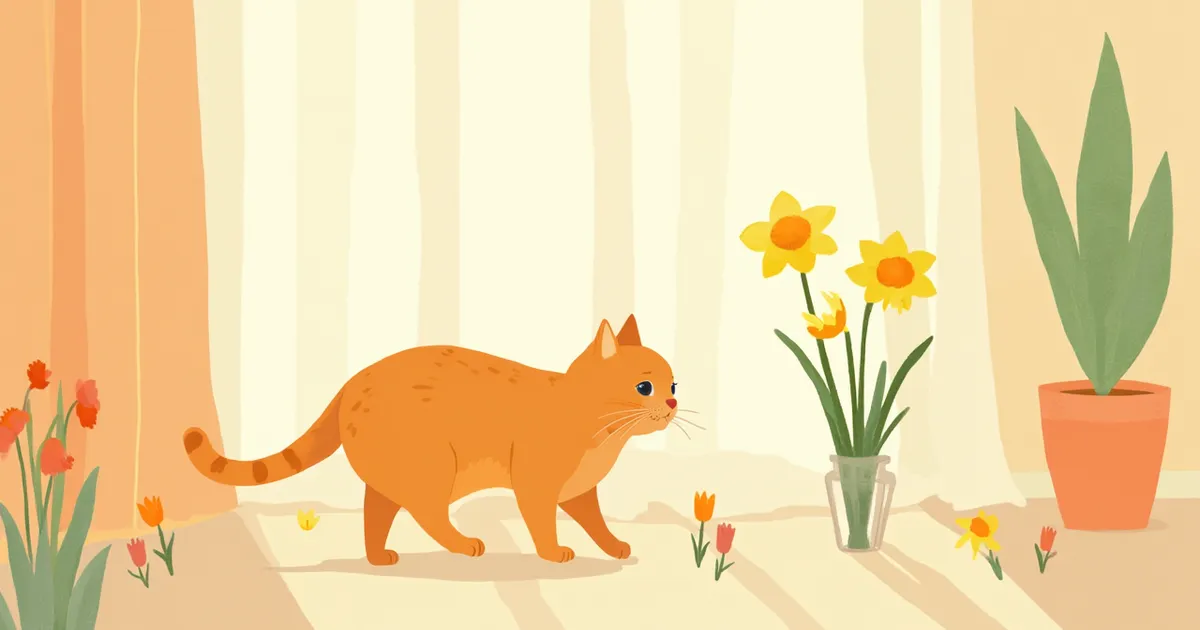
Emergency Response for Cat Exposure to Dangerous Spring Flowers — Tulips, Azaleas, Daffodils
This guide for pet owners outlines the most dangerous spring flowers for cats—such as tulips, azaleas, daffodils, and lilies—and explains emergency response steps based on the six-hour golden window, all according to veterinary toxicology textbook standards.
What Are Dangerous Spring Flowers for Cats?

Why Do Accidents Increase in Spring?
Comparison Table of Cat Toxicity by Spring Flower
| Item | Tulip | Daffodil | Azalea | Lily | Crocus (Spring) | Amaryllis |
|---|---|---|---|---|---|---|
| Toxic Part | Whole plant (bulb strongest) | Whole plant (bulb strongest) | Leaves, flowers, nectar | Flowers, leaves, pollen, vase water | Leaves, flowers | Bulb, stem |
| Key Toxic Component | Tulipalin A | Lycorine & calcium oxalate | Grayanotoxin | Water-soluble nephrotoxic substance | Gastrointestinal irritant | Lycorine |
| Main Symptoms | Vomiting, drooling, diarrhea | Vomiting, severe drooling, arrhythmia | Vomiting, bradycardia, hypotension, convulsions | Acute kidney failure, cessation of urination | Vomiting, diarrhea | Vomiting, tremors, hypotension |
| Risk Level | Moderate | High | Very High | Fatal | Moderate | High |
Summary based on Blackwell's Small Animal Toxicology, 3rd edition, chapters 114 and 119. Autumn crocus (Colchicum) is a different plant from spring crocus and is far more dangerous due to colchicine toxicity.
Symptom Checklist After Exposure
Go to the Emergency Room Immediately If You See These Signs
If your pet has come into contact with any part of a lily—petals, leaves, pollen, or even the water in the vase—immediate action is critical. Decontamination measures like inducing vomiting are most effective within 1 to 2 hours of ingestion, and early signs of lily toxicity typically appear within 6 to 12 hours of exposure. Even a small amount, such as one or two pieces, can cause acute kidney failure and be fatal. If you suspect exposure to spring flowers and notice even mild symptoms like lethargy or vomiting, take your pet to a veterinarian immediately. Never choose to "wait and see" because your pet seems fine. As time passes, kidney damage becomes increasingly difficult to reverse.
What to Do at Home Before Going to the Vet

Diagnosis and Treatment at the Veterinary Clinic
Check Your Indoor Environment in Spring
Information to Prepare Before Going to the Emergency Room
To speed up the start of the detoxification and IV fluid protocol upon arrival at the clinic, please have the following information ready: the estimated time of exposure, a photo of the flower species (or a leaf sample), the amount ingested (e.g., number of petals or sips of vase water), the time of the last meal, any regular medications your pet is taking, and your contact information. It’s also wise to save the location of a 24-hour emergency animal hospital in advance.
Reviewed by a veterinarian

Dr. Tony — Punnawat Phongkittirak
VeterinarianA veterinarian who majored in veterinary medicine at Khon Kaen University, Thailand, and completed the IVSA program at North Carolina State University in the United States. Drawing on clinical experience at animal hospitals, he works in the pet healthcare field and is dedicated to building a digital care environment that connects pet parents with veterinarians.
Reviewed 2026-05-07
Frequently Asked Questions
Is it dangerous if my dog drinks only water from a flower vase?
Is it a problem if pollen just gets stuck in their fur?
Can I give my pet activated charcoal or milk at home?
Is it equally dangerous for dogs?
Even though my pet seems fine after some time has passed since exposure, should I still go to the vet?
Share
Related Guides

Top 5 Emergency Poisoning Kits for Dogs Recommended by Veterinarians
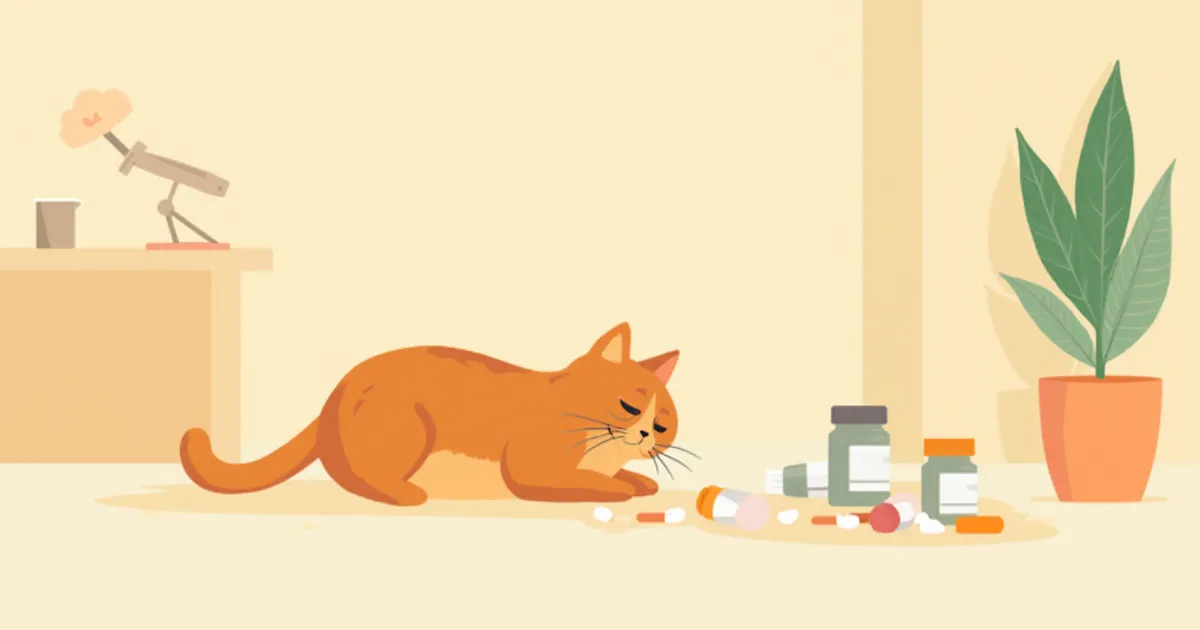
7 Emergency Checklist Items for Cat Poisoning — Signs to Check Immediately After Exposure
Is a kidney biopsy in cats really necessary? — What about the procedure and risks?
What is Feline Renal Amyloidosis? — Symptoms and When to Visit the Vet

Complete Guide to Feline Proteinuria and UPC Ratio — From Interpreting Values to Timing Kidney Care
My Cat Is Drinking Too Much Water — Causes of PU/PD and When to Visit the Vet

Are Lilies Truly Fatal to Cats? — Key Facts on Nephrotoxicity Symptoms and Emergency Treatment

Is My Cat’s Blood Pressure Okay? — The Dangerous Link Between Hypertension and Kidney Disease
Is High Phosphorus Dangerous in Cats? — Key Points on Hyperphosphatemia and Phosphate Binders

Feline Hydronephrosis: Causes and When Surgery Is Needed
References
[1] Hovda LR, Brutlag AG, Poppenga RH, Epstein SE (eds). Blackwell's Five-Minute Veterinary Consult Clinical Companion: Small Animal Toxicology, 3rd Edition. Chapter 119 Spring Bulbs. Wiley, 2024.
[2] Hovda LR et al. Blackwell's Five-Minute Veterinary Consult Clinical Companion: Small Animal Toxicology, 3rd Edition. Chapter 114 Lilies. Wiley, 2024.
[3] Peterson ME, Talcott PA. Small Animal Toxicology, 3rd Edition. Elsevier, 2013.
[4] Gwaltney-Brant SM. Common Household Plant Toxicities in Small Animals. Veterinary Clinics of North America: Small Animal Practice, 2018.