
Like
Share
멍실장
고양이 산책 훈련 (하네스)

Can Cats Be Walked Too? — Key Points and Precautions for Harness Training

Brain & CognitionQ&AMeongsiljang Veterinary Advisory Board

Walking your cat isn’t necessary for every feline, but we’ll guide you through step-by-step training—from harness acclimation to outdoor outings.

Is Walking Your Cat Necessary?
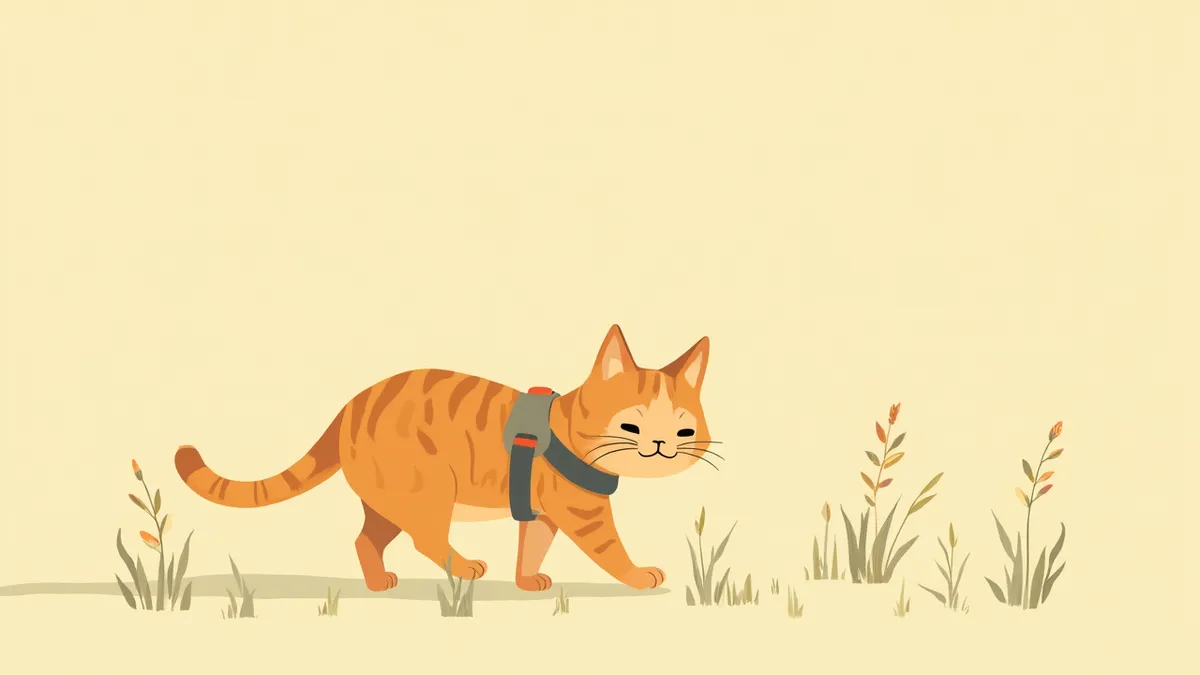
A cat exploring the grass while wearing a harness
Walking your cat with a harness and leash is a form of environmental enrichment that allows for safe outdoor activity. The most important thing to remember is that it’s not necessary for every cat. It can be beneficial for cats who lack indoor stimulation or have a curious nature, but for timid or sensitive cats, it can cause significant stress. Please don’t force the issue; instead, take the time to understand your cat’s personality first.

Does Your Cat Have the Right Personality for Walking?

You can tell whether a walk will benefit your cat by observing their everyday behavior. If your cat spends a long time gazing out the window, tries to follow you when the front door opens, and remains relatively calm around strangers and unfamiliar sounds, a walk may be worth trying. On the other hand, if your cat hides at the sound of the doorbell or hisses at the mere sight of a carrier, walking is not suitable. For such cats, providing stimulation through indoor cat trees, tunnels, and hunting-style play is much better.

Comparison of Harness Types

ItemH-style harnessVest-style harnessCollar/leash (prohibited)
Neck pressureNoneNoneSevere
Escape riskMediumLowHigh
Difficulty of fittingEasyMediumEasy
Recommendation levelRecommendedMost recommendedAbsolutely prohibited

For cats, a collar can be a restraining device that causes fear, pain, and stress, and if worn loosely it also increases the risk of escape. Always use a harness for outdoor activities.

Four Steps to Harness Acclimation Training
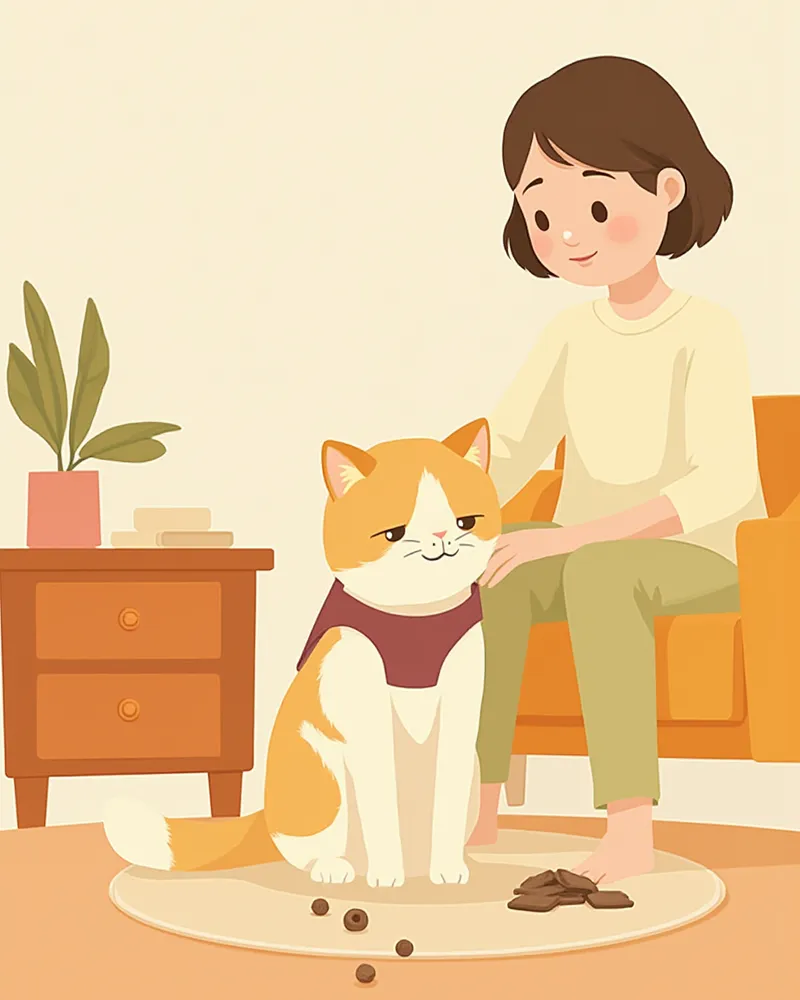
Don’t take your cat for a walk the moment you put the harness on. First, let them get fully comfortable with it indoors before heading outside. Step 1: Sniff and Explore – Place the harness on the floor and let your cat investigate it while offering treats. Step 2: Lightly Drape – Gently rest the harness on your cat's shoulders and immediately give a treat to create a positive association. Step 3: Try Putting It On – Start with short sessions of 10–30 seconds, gradually increasing the time. Step 4: Play While Wearing – Engage in indoor play, like fetch or tug, while your cat is wearing the harness to reinforce the idea that “harness = fun things.”
A guardian putting on a vest-style harness for their cat indoors.

Must-Check Items Before the First Outing

First, confirm that all vaccinations, such as rabies and the FVRCP combination vaccine, are up to date, and that your cat has been treated for external parasites like fleas and ticks. Unneutered male cats may exhibit more intense mating behaviors after going outside. For safety, ensure your cat wears an internal microchip or, at the very least, a harness with an ID tag. If startled and escaping, cats are much harder to find than dogs.

How to Start Outdoor Outings
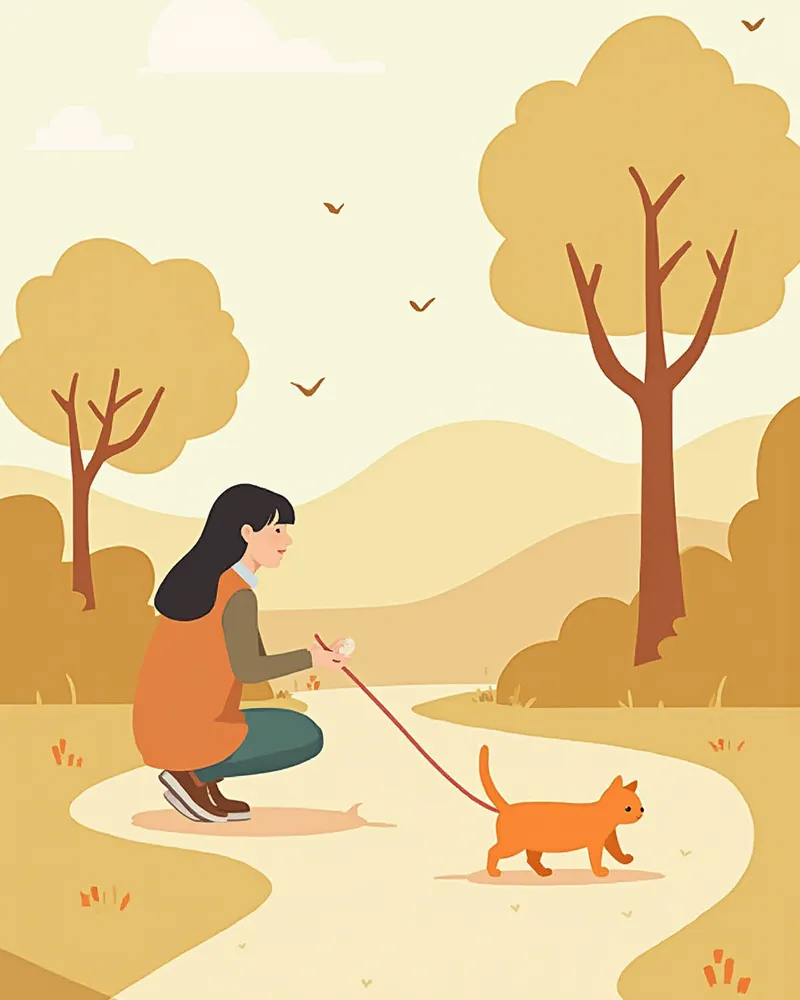
Start your cat’s first outing in a quiet, low-traffic area with minimal people, cars, and other dogs, keeping the session brief. Transport your cat in a carrier to the destination, then open the door on-site and let them step out on their own. Forcing them out can cause them to refuse walks from that moment on. Keep the leash at a comfortable, not overly long, length, and follow your cat’s chosen direction—trying to lead them like a dog will likely backfire. If the environment becomes too stimulating, immediately return them to the carrier and head home. Gradually build their confidence through short, positive reinforcement-based outings. For more training tips, check out our Cat Environmental Enrichment Guide.
A cat exploring a quiet walking path while wearing a leash

Stress Signal Checklist

If you notice any of these signs during a walk, stop immediately, place your cat in a carrier, and head home. - Lying flat on the belly: The cat lies motionless with its belly pressed to the ground. - Dilated pupils: The pupils are noticeably enlarged. - Ears pinned back: The ears flatten backward, resembling an airplane shape. - Puffed-up tail: The fur on the tail stands on end, appearing twice as large. - Excessive grooming: The cat repeatedly licks one specific area. Seeing these signs once or twice doesn’t mean you’ve failed. As you gain experience in quickly recognizing these signals and retreating promptly, your cat will learn that “this place is safe.”

Cats That Should Not Be Walked

For senior cats requiring ongoing treatment due to poor health, or those with underlying conditions that necessitate daily medication, outdoor environments can act as an additional source of stress. Cats that are easily frightened and tend to hide, or those who have never adapted to a carrier, are much safer with enriched indoor stimulation. Not being able to go for walks does not mean a lower quality of life. A window perch and puzzle feeders can provide ample enrichment.

Reviewed by a veterinarian

Dr. Tony — Punnawat Phongkittirak

Dr. Tony — Punnawat Phongkittirak

Veterinarian

A veterinarian who majored in veterinary medicine at Khon Kaen University, Thailand, and completed the IVSA program at North Carolina State University in the United States. Drawing on clinical experience at animal hospitals, he works in the pet healthcare field and is dedicated to building a digital care environment that connects pet parents with veterinarians.

Frequently Asked Questions

From what age can cats start going for walks?
Once your pet has completed all vaccinations, you can start considering outdoor walks. It's best to consult with your veterinarian to determine the exact timing. However, you can begin harness training indoors at a younger age.
My cat is just sitting still and not moving during our walk. Is this normal?
This is a common reaction on a dog’s first outing. They’re overwhelmed by all the new stimuli and have essentially “frozen.” Don’t force them to move; if they’re still in this state after five minutes, quietly head back home.
When I put the harness on, my dog suddenly stops walking and lies flat on its stomach.
Your dog was startled by the weight of the harness. Start over with just 10 seconds of wear time, and immediately offer a favorite treat or engage in a fun game of fetch to create a positive association.
My cat is hiding and refusing to eat after coming back from outside.
Temporary loss of appetite or hiding after going out may be a stress response. If it lasts more than 24 hours or is accompanied by vomiting or diarrhea, please visit the vet. Before the next outing, ensure your pet has fully recovered and is calm, and proceed without rushing.
My cat is an indoor cat and only looks out the window. Does he still need to go for walks?
It’s not strictly necessary. You can provide ample environmental enrichment through a cat tree by the window, a bird-watching perch, scent stimulation (such as catnip or cat grass), and hunting-style play. Walking is just one of many options.

Share

Related Guides

References

[1] Little SE, The Cat: Clinical Medicine and Management, 2nd Edition, Chapter: Behavior

[2] Rodan I, Heath S, A Professional's Guide to Feline Behaviour, 2023

[3] AAFP, 2024 AAFP indoor/outdoor lifestyle position statement, JFMS 2024;26(2)

This information is based on veterinary literature and does not replace diagnosis or treatment. Please consult a veterinarian for specific health concerns.

Metapet Co., Ltd. | CEO: Park Sung-yong | Business Reg. No. 417-88-02562 | Seoul, South Korea | Customer Center

Can Cats Go for Walks? Harness Training Tips and Safety Precautions | Meongsiljang