Like
Share
멍실장
고양이 초콜릿 위험도 — 강아지와 다른 점과 증상 정리

What Happens If a Cat Eats Chocolate? Theobromine Poisoning and Symptoms Different from Dogs

Emergency/ToxicityQ&AMeongsiljang Veterinary Advisory Board

Chocolate poisoning in cats differs from that in dogs. Cats have a reduced ability to taste sweetness, so they tend to consume chocolate less frequently. However, due to their smaller body size and slower metabolism, even the same amount of chocolate can pose a higher risk to them.

What Is Chocolate Poisoning in Cats and Why Is It Dangerous?

A curious cat eyeing the chocolate on the kitchen counter
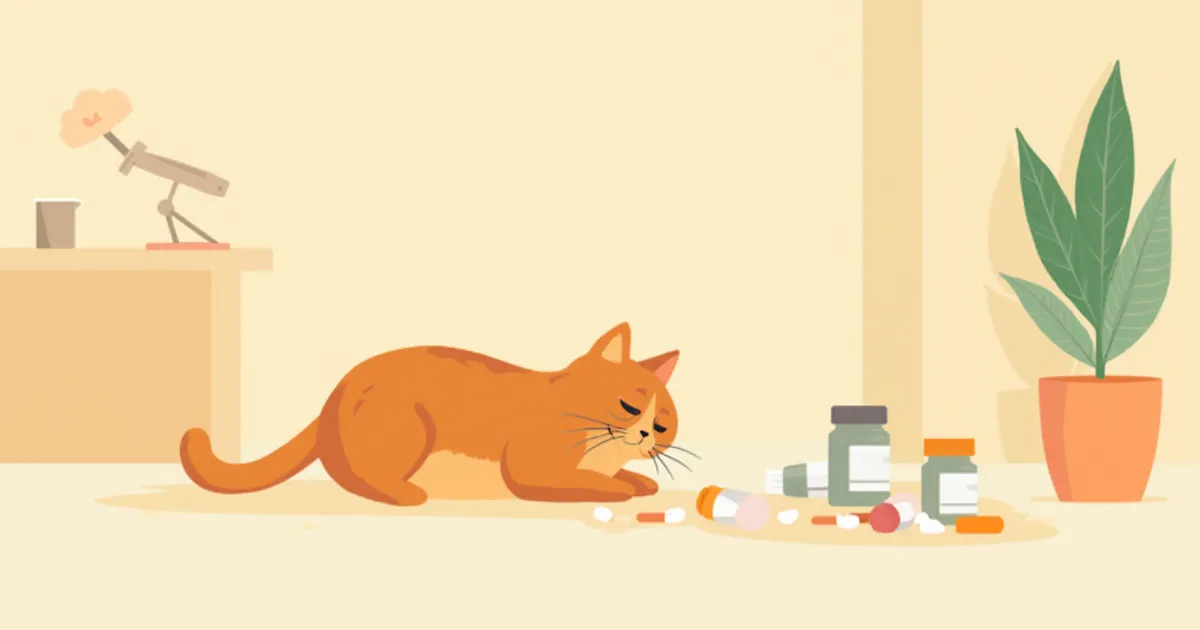
Chocolate poisoning in cats is a form of dietary toxicity caused by theobromine and caffeine in cocoa, which stimulate the heart and nervous system. What’s truly important to know is that cats have a limited ability to taste sweetness, so they rarely seek out chocolate on their own. However, due to their small body size, even an amount considered “small” for dogs can be dangerous for a cat. If you notice vomiting, rapid heart rate, or muscle tremors within 4 to 6 hours of ingestion, seek veterinary care immediately.

How Is It Different from Dogs?

Unlike dogs, cats have very few sweet taste receptors, so they rarely seek out chocolate on their own. However, they may lick chocolate out of curiosity when it’s in a form with strong fats or aromas, such as milk chocolate containing milk and butter, or chocolate ice cream. Most importantly, chocolate toxicity occurs in proportion to the amount of methylxanthines ingested per kilogram of body weight, regardless of species. The reported minimum lethal dose is 100–150 mg/kg for cats, which is lower than that for dogs (110–200 mg/kg), making cats more susceptible to poisoning. Because cats are small, with an average weight of around 4 kg, even an amount considered “small” for dogs can be dangerous for a cat.

Dangerous Chocolate Amounts for a 4kg Cat by Type

ItemWhite ChocolateMilk ChocolateDark Chocolate (72%)
Theobromine (per 100g)Almost none (about 1mg)About 200mgAbout 490–700mg
Mild-Onset Amount (20mg/kg)Not applicableAbout 40gAbout 13–16g
Moderate-Risk Amount (40mg/kg)Not applicableAbout 80gAbout 23–33g
Risk LevelLow (watch fat content)HighVery High

Methylxanthine toxicity is proportional to the dose ingested per body weight. Mild signs (vomiting, diarrhea) begin at 20mg/kg, moderate signs (rapid heart rate, arrhythmia, hypertension) at 40mg/kg, and severe signs (muscle rigidity, ataxia, seizures, coma) at 60mg/kg. Theobromine content rises with darkness: about 0.01mg/g for white, about 2.04mg/g for milk, about 4.86mg/g for dark (semisweet), and about 25.99mg/g for baking cocoa powder. Cocoa powder has the highest concentration, so as little as about 3g can reach the mild-risk amount for a 4kg cat. The reported minimum lethal dose in cats is 100–150mg/kg. Source: methylxanthine chapter of a veterinary toxicology textbook.

Symptoms of Chocolate Poisoning in Cats — A Timeline Checklist

Symptoms of chocolate poisoning in cats typically begin within 4 to 6 hours of ingestion. Even small amounts almost always cause gastrointestinal signs.
Vomiting and diarrhea: These are usually the first signs, caused by methylxanthines irritating the stomach lining.
Excessive thirst and frequent urination: Caffeine’s diuretic effect makes your cat seek water more often.
Rapid heart rate and arrhythmia: You may notice your cat’s heartbeat is noticeably faster than usual when you place your hand on their chest.
Muscle tremors and seizures: With moderate to high ingestion, you may see fine tremors in the limbs.
Hyperactivity and restlessness: Your cat may become unusually unable to stay still, pacing or vocalizing more than normal.
A guardian checks on a cat lying weakly on the sofa.

Seek Veterinary Care Immediately If You See These Signs

If you notice any of these signs, don’t wait for the 4-hour observation period—seek veterinary care immediately. Cats are more sensitive to toxicity than dogs, with a reported minimum lethal dose of 100–150 mg/kg compared to 110–200 mg/kg in dogs, meaning even small amounts can quickly become life-threatening due to their smaller body size. In particular, if methylxanthine intake exceeds 60 mg/kg of body weight, severe symptoms such as muscle rigidity, ataxia, seizures, and coma may occur. Key critical signs include decreased consciousness, generalized seizures, cyanosis (bluish gums), and rigid muscle stiffness. For the fastest response, keep the location and phone number of a nearby 24-hour emergency animal hospital saved in your phone.

Emergency Response — What to Do and What Not to Do at Home

If you confirm your cat has eaten chocolate, follow these steps:
Step 1 — Determine the exact amount: Find out what type of chocolate was consumed and how many grams. Bring the packaging with you to the clinic.
Step 2 — Record the time: Note down the estimated time of ingestion to help speed up the veterinary assessment.
Step 3 — Contact a vet immediately: Call your veterinarian right away, even if there are no symptoms, especially if the chocolate was dark or baking chocolate.
Step 4 — Do not induce vomiting at home: Attempting to make your cat vomit at home can lead to aspiration pneumonia. Never try this without explicit instructions from a veterinarian.
A veterinarian listening to a cat’s heart and lungs with a stethoscope at the animal hospital

Treatment Process at the Clinic

Upon arrival at the clinic, the general procedure is as follows. If ingestion occurred within the past two hours and the airway can be protected, the veterinarian will induce vomiting using a safe medication to empty the stomach contents. Activated charcoal (1–2 g/kg) is then administered once, along with a laxative, to block the absorption of any remaining methylxanthines. If tachycardia or arrhythmias are present, electrocardiographic monitoring is performed alongside antiarrhythmic medications to stabilize the heart, while intravenous fluids are used to correct dehydration and promote excretion. Anticonvulsants are administered if seizures occur. The length of hospitalization is determined by the progression of symptoms rather than a fixed timeframe; it is standard practice to monitor the patient closely, frequently checking heart rate, blood pressure, and neurological status, and to keep the pet hospitalized for observation until symptoms resolve. The veterinarian determines the medication schedule and dosage based on the pet’s body weight.

Preventing Recurrence — Storage Principles at Home

The most reliable way to reduce chocolate exposure at home is to store it out of your cat’s reach. Avoid leaving chocolate boxes or desserts on surfaces your cat frequently jumps on, such as dining tables or sofas. Baking cocoa powder and dark chocolate contain the highest concentrations of theobromine and are especially dangerous, so they must be kept in airtight containers. During holidays like Easter, Halloween, and Christmas, when chocolate is more abundant in the home, gift boxes are often left unattended in living areas, increasing both access and the risk of poisoning. Accidents have also been reported where children inadvertently hand dark chocolate to cats, so if you have young children who might drop chocolate, establish a routine for cleaning up after meals.

Reviewed by a veterinarian

Dr. Tony — Punnawat Phongkittirak

Dr. Tony — Punnawat Phongkittirak

Veterinarian

A veterinarian who majored in veterinary medicine at Khon Kaen University, Thailand, and completed the IVSA program at North Carolina State University in the United States. Drawing on clinical experience at animal hospitals, he works in the pet healthcare field and is dedicated to building a digital care environment that connects pet parents with veterinarians.

Frequently Asked Questions

Should I take my cat to the vet even if it only licked chocolate?
The severity depends on how much chocolate your pet licked and the type of chocolate. If they only licked a small amount of white or milk chocolate, you can monitor them for 24 hours. However, even a small amount of dark or baking chocolate requires immediate veterinary consultation for safety.
How much does the dangerous dose differ for dogs?
Methylxanthine toxicity is proportional to the ingested dose per unit of body weight, regardless of species. In a 4 kg cat, mild symptoms can begin with approximately 13–16 g of dark chocolate (20 mg/kg), moderate risk (rapid heart rate, arrhythmias) starts at about 27–33 g (40 mg/kg), and doses exceeding 60 mg/kg are considered severe. The reported minimum lethal dose for cats is 100–150 mg/kg, which is lower than that for dogs (110–200 mg/kg); therefore, amounts considered "safe in small quantities" for dogs may be dangerous for cats.
Is it dangerous if my pet just smells chocolate?
If your pet only smelled the product without ingesting it, there’s no risk of poisoning. However, since they might lick it out of curiosity if it’s within reach, please move it to a place where they can’t access it right away.
Chocolate and xylitol— which is more dangerous to cats?
Chocolate (methylxanthine) is dangerous for both cats and dogs, and because cats are smaller, they reach toxic levels more quickly even with the same amount. While it’s difficult to definitively conclude the toxicity of xylitol in cats based solely on current veterinary textbook evidence, it’s safest to keep all human sweetened foods and sugar-free products out of your cat’s reach, regardless of type.
Can I give my pet milk or water at home before going to the emergency room?
No. Force-feeding water carries the risk of aspiration pneumonia and does not delay absorption. If your pet is fully conscious, allow them to drink water freely as usual, and do not give any other food or medication without your veterinarian’s instructions.

Share

Related Guides

References

[1] Blackwell's Five-Minute Veterinary Consult Clinical Companion, Small Animal Toxicology, 3rd Edition — Chapter 71: Chocolate and Caffeine

[2] Plumb's Veterinary Drug Handbook, 10th Edition — Methylxanthine Toxicosis

[3] ASPCA Animal Poison Control Center — Chocolate Toxicity in Companion Animals

[4] The Dog Care Handbook, Things I Wish My Vet Had Told Me — Chocolate Toxicity Section

This information is based on veterinary literature and does not replace diagnosis or treatment. Please consult a veterinarian for specific health concerns.

Metapet Co., Ltd. | CEO: Park Sung-yong | Business Reg. No. 417-88-02562 | Seoul, South Korea | Customer Center

Cat Ate Chocolate? Theobromine Poisoning & Signs Unlike Dogs | Meongsiljang