Like
Share
멍실장
고양이 천식 증상과 관리

Feline Asthma: Symptoms and Management

RespiratoryQ&AMeongsiljang Veterinary Advisory Board

We’ve put together a clear overview of feline asthma, covering its main symptoms, causes, diagnostic methods, inhaler treatments, and home environment management tips.

What Is Feline Asthma?
A cat receiving treatment at a veterinary clinic
Feline asthma is an allergic respiratory condition characterized by chronic inflammation of the airways. It is relatively common, affecting 1–5% of all cats, and is particularly prevalent in young to middle-aged cats. If your cat exhibits recurring symptoms such as coughing, wheezing, or difficulty breathing, asthma should be suspected. Similar to human asthma, it is triggered by an allergic response, so the cornerstone of management is avoiding the triggering allergens and controlling inflammation.

Causes of Feline Asthma

Feline asthma occurs when allergic reactions cause the airways to narrow, and the triggers can vary widely.
Household dust: Dust and fine particulate matter in the home are known to irritate the airways and trigger symptoms.
Tobacco smoke: Secondhand smoke severely irritates a cat’s airways.
Scented products: Items such as air fresheners, scented candles, and diffusers can irritate the respiratory tract.
Seasonal triggers: Allergens and fine particles that increase in the air during seasonal changes can worsen symptoms.
Litter dust: Cat litters that produce significant amounts of fine dust can also be a contributing factor.

Suspect Asthma If You See These Symptoms

If you notice any of the following symptoms, consider the possibility of asthma.
Repetitive coughing: A low, hacking “hack-hack” cough, as if something is stuck in the throat.
Wheezing: A whistling or wheezing sound when breathing.
Mouth breathing: Breathing with the mouth open is a serious warning sign.
Increased respiratory rate: Breathing that appears noticeably rapid or labored, even at rest, may be abnormal.
Reluctance to exercise: Avoiding play or tiring easily.
Stretched posture: Breathing with the neck extended forward and the body hunched.
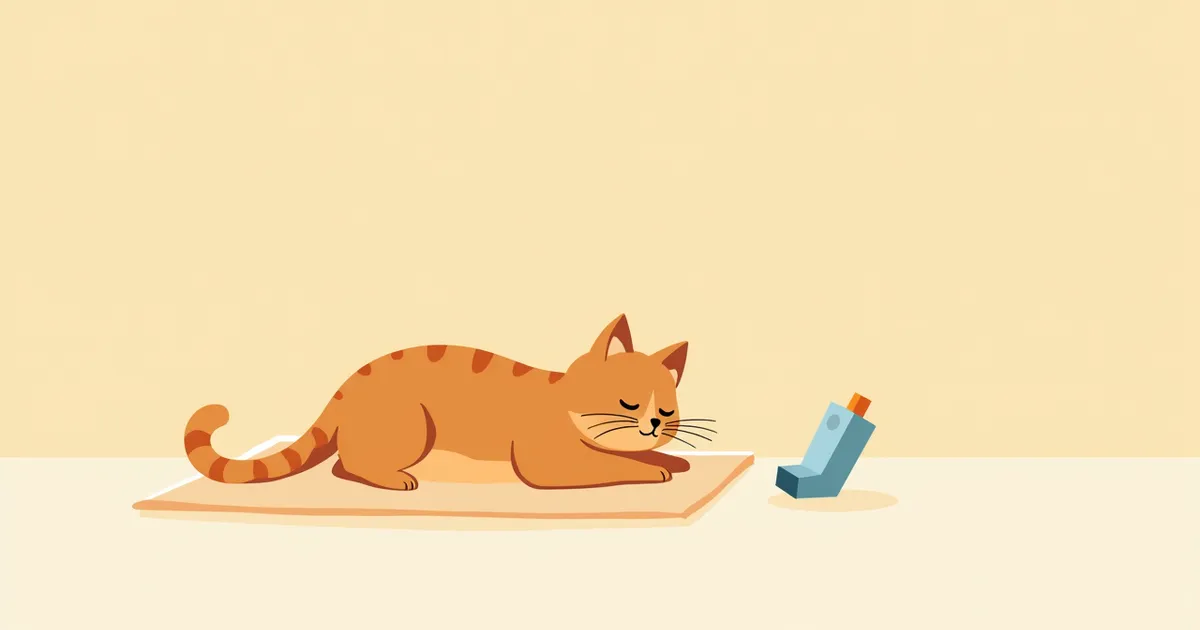
A cat crouching low to the ground

Go to the Veterinary Clinic Immediately in These Situations

If your cat is breathing with its mouth open (open-mouth breathing), if its gums or tongue turn blue (cyanosis), or if its abdomen moves significantly while breathing, this is an emergency. Immediate oxygen support may be necessary, so do not delay—visit a veterinary clinic right away.

Diagnostic Process at the Veterinary Clinic
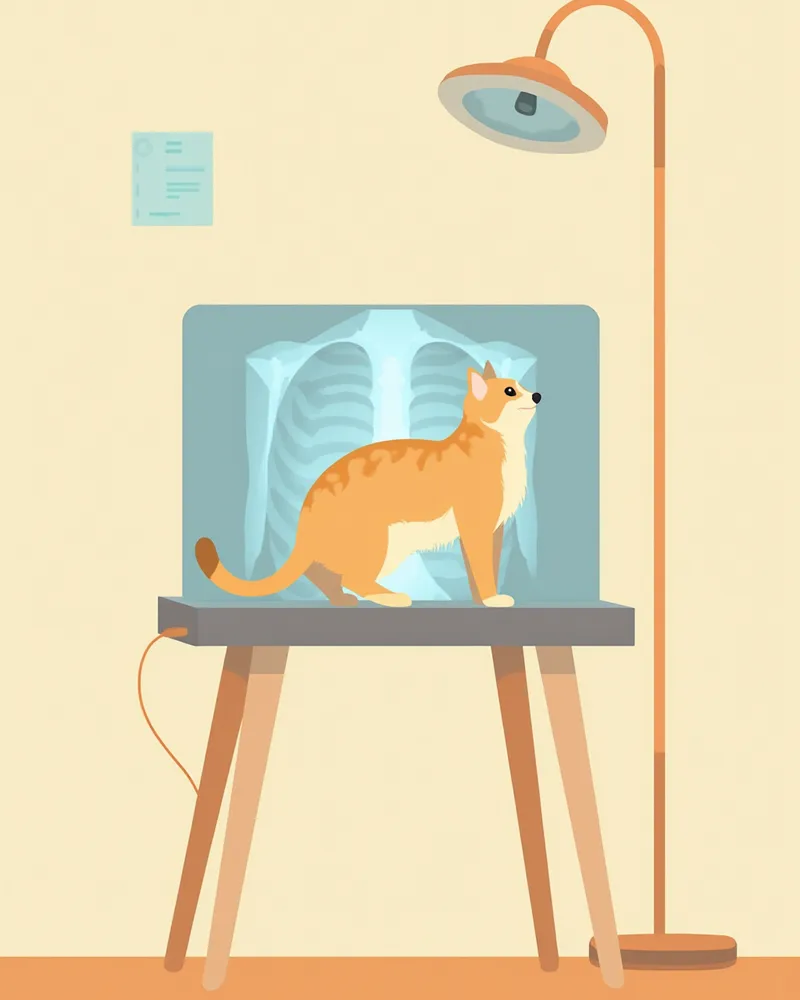
Veterinarians diagnose asthma by combining the results of several tests.
Chest X-rays: To check for thickened bronchial walls and overinflated lungs.
Bronchoalveolar lavage: To collect cells from the airways and analyze for an increase in eosinophils (allergy-related inflammatory cells).
Blood tests: Conducted alongside other tests to rule out different diseases.
Because other conditions can cause respiratory symptoms similar to asthma, differential diagnosis is essential for an accurate diagnosis.
A veterinarian reviewing a cat’s chest X-ray at the clinic

Treatment Methods for Feline Asthma

Treating feline asthma focuses on reducing inflammation and opening the airways.
Oral steroids: Considered the most consistent and reliable treatment in veterinary textbooks. Treatment begins with an adequate dose, which is gradually tapered once symptoms are controlled. The veterinarian prescribes the medication based on the cat’s weight and condition.
Inhaled steroids: Administered using a spacer (chamber) connected to a cat-specific mask. Because the medication is delivered directly to the bronchi, this method helps minimize systemic side effects and is often used in combination with other treatments.
Bronchodilators: Quickly open the airways during acute attacks. A response is typically seen within 30 to 45 minutes after starting treatment; if there is no effect, additional intervention is required.

Environmental Management You Can Do at Home

Environmental management is just as important as medical treatment for cats with asthma.
Use low-dust litter: Switch to low-dust options such as tofu-based or crystal litter.
Run an air purifier: Installing one in the areas where your cat spends most of its time can be helpful.
Remove scented products: Avoid strongly scented items such as air fresheners, scented candles, diffusers, and fabric softeners.
Regular ventilation and cleaning: Ventilate the home frequently and use damp cleaning methods to reduce dust and mites.
Maintain a healthy weight: Obesity can worsen breathing difficulties.
A cat sitting next to an air purifier in a clean living room

Precautions for Long-Term Steroid Use

Long-term use of oral steroids can lead to side effects such as diabetes or heart failure. Veterinary textbooks specifically emphasize the need for caution regarding this point. Whenever possible, it is advisable to switch to inhaled steroids. Under no circumstances should owners reduce or discontinue the medication on their own; always consult your veterinarian to adjust the dosage.

Reviewed by a veterinarian

Dr. Tony — Punnawat Phongkittirak

Dr. Tony — Punnawat Phongkittirak

Veterinarian

A veterinarian who majored in veterinary medicine at Khon Kaen University, Thailand, and completed the IVSA program at North Carolina State University in the United States. Drawing on clinical experience at animal hospitals, he works in the pet healthcare field and is dedicated to building a digital care environment that connects pet parents with veterinarians.

Frequently Asked Questions

Can feline asthma be cured?
Feline asthma is a condition where the goal is consistent management rather than a complete cure. With proper medication and environmental control, your cat can live comfortably without symptoms.
What should I do if my cat dislikes using the inhaler?
At first, most pets dislike it. Start by practicing placing the mask on their face, and gradually help them get used to it by rewarding them with treats. Usually, they become accustomed to it within 1 to 2 weeks.
How can you tell the difference between an asthma cough and a hairball cough?
Hairball coughing ends with retching and expelling a clump of fur, whereas asthma coughing produces nothing and involves repeated, low-pitched "hacking" while the cat is in a crouched position. If you're unsure which it is, record a video to show your veterinarian.
If my pet has asthma, should I change their food?
There’s no need to change your pet’s diet solely because of asthma. However, since obesity can make breathing more difficult, proper dietary management to maintain a healthy weight is important.
Can feline asthma be transmitted to humans?
Feline asthma is an allergic condition, so it is not contagious to humans. However, environmental triggers that can induce asthma in cats—such as dust and mold—are also harmful to human respiratory health, so it is best to manage these factors for the well-being of both you and your pet.

Share

Related Guides

References

[1] King LG (ed). Textbook of Respiratory Disease in Dogs and Cats, Saunders, 2004, Ch. 53 Feline Asthma

[2] Englar RE. The Veterinary Workbook of Small Animal Clinical Cases, 5M Publishing, Case 40 Feline Asthma

[3] Norkus CL (ed). Feline Emergency and Critical Care Medicine, 2nd Ed, CRC Press, Lower Airway Disease chapter

[4] Sharkey LC et al. Small Animal Cytologic Diagnosis Canine and Feline Disease, 2nd Ed, CRC Press, Respiratory Cytology chapter

This information is based on veterinary literature and does not replace diagnosis or treatment. Please consult a veterinarian for specific health concerns.

Metapet Co., Ltd. | CEO: Park Sung-yong | Business Reg. No. 417-88-02562 | Seoul, South Korea | Customer Center

Feline Asthma: Symptoms and Management | Meongsiljang