
Like
Share
멍실장
AAFCO 표시 의미와 영양 충족 기준 완벽 정리

Complete Guide to AAFCO Label Meanings and Nutritional Adequacy Standards

DigestiveQ&AMeongsiljang Veterinary Advisory Board

The AAFCO label certifies that a pet food meets established nutritional standards. Here’s what the different label statements mean and how to choose the right food for your pet.

What is the AAFCO Label?

A bag of dog food with the AAFCO nutritional adequacy statement and a puppy
The AAFCO (Association of American Feed Control Officials) label is an official certification indicating that a pet food meets the essential nutritional requirements for pets. The most important thing to check is the "Nutritional Adequacy Statement" on the back of the package. This single line tells you whether the food is complete and balanced, which life stage it’s suitable for, and how its nutritional adequacy was verified.

Why Should You Check the AAFCO Label?

AAFCO is the organization that sets nutritional standards and labeling regulations for pet food in the United States. Not only are pet foods made in the U.S. required to meet these standards, but many premium pet foods imported into Korea also follow them. The presence of an AAFCO label means the product has met minimum nutritional safety requirements, allowing pet owners to verify basic quality without having to analyze ingredients and nutrients themselves.

Meanings of AAFCO Label Statements

You’ll often see three main patterns of AAFCO statements on pet food packaging. Each statement differs in its testing method and the life stages it covers. Here’s a summary table for your reference.

Comparison of AAFCO Label Statements

ItemFormulated (calculation-based)Feeding TrialProduct Family
Validation methodNutrient value calculationActual animal feeding trialSimilarity to a product that passed a trial
ReliabilityBasicHighMedium
Label exampleis formulated to meet...Animal feeding tests...substantiated by...
Recommended forGeneral adult dogs/catsGrowth/reproduction/seniorGeneral adult dogs/cats

Foods that pass a Feeding Trial are the most rigorously validated products.

How to Read Life Stage Labels

AAFCO also indicates which life stage a pet food is formulated for. The life stages AAFCO uses to define nutritional adequacy are broadly divided into growth and reproduction, and adult maintenance. Overlooking this can lead to mistakes like feeding cat food to a dog or giving adult maintenance food to a puppy or kitten that hasn’t finished growing. Growing puppies and kittens have higher requirements for protein, fat, and minerals (especially calcium), so they need food carefully formulated to support their development. - Growth: Young puppies and kittens that are not yet fully grown - Maintenance: Healthy adult dogs and cats - Gestation/Lactation: Breeding female dogs and cats - All Life Stages: Suitable for all of the above stages (formulated to meet even the stricter requirements of the growth stage) - Senior: Not an official AAFCO category; a designation used by individual brands
Different food bowls for dogs at each life stage

When Not to Rely Solely on the AAFCO Label

The AAFCO label indicates that a food meets minimum nutritional standards, not that it is the best food available. Veterinary consultation is especially important in the following cases: - Dogs with chronic kidney disease, heart disease, or liver disease (prescription diets may be required) - Dogs with allergies or atopy (identifying the protein source is the first step) - Large-breed dogs with patellar luxation or joint disorders (calcium-to-phosphorus ratio is critical) - Dogs with special nutritional needs, such as during pregnancy, lactation, or recovery from illness

Key Points to Check When Choosing Pet Food
Beyond the AAFCO label, there are several key points to consider when choosing a high-quality pet food. - Ingredient Order: Check if animal-based proteins (such as chicken or salmon) are listed first. - Calorie Information: Look for calorie content labeled in kcal/kg or kcal/cup. - Guaranteed Analysis: Review the minimum and maximum levels for protein, fat, moisture, and fiber. - Manufacturing and Expiration Dates: Older food carries a risk of fat oxidation (rancidity). - Manufacturer Information: Ensure the company’s contact details and address are clearly provided. Veterinary clinical nutrition emphasizes that a pet owner’s habit of reading labels is the first step in managing their pet’s health.
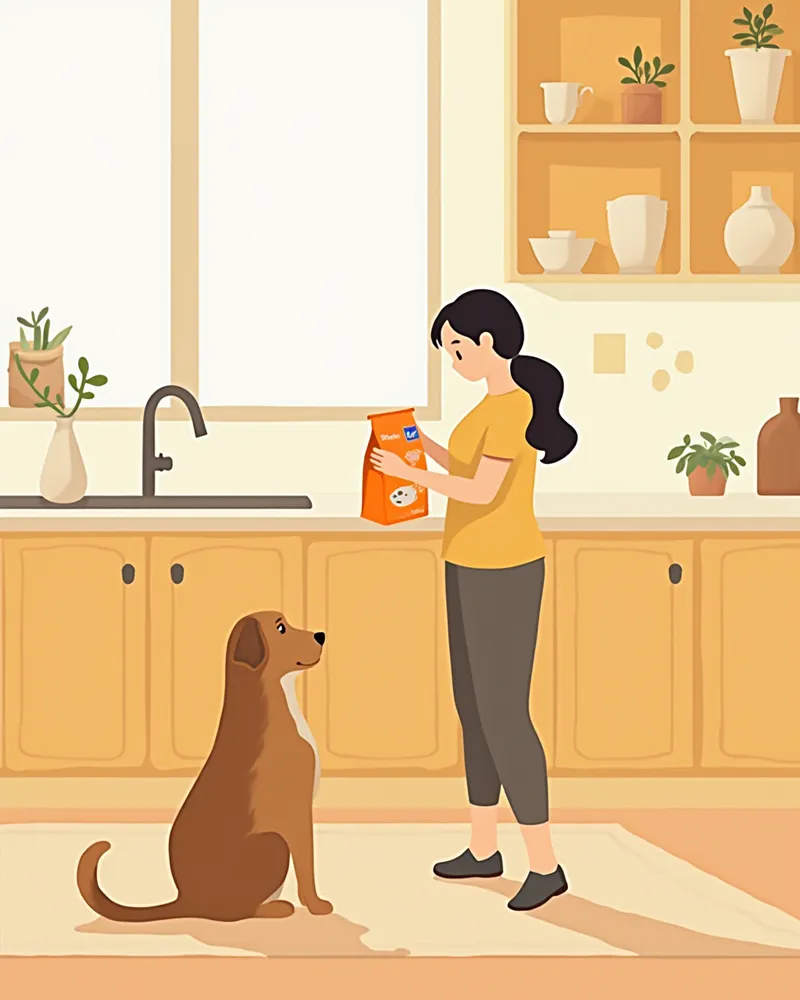
A pet owner carefully reading the food label, with their pet waiting patiently.

Do Korean Pet Foods Follow AAFCO Standards?

Pet foods produced in Korea follow the Feed Control Act enforced by the Ministry of Agriculture, Food and Rural Affairs, rather than AAFCO standards. However, many premium domestic brands voluntarily formulate their products with reference to AAFCO guidelines. Imported pet foods adhere to the regulations of their country of origin, so you should check for AAFCO standards for products from the United States and FEDIAF (the European Pet Food Industry Federation) standards for those from Europe. Although there are differences in specific numerical values between these two standards, they serve a similar role in ensuring nutritional safety.

Be Cautious with Foods Lacking Clear Labels

If the packaging lacks any official nutritional adequacy statement from recognized bodies such as AAFCO or FEDIAF, the product is likely not a "complete and balanced" diet. While treats, toppers, and supplemental foods may not carry such labels, any food intended as a main diet must include this verification. Feeding an incomplete diet long-term can lead to nutritional deficiencies or excesses.

Reviewed by a veterinarian

Dr. Tony — Punnawat Phongkittirak

Dr. Tony — Punnawat Phongkittirak

Veterinarian

A veterinarian who majored in veterinary medicine at Khon Kaen University, Thailand, and completed the IVSA program at North Carolina State University in the United States. Drawing on clinical experience at animal hospitals, he works in the pet healthcare field and is dedicated to building a digital care environment that connects pet parents with veterinarians.

Frequently Asked Questions

Does an AAFCO certification mean a pet food is automatically good?
Not at all. AAFCO certification simply means the food meets minimum nutritional requirements—it’s not a quality rating. To choose a truly good pet food, you need to look at the ingredients, processing methods, and manufacturing conditions as a whole.
Are pet foods that have passed feeding trials necessarily better?
The reliability is even higher. These products have been directly fed to dogs and cats, with their health indicators closely monitored. However, they tend to be more expensive and offer fewer options. For healthy adult dogs and cats, Formulated diets are also a sufficient choice.
Can I feed all-life-stage dog food to my senior dog?
While it’s technically possible to feed this diet, we don’t recommend it. All Life Stages formulas are designed to meet the nutritional requirements of growing dogs, which means they tend to be more calorie-dense. If a less active senior dog eats this food long-term, it may gain weight and become harder to maintain a healthy body condition. We recommend regular monitoring of your dog’s weight and body condition score (BCS), along with consultation with your veterinarian.
The package says it meets AAFCO standards, but my pet won’t eat it. Why is that?
Meeting nutritional standards and palatability are two different things. AAFCO only evaluates nutritional safety, not taste. Try changing the protein source, introducing it in small amounts, and consulting your veterinarian.
How do you meet AAFCO standards when feeding a homemade diet?
It’s very difficult to ensure proper nutritional balance when preparing homemade meals on your own. For safety, it’s best to get a recipe from a board-certified veterinary nutritionist or use a balanced supplement that meets AAFCO standards, such as Balance IT.

Share

Related Guides

References

[1] Nutrient Requirements of Dogs and Cats, National Research Council (NRC), 2006

[2] Applied Veterinary Clinical Nutrition, 2nd Edition, Fascetti & Delaney, 2012

[3] AAFCO Official Publication, Association of American Feed Control Officials, 연간 발행

[4] The Cat, Clinical Medicine and Management, 2nd Edition, Little, 2011

This information is based on veterinary literature and does not replace diagnosis or treatment. Please consult a veterinarian for specific health concerns.

Metapet Co., Ltd. | CEO: Park Sung-yong | Business Reg. No. 417-88-02562 | Seoul, South Korea | Customer Center

AAFCO Labels Explained: Nutritional Adequacy Standards | Meongsiljang