Like
Share
멍실장
환절기 관리 (면역·호흡기)

Seasonal Transition Pet Immunity & Respiratory Health — Which Comes First, Nutrition or Environmental Management?

RespiratoryPreventionMeongsiljang Veterinary Advisory Board

We’ve compiled practical tips to help prevent the surge in respiratory illnesses and weakened immunity during seasonal transitions. You’ll find key points on temperature and humidity control, ventilation, nutrition, and vaccinations for both dogs and cats, all in one place.

What is Seasonal Transition Care?
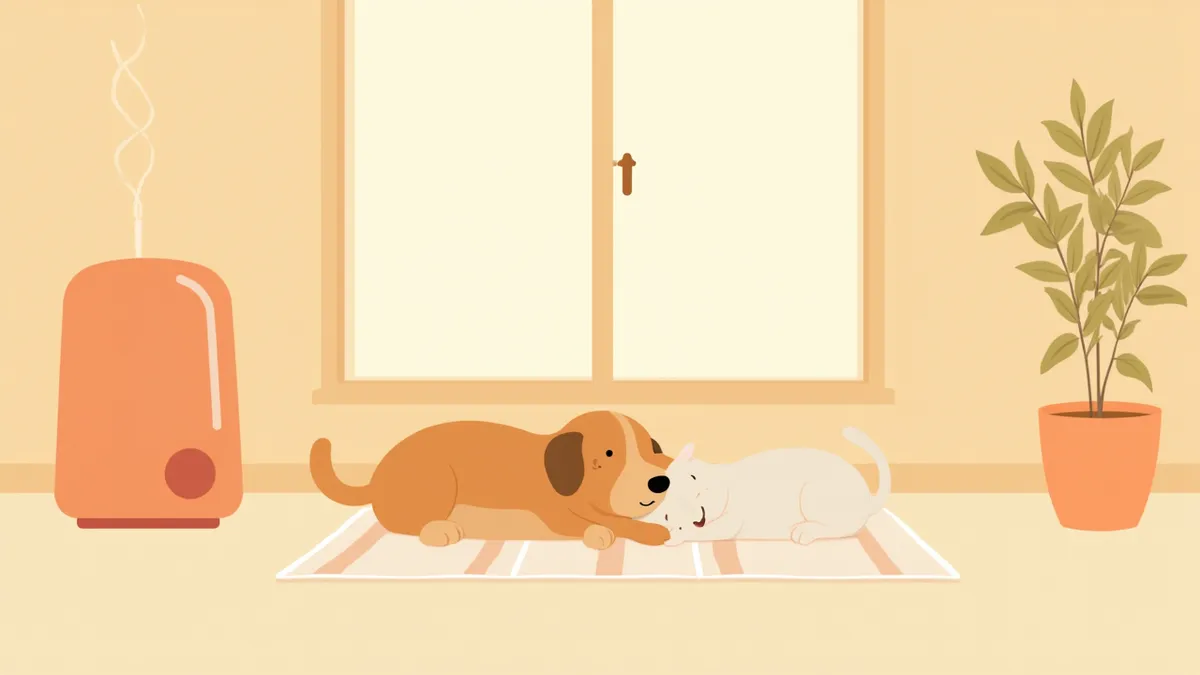
A dog and a cat resting next to a humidifier indoors during the transitional season.
Seasonal transition care refers to the basic routine of adjusting indoor temperature and humidity, nutrition, and ventilation to protect dogs and cats from respiratory and immune issues during the spring and autumn, when daily temperature fluctuations are significant. The key factor is not the absolute temperature, but the daily temperature range. Greater fluctuations increase the burden on thermoregulation and can suppress immune function, potentially triggering or worsening respiratory conditions such as kennel cough in dogs and feline herpesvirus in cats. Senior pets (7 years and older), young puppies and kittens, and dogs with heart disease should begin preventive care early in the seasonal transition.

Check These Points Before Starting Seasonal Care

If coughing, runny nose, or sneezing persists for more than two days, it may not be a simple cold. In cats especially, respiratory symptoms can quickly lead to a loss of appetite, so if your cat refuses food for over 24 hours, seek veterinary care immediately. For senior dogs and brachycephalic breeds (such as Pugs, Bulldogs, and Persians), even a slight increase in respiratory noise compared to their normal baseline can be an emergency sign.

Setting Up the Indoor Environment for Seasonal Transitions
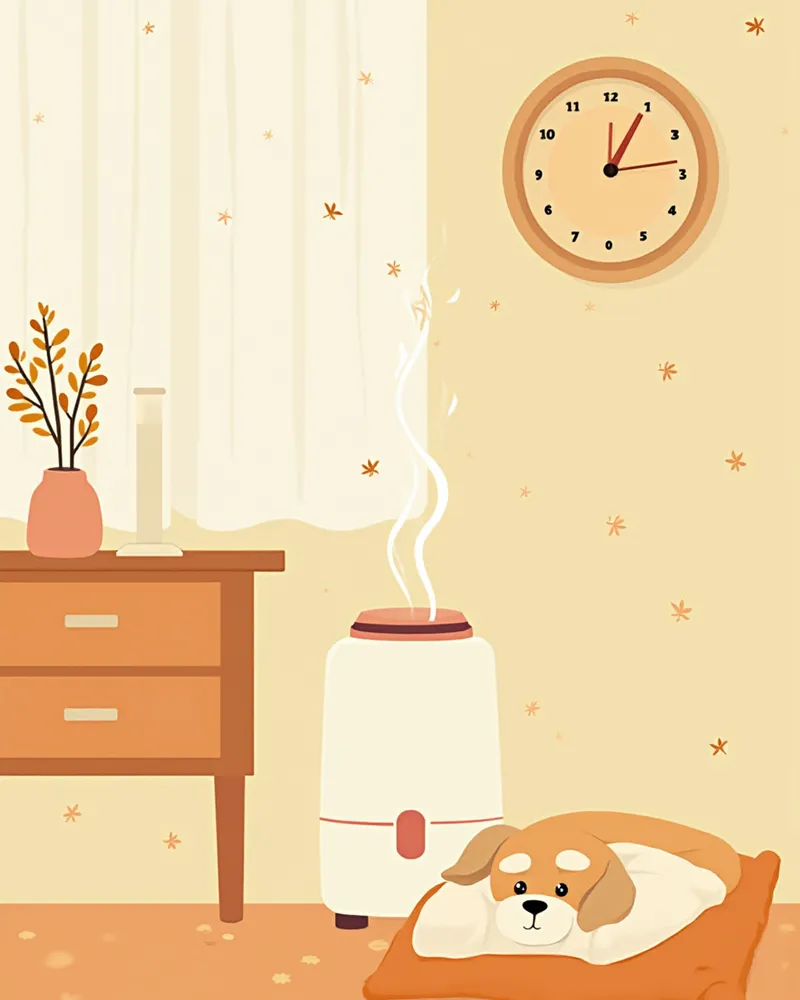
The key to indoor care during seasonal transitions is maintaining stable temperature and humidity. By following these guidelines, you can significantly reduce the risk of respiratory diseases.
Indoor Temperature: Keep dogs at 22–26°C and cats at 22–28°C.
Indoor Humidity: Maintain 40–60%. Excessive dryness can dry out mucous membranes, while excessive humidity promotes mold growth.
Floor Temperature: Avoid prolonged exposure to cold surfaces like marble or tile.
Draft Prevention: Seal gaps around windows and doors to block drafts, and ensure sleeping areas are at least 10 cm off the floor.
An indoor environment with optimal temperature and humidity maintained during seasonal transitions

Key Indicators for Dogs and Cats During Seasonal Transitions

ItemDogCat
Recommended indoor temperature22–26℃22–28℃
Recommended humidity40–60%40–60%
Common respiratory diseasesKennel cough, bronchitisHerpesvirus, calicivirus
Ventilation frequency2–3 times a day, 10 min2–3 times a day, 5–10 min
Warning symptomsDry cough, runny noseSneezing, eye discharge, reduced appetite

For brachycephalic breeds and senior animals, set to the upper end of the temperature range.

Nutritional Management to Maintain Immunity

During seasonal transitions, energy expenditure can increase, making balanced nutritional management even more important. Veterinary immunology highlights that vitamins (particularly vitamins A and D) and gut microbiota balance play crucial roles in immune function.
Vitamins D and A: Vitamin D supports innate immunity by increasing the production of antimicrobial peptides, and works alongside vitamin A in immune regulation.
Omega-3 and high-quality protein: These support skin and mucous membrane health and help maintain overall condition (look for salmon- or perilla oil-based products).
Probiotics: Gut microbiota balance is essential for immune development and regulation. However, their effectiveness in preventing seasonal diarrhea has not yet been definitively proven.
Hydration: Adequate water intake prevents dehydration in dry environments; increasing the proportion of wet food can also be beneficial.
Nutritional supplements and pet food to boost immunity during seasonal transitions

Timing for Vaccinations and Health Checkups

It’s most effective to complete vaccinations and a health checkup 2–4 weeks before the start of the seasonal transition. This allows enough time for antibodies to develop after vaccination.
Dogs: Core vaccine (DHPPL) + consider booster for kennel cough (Bordetella)
Cats: Core vaccine (FVRCP) — essential for preventing herpesvirus and calicivirus
Both: Continue prevention for heartworm and external parasites
7 years and older: Pre-screen for underlying conditions with blood tests, and heart and chest X-rays
If your pet already shows cold-like symptoms, please refer to Dog Cold Symptoms and Treatment for more details.

How to Handle Ventilation and Walks?

Ventilation is the easiest way to reduce viruses and mold spores, but doing it incorrectly can actually lead to colds. Open windows on opposite sides of the room from where your pet is to allow air circulation without exposing them directly to cold drafts. For walks, the safest time is between 10 a.m. and 3 p.m., when the sun is up. Early morning and evening temperatures can drop sharply, putting unnecessary strain on the hearts of senior dogs. After walking, always dry your pet’s wet paws and belly with a towel to prevent a drop in body temperature.
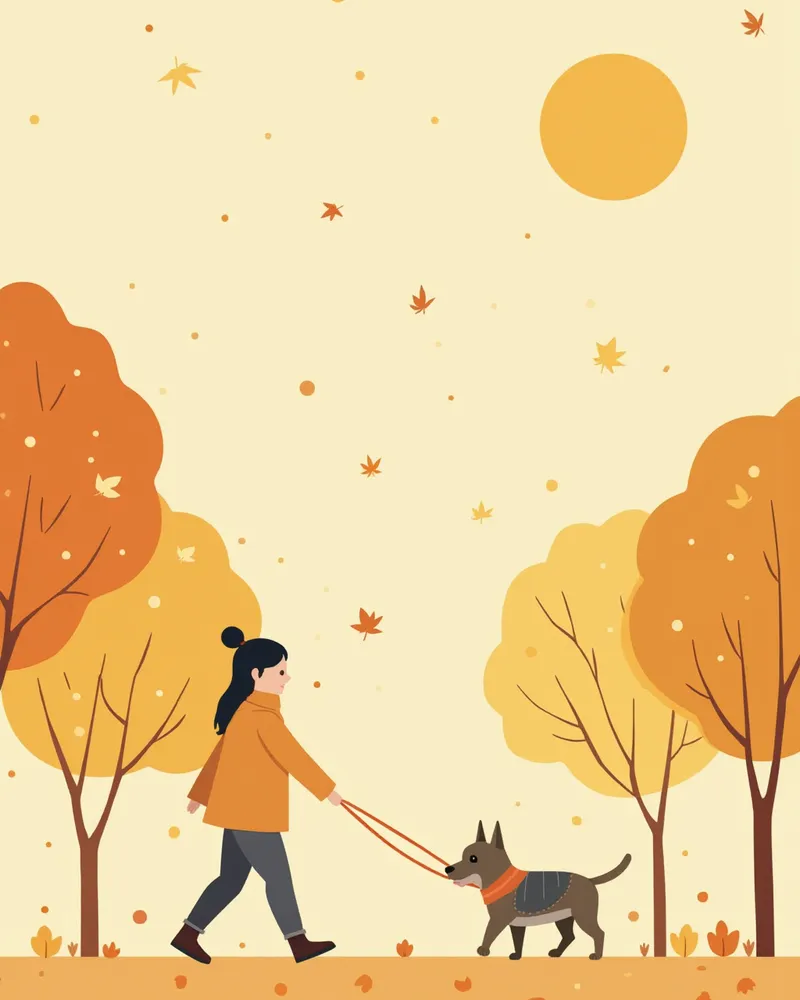
A dog and its owner enjoying a morning walk in the park during autumn.

Pay Special Attention to Brachycephalic Breeds and Senior Animals

Brachycephalic breeds such as Pugs, Shih Tzus, Bulldogs, Persians, and Himalayans have elongated soft palates and narrowed nostrils, resulting in inherently narrow airways that place them under constant respiratory stress. In hot and humid weather, increased panting to cool down can worsen airway swelling and airway resistance, so avoid midday heat and humidity, as well as excessive exercise or excitement, even during transitional seasons. Keep walks short, and seek immediate veterinary care if panting is more severe than usual or if the tongue or gums turn purple (cyanosis). In senior animals aged seven years or older, underlying heart disease can make respiratory stress particularly dangerous, so reduce strenuous outdoor activity and consult your veterinarian to adjust exercise levels.

Reviewed by a veterinarian

Dr. Tony — Punnawat Phongkittirak

Dr. Tony — Punnawat Phongkittirak

Veterinarian

A veterinarian who majored in veterinary medicine at Khon Kaen University, Thailand, and completed the IVSA program at North Carolina State University in the United States. Drawing on clinical experience at animal hospitals, he works in the pet healthcare field and is dedicated to building a digital care environment that connects pet parents with veterinarians.

Frequently Asked Questions

Do pets really need to wear clothes during seasonal transitions?
For short-haired breeds (such as Chihuahuas and Italian Greyhounds) and senior pets, it’s a good idea to dress them in light clothing during walks. On the other hand, double-coated breeds (such as Siberian Huskies and Pomeranians) may actually have their natural temperature regulation hindered by clothing.
Can cats also catch a cold during seasonal changes?
Yes, cats can also contract upper respiratory infections caused by herpesvirus and calicivirus. If symptoms such as sneezing, ocular discharge, and nasal discharge persist for several days or more, a viral respiratory infection should be suspected, so it is advisable to have your cat examined at a veterinary clinic.
Is it safe to leave the humidifier running continuously?
Use the humidifier only when the humidity is between 40% and 60%. If it rises above 60%, mold and bacteria can multiply, potentially leading to respiratory issues. For safety, monitor the humidity with a hygrometer and operate the humidifier in automatic mode.
How often should you bathe your pet during the transitional seasons?
It's best to bathe your pet every 2 to 3 weeks, rather than more frequently. Frequent bathing can weaken the skin barrier. After bathing, thoroughly dry your pet with a hair dryer and raise the indoor temperature until the undercoat is completely dry.
My dog often coughs during seasonal changes. Should I take him to the vet?
If the cough lasts for more than two days, worsens at night or in the early morning, or is accompanied by vomiting or difficulty breathing, please seek veterinary care immediately. It may be an early sign of heart disease or tracheal stenosis, rather than a simple cold.

Share

Related Guides

References

[1] Ettinger SJ, Feldman EC, Cote E, Textbook of Veterinary Internal Medicine, 8th Edition, Chapter on Respiratory Disorders

[2] Little SE, The Cat: Clinical Medicine and Management, 2nd Edition, Respiratory & Immunology Chapters

[3] Nelson RW, Couto CG, Small Animal Internal Medicine, 6th Edition, Chapter on Upper Respiratory Tract Diseases

This information is based on veterinary literature and does not replace diagnosis or treatment. Please consult a veterinarian for specific health concerns.

Metapet Co., Ltd. | CEO: Park Sung-yong | Business Reg. No. 417-88-02562 | Seoul, South Korea | Customer Center

Seasonal Pet Immunity & Respiratory Health: Nutrition or Environment? | Meongsiljang