Like
Share
멍실장
고양이 새 가족 도입 스트레스 증상과 원인, 진단·치료와 관리 포인트 총정리

Our Cat Changed After Bringing Home a New Family Member — Causes of Introduction Stress and When to Act

Brain & CognitionDiseasesMeongsiljang Veterinary Advisory Board

We’ve outlined the stress signals and underlying causes your cat may exhibit when a new family member joins, along with step-by-step introduction techniques and key home-care tips.

What Is Cat Introduction Stress?
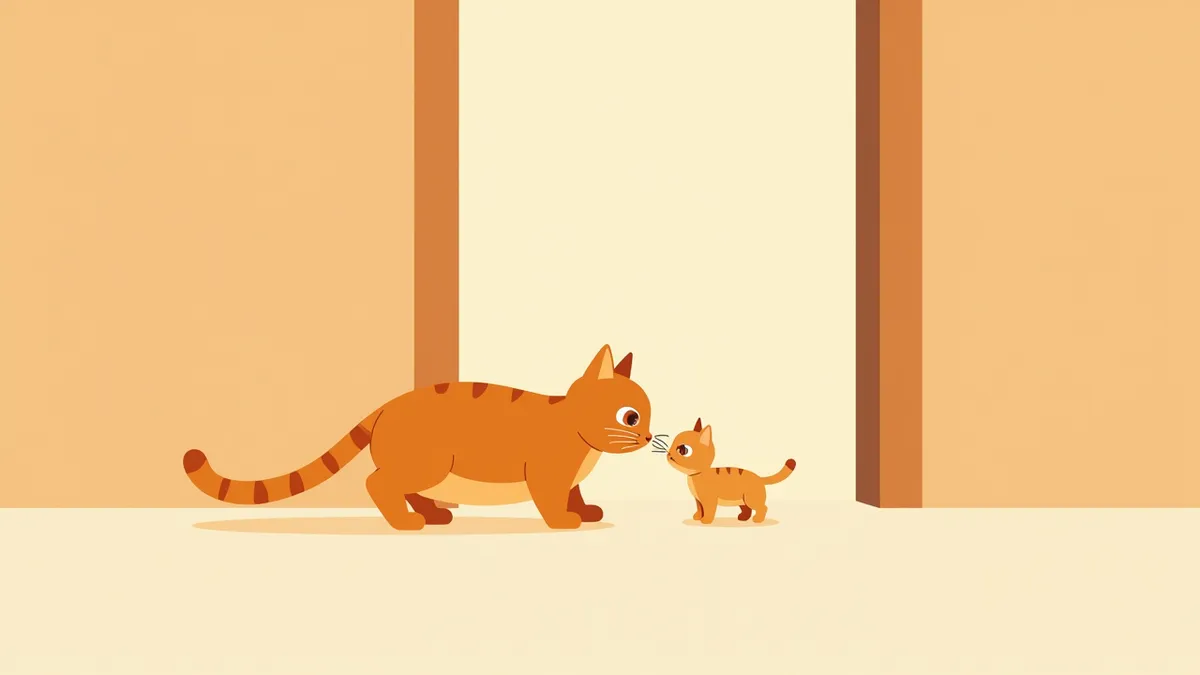
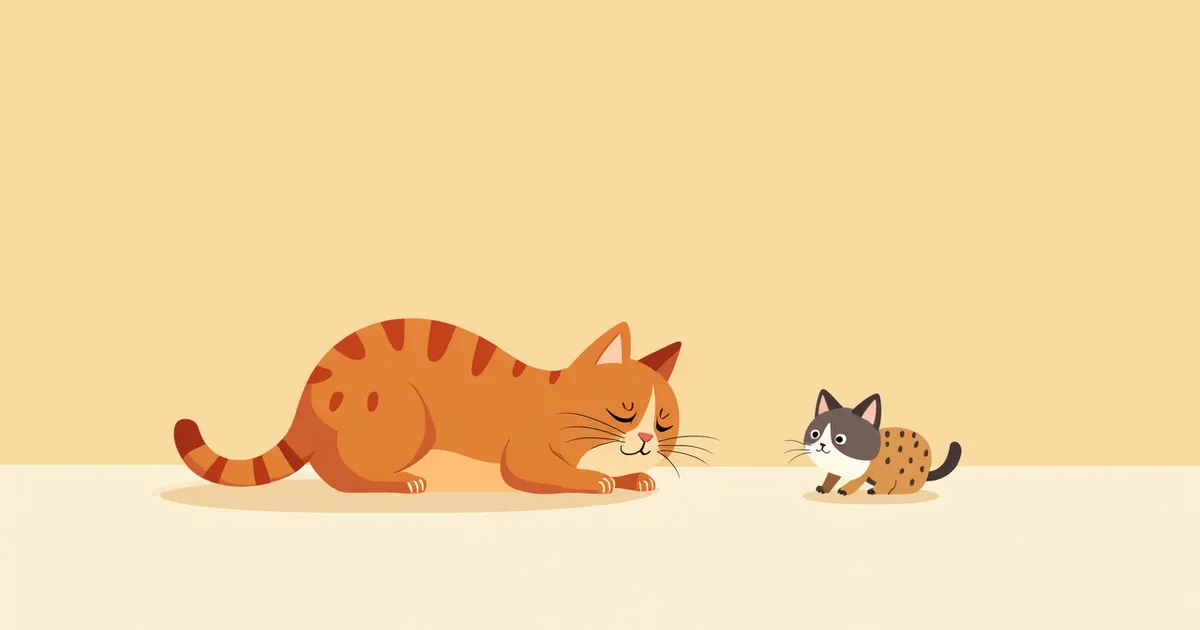
Two cats sniffing each other through a crack in the door
Stress when introducing a new family member to a cat refers to the behavioral and physical stress responses that occur when an existing cat perceives the arrival of a new person, another cat, or other pet as an intrusion into its territory. The most important thing to remember is that each cat’s adaptation speed varies greatly. Some cats may adjust within a few days, while others might take several months. By introducing the new family member gradually and avoiding sudden changes, most cats can eventually adapt to their new environment.

Why Do Cats Get Stressed? Causes and Mechanisms

Cats evolved as solitary hunters, so they have a very strong sense of territory. When a new family member arrives, the existing cat may feel that its space has been invaded, leading to increased stress hormone (cortisol) production.
Scent contamination: When unfamiliar scents spread throughout the home, it is perceived as a threat signal.
Visual stimulation: The moment the new family member comes into view, defensive responses are triggered.
Resource competition: Tension rises when food bowls, litter boxes, and sleeping areas are shared.
Lack of preparation: Introducing cats without providing separate spaces can maximize stress.

Checklist of Major Stress Symptoms

If two or more of the following symptoms persist for over a week, it's a good idea to consult with a veterinarian.
Hiding/Seeking Shelter: Spending most of the day hiding in places they normally wouldn't.
Decreased Appetite: Not eating at all or showing a noticeable drop in food intake.
Increased Aggression: Sudden increase in growling, scratching, or biting.
Excessive Grooming: Repeatedly licking the same area to the point of hair loss.
Inappropriate Elimination: Urinating or defecating outside of their usual litter box or designated area.
Increased Vocalization: Suddenly crying out at night or low growling during the day.
A cat hiding under the sofa, looking up with anxious eyes

Signs That Require an Immediate Veterinary Visit

If you notice any of the following symptoms, please visit a veterinary clinic within 24 hours, as stress can develop into physical illness. • Complete refusal to eat for more than 48 hours • No urination for more than 24 hours (especially in male cats) • Vomiting or diarrhea lasting more than two days • Lethargy and inability to move from one spot • Rapid breathing or panting with an open mouth

How Is It Diagnosed?

At the veterinary clinic, we first compare when the behavioral changes began with when the new family member arrived to check for stress-related causes. To rule out physical illness, we often perform a basic physical exam (including weight check, auscultation, and palpation) along with a urinalysis. In particular, cystitis and lower urinary tract diseases are closely linked to stress, so any abnormalities in the urine must be thoroughly evaluated. If symptoms are severe, we may recommend consulting a veterinary behavior specialist.

Treatment — Step-by-Step Introduction Approach

Treating stress-related behaviors hinges on environmental adjustments and behavior modification.
Step 1 — Spatial Separation: Create a separate, independent space for the new family member and keep them completely isolated for at least 1–2 weeks.
Step 2 — Scent Exchange: Swap bedding between the pets so they can become familiar with each other’s scents first.
Step 3 — Visual Contact: Allow them to see each other by slightly opening the door or using a transparent barrier.
Step 4 — Shared Space: Once you confirm they can coexist without conflict, gradually increase the time they spend together.
When bringing home a new cat, it is crucial not to rush but to introduce them gradually through these steps. Synthetic feline calming pheromone products can be used as a supplement alongside environmental adjustments, but since effectiveness varies by individual, it is best to prioritize environmental management as the foundation.
Two cats observing each other through a transparent barrier

Home Care Management Points

Creating a stress-reducing environment is the most important thing you can do.
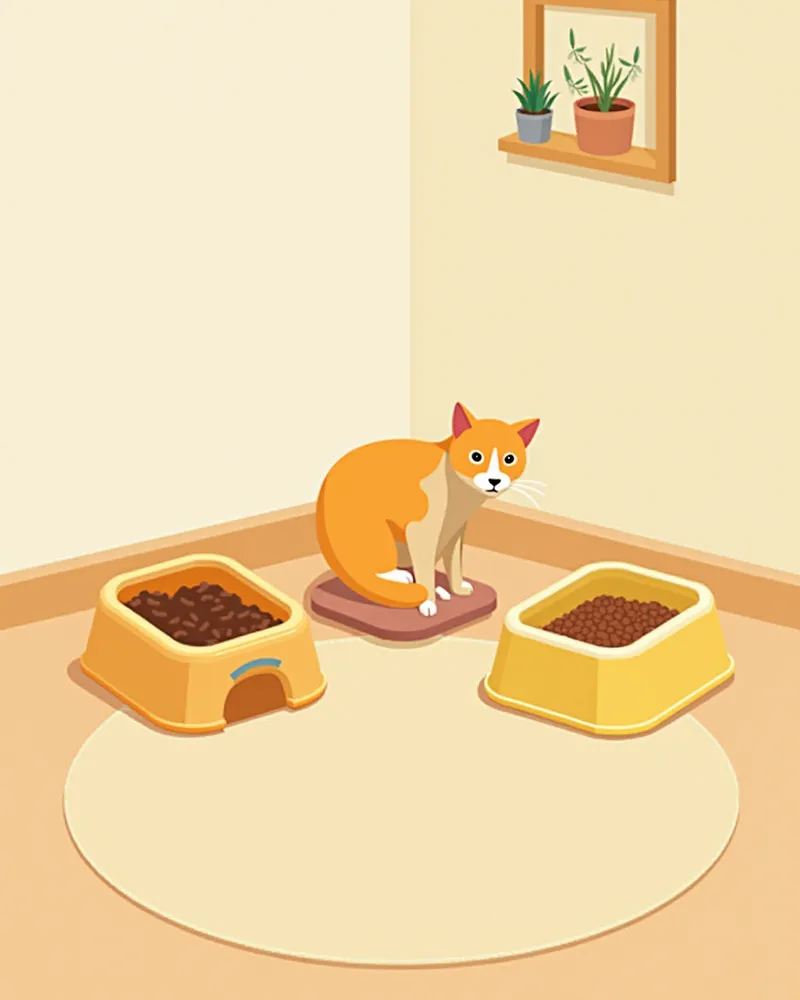
Resource Separation Rule: Provide one food bowl, litter box, and resting spot for each cat plus one extra, and place them in separate areas.
Vertical Space: Use cat trees or shelves to create safe retreats that only the resident cat can access.
Maintain Routine: Keep the resident cat’s feeding and playtimes as consistent as possible.
Positive Association: Offer special treats only when the new family member is present to build positive associations.
Owner Demeanor: Cats pick up on their owner’s anxiety, so it’s essential to stay calm and relaxed.
Cat food bowls and litter boxes placed separately in different areas of the home

When Professional Behavior Consultation Is Needed

If aggression persists beyond four to six weeks, or if one animal consistently chases and threatens another, environmental adjustments alone may not be sufficient. In particular, if a cat injures itself, other animals, or people, or shows no response to management strategies, it is advisable to consult a qualified veterinary behaviorist. After a comprehensive assessment, the specialist can develop an individualized behavior modification plan, and if necessary, medication may be prescribed by a veterinarian to complement the behavioral therapy.

Reviewed by a veterinarian

Dr. Tony — Punnawat Phongkittirak

Dr. Tony — Punnawat Phongkittirak

Veterinarian

A veterinarian who majored in veterinary medicine at Khon Kaen University, Thailand, and completed the IVSA program at North Carolina State University in the United States. Drawing on clinical experience at animal hospitals, he works in the pet healthcare field and is dedicated to building a digital care environment that connects pet parents with veterinarians.

Frequently Asked Questions

I just brought home a new cat, and my existing cat has stopped eating. How long should I wait?
A slight decrease in appetite or occasional food refusal for 1–3 days is not uncommon. However, changes in appetite are an important sign of stress, and prolonged anorexia can pose serious health risks. If your cat hasn’t eaten at all for more than 48 hours, consult a veterinarian. Never move the existing cat’s food bowl, and always feed the new cat in a completely separate area.
My existing cat is hissing at the new cat. Does this mean introducing them together has failed?
Growling is a normal warning signal and does not indicate a failed introduction. The key is to ensure it doesn’t escalate into physical aggression, such as chasing, swatting, or biting. If the dog voluntarily moves away after growling, the process is still ongoing. Try extending the separation period and progressing through the steps more gradually.
My baby was born, but it seems like my cat doesn’t like the baby. What should I do?
It’s important to first introduce your cat to a cloth with the baby’s scent, allowing them to become familiar with the smell. If your cat avoids it, don’t force interaction—instead, wait patiently for their natural curiosity to develop. Always supervise any direct contact between your cat and the baby.
How long does it usually take to successfully introduce two cats to each other?
The timeline varies greatly from cat to cat, so it’s hard to set a fixed period. Gradual introductions typically take several weeks, and in some cases, even a few months. Since cats are selectively social and tend to avoid conflict, success doesn’t necessarily mean they become friends; it’s enough if they learn to peacefully ignore each other. Forcing a quick introduction can lead to prolonged tension and conflict.
Do pheromone products work? Which one should I use?
Products containing synthetic cat calming pheromones can be used as a supplementary tool to reduce anxiety. However, they are not a cure-all; it's best to use them as a complement to proper environmental enrichment. Since effectiveness varies from cat to cat, if you choose to use them, it's important to apply them consistently for a set period while closely observing your cat's response.

Share

Related Guides

References

[1] McCobb EC, Patronek GJ, Marder A, Dinnage JD, Stone MS. Assessment of stress levels among cats in four animal shelters. Journal of the American Veterinary Medical Association. 2005;226(4):548–555.

[2] Behnke AC, Vitale KR, Udell MAR. The effect of owner presence and scent on stress resilience in cats. Applied Animal Behaviour Science. 2021;243:105444.

[3] Jensen JBH, Sandøe P, Nielsen SS. Owner-Related Reasons Matter more than Behavioural Problems—A Study of Why Owners Relinquished Dogs and Cats to a Danish Animal Shelter from 1996 to 2017. Animals. 2020;10(6):1064.

[4] Beata C, Beaumont-Graff E, Coll V, et al. Effect of alpha-casozepine (Zylkene) on anxiety in cats. Journal of Veterinary Behavior. 2007;2:40–46.

[5] Little S (ed.). The Cat: Clinical Medicine and Management, 2nd Edition. Elsevier Saunders; 2012. Chapter: Recognition and management of stress in housed cats.

This information is based on veterinary literature and does not replace diagnosis or treatment. Please consult a veterinarian for specific health concerns.

Metapet Co., Ltd. | CEO: Park Sung-yong | Business Reg. No. 417-88-02562 | Seoul, South Korea | Customer Center

Cat Changed After a New Family Member? Introduction Stress Guide | Meongsiljang