Like
Share
멍실장
고양이 비강 종양 종양학 증상과 원인, 진단·치료와 관리 포인트 총정리

If Your Cat’s Nosebleeds and Sneezing Don’t Stop — A Complete Guide to Nasal Tumor Causes, Diagnosis, and Treatment

Oncology/CancerDiseasesMeongsiljang Veterinary Advisory Board

Feline nasal tumors are malignant growths that develop within the nasal cavity. Because early symptoms are often subtle, these tumors can be difficult to detect in their initial stages. Accurate diagnosis and appropriate treatment are key to improving survival rates.

Nasal tumors in cats are malignant growths that develop inside the nasal cavity

An anatomical illustration showing a tumor growing inside a cat’s nasal cavity
Nasal tumors in cats are malignant growths that develop inside the nasal cavity, typically originating from epithelial cells and gradually increasing in size. - Early symptoms of nasal tumors: Signs include nasal congestion, persistent nasal discharge, nosebleeds, and difficulty breathing. These symptoms become more pronounced as the tumor grows and invades the surrounding bone and tissues. - The importance of early diagnosis: Because symptoms can be subtle, it is essential to visit a veterinarian immediately if you notice any unusual signs. - Essential steps before treatment: CT scans and biopsies are mandatory for an accurate diagnosis, as they are critical for determining the tumor’s malignancy and whether it has metastasized. Early detection and appropriate treatment directly improve survival rates.

The main causes involve a combination of genetic predisposition and environmental stimuli

The exact cause of nasal tumors in cats remains unclear. However, textbooks note that they are more commonly reported in older cats. In particular, squamous cell carcinoma (SCC) of the nose is known to be associated with chronic exposure to sunlight (ultraviolet radiation), and it tends to occur more frequently in cats with light or depigmented (white) noses. While links to smoking environments or certain chemicals are often mentioned, these associations are not definitively confirmed based on textbook evidence alone, so it is difficult to draw firm conclusions. Although there is no surefire way to completely prevent these tumors, keeping your cat indoors and minimizing exposure to strong direct sunlight may help.
A cat living with a smoker

Main symptoms include nasal discharge, bleeding, and difficulty breathing

A hallmark sign of nasal tumors in cats is persistent nasal discharge. Initially, the discharge may be mucous, but it often becomes bloody over time. It’s also common for the discharge to come from only one nostril. Other frequent symptoms include difficulty breathing, a flared nostril appearance, swelling at the tip of the nose, snoring, and scratching or rubbing the nose. In severe cases, facial asymmetry or changes around the eyes may occur. If these symptoms persist, immediate veterinary care is essential.
A cat with bloody discharge from one nostril

Emergency signs requiring immediate veterinary visit

If your cat has persistent bleeding from one nostril or severe difficulty breathing, seek veterinary care immediately. Facial asymmetry or bulging eyes may also indicate that a tumor has invaded the bone. Because these signs can be life-threatening, consult a veterinarian within 24 hours if you notice any of them.

Imaging and biopsy are necessary for accurate diagnosis

Accurate diagnosis of nasal tumors in cats requires imaging and biopsy. - CT scan: Precisely assesses the size, location, and bone involvement of lesions within the nasal cavity. - Endoscopy: Allows direct visualization of the nasal interior and enables tissue sampling from the exact site. - Pathological examination: Analyzes the collected tissue to determine the tumor type and malignancy grade. - Metastasis evaluation: Checks for spread to lymph nodes or other organs to guide treatment planning. Effective treatment is impossible without an accurate diagnosis, so this process is essential when visiting the clinic.
A cat undergoing a CT scan at a veterinary hospital

Treatment proceeds in stages with surgery, radiation therapy, and chemotherapy
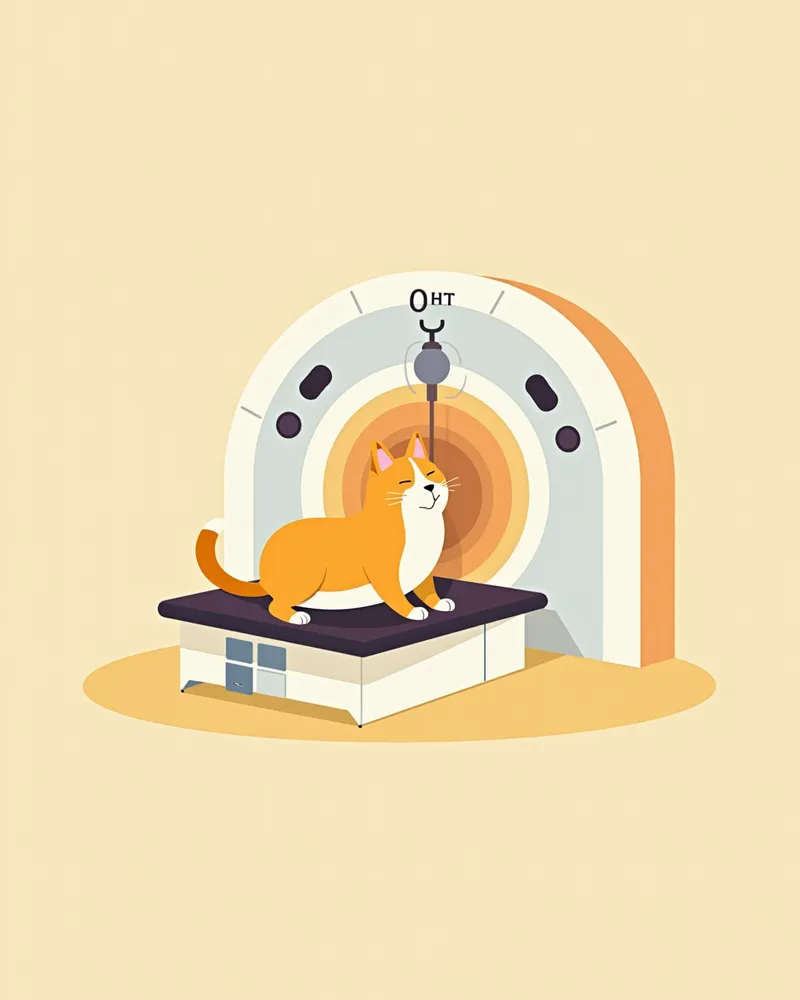
Treatment for nasal tumors in cats depends on the tumor’s size, location, and malignancy. Textbooks note that surgery alone rarely provides symptom relief or extends survival, so radiation therapy is the most commonly used primary treatment. Stereotactic radiation therapy, which minimizes damage to surrounding healthy tissue, is particularly preferred. Radiation therapy is effective in controlling clinical symptoms such as nasal discharge and epistaxis, as well as inhibiting tumor growth. Surgery is considered as an adjunct to radiation therapy in select cases rather than as a standalone treatment, and chemotherapy may be used concurrently depending on the patient. The treatment plan is determined by the veterinarian based on a comprehensive assessment of the tumor and the patient’s condition.
A scene of a cat receiving radiation therapy at a veterinary hospital

Home care focuses on pain management and maintaining nutrition

During treatment, it is crucial to manage your cat’s pain and maintain their appetite. - Pain Relief: Ensure your cat consistently takes the medications prescribed by your veterinarian. - Appetite Stimulation: Offer foods that are easy to eat, such as meat-based or soup-style options. - Respiratory Support: If nasal congestion makes breathing difficult, use warm steam to help open the nasal passages. - Nutritional Support: Supplementing with nutritional additives or oral nutrition products can help maintain strength. - Regular Monitoring: Regular veterinary visits allow for prompt detection of any changes in condition, which may necessitate adjustments to the treatment plan.
A cat resting comfortably next to a steamer.

Nasal tumors in cats have a high risk of recurrence, so caution is needed

Nasal tumors are locally invasive, so they can recur or progress even after treatment. This is especially true if surgery doesn’t completely remove the tumor, which can lead to local recurrence. However, it’s hard to make definitive claims about specific statistics, such as “recurrence within one year after radiation therapy is common,” based solely on the textbook references provided. Therefore, regular follow-up exams (CT scans, X-rays) are essential to consistently monitor your pet’s condition. Also, carefully observe any changes in your cat’s behavior, breathing, or nasal discharge. Stay vigilant to catch early signs of recurrence or progression.

Reviewed by a veterinarian

Dr. Tony — Punnawat Phongkittirak

Dr. Tony — Punnawat Phongkittirak

Veterinarian

A veterinarian who majored in veterinary medicine at Khon Kaen University, Thailand, and completed the IVSA program at North Carolina State University in the United States. Drawing on clinical experience at animal hospitals, he works in the pet healthcare field and is dedicated to building a digital care environment that connects pet parents with veterinarians.

Frequently Asked Questions

Can nasal tumors in cats be treated?
While treatment is possible, a complete cure is often difficult. For nasal tumors, surgery alone rarely improves symptoms or extends survival, so radiation therapy is the primary treatment option. Depending on the case, surgery or chemotherapy may also be considered in combination with radiation. This approach aims to alleviate symptoms and prolong life.
What is the prognosis for nasal tumors?
With early diagnosis and appropriate treatment, particularly curative radiation therapy, the reported average survival time is approximately 8 to 18 months. However, there can be significant variation depending on the tumor type and stage of progression, and the risk of recurrence or disease progression remains.
Are nasal tumors common in cats?
While not an extremely rare condition, its overall incidence is relatively low. It tends to be more common in older cats.
Can nasal tumors be transmitted to humans?
Since it is not a contagious disease, it cannot be transmitted to humans. However, the link to smoking environments is not clearly established based on the textbook evidence provided, so it is difficult to make a definitive conclusion.
How is pain from nasal tumors managed?
Administer the veterinarian-prescribed pain reliever regularly, and closely monitor any changes in your cat’s behavior.

Comparison of nasal tumor treatment methods

ItemEfficacySide effectsSuitability
SurgeryTumor removal can be attemptedPain, risk of infectionLimited on its own; considered when combined with radiation
Radiation therapySuppresses tumor growth and relieves symptomsDermatitis, oral ulcers, cataracts, etc.Primary treatment
ChemotherapyAdjunctive effect (combination therapy)Decreased appetite, vomitingUsed as adjunctive treatment

The treatment method depends on the tumor's size, location, and malignancy, and should be decided after consulting a veterinarian.

Share

Related Guides

References

[1] Cotter, S.M. (1981). Oral pharyngeal neoplasms in the cat. Journal of the American Veterinary Medical Association, 17:917–920.

[2] Théon, A.P., Madewell, B.R., Shern, V.I., et al. (1995). Prognostic factors associated with radiotherapy of squamous cell carcinoma of the nasal plane in cats. Journal of the American Veterinary Medical Association, 206(7):991–996.

[3] Goldschmidt, M.H. and Shofer, F.S. (1992). Skin Tumours of the Dog and Cat. Pergamon Press, Oxford.

This information is based on veterinary literature and does not replace diagnosis or treatment. Please consult a veterinarian for specific health concerns.

Metapet Co., Ltd. | CEO: Park Sung-yong | Business Reg. No. 417-88-02562 | Seoul, South Korea | Customer Center

Cat's Nosebleeds & Sneezing Won't Stop? Nasal Tumor Guide | Meongsiljang