
Like
Share
멍실장
고양이 칼리시바이러스 증상과 원인, 진단·치료와 관리 포인트 총정리

Feline Calicivirus: Symptoms, Causes, Diagnosis, Treatment, and Management Essentials

RespiratoryDiseasesMeongsiljang Veterinary Advisory Board

Feline calicivirus is a contagious viral disease that causes respiratory and oral conditions in cats. Because symptoms can vary widely and the virus is prone to recurrence, early intervention is crucial.

Feline Calicivirus Is a Contagious Viral Infection

Runny nose and watery eyes in cats caused by calicivirus symptoms
Feline calicivirus is a contagious viral disease that affects the respiratory tract and mouth of cats, spreading rapidly especially in multi-cat households. - Cause of infection: The virus spreads through secretions from infected cats or contaminated items such as food and water bowls and cat trees. Because calicivirus is a non-enveloped RNA virus, it can survive in the environment for several weeks. - Transmission routes: Cats can become infected through direct contact with acutely infected cats or asymptomatic carriers, or by exposure to the virus in contaminated environments. - Long-term carriage: While most cats recover naturally, some may remain chronically infected after recovery, shedding the virus without showing symptoms. - Importance of prevention: Maintaining a clean environment and vaccinating are crucial. If infection is suspected, consult a veterinarian. - Clinical course: Common symptoms include respiratory signs such as nasal discharge and sneezing, along with oral ulcers. In severe cases, these can progress to difficulty breathing.

Causes of Infection and Transmission Routes

Feline calicivirus spreads through secretions from infected cats or via contaminated items such as food bowls, play areas, and cat trees. - Droplet transmission: The infection spreads through droplets produced by coughing or sneezing. - Contact transmission: The virus is transmitted through objects contaminated with secretions from infected cats. - Environmental survival: As a non-enveloped RNA virus, it can survive in indoor environments for several weeks. It can be inactivated with disinfectants such as sodium hypochlorite (bleach) or accelerated hydrogen peroxide, but standard quaternary ammonium cleaners have limited efficacy. - Long-term shedding: Even after recovery, cats may continue to shed the virus for an extended period, posing a risk of transmission to other cats. - Multi-cat households: The risk of infection increases significantly when multiple cats live together indoors. - Key prevention measures: Regular disinfection and the use of individual water bowls are essential.
How feline calicivirus spreads: shared food bowls

Main Symptoms and Signs

The main symptoms of feline calicivirus infection include the following. While symptoms may be mild, leaving the infection untreated can lead to serious complications such as pneumonia.
Oral ulcers: A characteristic sign of calicivirus is the development of ulcers on the edges of the tongue or inside the mouth, which can cause pain and lead to food refusal.
Runny nose and sneezing: Persistent clear or mucous nasal discharge and frequent sneezing are common.
Conjunctivitis: Although calicivirus has relatively low pathogenicity for the conjunctiva, some cats may experience tearing or conjunctivitis.
Fever and lethargy: Body temperature may rise, and the cat may become lethargic and less active.
Loss of appetite: Due to oral pain or general malaise, the cat may eat less or refuse food altogether.
Oral ulcers caused by feline calicivirus

Symptoms Requiring Immediate Veterinary Visit

If your cat shows no appetite for more than 24 hours, has very rapid breathing, or is foaming at the mouth, you should consult a veterinarian immediately. These symptoms can lead to pneumonia or severe dehydration, so it’s essential to visit the clinic before it’s too late.

Diagnostic Methods
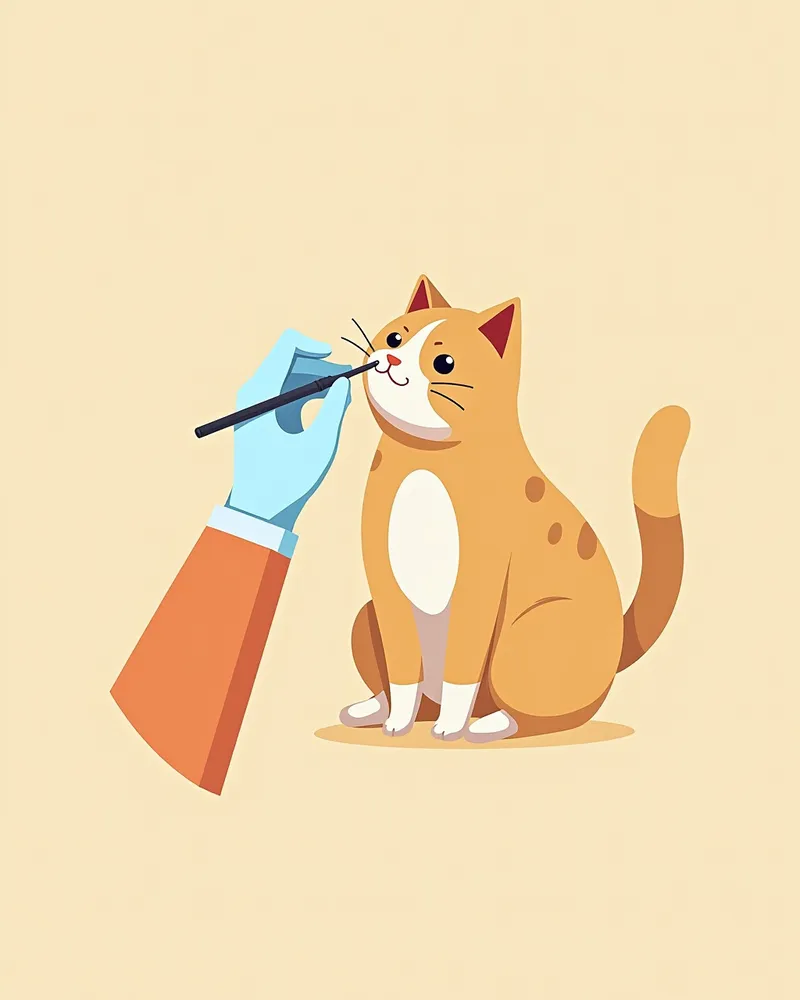
Feline calicivirus is diagnosed by combining clinical signs with various tests. - RT-PCR test: This method detects viral RNA in nasal or oral secretions. However, since it can yield positive results in cats vaccinated against the virus or in asymptomatic carriers, it is difficult to confirm the disease based on this test alone. Results must be interpreted alongside clinical symptoms. - Virus isolation and culture: This can confirm current infection, but it takes several days for results to come back. - Chest X-ray: This checks for inflammation or infiltration in the lungs to assess for pneumonia. - Differential diagnosis: It is important to distinguish calicivirus from other causes with similar symptoms, such as feline herpesvirus (FHV-1). - Regular check-ups: Even when symptoms are mild, consulting with a veterinarian is recommended for early diagnosis.
Nasal swab test for diagnosing feline calicivirus

Treatment Methods and Step-by-Step Management

Because specific antiviral treatments for feline calicivirus are limited, management focuses primarily on supportive care to alleviate symptoms. - Isolation: Infected cats must be separated from other cats to prevent transmission. - Hydration: To prevent dehydration, offer water frequently or administer intravenous fluids to replenish fluids and electrolytes. - Nutritional Support: If appetite is poor, use strongly scented food to encourage eating; in severe cases, a feeding tube may be used to provide nutrition. - Prevention of Secondary Infections: Antibiotics, such as doxycycline, are prescribed to prevent bacterial infections. - Oral Care: Supportive treatments to relieve pain are provided if ulcers develop. - Recurrence Management: Because cats can continue to shed the virus even after recovery, maintaining a clean environment and scheduling regular veterinary check-ups are essential.
Fluid supplementation during treatment for feline calicivirus

Home Management Points

Isolate the infected cat in a separate area and ensure that food and water bowls are used individually. - Environmental adjustments: Maintain a warm environment and increase humidity with steam to help alleviate respiratory symptoms. - Hygiene maintenance: Calicivirus is resistant to standard quaternary ammonium cleaners, so disinfect the environment with proven agents such as sodium hypochlorite (bleach). - Encouraging eating: Stimulate appetite by offering warm food or strongly scented kibble. - Hand hygiene: Always wash your hands after handling the cat to prevent human-mediated transmission. - Regular monitoring: Check respiratory status, appetite, and eye condition daily to catch any changes promptly.
Preparing an Isolation Area for Cats Infected with Calicivirus

Prevention of Recurrence and Breed Precautions

The course of the disease can vary depending on the cat’s overall health status, age, genetic traits, and whether there is a co-infection with immunosuppressive viruses (feline immunodeficiency virus or feline leukemia virus). However, there is insufficient evidence to establish that certain breeds are more susceptible to calicivirus. Because symptoms may recur if immunity declines, maintaining a clean environment, supporting immune function, and scheduling regular health check-ups are essential.

Reviewed by a veterinarian

Dr. Tony — Punnawat Phongkittirak

Dr. Tony — Punnawat Phongkittirak

Veterinarian

A veterinarian who majored in veterinary medicine at Khon Kaen University, Thailand, and completed the IVSA program at North Carolina State University in the United States. Drawing on clinical experience at animal hospitals, he works in the pet healthcare field and is dedicated to building a digital care environment that connects pet parents with veterinarians.

Frequently Asked Questions

Can feline calicivirus be transmitted to humans?
No, feline calicivirus is not transmitted to humans. It is a virus specific to cats, so people cannot become infected.
Can it be prevented with a vaccine?
Yes, there is a vaccine for feline calicivirus, and regular vaccinations can significantly reduce the risk of infection. It’s especially essential in multi-cat households.
Can a cat that has recovered from an infection still carry the virus?
Yes, some cats can continue to shed the virus for an extended period even after recovery. This poses a risk of infecting other cats, so isolation and careful management are necessary.
Can I administer the medication at home?
No, antibiotics and antiviral medications should never be used without a veterinarian’s prescription. Improper use can lead to adverse side effects, so it’s essential to follow a professional’s guidance.
Does it tend to recur frequently?
Yes, feline calicivirus has a high likelihood of recurrence. Symptoms can reappear when the immune system is weakened, so maintaining healthy daily habits and scheduling regular veterinary check-ups are essential.

Comparison of Symptoms and Responses by Infection Stage

ItemMain symptomsManagementPrecautions
MildMild nasal discharge, watery eyes, slight sneezingIntensive care, fluid supplementation, verify vaccinationEven in mild cases the virus is shed, so it is best to separate the cat from other cats
ModeratePersistent nasal discharge, oral ulcers, feverVisit a veterinarian, antibiotic prescription, isolation managementComplete separation from other cats is necessary
SevereDifficulty breathing, loss of appetite, dehydrationVisit the hospital immediately, intravenous fluids, intensive supportive careSpecialized care in an isolation space is necessary

If symptoms worsen or persist, consult a veterinarian immediately.

Share

Related Guides

References

[1] Low HC, Powell CC, Veir JK, et al. Prevalence of feline herpesvirus or dermatologic disease attributed to feline herpesvirus type 1: 1, Chlamydophila felis, and Mycoplasma spp DNA in conjunctival cells collected from cats with and without conjunctivitis. J Am Vet Med Assoc. 2016;249(5):526–538.

[2] Pesavento PA, MacLachlan NJ, Dillard-Telm L, et al. Pathologic, immunohistochemical, and electron microscopic findings in naturally occurring virulent systemic feline calicivirus infection in cats. Vet Pathol. 2004;41(3):257–263.

[3] Cooper AE, Thomasy SM, Drazenovich TL, et al. Prophylactic and therapeutic effects of twice-daily famciclovir administration on feline calicivirus. Vet Microbiol. 2007;125(1-2):107–115.

This information is based on veterinary literature and does not replace diagnosis or treatment. Please consult a veterinarian for specific health concerns.

Metapet Co., Ltd. | CEO: Park Sung-yong | Business Reg. No. 417-88-02562 | Seoul, South Korea | Customer Center

Feline Calicivirus: Symptoms, Causes, Diagnosis & Treatment | Meongsiljang