
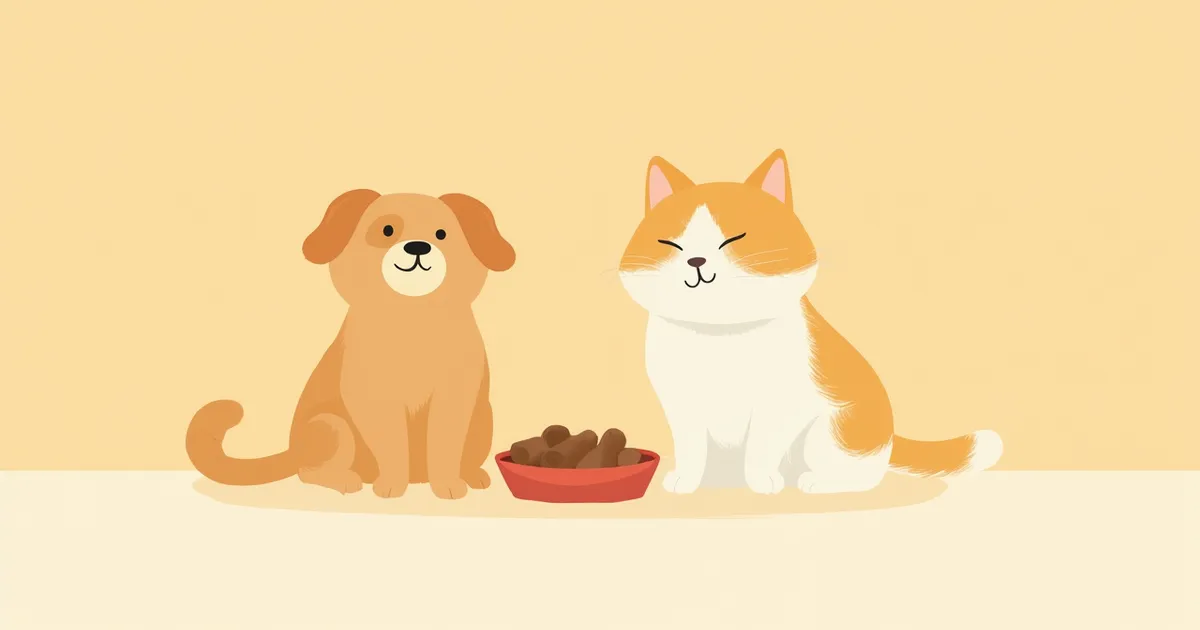
Perfect Comparison of Nutritional Differences Between Dogs and Cats
Dogs and cats have different digestive physiologies, so the types and proportions of nutrients they need vary significantly. Here’s a clear overview of key differences, such as protein, taurine, and arachidonic acid.
Why Do Dogs and Cats Have Different Nutritional Needs?

Two Animals with Different Digestive Physiologies
Comparison Table of Key Nutrient Requirements
| Item | Adult dog (general adult) | Adult cat (general adult) |
|---|---|---|
| Minimum protein (dry matter basis) | 18% | 26% |
| Minimum fat | 5.5% | 9% |
| Taurine | Can be synthesized in the body | Essential — must come from the diet |
| Arachidonic acid | Synthesized from linoleic acid | Essential — must come from the diet |
| Vitamin A | Can be converted from beta-carotene | Requires direct intake of retinol |
| Niacin (B3) | Synthesized from tryptophan | Must be supplied directly through the diet |
Compiled based on the AAFCO (Association of American Feed Control Officials) adult maintenance standards.
Four Nutrients Essential Only for Cats

Problems Arising from Feeding the Wrong Food
Feeding your dog cat food over a long period can lead to excessive protein and fat intake, resulting in nutritional overload and obesity. Conversely, if a cat is fed dog food for an extended time, the lack of taurine can cause taurine-deficient dilated cardiomyopathy or retinal degeneration (blindness). By the time symptoms become apparent, heart or retinal damage is often already advanced. While an occasional meal or two in an emergency is unlikely to cause harm, you should avoid switching your pets’ diets for several days or longer.
Differences in Carbohydrate Metabolism Are Also Decisive

Water Intake Methods Differ as Well
At-a-Glance Safety Ratings by Nutrient
타우린(Taurine)
심장·망막 건강 유지
Dosage: 고양이 1000mg/kg 사료 이상
미국사료관리협회 권장
아라키돈산(Arachidonic acid)
피부·염증 조절
Dosage: 고양이 사료 필수 포함
미국국립연구위원회 기준
양파·마늘 성분
없음 — 오히려 독성
Dosage: 0 (급여 금지)
적혈구 파괴 유발
우유(락토스)
권장하지 않음
Dosage: 성체는 제한
설사 유발 가능
Feeding Tips for Dogs and Cats Living in the Same Household
It’s common for dogs and cats to steal each other’s food when they live together. To prevent this, store cat food on high shelves or in a room with a pet door, effectively separating the spaces so your dog can’t access it. Feed them at different times and remove their bowls immediately after they finish eating. Following these simple guidelines can almost entirely prevent nutritional imbalances and obesity.
Reviewed by a veterinarian

Dr. Tony — Punnawat Phongkittirak
VeterinarianA veterinarian who majored in veterinary medicine at Khon Kaen University, Thailand, and completed the IVSA program at North Carolina State University in the United States. Drawing on clinical experience at animal hospitals, he works in the pet healthcare field and is dedicated to building a digital care environment that connects pet parents with veterinarians.
Reviewed 2026-04-27
Frequently Asked Questions
Can I give my dog a cat food can as a treat?
How many days can I feed my cat dog food?
Is it safe to feed vegetarian dog food to both dogs and cats?
Are the ingredients in dog and cat food from the same brand similar?
Can I give adult-formula food to kittens and puppies?
Share
Related Guides
My Senior Cat Won’t Eat — A Complete Guide to Choosing Food for Cats with Weak Digestion
Top 5 Prescription Diets for Feline Pancreatitis Recommended by Veterinarians — Low-Fat, Highly Digestible Food Guide

Royal Canin vs Hill’s vs Purina vs Orijen — Which Brand Is Right for Your Pet, According to Veterinarians?
Which Dog Eye Supplement Is Best? How to Choose by Ingredient: Lutein and Astaxanthin

What’s the Difference in Immune Supplements? — Comparing Beta-Glucan, Colostrum, and Probiotics

Comparison of Dog Skin Supplement Ingredients by Type — Key Points on Omega-3, Zinc, and Biotin
Comparing Prescription Joint Diets for Dogs — Hill's j/d vs Royal Canin Mobility
Pet Hotel vs. Pet Sitter Comparison Guide
Freeze-Dried vs. Raw Diets: Which Is Better for Your Pet?
Where to Take Your Pet: Differences Between General Practitioners and Specialists, and When to Visit
References
[1] National Research Council, Nutrient Requirements of Dogs and Cats, 2006
[2] Fascetti AJ, Delaney SJ, Applied Veterinary Clinical Nutrition, 2nd Ed, 2023
[3] AAFCO Official Publication, Dog and Cat Food Nutrient Profiles, 2024