Like
Share
멍실장
강아지 피부 보습 케어 제품 추천 BEST와 고르는 기준 총정리

Top 5 Moisturizing Skincare Products for Dogs with Dry Skin — Complete Guide to Choosing the Right One

Skin & CoatTop PicksMeongsiljang Veterinary Advisory Board

We’ve compiled a guide based on veterinary resources to help you choose the right moisturizing skincare products for your dog, highlighting key ingredients and product types. Learn how to select the best option for your dog’s skin type, from shampoos to spot-on treatments and balms.

What Are Dog Skin Moisturizing Care Products?

Healthy, shiny dog skin
Dog skin moisturizing care products are topical treatments that help restore the damaged skin barrier and prevent moisture loss, thereby reducing dryness and itching. Moisturizing ingredients are broadly categorized into emollients, such as fatty acids and oils, which soften the skin and reduce evaporation, and humectants, such as glycerin, propylene glycol, and colloidal oatmeal, which draw moisture into the stratum corneum and help retain it. The most critical factor is selecting the right ingredients and formulation. Even among products labeled as "moisturizers," there is a significant difference in efficacy between those containing ingredients recognized by veterinary textbooks as effective moisturizers, such as colloidal oatmeal and fatty acids, and those that do not. The key is to choose the appropriate product type—shampoo, spot-on, or balm—based on your dog’s skin type (dry, oily, or atopic) and the specific problem areas.

Main Causes of Dry Skin in Dogs

Dry skin in dogs is often the result of several overlapping factors.
Season and Environment: Indoor heating during winter can dry out the air, causing moisture to evaporate more quickly from the skin and leading to dryness.
Excessive Bathing: Frequent shampooing can repeatedly irritate the skin barrier (the stratum corneum), compromising its protective function and leaving the skin rough.
Nutritional Status: Essential fatty acids like omega-3 and omega-6 are crucial for skin hydration and barrier maintenance. An imbalance in nutrition can make the skin more prone to dryness.
Atopy and Allergies: Dogs with atopic dermatitis have impaired epidermal barrier function, which increases transepidermal water loss (TEWL) and leads to chronic dryness.
Breed and Individual Traits: Sebum production and keratinization vary by breed and individual, meaning some dogs are naturally more prone to dry skin.

When to See a Vet Instead of Using Products

Moisturizers alone may not be enough in some cases. If you notice red rashes, oozing, scabs, severe itching that disrupts sleep, circular hair loss, or a strong odor, it could indicate a secondary bacterial or yeast infection or an underlying medical condition. In such cases, it’s best to first visit a veterinary clinic for a proper diagnosis, and then use care products during the skin recovery phase after treatment.

5 Key Criteria for Choosing a Good Moisturizing Care Product
1. Check for proven ingredients: Look for moisturizing components recognized in veterinary dermatology textbooks, such as colloidal oatmeal, fatty acids (emollients), glycerin, and propylene glycol (humectants). 2. Choose pet-specific products: Human and canine skin environments and ingredient formulations differ significantly. Using human products directly can irritate your pet’s skin barrier, so opt for products designed specifically for pets. 3. Fragrance-free and low-irritation: Gentle formulas with minimal irritants like fragrances and alcohol are best suited for sensitive or dry skin. 4. Match the formulation to the need: Use shampoo for whole-body dryness, spot-on treatments or balms for localized dryness, and lotions for daily maintenance. 5. Veterinary verification: For added safety, confirm that the product has clinical evidence or is recommended by a board-certified veterinary dermatologist.
Types of moisturizing skincare products for dogs

Type 1 — Moisturizing Shampoo and Rinse

Shampoo is the most basic moisturizing care product. According to veterinary dermatology textbooks, products containing colloidal oatmeal help moisturize slightly dry, flaky skin, gently soothe it, and relieve mild itching.
General dry skin: Bathe at moderate intervals using a colloidal oatmeal shampoo.
Seborrheic skin/dandruff: Use a medicated shampoo for exfoliation (containing salicylic acid) alongside a moisturizing rinse.
Atopic skin: Choose a gentle, low-irritation moisturizing shampoo and apply additional moisturizer after bathing.
Frequent bathing can burden the skin barrier, so it is best to allow sufficient time between baths.
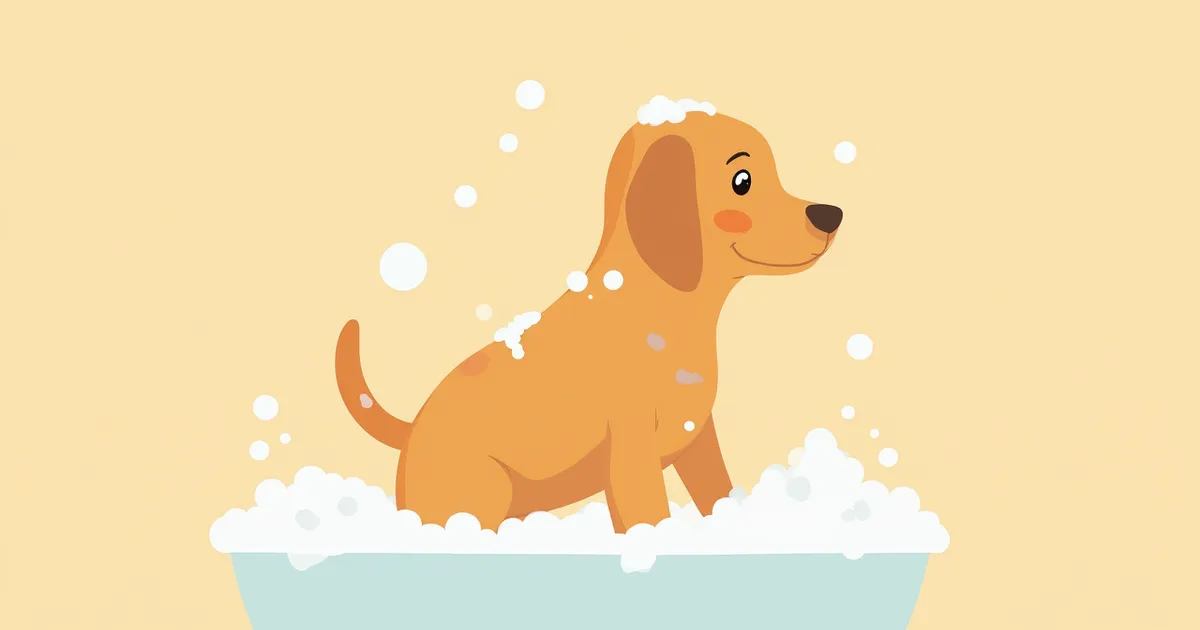
A scene of a puppy taking a bath with moisturizing shampoo.

Type 2 — Spot-On, Lotion, and Balm

These are supplementary products to use when shampoo alone isn’t enough.
Spot-on: This formulation is applied directly to the skin for absorption. Lipid complex spot-ons designed for atopic and seborrheic skin are lipophilic, allowing active ingredients to be released gradually through the stratum corneum. Since atopic skin has impaired epidermal barrier function leading to increased transepidermal water loss, there is evidence that such products can help with barrier management.
Lotion: Apply between baths to replenish and maintain skin moisture. Emollients like fatty acids and oils, along with humectants like glycerin, help with hydration.
Balm: Ideal for intensive care on areas with severe hyperkeratosis, such as the nose and paw pads. Research has shown that moisturizing balms containing essential fatty acids and essential oils can help manage idiopathic nasal hyperkeratosis in dogs.

Recommended Moisturizing Care Routines by Skin Type

Dry skin: Bathe your pet at intervals using a colloidal oatmeal shampoo, then apply a moisturizing lotion after bathing. Maintaining an appropriate indoor humidity level to prevent excessive dryness can also help.
Oily and seborrheic skin: Use a medicated shampoo containing salicylic acid to remove dead skin cells, followed by a moisturizing rinse. Avoid overly heavy formulations, as they can burden the skin; adjust the product based on your pet’s skin condition.
Atopic skin: Combine a gentle, low-irritation moisturizing shampoo with an omega (lipid complex) spot-on treatment. Since topical care alone has limitations for atopic dermatitis, it should be used alongside veterinary-prescribed treatment.
Nose and paw pad hyperkeratosis: Apply a pet-specific balm locally once or twice daily. If cracking is severe, it may indicate a hyperkeratosis disorder, so please seek a veterinary diagnosis first.

Comparison of Dog Skin Moisturizing Care Product Types

ItemMoisturizing ShampooSpot-onLotion/CreamBalm
Application AreaWhole bodyWhole body/localizedWhole body/localizedLocalized to nose and paw pads
Main IngredientsColloidal oatmeal and fatty acidsOmega-3/6 fatty acids (lipid complex)Moisturizing ingredients such as fatty acids and glycerinEssential fatty acids and essential oils
Frequency of UseAt intervals1–2 times per weekCan be used dailyAs needed
Suitable SkinDry, flaky, atopicAtopic, seborrheicGeneral dry, sensitiveSevere keratinization, cracking
Ease of UseRequires bathingConvenientConvenientConvenient

For atopic skin, we recommend combining a moisturizing shampoo with an omega spot-on. Using multiple types together is more effective.

Key Ingredient Card for Dog Moisturizing Products

Safe

콜로이달 오트밀 (Colloidal Oatmeal)

피부 수분 보유·보습, 가벼운 가려움 완화, 민감 피부 진정

Dosage: 샴푸 제형 적정 함량 사용

수의피부과학 교과서 권장 성분

Safe

세라마이드 (Ceramide)

피부 장벽 지질층 구성 회복, 수분 손실 방지

Dosage: 스팟온·로션 제형 사용

임상 연구(Marsella 등, 2013) 피부 장벽 개선 확인

Safe

오메가-3·6 지방산

피부 장벽 지질 합성 지원, 항염 효과

Dosage: 스팟온 또는 경구 보충

임상 연구(Blaskovic 등, 2014) 아토피 피부 개선

Safe

히알루론산 (Hyaluronic Acid)

고보습·수분 저장, 피부 탄력 유지

Dosage: 로션·크림 제형

피부과학 일반 권장

Caution

살리실산 (Salicylic Acid)

각질 제거, 피지 조절, 지루성 피부 완화

Dosage: 약용 샴푸 0.5~2% 농도

고농도·빈번 사용 시 자극 가능 — 수의사 지도 하에 사용 권장

Important Precautions When Using Moisturizing Products

It’s safer to avoid using human moisturizers and lotions on dogs. Human and canine skin differ in their environmental adaptations and formulation needs, so products designed for people can irritate or damage a dog’s skin barrier. With spot-on treatments, keep your dog from licking the area until the product has fully absorbed. When trying a new product for the first time, perform a patch test by applying a small amount behind the ear and monitoring for redness or itching over the next 24 hours.

Reviewed by a veterinarian

Dr. Tony — Punnawat Phongkittirak

Dr. Tony — Punnawat Phongkittirak

Veterinarian

A veterinarian who majored in veterinary medicine at Khon Kaen University, Thailand, and completed the IVSA program at North Carolina State University in the United States. Drawing on clinical experience at animal hospitals, he works in the pet healthcare field and is dedicated to building a digital care environment that connects pet parents with veterinarians.

Frequently Asked Questions About Dog Skin Moisturizing Care Products

Is it safe to use human moisturizing lotion on my dog?
I don’t recommend using human products on dogs. Human and canine skin differ in their environmental adaptations and formulation requirements, so ingredients in human products can irritate or damage your dog’s skin barrier. If your dog needs moisturizing, always use products specifically formulated for pets.
What is the best combination of moisturizing products for dogs with atopic dermatitis?
I recommend a combination of a gentle, low-irritation moisturizing shampoo and an omega fatty acid (lipid complex) spot-on treatment. There is evidence that lipid complex spot-ons designed for atopic skin can help manage the stratum corneum barrier. However, moisturizing alone has its limitations, so it must always be used in conjunction with veterinary-prescribed treatment.
My dog’s nose and paw pads are severely cracked. What product should I use?
For areas with severe hyperkeratosis, a pet-specific balm formulation is ideal. Apply a fragrance-free, non-irritating balm once or twice daily. However, if there is significant cracking or bleeding, it could indicate a hyperkeratotic disease, so it’s important to get a veterinary diagnosis first.
Does frequent bathing make the skin drier?
You're right. Frequent bathing can repeatedly stress the skin barrier, weakening its protective function. Therefore, it's best to space out baths and avoid over-bathing. If your pet needs frequent baths due to conditions like atopic dermatitis, choose a low-irritation, moisturizing shampoo, and always apply a moisturizing product after bathing.
What should I do if my pet’s skin stays dry even after using moisturizing products?
If topical moisturizers aren’t helping, it’s time to evaluate your pet’s internal nutrition. Diets or supplements rich in omega-3 and omega-6 fatty acids support the synthesis of skin barrier lipids from within. If there’s still no improvement, underlying medical issues such as allergies or hormonal imbalances may be at play, so a veterinary checkup is recommended.

Share

Related Guides

References

[1] Harvey R, Gaschen F (Eds.), BSAVA Manual of Canine and Feline Dermatology, 4th Ed, BSAVA, 2019

[2] Marsella R, Genovese D, Gilmer L et al., Investigations on the effects of a topical ceramides-containing emulsion (Allerderm spot on) on clinical signs and skin barrier function in dogs with atopic dermatitis, Veterinary Dermatology, 2013

[3] Blaskovic M, Rosenkrantz W, Neuber A et al., The effect of a spot-on formulation containing polyunsaturated fatty acids and essential oils on dogs with atopic dermatitis, Veterinary Journal 199, 39-43, 2014

[4] Catarino M, Combarros-Garcia D, Mimouni P et al., Control of canine idiopathic nasal hyperkeratosis with a natural skin restorative balm: a randomised double-blind placebo-controlled study, Veterinary Dermatology 29, 134-138, 2018

This information is based on veterinary literature and does not replace diagnosis or treatment. Please consult a veterinarian for specific health concerns.

Metapet Co., Ltd. | CEO: Park Sung-yong | Business Reg. No. 417-88-02562 | Seoul, South Korea | Customer Center

Best 5 Moisturizers for Dogs with Dry Skin: How to Choose | Meongsiljang