Like
Share
멍실장
강아지 반려동물 연령 환산 공식 관리 추천 BEST와 고르는 기준 총정리

The Ultimate Guide to Choosing the Best Dog Age Conversion Formula and Selection Criteria

Lifestyle & Age CareTop PicksMeongsiljang Veterinary Advisory Board

To accurately determine your dog’s true biological age, you need a scientific conversion method rather than the simplistic “1 year equals 7 human years” rule. I’ll share breed- and size-specific care guidelines tailored to your dog’s needs.

The Dog Age Conversion Formula Is Not 1 Year = 7 Years

Comparison image of biological age differences between small and large dogs
A dog’s actual biological age varies significantly depending on breed and body size. The simple “one dog year equals seven human years” formula lacks scientific basis. - Size-based conversion: Small dogs generally age more slowly and live longer on average than large dogs, so their biological age tends to progress more gradually. In fact, some large purebred dogs have an average lifespan of only 6 to 9 years. - Biological development stages: Puppies typically reach sexual maturity and adult body size around one year of age, but this timing varies by breed and can influence vaccination schedules and nutritional management strategies. - Research on aging assessment: While ongoing research aims to evaluate aging more objectively, the rate of aging differs greatly among individuals, and no single clinically established standard currently exists. - Reflecting health status: Factors such as mobility, presence of chronic diseases, and weight changes can serve as important indicators of health beyond chronological age. A comprehensive health management plan should be developed through regular assessments, including weight and Body Condition Score (BCS) evaluations.

4 Criteria for Choosing a Dog Age Conversion Formula
To accurately determine your dog’s actual age, you need to consider several factors. A comprehensive assessment should include breed, body size, physiological development stage, and overall health status.
Size-based conversion: Small dogs tend to age more slowly physiologically and have longer average lifespans, meaning they experience aging at a slower pace. In contrast, large purebred dogs generally have shorter average lifespans.
Biological development stages: Dogs typically reach sexual maturity around one year of age, but this timing varies by breed and can influence vaccination schedules and nutritional management plans.
Aging assessment research: While studies are underway to evaluate aging at the molecular level, there is no clinically established standard yet, so these findings should be viewed as supplementary reference materials.
Reflecting health status: Factors such as the presence of chronic diseases, weight changes, and mobility can serve as important health indicators, just as significant as chronological age. Regular health check-ups are recommended to consistently monitor these changes.
Image of gene methylation patterns for converting dog age

BEST 1: Breed-Specific Biological Age Calculator (Expert Recommended)
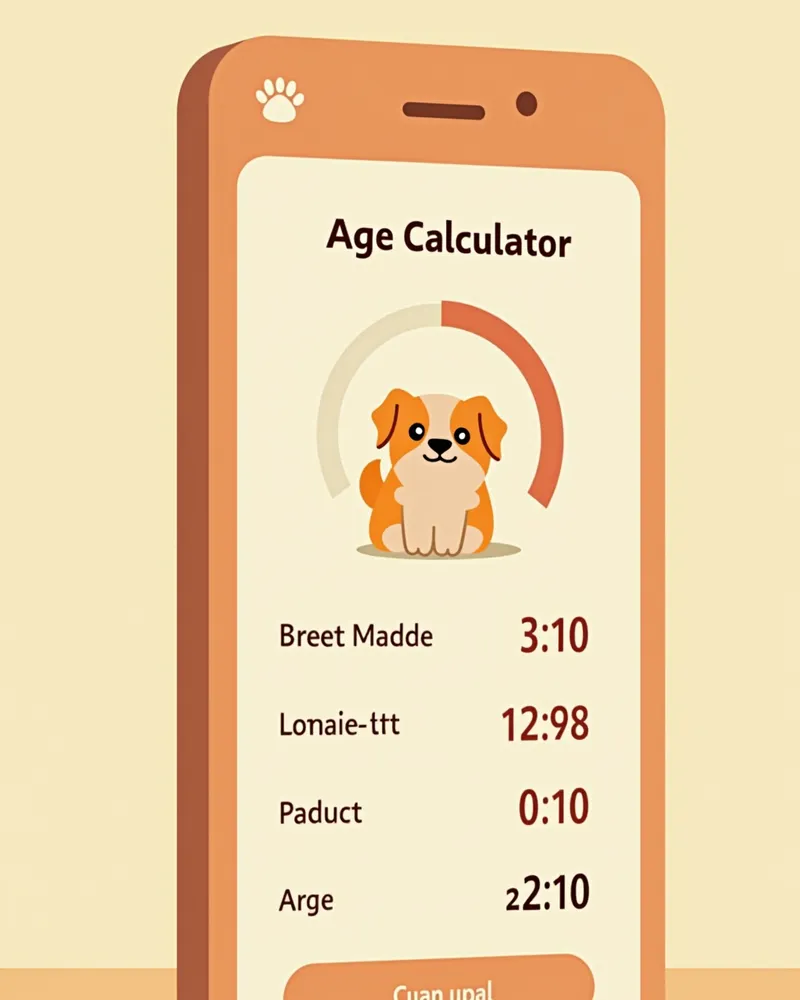
This tool proposes an age-conversion approach that takes breed-specific biological age into account. Small dogs age physiologically more slowly than large dogs, which tends to help them maintain a youthful state for longer in everyday life.
Key Features: Estimates breed-specific biological age, analyzes health risks, provides nutritional recommendations, and offers exercise guidelines.
How to Use: Enter your dog’s breed and age in the app → view the estimated results → check personalized care tips.
Advantages: Reflects breed-specific characteristics, allows for continuous updates, and incorporates evidence-based approaches from multiple studies.
Disadvantages: Data may be limited for some rare breeds, and professional veterinary review is recommended.
Image of a breed-specific biological age calculator app

BEST 2: Physiological Age Checklist (Recommended for Home Use)

This checklist is a home-assessment tool developed by veterinarians. It scores your dog’s appearance, behavior, and health across ten items to help estimate their actual biological age. Checking it once a month allows you to quickly spot any changes.
Assessment Items: Muscle mass, coat condition, clarity of eyes, mobility, appetite, sleep patterns, responsiveness, weight changes, elimination habits, and emotional state.
Scoring System: Each item is scored from 1 to 5, for a maximum total of 50 points. A score of 40 or higher indicates a younger biological age, while a score below 30 suggests aging is progressing.
Advantages: Free, easy to use, and capable of detecting real-time changes.
Limitations: Subjective assessment may occur, and precision is lower than that of professional diagnostic tools.
Checklist image for determining your dog's physiological age

BEST 3: DNA-Based Age Analysis Kit (Highest Accuracy)

This kit analyzes your dog’s DNA sample to provide aging-related information for reference purposes. While research continues to evaluate aging at the molecular level, it is not yet an established clinical standard. Since the aging process varies significantly among individuals, results should be understood as reference material rather than definitive diagnoses.
Analysis Items: Estimation of biological age, assessment of aging rate, exploration of genetic disease risk, and information related to immune response.
How to Use: Collect a sample by swabbing the inside of the mouth with a cotton swab → Mail the sample → Receive the result report.
Advantages: Provides reference data for long-term health management and may help in early detection of potential diseases.
Disadvantages: The cost is high, results are best interpreted by a professional, and they must be evaluated in conjunction with the individual’s overall health status.
Image of a gene-based age analysis kit

Comparison Table of Dog Age Conversion Formulas BEST 1–3

ItemBreed-Specific Biological Age CalculatorPhysiological Age ChecklistGenetic-Based Age Analysis Kit
AccuracyMediumMediumConservative reliability (research-based approach)
CostMedium (annual subscription)FreeHigh (about $100)
Ease of UseVery easyEasyModerate
Result Delivery MethodReal-time app resultsPaper checklistElectronic report
Recommended ForRegular caregiversNovice pet ownersOwners attentive to health management

Accuracy refers to the reliability of biological age measurement. Cost is based on the initial cost.

Caution: Age Conversion Is Not a Diagnosis

Converting your dog’s actual age into human-equivalent years is simply a tool to help assess their overall health; it cannot replace a veterinary diagnosis or treatment plan. If you notice any unusual symptoms, please consult your veterinarian.

4 Tips for Using Dog Age Conversion

Try these tips to get a more accurate age conversion.
Regular check-ups: Fill out a physiological age checklist every three months to monitor changes.
Keep records: Log your age conversion results in a journal or app to analyze trends over time.
Consult a professional: If the conversion results seem off, review them with your veterinarian.
Use multiple tools: Rather than relying on just one tool, compare results from several different ones.
Tips for using the dog age conversion chart

Reviewed by a veterinarian

Dr. Tony — Punnawat Phongkittirak

Dr. Tony — Punnawat Phongkittirak

Veterinarian

A veterinarian who majored in veterinary medicine at Khon Kaen University, Thailand, and completed the IVSA program at North Carolina State University in the United States. Drawing on clinical experience at animal hospitals, he works in the pet healthcare field and is dedicated to building a digital care environment that connects pet parents with veterinarians.

Frequently Asked Questions

Why is the “1 dog year equals 7 human years” rule inaccurate?
Small dogs age more slowly and live longer on average than large dogs, so you can’t simply equate one dog year to a fixed number of human years. Aging rates vary by breed and body size, meaning general conversion ratios may not reflect reality.
How accurate are genetic testing kits?
While research continues into using genetic analysis to assess aging, this method is not yet a clinical standard for determining age. Because the rate of aging varies significantly from one individual to another, it’s best to use genetic results as a supplementary reference rather than relying on them as the sole indicator.
The age conversion result seems more complicated than just the age itself.
This suggests that a healthy lifestyle or genetic factors may have helped maintain their good health. However, since a pet’s health status isn’t solely determined by age, a comprehensive health assessment is still necessary.
Do puppies also need age conversion?
Yes, it’s important to monitor your pet’s physiological development from an early age to understand their growth stage and overall health. Since growth rates can vary by breed, personalized care is essential.
Where can I find a tool to convert my pet’s age into human-equivalent years?
Breed-specific biological age calculators are available as free or paid apps on the App Store, and genetic testing kits can be purchased from online specialty retailers. It’s important to understand the purpose and limitations of each tool before buying.

Share

Related Guides

References

[1] Salt, C., Morris, P.J., German, A.J. et al. (2017) Growth standard charts for monitoring bodyweight in dogs of different sizes. PLOS ONE 12, e0182064.

[2] Hofman, J.M., Creevy, K.E. and Promislow, D.E.L. (2013) Reproductive capability is associated with lifespan and cancer risk in dogs. Nature Communications 4, 2255.

[3] Guy, M.K., Page, R.L., Jensen, W.A. et al. (2015) The Golden Retriever lifetime study: Establishing an observational cohort study with translational relevance for human health. Philosophical Transactions of the Royal Society B 370, 20140230.

This information is based on veterinary literature and does not replace diagnosis or treatment. Please consult a veterinarian for specific health concerns.

Metapet Co., Ltd. | CEO: Park Sung-yong | Business Reg. No. 417-88-02562 | Seoul, South Korea | Customer Center

Best Dog Age Conversion Formulas & How to Choose | Meongsiljang