Like
Share
멍실장
강아지 관절 보조 매트·계단 추천 BEST와 고르는 기준 총정리

Top 5 Joint-Support Mats and Stairs for Dogs and How to Choose Them

JointTop PicksMeongsiljang Veterinary Advisory Board

We’ve compiled the key criteria for selecting supportive mats and stairs for dogs with arthritis or hip dysplasia, along with a comparison of different product types. If you’re the guardian of a small-breed or senior dog, be sure to check this out.

Why Are Joint-Support Mats and Stairs Necessary for Dogs?
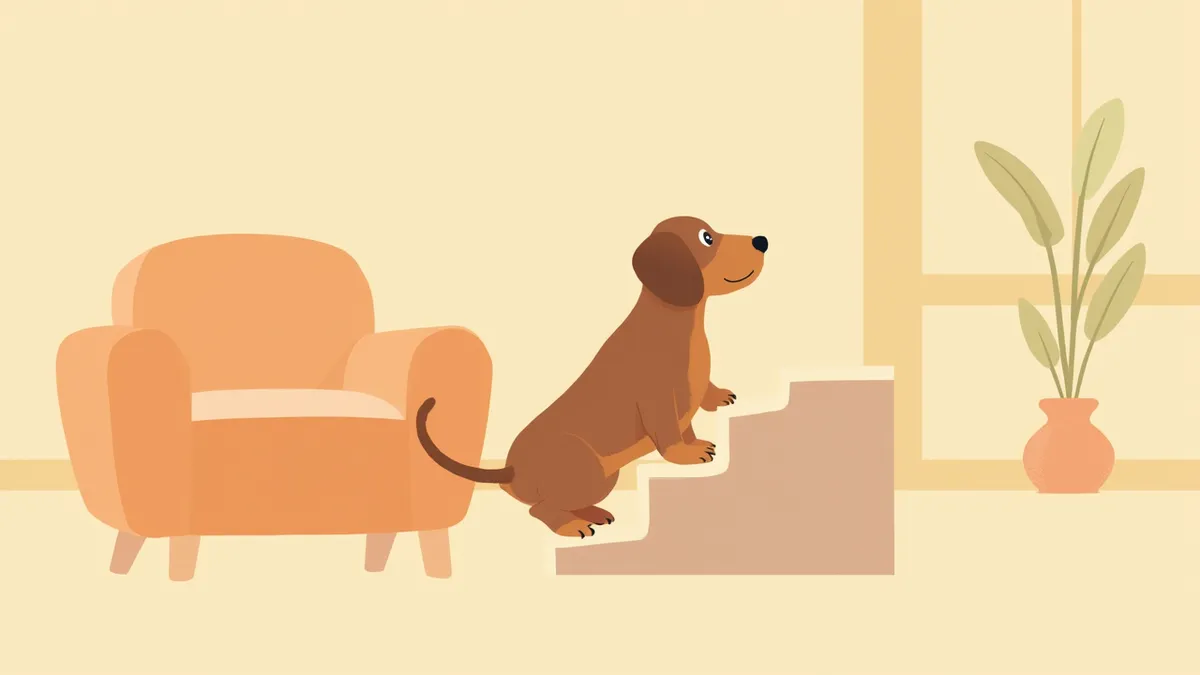
A dachshund climbing up the sofa using stairs.
Dog joint-support mats and stairs are assistive products designed to help dogs with mobility issues due to arthritis (osteoarthritis), hip dysplasia, and other conditions safely get on and off sofas, beds, and cars. Since osteoarthritis is a degenerative joint disease that is difficult to reverse once it progresses, it is important to minimize movements that strain the joints, such as repetitive jumping and impact. Veterinary textbooks emphasize that managing joint disease requires a multifaceted approach that includes weight management, activity modification, and pain control, and note that improving the living environment, such as avoiding slippery floors, can be beneficial. These assistive products can be especially helpful for small breeds, senior dogs, and dogs recovering from surgery, as they reduce daily strain and improve quality of life.

Be Sure to Check These Before Purchasing

It’s best to consult with your veterinarian and choose joint support products after a clinical diagnosis. If your pet is already experiencing severe pain or significant weakness in their hind legs, mats and steps alone may not be sufficient. If your pet is undergoing post-surgical rehabilitation, be sure to check with your veterinarian about the appropriate height and incline angle first.

Mat vs. Stairs vs. Ramp — Which Should You Choose?

The right product depends on your dog’s specific needs.
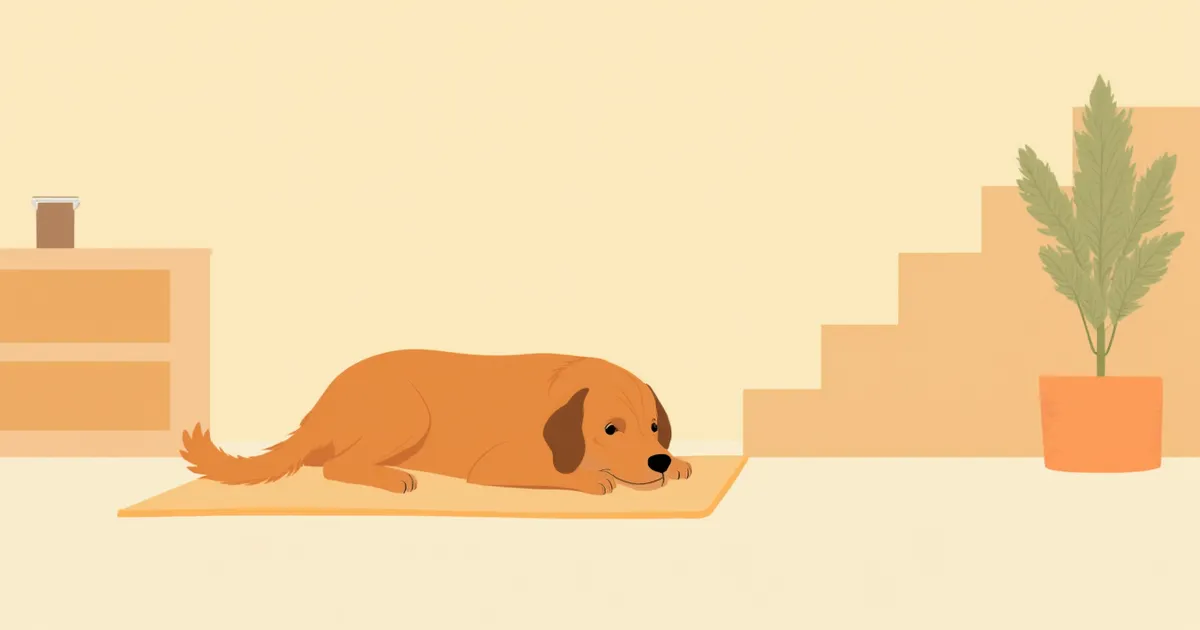
Joint-support mat: Provides a cushioned surface instead of a hard floor. Essential for dogs with arthritis or those recovering from surgery who spend long periods lying down.
Pet stairs: Ideal for reaching consistent heights like sofas or beds. More steps mean a lower rise per step, reducing strain on the joints.
Ramp: Suitable for dogs who find climbing stairs difficult after knee or hip surgery. A non-slip surface is key.
Three Joint Support Products for Dogs — Comparing Mats, Stairs, and Ramps

Checklist for Choosing a Joint-Support Mat
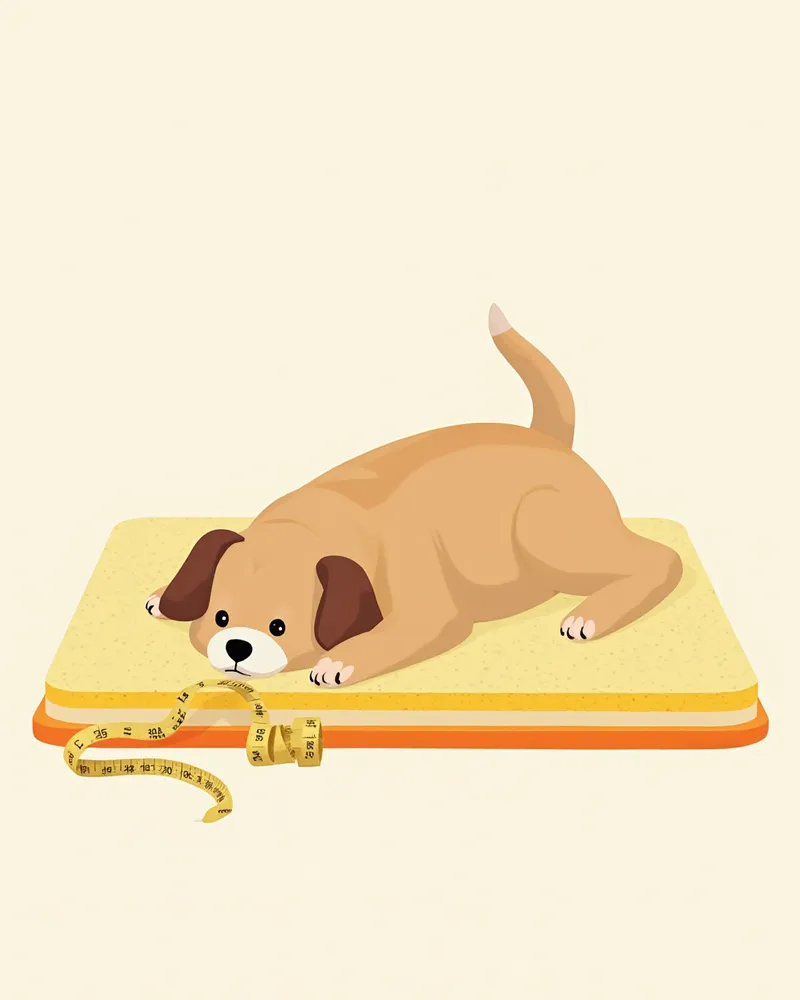
Here are a few things to check when choosing a mat:
Memory foam thickness: We recommend at least 5 cm. The thicker the foam, the more evenly your dog’s weight is distributed.
Breathability of materials: Be sure to check if the waterproof cover is removable and machine-washable. Hygiene is important for long-term use.
Non-slip bottom: If the underside of the mat isn’t treated to prevent slipping, your dog could slip when trying to stand up, which can be dangerous.
Size: Your dog should be able to stretch out fully and lie down comfortably. A good rule of thumb is to choose a mat with an area 1.5 times your dog’s body weight.
A cross-section of a dog joint-support mat featuring memory foam that is at least 5 cm thick.

Checklist for Choosing Pet Stairs and Ramps

Here are the key points to consider when choosing between stairs and a ramp.
Slope Angle: The gentler the incline and the lower each step, the less strain on your dog’s joints. In veterinary orthopedic rehabilitation, vets recommend that recovering dogs use ramps or stairs slowly and at a controlled pace, gradually increasing their activity level. Therefore, it’s best to choose a product with a gentle slope and low step height.
Step Surface Material: Non-slip materials like carpet or EVA foam are essential. Wooden or plastic-only steps can be slippery and pose a safety risk.
Maximum Load Capacity: Choose a product that can support at least twice your dog’s body weight.
Foldable Design: If you need to move or store the product frequently, a foldable design is more convenient.

At-a-Glance Comparison of Joint-Support Product Types

ItemJoint-protection matPet stairsRamp
Main useLong rest/sleepGetting on/off the sofa or bedPost-surgery/senior dog mobility
Joint burden levelVery lowLow (with more steps)Lowest
Suitable weightAll weightsSmall–mediumAll weights
Ease of installationPlace anywhere on the floorFixed beside the sofaRequires relatively more space
Average price rangeKRW 20,000–80,000KRW 30,000–100,000KRW 40,000–120,000

Prices are the lowest online range as of 2026. Vet-prescribed rehabilitation-specific products are priced separately.

Proper Placement and Usage — Just Follow These Guidelines

Even if you purchase the product, improper placement can significantly reduce its effectiveness.
Mat Placement: Position the mat where your dog usually rests, especially on hard surfaces like tiles or hardwood floors. Avoid direct exposure to air conditioning vents or sunlight.
Stair Stability: Secure the top of the stairs firmly against the sofa or bed, and ensure the non-slip pads at the bottom are properly in place. Dogs tend to avoid unstable stairs.
Adaptation Training: Initially, use treats to encourage your dog to climb up voluntarily. Forcing them may cause fear and lead to refusal to use the stairs.
A Pomeranian undergoing stair adaptation training using treats.

Guardians of Small-Breed and Specific Breed Dogs Must Check This

Breeds with long backs and short legs, such as Dachshunds, Corgis, and French Bulldogs, are particularly sensitive to slope angles. If a ramp is too steep, it can put strain on the intervertebral discs. For toy breeds like Pomeranians and Chihuahuas, if the stair treads are too wide, there is a risk of their paws slipping through the gaps, so be sure to check the spacing between steps.

Reviewed by a veterinarian

Dr. Tony — Punnawat Phongkittirak

Dr. Tony — Punnawat Phongkittirak

Veterinarian

A veterinarian who majored in veterinary medicine at Khon Kaen University, Thailand, and completed the IVSA program at North Carolina State University in the United States. Drawing on clinical experience at animal hospitals, he works in the pet healthcare field and is dedicated to building a digital care environment that connects pet parents with veterinarians.

Frequently Asked Questions

What’s the difference between a joint-support mat and a regular dog cushion?
Standard cushions filled with cotton or polyester tend to flatten over time. In contrast, joint-support mats are designed with memory foam or low-rebound foam to evenly distribute your pet’s weight, which is key to reducing pressure on the joints. If your dog has been diagnosed with arthritis, a joint-support mat is a better choice than a regular cushion.
How many steps should a pet staircase have?
Divide the destination height by the number of steps to determine the height of each step. To minimize joint strain, each step should be 15 cm or less. For a sofa (40–45 cm high), three steps are appropriate; for a bed (50–60 cm high), four or more steps are recommended.
My dog refuses to use the stairs. What should I do?
Dogs often resist at first because the stairs feel unfamiliar. Place treats on the steps to encourage them to climb up on their own. Avoid using a leash to pull or guide them; instead, patiently wait for your dog to ascend voluntarily. With positive reinforcement, most dogs adapt within one to two weeks.
My pet is recovering from joint surgery. Is it safe to use a ramp?
During the post-surgical recovery period, it’s important to consult with your veterinarian first. Generally, ramps place less stress on the joints than stairs, making them a better option during recovery. However, the appropriate timing and angle for using a ramp will vary depending on the type of surgery and the stage of recovery.
How often should I wash the joint support mat?
It’s best to clean the cover every one to two weeks and the foam body at least once a month. Choosing a product with removable, washable parts makes hygiene maintenance much easier. Always ensure everything is completely dry before use, as lingering moisture can promote bacterial growth.

Share

Related Guides

References

[1] Corbee R.J., Nutrition and skeletal health in dogs and cats, PhD thesis, Utrecht University, 2014

[2] Textbook of Veterinary Orthopaedic Surgery, Chapter 15: Physiotherapy and Rehabilitation of Orthopedic Patients, 2023

[3] Bierer T.L. and Bui L.M., Improvement of arthritic signs in dogs fed green-lipped mussel (Perna canaliculus), J. Nutr. 132 (Suppl 2): 1634S-1636S, 2002

This information is based on veterinary literature and does not replace diagnosis or treatment. Please consult a veterinarian for specific health concerns.

Metapet Co., Ltd. | CEO: Park Sung-yong | Business Reg. No. 417-88-02562 | Seoul, South Korea | Customer Center

Top 5 Joint-Support Mats & Stairs for Dogs: How to Choose | Meongsiljang