
The Complete Guide to Interpreting Lymph Node Aspiration Results
Lymph node aspiration is the most basic and safe diagnostic method to find the cause of swollen lymph nodes. I'll explain the terms and their meanings on the result sheet in a way that's easy for pet owners to understand.
What is a Lymph Node Aspiration?
Why Perform a Lymph Node Test?
Lymph Node Locations Pet Owners Can Palpate
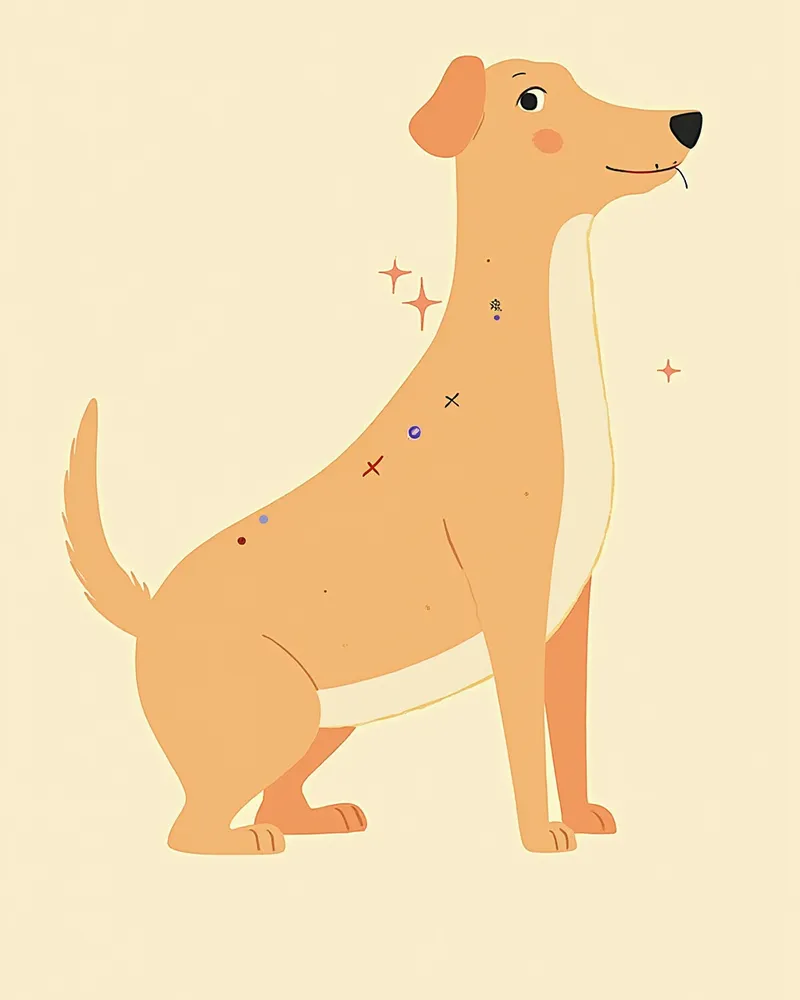
Major Lymph Node Locations and Normal Size
| Item | How to find | Normal size criteria |
|---|---|---|
| Submandibular lymph nodes | Gently press both sides under the jaw | Bean size |
| Prescapular lymph nodes | Inner side at the base of the forelimb | Bean size |
| Axillary lymph nodes | Deep on the inner side of the forelimb | Normally hard to palpate |
| Inguinal lymph nodes | Inner side at the base of the hindlimb | Bean to quail egg size |
| Popliteal lymph nodes | Behind the knee joint of the hindlimb | Bean size |
If it is larger than a quail egg or there is a clear left-right difference, get it examined.
Explanation of Key Terms on the Test Result Sheet
These Results Require Immediate Follow-up Testing
If your results include terms like “suspected lymphoma,” “malignant cells detected,” or “metastatic tumor cells,” schedule a follow-up test within 24 to 48 hours. Lymphoma can progress rapidly, so even a few days’ delay can significantly impact treatment timing. Additionally, because fine-needle aspiration alone often isn’t sufficient for a definitive diagnosis, your veterinarian may recommend a lymph node excisional biopsy, immunophenotyping, and thoracic and abdominal imaging. Don’t wait—confirm your appointment with your vet right away.
Is Aspiration Accurate? It Has Limitations
What to Monitor at Home After the Test

Cat Owners Should Pay Extra Attention
Lymphoma is one of the most common hematopoietic cancers in cats. If your cat suddenly loses appetite, loses weight, and you notice enlarged lymph nodes, do not delay fine-needle aspiration. Feline lymphoma can develop in various locations, including the gastrointestinal tract (mesenteric lymph nodes) and the thymus or mediastinum, so imaging studies such as abdominal ultrasound and thoracic radiographs are often performed alongside lymph node examination. If multiple lymph nodes are enlarged, it is recommended to sample several nodes rather than just one. If fine-needle aspiration yields inconclusive results, an excisional biopsy may be necessary. Even if your cat appears to be in good condition, early diagnosis is crucial for determining the appropriate treatment plan.
Reviewed by a veterinarian

Dr. Tony — Punnawat Phongkittirak
VeterinarianA veterinarian who majored in veterinary medicine at Khon Kaen University, Thailand, and completed the IVSA program at North Carolina State University in the United States. Drawing on clinical experience at animal hospitals, he works in the pet healthcare field and is dedicated to building a digital care environment that connects pet parents with veterinarians.
Reviewed 2026-04-28
Frequently Asked Questions
Does a lymph node aspiration test require anesthesia?
How long does it take for the test results to come back?
My pet’s lymph nodes are swollen, but they seem otherwise fine. Is it okay to just leave them alone?
How much does the test cost?
Can lymphoma be definitively diagnosed with a single test?
Share
Related Guides

Primary vs. Secondary Veterinary Hospitals: A Comparison

5 Easy-to-Raise Cat Breeds for First-Time Owners — Grooming Difficulty Comparison
Top 7 Short-Legged Dog Breeds
Types of Minimally Invasive Surgery (MIS)
What is Cryosurgery for Pets? — Is It an Option for Your Pet’s Tumor?

When is Total Hip Replacement Needed for Dogs, and What Is the Recovery Like?
Partial Hepatectomy Procedure
Ovariohysterectomy vs Ovariectomy: How Do They Differ for Dog Spaying?

How is a Dog’s Vasectomy Different from Neutering? — A Guide to Hormonal, Reproductive, and Health Differences
Penile Amputation (for Urinary Tract Obstruction)
References
[1] Veterinary Surgical Oncology, 2nd Edition, Chapter 14 Hemolymphatic System, Deanna R. Worley, 2022
[2] The Cat, Clinical Medicine and Management, 2nd Edition, Cytology Chapter
[3] Cowell and Tyler's Diagnostic Cytology and Hematology of the Dog and Cat, 5th Edition