
Is homemade dog food safe? — Prohibited ingredients to remove and how to balance nutrition
Homemade pet food can be made with fresh ingredients, but it carries a high risk of nutritional imbalance and exposure to prohibited ingredients. Here are the key principles for feeding it safely.
What is homemade pet food, and why should you be cautious?
Is homemade pet food always better than commercial pet food?
Homemade pet food vs. commercial pet food at a glance
| Item | Homemade Food | Commercial Dry Food | Commercial Wet Food |
|---|---|---|---|
| Freshness | Very high | Moderate | High |
| Nutritional Balance | Requires owner's calculation | Complete and balanced | Complete and balanced |
| Storage Convenience | Refrigeration · freezing required | Room-temperature storage OK | Refrigerate after opening |
| Palatability | Very high | Moderate | High |
| Cost | Ingredient cost + time | Moderate | High |
| Water Intake | Sufficient | Insufficient | Sufficient |
Homemade food is safer as 'mixed feeding' alongside commercial food rather than fed alone
Prohibited ingredients you must never include
Emergency situations — When your pet ingests prohibited ingredients
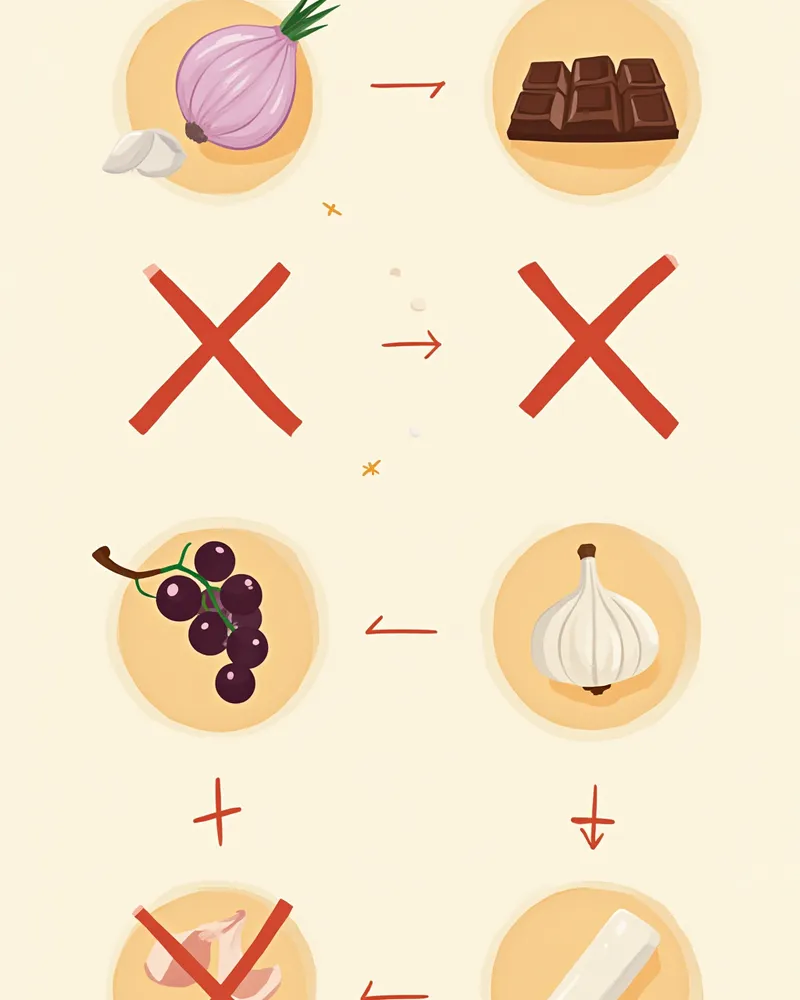
If you confirm your pet has ingested onions, chocolate, grapes, or xylitol, immediate action is required. Do not attempt to induce vomiting at home; instead, note the amount consumed, the time of ingestion, and your pet’s weight, then go to a 24-hour animal hospital right away. Even if no symptoms are present, organ damage can develop two to three days later, so a veterinarian’s assessment is essential. Do not delay visiting the hospital, even if some time has passed since ingestion.
Basic ratios for balancing nutrition

Cooking methods — Basic principles to aid digestion
Guide to commonly used safe ingredients
닭가슴살
고단백 저지방, 소화 쉬움
Dosage: 체중 5kg당 50~80g/일
수의 영양학 교과서 권장
연어
오메가-3, 피부·관절 건강
Dosage: 주 2~3회, 완전히 익혀서
단호박
식이섬유, 장 운동 개선
Dosage: 전체 식사의 10% 이내
달걀
완전단백질, 비오틴
Dosage: 소형견 주 2~3개
우유·유제품
칼슘 (단, 유당불내증 주의)
Dosage: 소량 테스트 후
간(liver)
비타민 A·철분
Dosage: 전체의 5% 이내
Storage and hygiene — Just follow these rules
Homemade pet food lacks preservatives, so it should be consumed within a short period. Store it in single-serving portions in the freezer, and always thaw it slowly in the refrigerator—thawing at room temperature can lead to a rapid increase in foodborne pathogens. When serving, warm the food only to a lukewarm temperature, and promptly remove any leftovers after feeding. For safety, keep cooking utensils separate from those used for human food.
Avoid homemade pet food in these cases
Reviewed by a veterinarian

Dr. Tony — Punnawat Phongkittirak
VeterinarianA veterinarian who majored in veterinary medicine at Khon Kaen University, Thailand, and completed the IVSA program at North Carolina State University in the United States. Drawing on clinical experience at animal hospitals, he works in the pet healthcare field and is dedicated to building a digital care environment that connects pet parents with veterinarians.
Reviewed 2026-04-21
Frequently Asked Questions
Is it okay to feed only homemade food?
Can cats also be fed homemade food?
How should I supplement calcium?
Is it okay to only give homemade food as treats?
Is a raw diet safe?
Share
Related Guides
My Senior Cat Won’t Eat — A Complete Guide to Choosing Food for Cats with Weak Digestion
Top 5 Prescription Diets for Feline Pancreatitis Recommended by Veterinarians — Low-Fat, Highly Digestible Food Guide

Royal Canin vs Hill’s vs Purina vs Orijen — Which Brand Is Right for Your Pet, According to Veterinarians?

What is Feline Squamous Cell Carcinoma? — What Symptoms Should Raise Suspicion?

When to Spay Your Cat to Prevent Mammary Tumors — Key Prevention Q&A

How to Reduce Pain in Cats with Cancer at Home — Key Q&A on Palliative Care

Cat Epistaxis and Nasal Obstruction: Could It Be a Nasal Tumor? — Key Symptoms and Treatment Overview

What Are Feline Mammary Tumors? — Key Q&A on Symptoms, Malignancy, and Treatment
How to Confirm Lymph Node Metastasis in Cats: From Testing to Interpreting Results
What are feline hormone-responsive tumors? — Causes and treatment
References
[1] Fascetti AJ, Delaney SJ. Applied Veterinary Clinical Nutrition, 2nd Ed - Chapter 8: Commercial and Home-Prepared Diets
[2] Ettinger SJ, Feldman EC. Textbook of Veterinary Internal Medicine - Nutritional Management
[3] Little S. The Dog Care Handbook - Diet and Nutrition Chapter