
Like
Share
멍실장
고양이 각막궤양·각막미란 자주 묻는 질문 Q&A — 보호자가 꼭 알아야 할 핵심

What’s the Difference Between Corneal Ulcers and Corneal Erosion in Cats? Causes to Treatment Explained

Eye HealthQ&AMeongsiljang Veterinary Advisory Board

Corneal ulcers in cats are painful eye conditions that require prompt treatment. Here’s a summary of the key questions and responses every pet owner should know.

Corneal Ulcers in Cats Occur When the Surface of the Eye Is Damaged

A cat that appears to be in pain, with one eye half-closed.
Corneal ulcers in cats occur when the epithelium, the outermost layer of the cornea, becomes damaged. Once the cornea is injured, the exposed area causes significant pain, and if left untreated, it can lead to corneal melting (lysis) or even rupture of the eyeball. In the early stages, obvious changes in the eye may not be visible, making it easy to miss subtle signs like squinting or increased discharge. Therefore, it’s important to regularly check your cat’s eye health. - Corneal Damage: Can result from various causes such as trauma, infection, insufficient tear production, or eyelid abnormalities. - Pain Symptoms: Your cat may squint, keep their eyes closed, or show increased tearing and discharge. - Early Detection: If you notice your cat partially closing their eyes or rubbing them, seek veterinary care immediately.

The Main Causes of Corneal Ulcers Are Diverse

Feline corneal ulcers can develop from a variety of causes, including trauma, infection, dry eye, and eyelid abnormalities. In particular, feline herpesvirus (FHV-1) infection can lead to "dendritic ulcers," which are characterized by a branching pattern resembling tree limbs. Conditions such as insufficient tear production or entropion (eyelids rolling inward) also pose significant risks. - Traumatic causes: Scratches or impacts from sharp objects. - Infectious factors: Viral or bacterial invasion of the cornea. - Underlying conditions: Tear production disorders or structural abnormalities of the eye. Early identification of the underlying cause is key to effective treatment.
An unusual eyelash growing inward on the cat's eyelid

The Main Symptoms of Corneal Ulcers Include Rubbing or Squinting the Eyes

Cats often rub their eyes frequently or keep one eye partially closed. You may notice excessive tearing, cloudy discharge, light sensitivity, or the cat keeping its eyes shut. In severe cases, the eye may become swollen or develop white spots. However, since there may be no obvious changes in the early stages, careful observation is essential. - Eye rubbing: This is a reflexive response to pain. - Reduced blinking: The cat avoids opening its eye frequently due to discomfort. - Light sensitivity (photophobia): The eye hurts, causing aversion to light. Regular daily observation is crucial for early detection.
A cat with swollen eyes and discharge

Signs That Require an Immediate Veterinary Visit

If your cat squints, keeps its eyes closed, or frequently rubs them, seek veterinary care immediately. Swelling, white or cloudy spots on the cornea, and increased discharge may indicate an emergency. Corneal ulcers are extremely painful and, if left untreated, can lead to corneal melting or rupture. Therefore, it is crucial to have your cat examined by a veterinarian as soon as you suspect these symptoms.

Comparison of Characteristics and Treatment Duration by Type of Corneal Ulcer

ItemCharacteristicsTreatment DurationPrecautions
Superficial ulcerShallow epithelial damage, most commonUsually heals within 5–7 daysTopical antibiotic drops (e.g., erythromycin)
Dendritic ulcerSuperficial ulcer caused by FHV-1, branching/linear shapeUsually responds well to supportive careConsider antivirals if symptoms are severe
Deep (stromal) ulcerInvolves the corneal stroma, risk of melting/perforation2–4 weeks, weekly rechecks neededConsider surgery such as conjunctival grafting if melting/perforation occurs

Treatment duration and method vary between individuals, so the veterinarian's judgment is important.

Dye Must Be Applied to the Eye for an Accurate Diagnosis
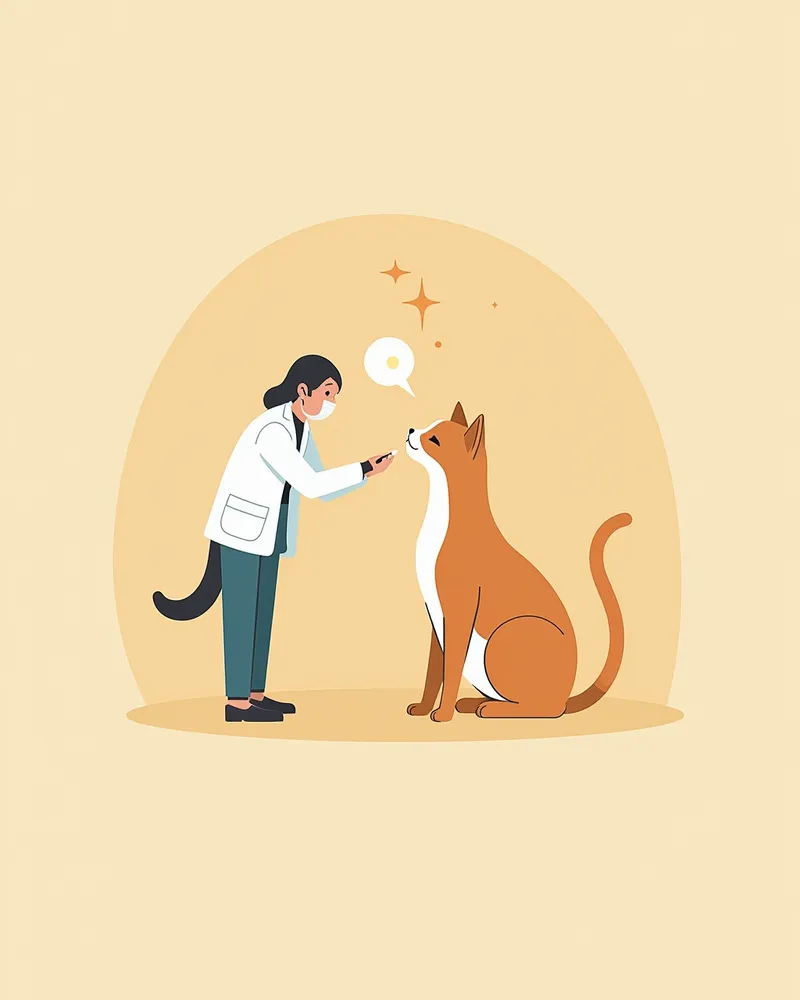
Corneal ulcers can be detected relatively easily by applying a dye called fluorescein to the eye. This dye adheres only to areas where the epithelium is damaged and exposed, and when illuminated with cobalt blue light, those areas glow bright green. Since the dye does not stain healthy corneal epithelium, it allows for precise identification of the damaged area. Veterinarians examine both eyes, even if only one appears painful, because the other eye may also have underlying issues despite showing no obvious symptoms. - Dye application: This is a standard diagnostic test essential for locating damaged areas. - Green fluorescence: Under cobalt blue light, damaged corneal tissue glows green. - Bilateral examination: It is standard practice to evaluate both eyes, even if symptoms appear in only one. A professional veterinary examination is essential for an accurate diagnosis.
A veterinarian applying dye to a cat's eye.

Treatment Involves Antibiotics, Antivirals, and Protective Agents
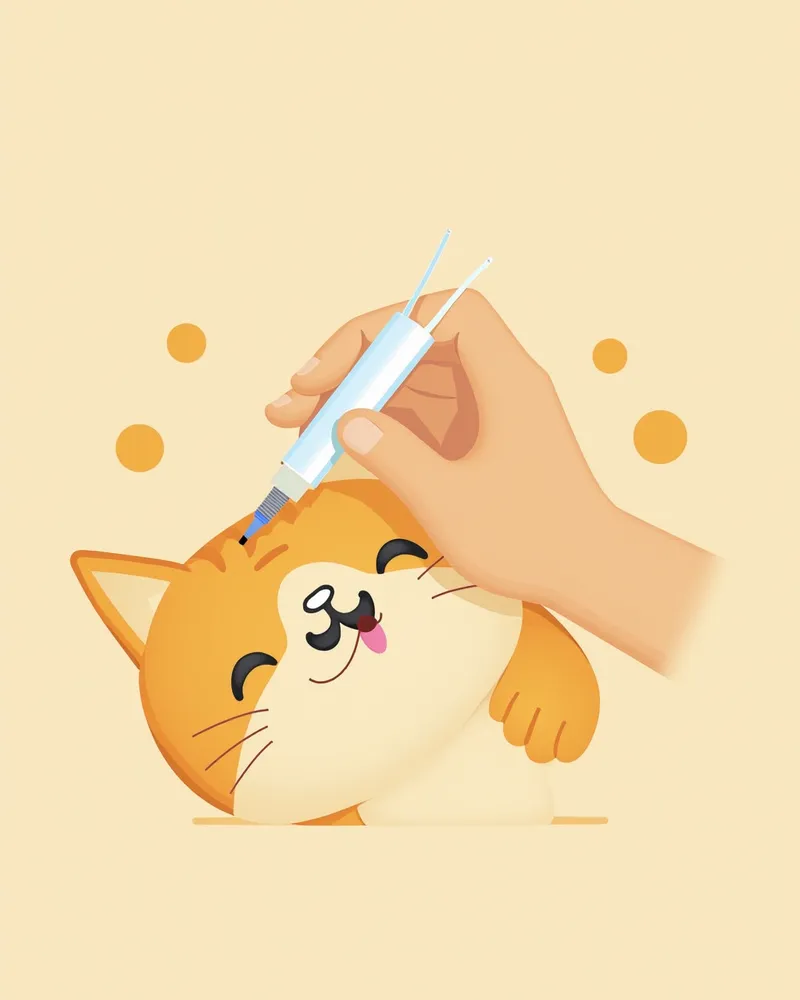
Superficial ulcers are treated with topical antibiotic eye drops, and all corneal ulcers should receive topical antibiotics as a baseline. Dendritic ulcers caused by FHV-1 usually respond well to supportive care, but antiviral medication may be considered if symptoms are severe. If pain or reflex uveitis is present, medications such as atropine may be used, and if the ulcer becomes infected or melting, autologous serum can be added to the treatment regimen. Please use eye drops exactly as prescribed by your veterinarian in terms of frequency and timing, and do not stop or change the medication on your own. - Antibiotic Use: Used to prevent and treat bacterial infections; deeper or melting ulcers may require stronger antibiotics. - Antiviral Medication: Considered for severe cases of FHV-1-related ulcers. - Supportive Therapy: Includes atropine for pain relief and autologous serum for melting ulcers to protect the cornea and aid healing. Treatment duration may vary depending on the patient’s condition.
A veterinarian administering eye drops to a cat.

Strictly Prohibited: Steroid Eye Drops

Using steroid eye drops on a corneal ulcer can worsen the ulcer, potentially leading to corneal melting or rupture, which may result in blindness. Therefore, their use is strictly prohibited. Never use eye drops without a veterinarian’s prescription.

Reviewed by a veterinarian

Dr. Tony — Punnawat Phongkittirak

Dr. Tony — Punnawat Phongkittirak

Veterinarian

A veterinarian who majored in veterinary medicine at Khon Kaen University, Thailand, and completed the IVSA program at North Carolina State University in the United States. Drawing on clinical experience at animal hospitals, he works in the pet healthcare field and is dedicated to building a digital care environment that connects pet parents with veterinarians.

Frequently Asked Questions

Is your cat rubbing its eyes because of a corneal ulcer?
Yes, rubbing the eyes can be a sign of corneal pain. In particular, if the behavior is repetitive or involves only one eye, there is a high possibility of a corneal ulcer.
Can corneal ulcers recur after treatment?
Yes, there is a possibility of recurrence. In particular, if the cause is an FHV-1 infection, it can recur during times of stress or when the immune system is weakened.
Is it okay to clean my pet’s eyes at home?
No, it’s risky to clean it at home. Touching your pet’s eyes with your hands can worsen infections or cause further injury, so please follow your veterinarian’s instructions for proper care.
Will vision return once a corneal ulcer has fully healed?
In most cases, vision can be restored with appropriate treatment. However, deep damage may leave scars, so early treatment is important.
Is there a way to prevent it?
Yes, vaccinations (especially against FHV-1), preventing dry eyes, keeping the area around the eyes clean, and managing stress can all help.

Share

Related Guides

References

[1] Carter, J. (2023). 100 Top Consultations in Small Animal General Practice. Elsevier.

[2] The Veterinary Workbook of Small Animal Clinical Cases (2022). Chapter 196: Corneal Ulcers in Cats.

[3] Clinical Atlas of Canine and Feline Ophthalmic Disease, 2nd Ed. (2021). Chapter 90: Stromal Ulcerative Keratitis.

This information is based on veterinary literature and does not replace diagnosis or treatment. Please consult a veterinarian for specific health concerns.

Metapet Co., Ltd. | CEO: Park Sung-yong | Business Reg. No. 417-88-02562 | Seoul, South Korea | Customer Center

Corneal Ulcer vs. Erosion in Cats: Causes to Treatment | Meongsiljang