Like
Share
멍실장
고양이 다묘 가정 갈등 관리 — 증상·원인·진단·치료와 케어 포인트 총정리

Why Do Two Cats in One Household Fight? — Causes of Multi-Cat Conflict and Co-Habitation & Mediation Methods

Brain & CognitionDiseasesMeongsiljang Veterinary Advisory Board

We’ve outlined the causes, symptoms, and diagnostic methods for conflicts between cats in multi-cat households. Explore practical care tips you can implement at home right away, from environmental enrichment to step-by-step introduction protocols.

What Is Multi-Cat Household Conflict?
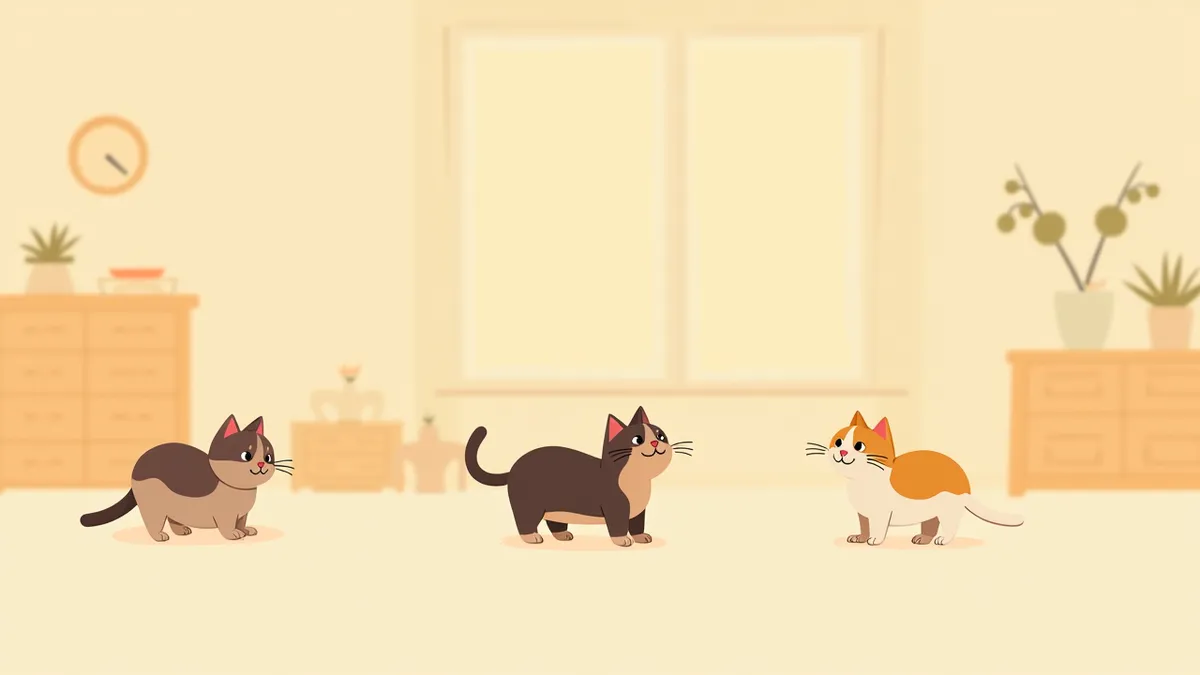
Cats in a multi-cat household who keep their distance and remain wary of each other
Conflict in multi-cat households arises as a chronic stress response when several cats share the same space, competing over territory, resources, and social hierarchy. The key point is that cats are fundamentally solitary animals by nature, so forcing them to share space can lead to invisible, accumulating tension. If left unaddressed, this conflict can result in stress-induced cystitis, overgrooming, and decreased appetite, making it crucial to recognize and manage early warning signs promptly.

Main Causes of Multi-Cat Conflict

Conflicts among cats typically stem from four main causes.
Territorial competition: Cats divide their living space into territories. When there is insufficient vertical space or hiding spots, tension builds up.
Resource scarcity: If there are fewer food bowls, water bowls, or litter boxes than cats, competition to claim these resources arises.
Improper introduction: Introducing cats face-to-face without prior scent exchange can cause them to perceive each other as threats.
Mismatch in personality or age: Housing an active young cat with an older cat can easily concentrate stress on one of them.

Checklist for Easily Overlooked Conflict Signs

Signs of multi-cat conflict often go unnoticed at first. Be sure to watch for these warning signs:
Chasing and being chased: One cat persistently stalks or pursues another.
Refusal of social grooming: Cats that previously groomed each other suddenly avoid contact.
Litter box avoidance or elimination outside the box: Stress causes cats to urinate or defecate outside the litter box.
Decreased appetite: Cats appear wary near their food and eat poorly.
Overgrooming: Excessive licking leads to hair loss on the belly or thighs.
Increased hiding: Cats spend more time hiding than usual.
Conflict signals in cats that hide under the bed due to stress

Emergency Signs Requiring Immediate Veterinary Care

If you notice these symptoms, your cat may have developed a stress-related physical condition. Male cats are especially at risk, as stress-induced cystitis can progress to a urethral blockage, requiring immediate emergency veterinary care. If your cat hasn’t eaten for more than 48 hours or hasn’t urinated at all, take them to the vet right away.

Conflict Severity Assessment — 3-Stage Diagnosis

Conflict severity can be assessed in three stages. Stage 1 (Latent Conflict): The animals avoid each other but do not fight. This situation often improves simply by providing additional resources and expanding their living space. Stage 2 (Tension State): There is repeated chasing, snapping, or low growling. Both environmental modifications and behavior modification are necessary. Stage 3 (Active Conflict): Actual biting, injuries, or elimination problems have occurred. Veterinary consultation and management through separation are required.

Stage-Specific Treatment Methods — Environmental Enrichment and Behavioral Therapy
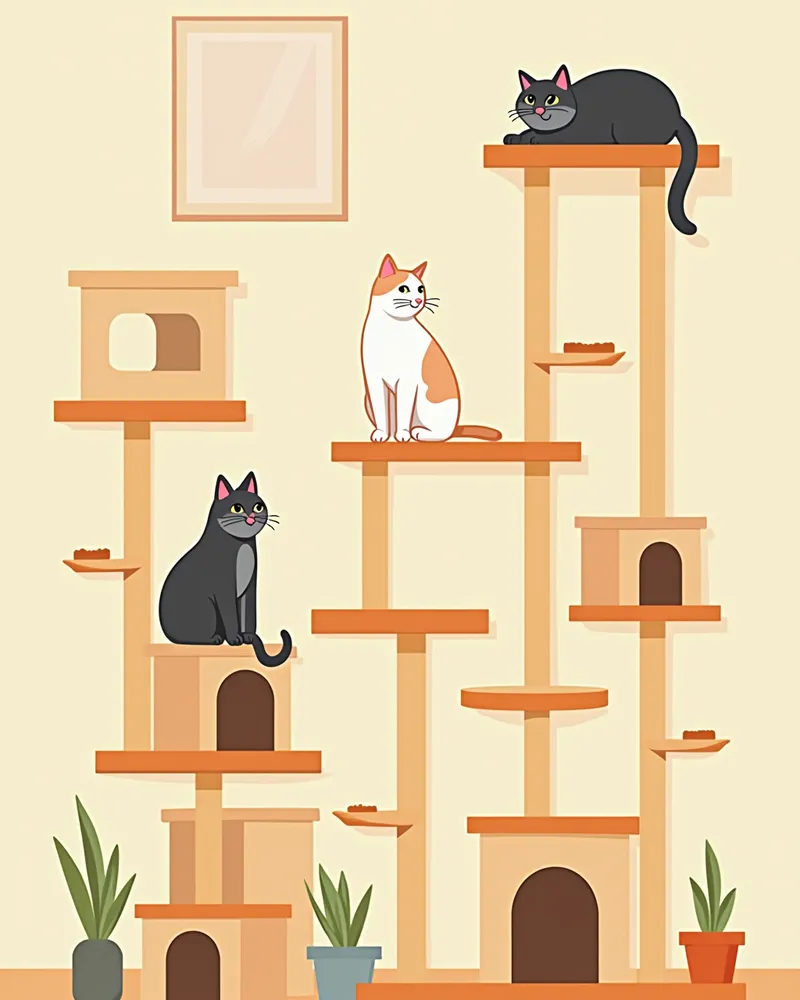
The approach should vary depending on the stage of conflict.
Expand the environment: Increase vertical space with cat trees and shelves, and place hiding boxes and tunnels in various locations.
Distribute resources: Increase the number of food bowls and litter boxes to one more than the number of cats, and place them where they are out of sight from each other.
Utilize pheromones: Installing synthetic feline calming pheromone products in areas of high conflict can help reduce tension.
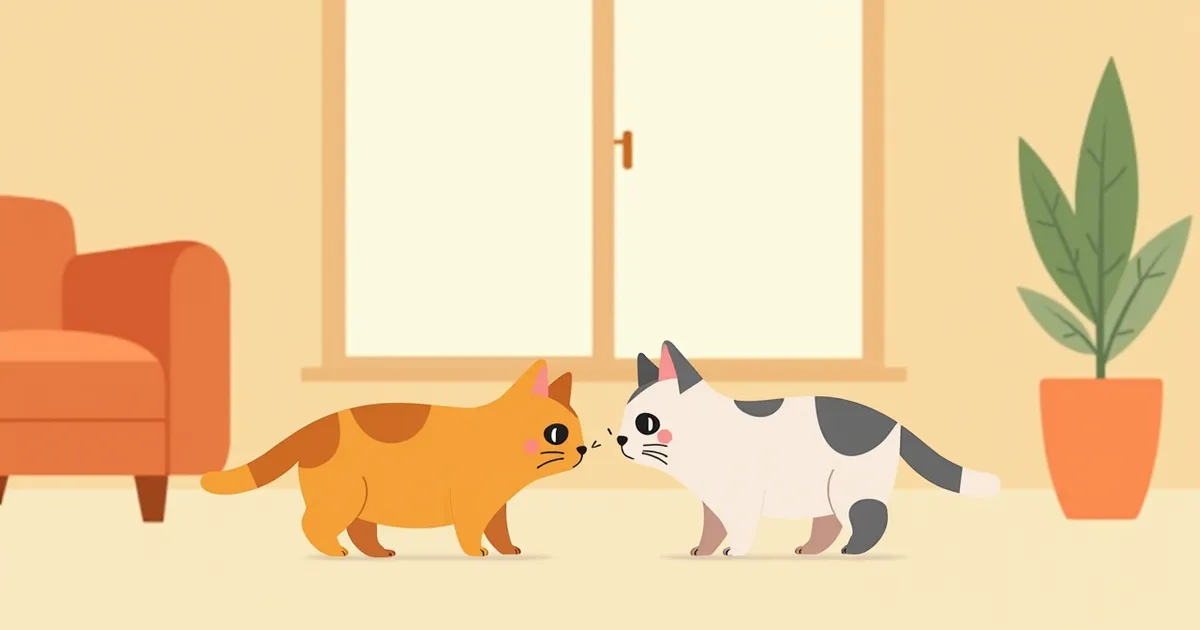
Separation and reintroduction: If conflict is severe, temporarily separate the cats and then slowly reintroduce them through scent swapping, visual contact through a barrier, and finally free interaction.
An environment with resources distributed to suit multi-cat households

Daily Home Care Points to Practice

Consistent daily management is key to preventing conflicts from recurring. - Feed each cat in a separate area or with ample distance between them. - Clean the litter box daily to reduce stress caused by lingering odors. - Provide individual playtime for each cat (15–20 minutes per day is recommended). - If you notice one cat blocking another’s path, separate them immediately. - During conflicts, avoid intervening; instead, allow the cats to disengage naturally.
A pet owner who makes sure to spend individual playtime with their cat

Essential Tips for Introducing a New Cat

When introducing a new cat, it’s safest to keep them separated for at least two to three weeks, starting with scent swapping, then progressing to visual contact through a barrier, and finally allowing free interaction. This gradual approach is especially important in homes with senior cats (10 years or older) or timid cats, where the introduction process should be slowed down further. While people often assume young cats will cause fewer conflicts, bringing an energetic kitten into a home with an older cat can lead to the kitten gradually exhibiting territorial aggression, such as chasing or pouncing on the senior cat. Therefore, regardless of the cats’ ages or personalities, a step-by-step, gradual introduction is always the most important.

Reviewed by a veterinarian

Dr. Tony — Punnawat Phongkittirak

Dr. Tony — Punnawat Phongkittirak

Veterinarian

A veterinarian who majored in veterinary medicine at Khon Kaen University, Thailand, and completed the IVSA program at North Carolina State University in the United States. Drawing on clinical experience at animal hospitals, he works in the pet healthcare field and is dedicated to building a digital care environment that connects pet parents with veterinarians.

Frequently Asked Questions

When cats chase each other, is it a sign of conflict or just play?
If a cat being chased runs away with its ears pinned back and pupils dilated, it’s a sign of conflict. In contrast, playful chasing is characterized by both cats taking turns pursuing and being pursued, with their ears and tails held up.
How many litter boxes should you have in a multi-cat household?
It’s generally best to provide one more litter box than the number of cats, placing them in separate, out-of-sight locations. Since cats are naturally solitary hunters and eaters, they can become stressed over resources when other cats are nearby. Therefore, it’s important to keep litter boxes separate from food and water bowls.
One of the cats isn’t eating after a fight. How long should I monitor it?
If your pet hasn’t eaten for more than 24 hours, it’s time to see a veterinarian. This is especially important for overweight cats, as going without food for over 48 hours can put them at risk of developing fatty liver disease, so early evaluation is recommended.
Can neutering help resolve conflicts?
It helps reduce territorial marking and aggression driven by sex hormones. If your pet hasn’t been neutered or spayed yet, consult your veterinarian. However, keep in mind that established behavioral conflicts won’t be resolved by neutering or spaying alone.
The conflict between them is so severe—aside from rehoming them separately, are there any other options?
Consider starting with a professional veterinary behavior consultation. In many cases, symptoms improve through a combination of separation management, environmental enrichment, and anti-anxiety medication. If you’re considering adopting another pet to help, it’s important to make that decision together with your veterinarian.

Share

Related Guides

References

[1] Atkinson T., A Professional's Guide to Feline Behaviour Understanding, Improving and Resolving Problems, CABI Publishing, 2018

[2] Seksel K. et al., Veterinary Guide to Preventing Behavior Problems in Dogs and Cats, 2016

[3] Introduction to Animal Behavior and Veterinary Behavioral Medicine, Chapter 5: Feline Behavior, 2020

This information is based on veterinary literature and does not replace diagnosis or treatment. Please consult a veterinarian for specific health concerns.

Metapet Co., Ltd. | CEO: Park Sung-yong | Business Reg. No. 417-88-02562 | Seoul, South Korea | Customer Center

Why Do Two Cats Fight? Multi-Cat Conflict Causes & Solutions | Meongsiljang