
Like
Share
멍실장
고양이 예방접종 후 부작용 모니터링 관리 추천 BEST와 고르는 기준 총정리

Comprehensive Guide to Recommended Products and Selection Criteria for Monitoring Side Effects After Cat Vaccinations

Lifestyle & Age CareTop PicksMeongsiljang Veterinary Advisory Board

We provide a comprehensive guide to recommended products and selection criteria for effectively managing side effects after cat vaccinations. It also includes practical tips for preventing side effects and responding early.

Why Monitoring for Side Effects After Your Cat’s Vaccination Is Important

A cat having its temperature taken after vaccination.
Monitoring for side effects after your cat’s vaccination is a crucial step to catch and address any adverse reactions early on. While most side effects are mild—such as a low-grade fever, temporary lethargy, or local reactions at the injection site—serious reactions like anaphylaxis can rarely occur, making careful observation essential.
Intensive observation immediately after vaccination and for several hours: Acute allergic reactions, such as anaphylaxis, can appear relatively quickly after vaccination, so close monitoring during this initial period is particularly important.
Continue monitoring for 1–3 days: Vaccination-related adverse reactions, such as fever or lethargy, typically manifest within three days of vaccination, so keep a close eye on your cat during this time.
Monitor body temperature: Your cat’s temperature may rise after vaccination, so regular checks can be helpful.
Watch for changes in appetite and energy levels: A decreased appetite or unusual lethargy could be early warning signs of an adverse reaction, requiring prompt attention.

Key Takeaways: Points to Check After Vaccination
Choosing the right product is crucial for effectively managing side effects after your cat’s vaccinations. Be sure to check the following criteria.
Accurate temperature measurement: Infrared thermometers minimize stress and allow for precise readings.
Real-time monitoring capability: App connectivity makes it easy to keep track of your cat’s condition in real time.
Cat-friendly design: The product should be comfortable and non-intrusive for your cat to use.
Portability: It should be easy to carry, especially when visiting the vet.
Logging features: The product should allow you to consistently record changes in your cat’s condition post-vaccination.
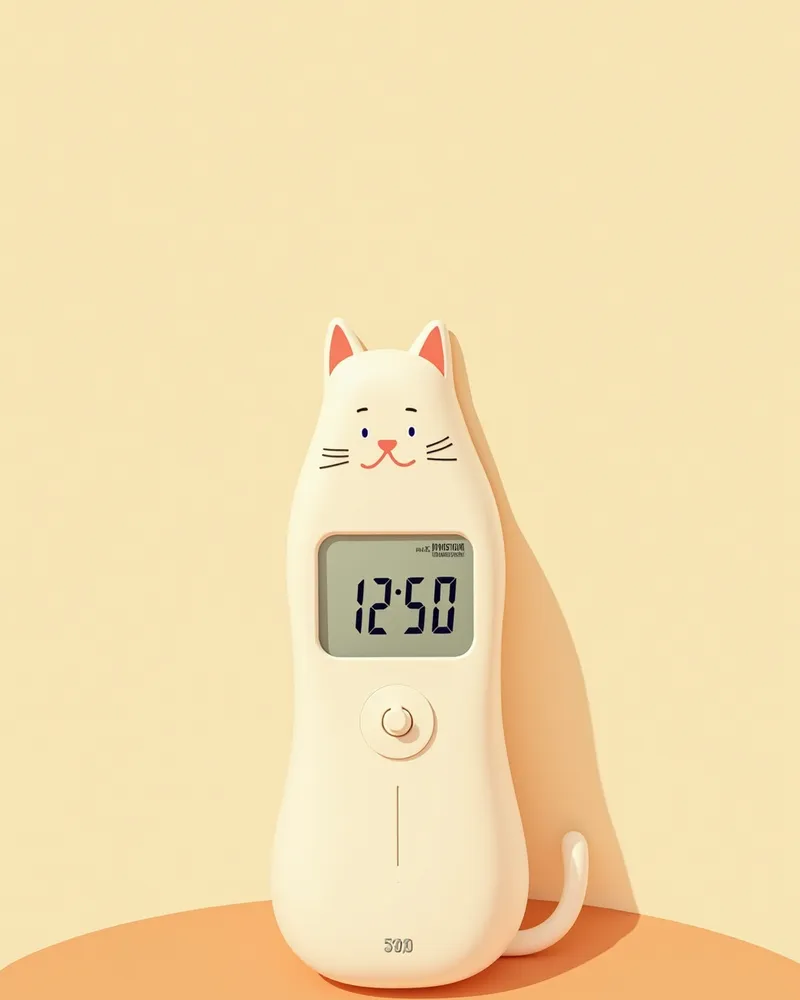
A thermometer designed with cats in mind

Key Point 1: Monitor for 24–48 Hours After Vaccination

After vaccination, reactions typically appear within 1 to 3 days and are usually temporary. During this period, please monitor your cat’s injection site, appetite, energy level, and body temperature compared to their normal baseline. On the day of vaccination, avoid strenuous outdoor activities and bathing, and provide a comfortable environment for rest. Keeping a record of which vaccines were administered and where can help you communicate accurately with your veterinarian if any discomfort occurs.
Guidance image on observing your pet for 24 to 48 hours after vaccination

Key Point 2: Distinguish Between Mild Reactions and Warning Signs

It’s common for pets to experience mild side effects for a day or two after vaccination, such as slight lethargy, a low-grade fever, or mild swelling and tenderness at the injection site. These symptoms usually resolve on their own. However, if the reaction persists or worsens, it warrants attention. Keeping a record of any unusual changes can help you and your veterinarian assess the situation together. If you notice any concerning changes, it’s safest to contact the clinic where the vaccination was administered.
An illustrative guide to distinguishing between mild reactions and warning signs

Key Point 3: Signs Requiring Immediate Veterinary Attention

If your pet develops facial or periorbital swelling, experiences recurrent vomiting and diarrhea, shows signs of itching with hives, or has difficulty breathing, these may indicate an allergic reaction requiring immediate veterinary attention. Although rare, such reactions can be life-threatening. Additionally, in cats, if a lump at the injection site persists for more than a few weeks or continues to grow, it could be a feline injection-site sarcoma (FISS), necessitating prompt veterinary evaluation. Monitoring is essential to detect these warning signs early and respond appropriately.
Guide image on signs that require immediate veterinary care

Core Principles of Monitoring Side Effects After Vaccination

ItemKey Points
Observation periodWithin 1–3 days after vaccination, check the injection site, appetite, energy, and body temperature
Mild reactionsLow-grade fever, temporary lethargy, and site pain within 1–3 days mostly resolve on their own
Seek care immediatelyFacial swelling, repeated vomiting, hives, or difficulty breathing suggest an allergic reaction
Cat cautionIf a lump at the injection site persists for several weeks or grows, seek care for sarcoma (FISS)
CautionInquire and consult with the clinic that administered the vaccine about any worrisome changes

This is not a table recommending specific products or devices, but key points to reference for at-home care. Always consult your veterinarian for interpreting measurements and treatment decisions.

Note: These Products Are Management Tools, Not Medications for Treatment

These products are simply tools to help you monitor and record any side effects in your cat; they are not medical devices or medications intended for treatment. If your cat develops severe symptoms, please consult your veterinarian immediately.

5 Tips for Post-Vaccination Care

In addition to monitoring for side effects, effective aftercare is essential. Please follow these tips carefully.
Ensure adequate rest: Limit activity for one day after vaccination and allow your cat to rest in a comfortable environment.
Adjust feeding: Offer slightly less food than usual, but ensure plenty of fresh water is available.
Limit contact: Avoid contact with other cats for at least 24 hours.
Maintain environmental stability: Provide a quiet space and avoid environments with excessive noise or changes.
Keep records: Daily logs of temperature, appetite, and activity level will be helpful during consultations with your veterinarian.
A cat resting comfortably in a quiet environment

Reviewed by a veterinarian

Dr. Tony — Punnawat Phongkittirak

Dr. Tony — Punnawat Phongkittirak

Veterinarian

A veterinarian who majored in veterinary medicine at Khon Kaen University, Thailand, and completed the IVSA program at North Carolina State University in the United States. Drawing on clinical experience at animal hospitals, he works in the pet healthcare field and is dedicated to building a digital care environment that connects pet parents with veterinarians.

Frequently Asked Questions

What should I do if my pet’s body temperature exceeds 39°C after vaccination?
If your pet seems to have a higher-than-normal temperature after vaccination, it may be a sign of fever, so please consult your veterinarian immediately. Fever is one of the common adverse reactions that can occur within three days after vaccination. Since the exact temperature threshold and its interpretation can vary depending on the individual animal and the measurement method, it is safer to have a veterinarian confirm rather than relying on your own judgment. Ensure your pet drinks plenty of water and rests in a cool, comfortable environment.
Should I continue giving the medication if side effects occur?
Medication may be necessary depending on the side effects, but you should never administer drugs without a veterinarian’s prescription. First, document your pet’s condition and consult with your vet.
What should I do if my pet still has a fever three days after vaccination?
Adverse reactions to vaccinations typically appear within 1 to 3 days after the shot. If your pet has a fever that persists beyond three days, it could be a sign of an abnormal reaction. In such cases, it is important to contact your veterinarian immediately for an examination.
Can I prepare the monitoring kit before the vaccination?
Yes, it's helpful to prepare in advance before vaccination so you can monitor your pet immediately afterward. This is especially useful for the first vaccination.
How do I share my pet’s monitoring records with the veterinarian?
You can export the app records as a PDF to share with your veterinarian, or simply bring the paper records with you when you visit.

Share

Related Guides

References

This information is based on veterinary literature and does not replace diagnosis or treatment. Please consult a veterinarian for specific health concerns.

Metapet Co., Ltd. | CEO: Park Sung-yong | Business Reg. No. 417-88-02562 | Seoul, South Korea | Customer Center

Cat Post-Vaccine Side Effect Monitoring: Top Picks | Meongsiljang