Like
Share
멍실장
사료 라벨 읽는 법 (보장 분석·재료 순서)

How to Read Pet Food Labels (Guaranteed Analysis & Ingredient Order)

DigestiveQ&AMeongsiljang Veterinary Advisory Board

I’ll show you how to properly read the guaranteed analysis values and ingredient order on pet food labels. With just one package, you can determine whether the food is right for your pet.

How Should You Read Pet Food Labels?
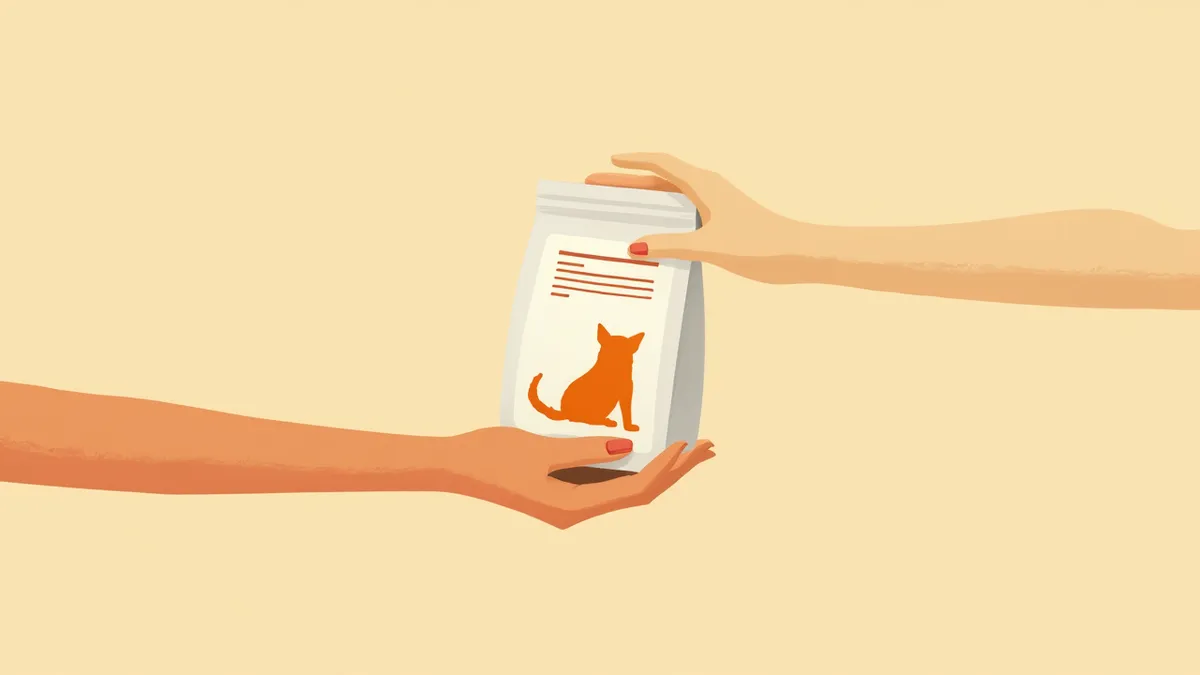
A pet owner checking the nutritional information on the back of a pet food bag.
Pet food labels are legally required disclosures that inform owners about a product’s nutritional composition and ingredient list. The two most critical elements to focus on are the “guaranteed analysis” and the “ingredient order.” By carefully reviewing just these two sections, you can determine whether a food is suitable for your pet with about 80% confidence. The small print on the back of the package often reveals far more truth than the flashy claims on the front.

Mandatory Items on Pet Food Labels

By law, all pet food sold domestically and internationally must include certain mandatory information. In Korea, this follows the Ministry of Agriculture, Food and Rural Affairs guidelines, while in the U.S., it adheres to the standards set by the Association of American Feed Control Officials (AAFCO). If any of these details are missing from the packaging, it should raise concerns.
Product Name: Allows you to infer the main ingredient
Guaranteed Analysis: Minimum and maximum levels of protein, fat, fiber, and moisture
Ingredient List: Listed in descending order by quantity
Feeding Guidelines: Recommended amounts based on body weight
Manufacturer Information: Country of origin, expiration date, and lot number

How to Read the Guaranteed Analysis

Guaranteed analysis lists the minimum and maximum guaranteed levels of key nutrients in pet food on an “as-is” basis. Crude protein and crude fat are stated as minimum guarantees, so “crude protein min. 26%” means at least 26%, and “crude fat min. 15%” means at least 15%. In contrast, crude fiber and moisture are stated as maximum guarantees, so “moisture max. 10%” means the content does not exceed that value. The term “crude” refers to the analytical method used. Crude protein is calculated by measuring total nitrogen in the food and converting it to protein; because it can include non-protein nitrogen, it may differ from the actual digestible protein content. Foods with moisture content of 10% or less are classified as dry food, while those with 70% or more are classified as wet food.
The protein, fat, fiber, and moisture levels listed on the guaranteed analysis table

Comparing Guaranteed Analysis: Dry Food vs. Wet Food

ItemDry foodWet foodSemi-moist
Moisture content10% or less70–85%15–30%
Crude protein (min)16–30%8–12%15–20%
Crude fat (min)7–20%3–7%5–10%
Calorie densityHighLowMedium

When moisture content differs, compare on a dry matter (DM) basis for accuracy.

The True Meaning of Ingredient Order

Ingredients are listed in order of weight at the time of manufacturing, with the first ingredient being the most abundant. However, there’s a catch: raw meat contains over 70% water, so its weight drops significantly after cooking. This means that even if “chicken” is listed first, the final dry food may contain less chicken than dried grains. If a dry-processed ingredient like “chicken meal” is listed first, it indicates a higher actual protein content.

Ingredient Labels to Watch Out For

Ingredients that don’t specify the exact animal species, such as “meat by-products” or “poultry by-products,” can vary significantly in quality. Similarly, vague terms like “meat ingredients” or “animal fats,” which don’t clearly state the source of the raw materials, may change from batch to batch, so it’s important to pay attention to consistency in quality. Keep an eye out for ambiguous labels like “natural flavors” or “animal fats.” If your pet has allergies, it’s safer to choose products with a single, clearly identified protein source.

Key Information Often Overlooked on Labels

AAFCO Nutritional Adequacy Statement: Always check for the "Complete and Balanced" label. If this statement is missing, the product is a treat or a supplement, not a main meal.
Life Stage Labeling: Ensure the label matches your pet's age, such as "Growth," "Adult Maintenance," or "All Life Stages."
Feeding Trial Method: A product that has "Passed AAFCO Feeding Trials" has undergone more rigorous real-world verification than one that merely "Meets Nutrient Profiles."
Calorie Information: Calories are listed in kcal/kg. Depending on the label, you may also find converted information per cup or per 100g.
Checking the nutritional adequacy statement and life stage designation on the pet food packaging.

How to Convert to a Dry Matter Basis

When comparing pet foods with different moisture contents, you need to convert the values to a dry matter basis for an accurate comparison. The formula is simple: Nutrient on a dry matter basis (%) = Labeled nutrient (%) ÷ (100 - Moisture %) × 100 For example, a wet food with 10% protein and 75% moisture converts to 10 ÷ 25 × 100 = 40% on a dry matter basis. A dry food with 26% protein and 10% moisture converts to 26 ÷ 90 × 100 = approximately 29%. While the dry food appears higher at first glance, the wet food actually has a higher protein density.

Prescription Diets: Always Consult a Veterinarian First

Diets labeled as "Prescription Diet" or "Veterinary Diet" are specifically formulated to manage certain medical conditions. Because prescription diets for kidney, liver, or gastrointestinal diseases intentionally adjust protein or phosphorus levels, feeding them long-term to a healthy pet can actually lead to nutritional imbalances. Veterinary internal medicine textbooks also recommend that prescription diets be used only under veterinary guidance and based on a proper diagnosis.

Reviewed by a veterinarian

Dr. Tony — Punnawat Phongkittirak

Dr. Tony — Punnawat Phongkittirak

Veterinarian

A veterinarian who majored in veterinary medicine at Khon Kaen University, Thailand, and completed the IVSA program at North Carolina State University in the United States. Drawing on clinical experience at animal hospitals, he works in the pet healthcare field and is dedicated to building a digital care environment that connects pet parents with veterinarians.

Frequently Asked Questions

Is it a good pet food if chicken is listed as the first ingredient?
Not necessarily. Raw meat contains a high proportion of water, so its actual protein content drops significantly after cooking. If "chicken meal" is listed as the first ingredient, it means the product is rich in concentrated, dried protein, which is generally a more reliable indicator of quality.
Are “Natural” and “Organic” labels trustworthy?
The term “natural” simply means that no synthetic ingredients were used, but its legal definition is quite loose. In contrast, “organic” is a stricter label, requiring at least 95% organic ingredients according to USDA standards. Rather than relying on marketing claims, always check the ingredient list and guaranteed analysis first.
Does a lower moisture content make a better pet food?
Not at all. Moisture content simply distinguishes between dry and wet food; it is not a measure of quality. Since cats naturally drink very little water, wet food with higher moisture content can actually be more beneficial for their urinary tract health.
Are "crude protein" and "actual protein" different in guaranteed analysis?
Crude protein is a value calculated by measuring nitrogen content and converting it to protein, so it differs from the actual amount of digestible protein. Since animal-based proteins are more readily absorbed than plant-based ones, it’s important to also review the ingredient list.
Are the labeling standards for domestic pet food different from those for U.S.-imported pet food?
Although the listed items are similar, South Korea follows the Ministry of Agriculture, Food and Rural Affairs regulations, while the U.S. adheres to AAFCO standards. Imported pet food must have a separate Korean-language label attached, and the country of origin and importer information must be clearly indicated.

Share

Related Guides

References

[1] Fascetti AJ, Delaney SJ, Applied Veterinary Clinical Nutrition, 2nd Ed, Chapter 8: Commercial and Home-Prepared Diets

[2] Little S, The Dog Care Handbook: Things I Wish My Vet Had Told Me, Chapter on Commercial Diets

[3] AAFCO Official Publication, Pet Food Labeling Guide, 2023

This information is based on veterinary literature and does not replace diagnosis or treatment. Please consult a veterinarian for specific health concerns.

Metapet Co., Ltd. | CEO: Park Sung-yong | Business Reg. No. 417-88-02562 | Seoul, South Korea | Customer Center

How to Read Pet Food Labels: Guaranteed Analysis & More | Meongsiljang