Like
Share
멍실장
강아지가 한쪽 다리 들고 있는 이유

Why Your Dog Is Lifting One Leg — Pain Causes and When to See a Vet

JointQ&AMeongsiljang Veterinary Advisory Board

When your dog lifts one leg, it could be due to pain, joint issues, paw problems, or other causes. Here’s how to recognize the signs and when to seek immediate veterinary care.

Why Is Your Dog Lifting One Leg?

A guardian examining a dog that is holding up its front paw
When a dog lifts one of its legs, it’s usually because that leg is painful or uncomfortable, causing the dog to avoid putting weight on it and hold it up in the air. The key is identifying the underlying cause. If the dog briefly lifts the leg but soon resumes walking normally, it may just be a temporary irritation. However, if the behavior persists for more than 10 minutes or if the dog shows pain when touched, it could indicate a condition requiring treatment, such as patellar luxation, arthritis, a paw pad injury, or ligament damage. At home, start by carefully examining the paw pads and spaces between the toes. If you don’t find any obvious issues, it’s best to visit the vet promptly.

5 Main Reasons for Lifting One Leg

There are five main reasons why a dog might lift one leg. - Paw pad issues: Direct irritation to the surface of the paw pad, such as from thorns, glass shards, nail injuries, or burns. - Patellar luxation: A mechanical problem where the kneecap slips out of place, which can cause a skipping gait where the dog briefly lifts the leg before continuing to walk. - Arthritis or joint pain: Common in senior dogs, this condition often worsens after exercise or appears intermittently. - Muscle or ligament injury: Sprains caused by jumping or slipping, or partial tears of the cruciate ligament. - Fractures or dislocations: Injuries resulting from trauma, such as falls or accidents, that cause the dog to suddenly hold the leg completely off the ground while walking.

Symptoms and Urgency by Cause

ItemPaw Pad ProblemPatellar LuxationArthritisFracture / Ligament Rupture
Pain intensityModerateLow to moderateModerateVery high
When the paw is touchedShows a lot of painPainful when the knee is touchedStiffness in the joint areaExtreme pain and swelling
Gait patternLimpingNormal after skippingStiff limpingCannot bear weight at all
UrgencySame-day visitVisit within a few daysVisit within a few daysImmediate emergency

For self-assessment reference only; accurate diagnosis requires a veterinarian's palpation and X-rays.

Checklist to Review at Home First
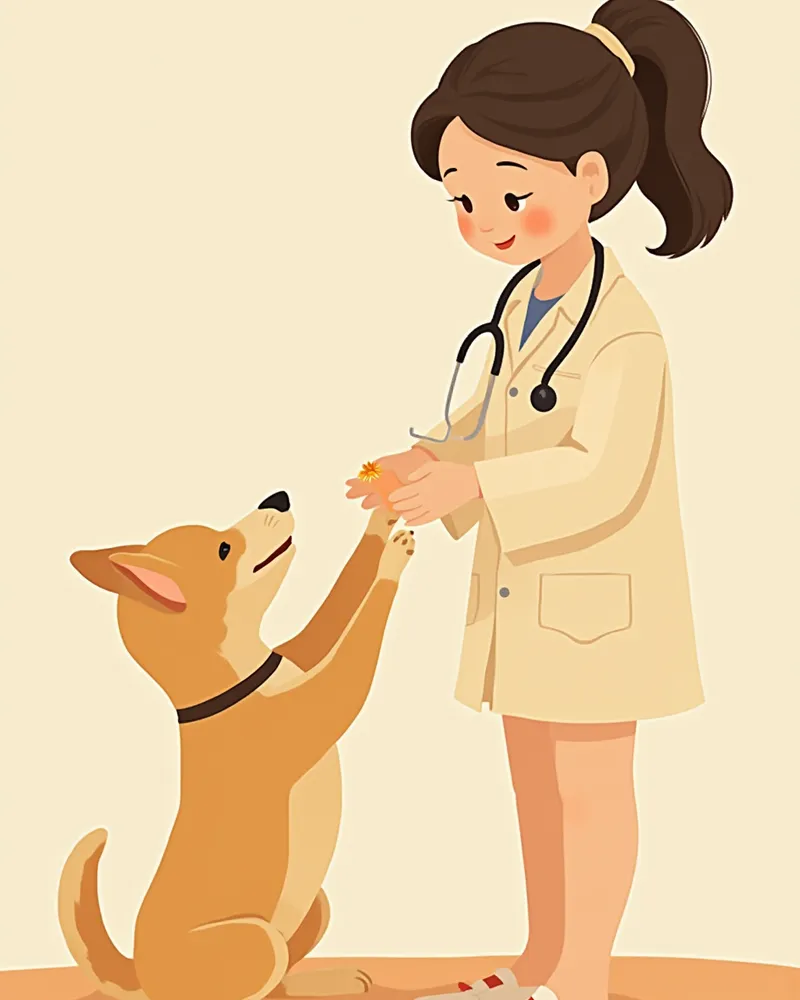
Here are some key points you can safely check at home before visiting the clinic: - Paw pads: Look for wounds, cracks, or foreign objects (such as thorns or gum). - Between the toes: Check for tangles, burrs, or ticks embedded in the fur. - Nails: Check for broken nails or nails growing into the skin. - Knees and elbows: Observe if your pet flinches severely or growls when gently pressed. - Swelling and heat: Compare with the opposite leg to see if there is swelling or warmth. If your pet is in significant pain, do not force examination and go to the clinic immediately.
Examining the paw pads and spaces between the toes of a puppy

Signs That Require Immediate Emergency Care

If you notice any of the following symptoms, take your pet to a 24-hour emergency animal hospital immediately, even in the middle of the night: - The pet is completely holding up the leg and unable to put any weight on it - The leg is bent at an unnatural angle or appears limp and dangling - The pet is vocalizing in extreme pain or showing signs of aggression - Bleeding from a wound will not stop, or bone is visible - The leg is noticeably swollen and warm to the touch These signs strongly suggest a fracture, complete ligament rupture, or joint dislocation. Prompt initial treatment is critical and will significantly influence the prognosis.

What Tests Are Performed at the Clinic?
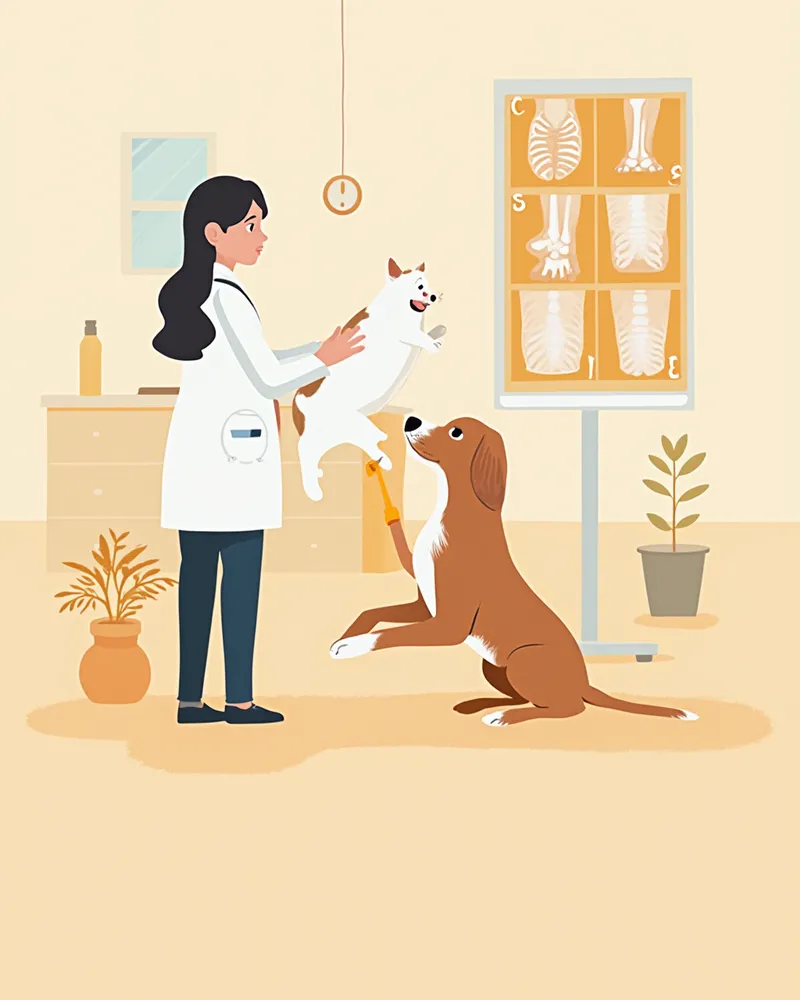
Veterinarians typically proceed with the diagnostic process in order: starting with a medical history review, followed by a physical examination, and then imaging tests. Physical palpation is a fundamental step in which the veterinarian bends and extends the leg to check for pain, joint instability, laxity, and crepitus (grating sounds). The severity (grade) of patellar luxation is assessed during this palpation phase. X-rays are used to identify fractures, dislocations, arthritis, and bone deformities. If a partial tear of the cruciate ligament or soft tissue injury is suspected, additional tests such as MRI or CT scans, or synovial fluid (cell) analysis, may be performed. For accurate comparison, the opposite leg may also be imaged to allow for a side-by-side evaluation of both limbs.
A veterinarian examining a dog's leg while reviewing an X-ray.

What Not to Do at Home

Here are a few common mistakes pet owners make: - Never give human pain relievers (such as Tylenol or ibuprofen) to your dog, as they can cause poisoning. - Do not forcibly massage or pull the affected leg, as this can worsen a fracture. - Do not attempt to splint the limb based solely on internet advice, as improper application can cut off blood flow. - Continuing walks or climbing stairs can delay recovery; your pet needs to rest quietly in a crate for at least the initial period.

Daily Management Tips to Prevent Recurrence

While management strategies vary depending on the underlying cause, the following measures are universally beneficial: - Weight Management: Excess weight places additional stress on joints and ligaments, potentially accelerating the progression of degenerative joint disease. Maintaining an ideal body condition is the most fundamental preventive measure. - Slip Prevention: Place rugs or non-slip mats on hardwood floors to improve traction. - Appropriate Exercise: Low-impact activities like walking on flat ground or swimming are gentler on the joints than sudden jumping. - Joint Supplements: Supplements such as glucosamine, chondroitin, and omega-3 fatty acids can be provided as adjunctive support after consulting with your veterinarian. - Regular Check-ups: Early detection of patellar and hip joint issues is possible through regular physical examinations. If you suspect patellar luxation, please refer to our Patellar Luxation Guide for treatment options based on the severity grade.
A healthy puppy walking on a non-slip mat

Reviewed by a veterinarian

Dr. Tony — Punnawat Phongkittirak

Dr. Tony — Punnawat Phongkittirak

Veterinarian

A veterinarian who majored in veterinary medicine at Khon Kaen University, Thailand, and completed the IVSA program at North Carolina State University in the United States. Drawing on clinical experience at animal hospitals, he works in the pet healthcare field and is dedicated to building a digital care environment that connects pet parents with veterinarians.

Frequently Asked Questions

My dog lifts his leg and then immediately starts walking again. Should I take him to the vet?
If your pet limps briefly and then returns to normal without further recurrence, it’s likely just a minor irritation. However, if the limping happens multiple times a day or persists for several days, it could be an early sign of patellar luxation or arthritis, so it’s best to have them checked by a veterinarian.
My young puppy frequently lifts one hind leg. Could it be patellar luxation?
In small-breed dogs such as Pomeranians, Maltese, and Chihuahuas, a skipping gait—where the dog briefly lifts and then places one hind leg—is a classic sign of patellar luxation. To determine whether surgery is necessary, your veterinarian will need to perform a physical examination and take X-rays.
Does applying a warm compress help when lifting your leg?
It depends on the cause. For acute injuries (such as swelling and heat), cold compresses can help in the early stages, while warm compresses may benefit chronic arthritis. However, it’s safer to follow your veterinarian’s guidance rather than making your own judgment.
My senior dog suddenly started lifting one leg. Could it be arthritis?
The most common cause in senior dogs is degenerative arthritis. It’s particularly characterized by symptoms that worsen after exercise or appear intermittently. However, since cruciate ligament tears can also occur in older dogs, an X-ray examination is necessary to differentiate between the two conditions.
Will supplementing alone improve my dog’s leg weakness?
While glucosamine and omega-3 fatty acids may offer supportive relief for mild joint discomfort, they cannot resolve structural issues such as patellar luxation, ligament tears, or fractures. It is essential to pursue a precise diagnosis followed by a comprehensive treatment plan that may include surgery, physical therapy, and weight management.

Share

Related Guides

References

[1] Piermattei DL, Flo GL, DeCamp CE. Brinker, Piermattei and Flo's Handbook of Small Animal Orthopedics and Fracture Repair, 5th Edition. Elsevier, 2016.

[2] Fossum TW. Small Animal Surgery, 5th Edition. Elsevier, 2019. Chapter 33: Diseases of the Joints.

[3] Ettinger SJ, Feldman EC, Cote E. Textbook of Veterinary Internal Medicine, 8th Edition. Elsevier, 2017.

This information is based on veterinary literature and does not replace diagnosis or treatment. Please consult a veterinarian for specific health concerns.

Metapet Co., Ltd. | CEO: Park Sung-yong | Business Reg. No. 417-88-02562 | Seoul, South Korea | Customer Center

Why Is My Dog Lifting One Leg? Pain Causes & Vet Signs | Meongsiljang