

What is Cryosurgery for Pets? — Is It an Option for Your Pet’s Tumor?
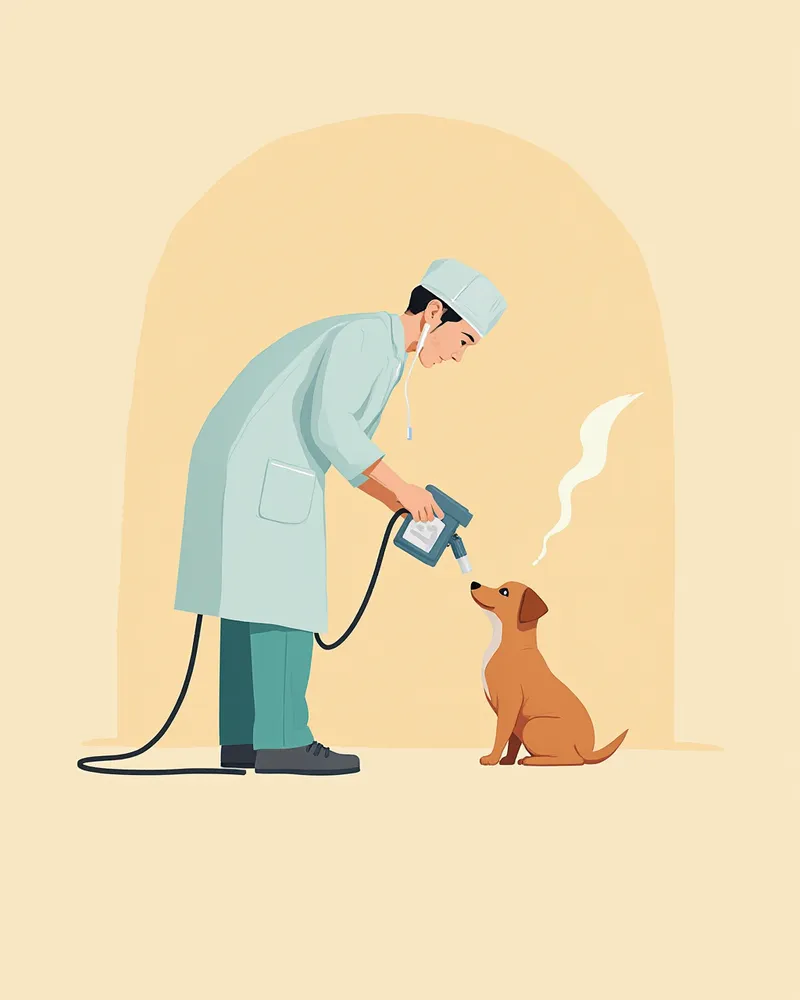
Cryosurgery is a procedure that uses liquid nitrogen at -196°C to freeze and destroy tumor cells. It is particularly beneficial for small, superficial tumors and for elderly pets or those at risk from anesthesia.
What Is Cryosurgery?

Why Consider Cryosurgery?
Cryosurgery vs. Standard Surgical Excision
| Item | Cryosurgery | Surgical excision |
|---|---|---|
| Extent of anesthesia | Local, mild sedation | General anesthesia |
| Blood loss | Very little | Moderate to heavy |
| Suturing needed | No (falls off naturally as a scab) | Needed |
| Applicable tumor size | Small, superficial shallow lesions (size and indications at the veterinarian's discretion) | Few limitations |
| Use of biopsy | Separate testing recommended before the procedure | Excised tissue tested directly |
| Recovery period | 1–2 weeks (based on scab detachment; repigmentation takes several months) | 2–4 weeks |
The veterinarian's judgment varies with the tumor type and location.
Which Tumors Are Suitable?

Points to Confirm Before the Procedure
Cryosurgery isn’t simply “freeze and finish.” If you freeze a lesion without first knowing whether it’s benign or malignant, you risk missing a malignant tumor that won’t be adequately treated by cryosurgery alone, leading to recurrence. While cryosurgery can be therapeutic for benign lesions, it is generally not curative for malignant melanomas or mast cell tumors. Therefore, it’s essential to first confirm the tumor type and grade through fine-needle aspiration (FNA) or biopsy, and then determine the appropriate treatment based on those results. Additionally, cryosurgery is not suitable for lesions of unknown depth, areas with abundant blood vessels or nerves, or tumors that are large or deeply invasive, making it difficult to achieve an adequate freeze margin. Whether a tumor’s size is appropriate for cryosurgery must be determined by a veterinarian through a comprehensive evaluation of its superficiality, border clarity, and location.
How Is the Procedure Performed?
Post-Procedure Home Care
When Cryosurgery Is Not the Answer
For highly invasive and malignant tumors such as mast cell tumors, malignant melanoma, and soft tissue sarcomas, it is difficult to achieve adequate safety margins with cryosurgery alone. We also do not recommend cryosurgery as a standalone treatment for tumors with unpredictable depth, such as feline oral squamous cell carcinoma. In these cases, the standard of care involves surgical excision, histopathological examination, and, when necessary, chemotherapy or radiation therapy. If your veterinarian advises that cryosurgery is not suitable, be sure to ask for the specific reasons behind this recommendation.
Reviewed by a veterinarian

Dr. Tony — Punnawat Phongkittirak
VeterinarianA veterinarian who majored in veterinary medicine at Khon Kaen University, Thailand, and completed the IVSA program at North Carolina State University in the United States. Drawing on clinical experience at animal hospitals, he works in the pet healthcare field and is dedicated to building a digital care environment that connects pet parents with veterinarians.
Reviewed 2026-04-26
Frequently Asked Questions
Is cryosurgery painful?
Can multiple lumps be removed at the same time?
How likely is it to recur?
Can this be used for cats as well?
Is the cost lower than surgical excision?
Share
Related Guides

Primary vs. Secondary Veterinary Hospitals: A Comparison

5 Easy-to-Raise Cat Breeds for First-Time Owners — Grooming Difficulty Comparison

Top 7 Short-Legged Dog Breeds

Why Does Anemia Occur in Cats with Kidney Disease? — Causes of EPO Deficiency and Treatment Timing

Feline Pyelonephritis: Warning Signs You Must Not Miss — Key Facts on Bacterial Kidney Infection

Is Your Puppy’s Heart Murmur a Ventricular Septal Defect? — Symptoms, Diagnosis, and Management
What is Canine Tricuspid Valve Dysplasia? — Congenital Heart Malformation, Symptoms, and When to Seek Veterinary Care

Complete Guide to Pulmonary Artery Stenosis in Dogs — From Symptoms to Surgical Treatment Timing

What is Patent Ductus Arteriosus (PDA) in Puppies? — Treatment and Surgical Timing

Dog Mitral Valve Disease (MVD) FAQ — Key Information Every Pet Owner Should Know
References
[1] Fossum TW. Preoperative and intraoperative care of the surgical patient. In: Small Animal Surgery, 3rd ed. Elsevier; 2007.
[2] Withrow SJ, Vail DM, Page RL. Withrow and MacEwen's Small Animal Clinical Oncology, 5th ed. Elsevier; 2013.
[3] Small Animal Anesthesia and Pain Management: A Color Handbook, 3rd ed.