Like
Share
멍실장
흰 고양이 피부암(편평세포암) — 햇빛 노출과 예방 가이드

Feline Skin Cancer (Squamous Cell Carcinoma) in White Cats — Sun Exposure and Prevention Guide

Oncology/CancerQ&AMeongsiljang Veterinary Advisory Board

White or light-colored cats are prone to developing squamous cell carcinoma on their noses, ear tips, and eyelids due to cumulative UV exposure. If detected during the actinic keratosis stage, progression can be prevented.

How Feline Skin Cancer Develops and Why It Is Dangerous

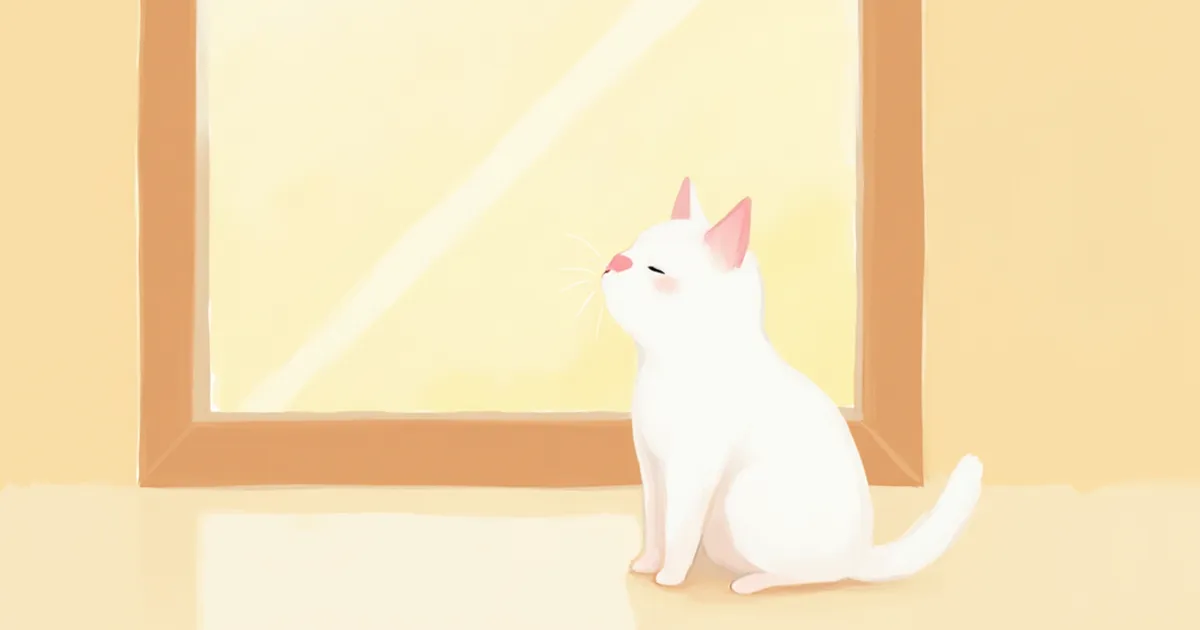
An illustration of a white cat sunbathing by a sunny window.
Feline skin cancer (squamous cell carcinoma) is a tumor that develops when epidermal keratinocytes in the skin, which have been exposed to sunlight (ultraviolet rays) for an extended period, undergo malignant transformation. The most crucial aspect is early detection. This type of cancer frequently occurs in areas with sparse hair and low pigmentation, such as the nose, ear tips, and eyelids of white or light-colored cats. If you notice small scabs or ulcers that do not heal within two weeks, it is essential to have your cat examined by a veterinarian immediately. Treating actinic keratosis (a pre-cancerous stage) can prevent progression.

Why Are White Cats at Higher Risk?

The cause is cumulative exposure to ultraviolet (UV) radiation. White fur and pink skin contain very little melanin pigment, so they absorb UV rays directly. Prolonged sun exposure damages the DNA of epidermal cells, leading to actinic keratosis—a precancerous stage—that can progress to squamous cell carcinoma. Outdoor cats are at risk, as are indoor cats that regularly sunbathe near sunny windows, since standard glass allows most UVA rays to pass through.

Checklist of Early Symptoms to Watch For

Early symptoms are often mistaken for simple skin issues. - Scabs and flaking: Repeatedly appear and shed on the nose and ear tips. - Red patches: Redness that gradually darkens on hairless, pink skin. - Ulcers: Open sores with oozing or bleeding. - Ear tip deformity: The edges of the ears appear eroded or missing. - Lumps and growths: Firm nodules develop on the nose or eyelids. If a lesion does not heal within two weeks, it is likely more than just a simple wound.
Close-up illustration of a white cat’s nose and ear tips

Overview of Changes by Stage of Progression

ItemActinic keratosis (precancer)Superficial squamous cell carcinomaInvasive squamous cell carcinoma
AppearanceRed patches · recurring scalingCrusts · small ulcersLarge ulcers · tissue defects
Lesion depthWithin the epidermisPartial epidermal invasionDermis · cartilage · bone invasion
TreatabilityReversible with local treatmentHigh chance of cure with surgeryWide excision · reconstruction required
Metastasis riskNoneLowPresent (regional lymph nodes · lungs)
PrognosisGoodFavorable if detected earlyVaries by stage

In white cats, starting treatment at the actinic keratosis stage can prevent progression to cancer.

How Is It Diagnosed at the Veterinary Clinic?
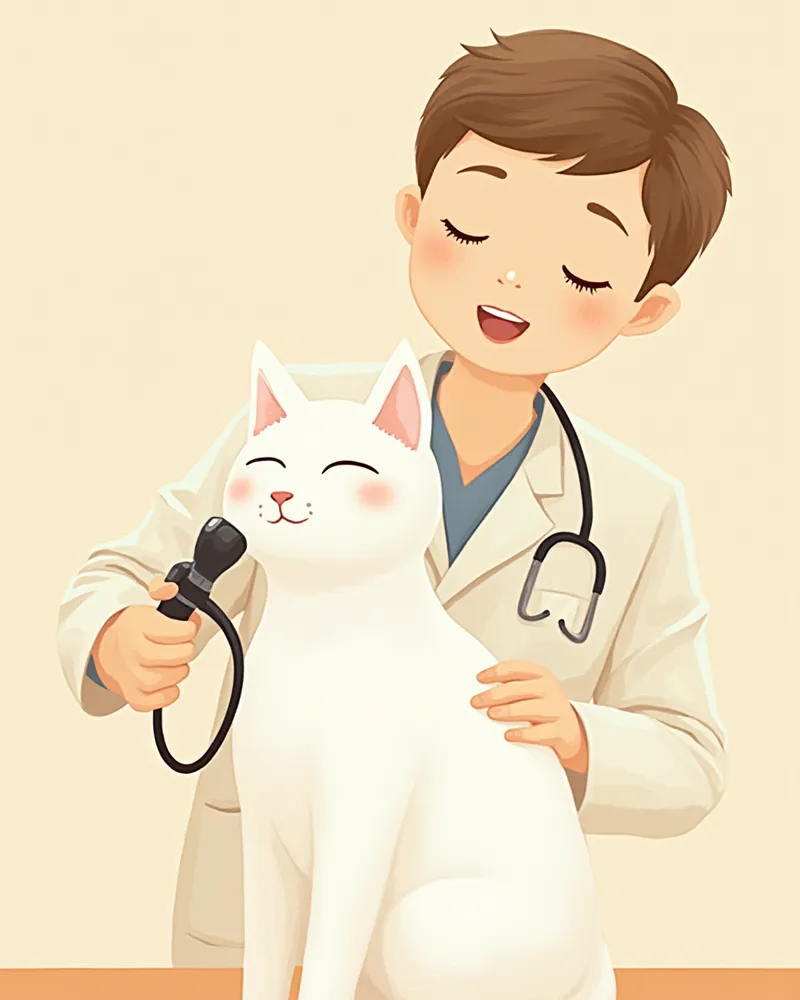
The veterinarian first examines the lesion through visual inspection and palpation. To differentiate it from simple dermatitis, cells are collected via fine-needle aspiration, or a biopsy may be performed for a definitive diagnosis. To assess the extent of invasion and check for metastasis, the vet may evaluate regional lymph nodes, take chest X-rays, and, depending on the location, perform a CT scan. For areas where the extent of surgical removal could affect appearance, such as the nose or ears, imaging is crucial to accurately determine the lesion’s boundaries.
Illustration of a veterinarian examining the ear of a white cat.

When to Seek Immediate Veterinary Care

• When crusts or ulcers on the nose, ears, or eyelids fail to heal within two weeks • When the tips of the ears are eroded and show tissue loss • When bleeding or discharge recurs from the affected area • When the same area gradually enlarges or becomes firm • When new lumps appear in the same area Treating actinic keratosis at this stage can prevent tumor progression, but once it advances to the invasive stage, extensive surgical excision is required. Please don’t delay treatment by dismissing it as “just a summer sunburn.”

Treatment Options — How Do They Differ by Stage?

Treatment depends on the depth and location of the lesion. - Surgical excision: This is the most definitive approach, with a high chance of cure in early stages. Common procedures include amputation of the ear tip (partial pinnectomy) or removal of the nasal tip. - Radiation therapy: Used when surgery is difficult or as an adjunctive treatment. - Photodynamic therapy: A non-invasive option applicable to superficial tumors. - Topical medication: Can be attempted at the actinic keratosis stage. Your veterinarian will determine the most appropriate method based on the tumor’s location and size, as well as your cat’s overall condition.
Illustration of a white cat resting comfortably after treatment

Preventing Recurrence and Daily Care

Sun protection remains a cornerstone of lifelong care even after surgery. - UV-blocking window film and blinds: Applying these to windows makes sunbathing safer. They are more practical and long-lasting than sunscreen, making them the recommended first choice. - Limit exposure during peak sunlight: Reduce access to sunny windows between 10 a.m. and 4 p.m. - Use sunscreen with caution: Cats can easily lick it off during grooming, and some ingredients (such as zinc oxide) are toxic to them. Since there are currently no sunscreens specifically formulated for cats, use them only when absolutely necessary, avoiding toxic ingredients, and after consulting your veterinarian for limited application. - Regular check-ups: Inspect the nose, ears, and eyelids once a month, and have any suspicious areas re-evaluated by a veterinarian.

Reviewed by a veterinarian

Dr. Tony — Punnawat Phongkittirak

Dr. Tony — Punnawat Phongkittirak

Veterinarian

A veterinarian who majored in veterinary medicine at Khon Kaen University, Thailand, and completed the IVSA program at North Carolina State University in the United States. Drawing on clinical experience at animal hospitals, he works in the pet healthcare field and is dedicated to building a digital care environment that connects pet parents with veterinarians.

Frequently Asked Questions

How advanced does feline skin cancer need to be before it becomes dangerous?
The actinic keratosis (pre-cancerous) stage is reversible, but if it progresses to an invasive form, it can metastasize to local lymph nodes or the lungs. If lesions on the nose or ear tips of a white cat persist for more than two weeks, it is safest to have them examined immediately, regardless of the stage.
Can my pet still develop skin cancer even if it’s kept indoors?
Yes, it is possible. Even indoor cats that enjoy daily sunbathing by a sunny window can accumulate UV exposure. Since standard glass windows do not block UV rays effectively, it is advisable to apply UV-blocking film or install blinds.
Are there any other high-risk breeds or traits besides white fur?
Cats with lighter pigmentation are at higher risk. Among calico and tortoiseshell cats, those with more white areas, pink noses, light-colored ear tips, and depigmented patches are all common sites for this condition.
Can I use sunscreen made for humans?
We do not recommend it. If your cat licks the product during grooming, certain ingredients—particularly zinc oxide—can cause toxicity, and the protective effect will wear off quickly as it gets licked away. Moreover, there are currently no sunscreens specifically formulated for cats, so using UV-blocking window film or blinds is a more practical and recommended approach. If you feel sunscreen is absolutely necessary, please consult your veterinarian to choose a product free of toxic ingredients.
Will surgery significantly change my pet’s appearance?
While amputating the tips of the ears or nose may alter your pet's appearance, it generally doesn't cause significant functional issues. The earlier the surgery is performed, the smaller the area that needs to be removed, and the faster the recovery.

Share

Related Guides

References

[1] Ruslander D, Kaser-Hotz B, Sardinas JC. Cutaneous squamous cell carcinoma in cats. Compendium on Continuing Education for the Practicing Veterinarian, 1997

[2] Peaston AE, Leach MW, Higgins RJ. Photodynamic therapy for nasal and aural squamous cell carcinoma in cats. Journal of the American Veterinary Medical Association, 1993

[3] Little SE. The Cat: Clinical Medicine and Management, 2nd Edition. Elsevier, 2011

[4] Jackson HA, Marsella R. BSAVA Manual of Canine and Feline Dermatology, 4th Edition. BSAVA, 2018

This information is based on veterinary literature and does not replace diagnosis or treatment. Please consult a veterinarian for specific health concerns.

Metapet Co., Ltd. | CEO: Park Sung-yong | Business Reg. No. 417-88-02562 | Seoul, South Korea | Customer Center

White Cat Skin Cancer (SCC): Sun Exposure & Prevention Guide | Meongsiljang